
Published May 26, 2026 11:11AM
When someone mentions “yoga for older adults,” what typically comes to mind is a class of slow stretches and mindful breathing with students safely seated. That type of practice has profound benefits for all ages. Yet there’s a gap between that class and an all-levels studio class attended by older adults who are still interested in an intense vinyasa experience. And the needs of a lot of older students fall into that gap.
Many of these students have practiced yoga consistently for decades and still seek the creative, challenging, even playful sequencing found in studio vinyasa classes. However, students in their 50s and beyond tend to have different needs than what they brought to class in their 20s, 30s, and 40s.
Older students might still be entirely capable of practicing Chaturanga and working toward Forearm Balance. Yet it’s likely that at least some of them are navigating physical challenges that most teachers might not completely understand how to accommodate, including osteoarthritis, joint replacement, osteoporosis, lack of balance, and more.
As students’ physical needs change over the years, it’s normal that their yoga practice also needs to change. These students still derive benefits from engaging in challenging work related to mobility, stability, strength, and balance work. But how do you create a class that’s challenging yet supportive to older adults without underestimating their needs?
Common Challenges in Yoga for Older Adults
The following can affect students of any age, although they disproportionately affect an aging population. Here’s what to keep in mind.
Placing Weight on Hands and Knees
Most all-levels classes include kneeling and lunging positions, which can create discomfort if hands, wrists, or knees are impacted by stiffness and soreness from osteoarthritis or other challenges.
Reduced Mobility
Many yoga poses and transitions assume a higher-than-average range of motion. This applies to even the most common and familiar movements, including stepping forward from Downward-Facing Dog (Adho Mukha Svanasana) into Low Lunge (Anjaneyasana) or bringing one hand to the mat in Extended Side Angle.
Although limited mobility affects all ages, it can be more of a problem with older students due to increased stiffness in muscles and fascia, joint replacements, and bony changes around the joints from repetitive movement or osteoarthritis.
Balance
Complex or fast-paced transitions between poses can also be a barrier for anyone experiencing balancing challenges due to diminished vision, vestibular functioning, foot and ankle mechanics, or leg and hip strength.
Bone Density Loss
When you’re teaching older students, osteoporosis is common enough that it’s likely to affect at least a couple of people in your class. Poses and transitions that require a rounded back, such as rolling up from a forward fold or including a twist or bind in a forward fold, are contraindicated for students with osteoporosis in the spine.
5 Things to Consider When Teaching Yoga for Older Adults
The following adjustments can help any sequence be more inclusive of the needs of older students—and, generally, all students.
1. Always offer props and options
It’s increasingly typical for teachers to cue the use of props and variations. Ensuring you’re consistently mentioning these options helps ensure the class meets the needs of more students. And demonstrating them, not just talking about them, goes a long way in destigmatizing these approaches. That means suggesting:
• Additional padding beneath the knees in lunges or kneeling poses
• Blocks beneath hands to create space in standing forward folds and lunges
• Relying on walking, rather than taking a single step,nto a lunge from Down Dog or stepping backward from the front of the mat
• Fingertips pressing against the wall in standing balance poses
• Staying in one pose longer if it feels good
• Opting out of any pose that requires intense flexibility, strength, or stability
• Encouraging students to shape the practice to their body and not the other way around.
2. Include balancing challenges
Standing stability is something most of us take for granted. There are ample ways to practice stability in yoga, and single-leg balancing poses such as Tree (Vrksasana) are only part of the picture. Poses that require a narrow stance, such as High Lunge and Triangle (Utthita Trikonasana), can also challenge stability, especially when paired with eye and/or head movements. Also, transitions between poses, including sideways or backward movement, can present a chance to find steadiness.
These movements need to be explored with a little more care than usual among older students. That doesn’t mean you want to avoid balance poses. But you do want to mention there are options for finding additional support and stability from a wall, a chair, or placing the tiptoes of the “lifted foot” on the mat.
3. Rethink common transitions
Yoga classes commonly include full-body transitions, such as stepping forward from Downward-Facing Dog into Low Lunge or moving from Low Lunge into standing or balancing poses such as Warrior 2 (Virabhadrasana II) or Warrior 3 (Virabhadrasana III). Each of these transitions requires high mobility in major joints, not to mention considerable balance. These transitions aren’t necessarily out of reach for older students, although they are worth using sparingly and teaching with a range of options.
Another type of challenge includes supporting weight with the hands, so it can be helpful to sequence standing flows that don’t require bringing your hands to the mat. That could look like stepping back from the front of the mat into a pose instead of always stepping forward from the back of the mat. This approach is more accessible for students of any age who experience balance or wrist issues and helps train full-body stability.
4. Change how you cue students into standing
A common movement in yoga is transitioning from Standing Forward Bend (Uttanasana) to standing upright in Mountain Pose (Tadasana). The movement can be uncomfortable for students with lower back pain and stiff joints. The portion of the transition in which the spine rounds is also contraindicated for those with spinal osteoporosis. The transition can also be challenging for students with blood pressure or vestibular issues.
Instead of including this common transition, you could teach everyone how to practice a neutral spine as they transition first to a squat and then to standing. So from a forward fold (with the option of blocks under hands to reduce the mobility required), cue bending the knees and lowering the hips. As the hips sink, the head and chest naturally lift, not unlike a seesaw action. Then cue students to press down through the feet to find a standing position, as if they’re moving through Chair Pose (Utkatasana) along the way.
As a bonus, squats also improve lower body strength and power by approximating the effort required to stand up from a chair, a movement that can become increasingly difficult as we age.
5. Replace seated stretches with reclined ones
Another place that students tend to round their spines is seated forward bends, whether with straight legs together (Paschimottanasana) or wide apart (Upavista Konasana). Rounded spines also sneak into seated hip openers, such as Bound Angle Pose (Baddha Konasana), and twists, such as Half Lord of the Fishes (Ardha Matsyendrasana). And thanks to the pervasive postural pattern of rounded shoulders that we see throughout society, even seated poses that in theory involve a neutral spine often become rounded spine postures.
The problem with sharing an option with the caveat to take it “if you experience osteoporosis” is that students don’t always know they have low bone density, so cueing students not to round their spine if they experience osteoporosis only helps if they are aware of their situation.
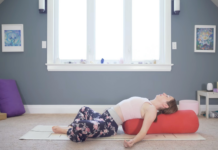
Most of these poses are practiced during the cool down part of class, so consider swapping traditional shapes with reclined versions of these poses. These more restful shapes allow the floor to support the body, which leads to an easier slide into Savasana.
All in all, active older students aren’t that different from anyone else. Your sequences can still be as challenging and creative as you like, provided you remain aware of some common physiological conditions. By learning how to make your classes safer and more accessible for this population, you become a more skillful teacher for all your students.