
Published June 4, 2026 01:18PM
Anyone who practices yoga on the regular knows that it can help with a number of everyday complaints, a fact that has been well-researched in recent decades. Yet a recent analysis of data conducted at the University of Rochester Medical Center is drawing attention not only for its finding that practicing yoga reduces sleep challenges among cancer survivors, but the potential implications for other unwanted side effects of cancer treatment.
“In some instances, these side effects resolve on their own,” explains Karen Mustian, PhD, MPH, and principal investigator for the research. “But a considerable amount of the time, they don’t.” Studies estimate, conservatively, that more than 50 percent of cancer survivors find sleep elusive. By comparison, research suggests approximately 30 percent of Americans experience difficulty falling and staying asleep.
Insomnia becomes further complicated for cancer survivors because common interventions, including exercise and pharmaceuticals, can be problematic for some. Medications can cause negative interactions, explains Yuri Choi, PhD, RN, and Research Assistant Professor. Also, vigorous exercise can be overly exhausting for those who already experience fatigue, which is another common side effect experienced by cancer survivors.
The primary focus of the research was to explore the relationship between practicing yoga and reducing sleep challenges. But recently, the researchers began asking more questions.
“Historically, a lot of side effects will often occur at the same time. So you might see a patient struggling with their sleep, but they’re also saying, ‘I’m super tired during my day, my mood is off, I feel terrible, I feel really down, I feel really anxious, frustrated, or agitated,’” explains Mustian, who is also Associate Director for the Population Science at the Wilmot Cancer Institute.
“So the question became, ‘Is one of these things causing the other? If we lower mood disturbance, will that subsequently help with sleep?’” says Mustian.
The answer appears to be yes.
What the Yoga for Insomnia Research Shows
The study, initially conceived in the early 2000s, was based on a “yoga intervention” consisting of poses, breathing, and mindfulness. It was practiced three times a week for four-weeks by 410 women who had previously completed a course of cancer treatment and experienced resulting sleep disturbances. Data from self-reporting and wearable devices showed a significant reduction in sleep challenge symptoms.
In analyzing the data, Choi began to examine other common side effects of cancer treatment—including fatigue, mood disturbance, and anxiety—and the role these might play in sleeping patterns.
“Fatigue also showed significant improvement,” explains Pu-Jo Lin, PHRD, a longtime collaborator on the study, Research Assistant Professor, and a yoga teacher. She explains that extreme tiredness is the most common side effect throughout the cancer trajectory and is likely to be experienced by those cancer survivors with insomnia issues.
“If we can lower a person’s fatigue during the day, it seems that we will also help with their sleep at night,” says Mustian.
The initial analysis indicates that yoga had a beneficial effect on each of the unwanted side effects. “It starts to give you a clue on how you want to work with the yoga,” explains Mustian. Ultimately, she says, the objective becomes understanding how to adopt a precision medicine approach with all lifestyle and behavioral interventions.
The Right Type of Yoga for Cancer Survivors
The researchers are quick to point out that the recommended prescription is yoga. But not just any yoga.
“This is not a rigorous vinyasa flow, it is not heated yoga, it is not some of the things that you might find at a typical YMCA class,” says Mustian, which could create even more stress for participants. She explains the specific yoga practice studied is a slow sequence of gentle hatha and restorative poses that initially energizes students with seated stretches, works up to slightly more intense poses, and then brings students back to the mat for an extended restorative practice.
The researchers, who each practice yoga, also emphasize that the protocol isn’t about merely making shapes with the body. Instead, it relies on the integration of movement, breath, and body awareness or, as defined in the original research, “the practice of paying attention with non-judgmental observation to the present experience.” In other words, yoga.
The teacher also plays an integral role in creating a beneficial practice for students. “We encourage survivors to find certified yoga instructors that have experience working with cancer survivors and who know how to modify the postures based on survivors’ needs,” explains Choi. In-person classes are preferred.
“When I started this work back in 2003, we did not have yoga studios as available as we do now. But it still presented challenges in coordinating yoga teachers to share in-person classes in an era that preceded YouTube and yoga apps.
“Yoga is much more accessible now than it used to be,” explains Mustian.. “But we sort of fall into this different challenge, which is that not every type of yoga being taught is appropriate for this population, and not every type of training would position a yoga instructor to be effective and safe in this role.”
The researchers emphasize to clinicians the importance of being aware of credible yoga resources in their communities where they can refer patients and survivors, says Choi. Classes can be found at a large percentage of cancer centers, including City of Hope and Memorial Sloan-Kettering, as well as local cancer support centers. The nonprofit Yoga4Cancer Foundation also shares free online classes for survivors as well as oncology yoga training for teachers interested in understanding the nuances of how to safely modify classes.
The team’s upcoming work will explore avenues to make yoga more accessible to Black and Latina cancer survivors and examine the role of yoga in mitigating side effects in adolescent and young adult cancer survivors. Ultimately, the goal of the research is to ensure cancer treatment minimally interferes with survivors’ lives by helping them learn how to navigate challenging side effects of treatment. “We’re just giving them the tools,” explains Mustian.
Yoga for Cancer Survivors (YOCAS) Practice
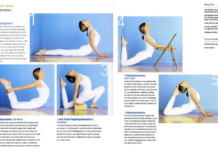
The specific yoga sequence used in the study was developed by Marget Braun, a yoga instructor with prior experience teaching cancer survivors. The following list of poses as well as video instruction was shared with certified yoga teachers who led participants through the practice.
Seated
Ynana mudra (also known as Jnana mudra or the Seal of Wisdom; link index finger and thumb together during mindfulness sitting meditation)
Parvatasana (Seated Mountain Pose)
Lateral extension with breath on both sides
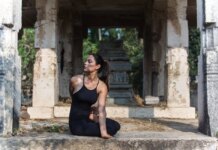
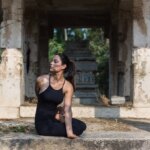
Bharadvajasana (Seated Twist)
Janu Sirasana (Head-to-Knee Pose
Modification: Adho Mukha Paschimottanasana (Supported Forward Bend from chair)
Spinal waves
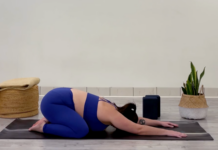
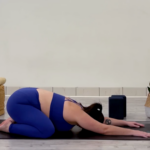
Balasana (Extended Child Pose)
Standing and Kneeling
Adho Mukha Svanasana (Downward Dog)
Uttanasana (Standing Forward Bend)
Prasaritta Padotanasana (Wide-Legged Standing Forward Bend)
Balasana (Child Pose with side stretch by walking hands to one side then the other)
Balasana (Child Pose with shoulder extension transition to supported backbend)
Transition
Supine curl to floor
Savasana
Jathara Parivartanasana (Supine Twist on each side)
Supta Padangusthasana (Supine Leg Stretch)
Setu Bandhasana (Supine Pelvic Lift or Bridge Pose)
Restorative
Supta Baddha Konasana (Supine Bound Angle supported with a bolster beneath the back and blankets beneath the legs)
Adho Mukha Virasana (Supported Child Pose with twist)
Setu Bandha Sarvangasana (Supported Bridge Pose)
Viloma II (regulated exhalation)
Viparita Karani (Legs up Wall with pelvis on bolster)
Savasana (Corpse Pose)
Mudra
Ynana (link index finger and thumb together)
Pranayama
Equalize breath with a pause post-exhalation
Hmm breath
Viloma II
Mindfulness Meditation
Body scan and sensation
Internal viewing
Nostril breathing, gravity tailbone, tactile cues
Visualization
Mind turn inward to heart
Dive beneath surface
Lying into back body
Affirmation
My senses turn inward and I relax into peace.