
It requires a balance of effort and ease.
(Photo: Andrew Clark; Design in Canva by Laura Harold)
Published August 19, 2026 09:21AM
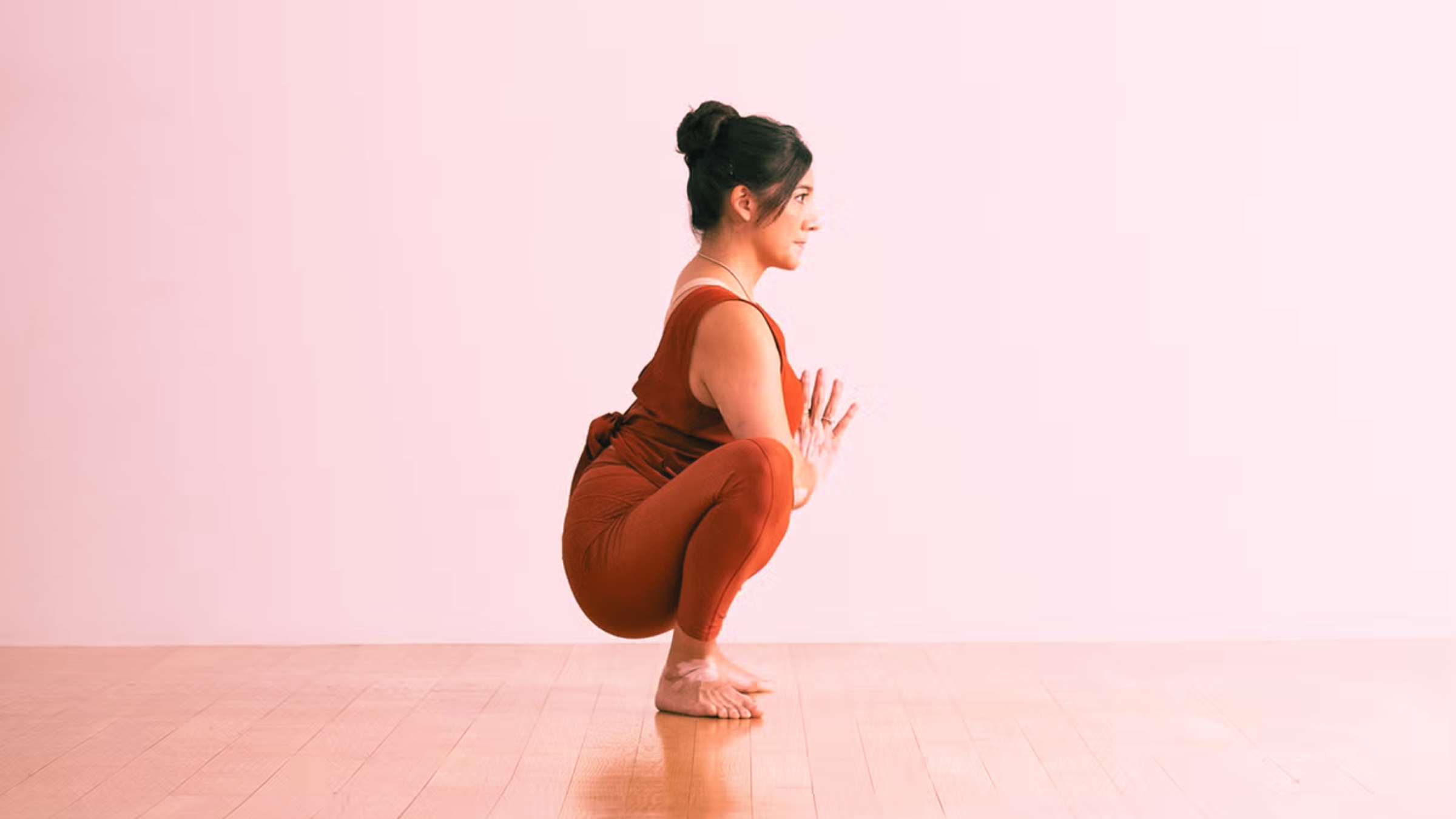
When most people think of squats, they think of the repetitive, up-and-down exercise common to gym-goers and the workout influencers in their Instagram feeds. Squats in yoga, on the other hand, are much different. Also known as Malasana, the pose still requires flexibility and strength, but also emphasizes stillness and a balance of effort and ease.
Despite its relatively straightforward shape, coming into Squat can feel like a catch-22. On the one hand, it helps improve mobility in the lower body. On the other hand, if movement is already restricted in your lower body (aka, long periods of sitting), Malasana can feel like a position your body can’t comfortably maintain.
Instead of forcing your body into the pose all at once, you can practice other stretches to prepare your hips, knees, and ankles for coming into Malasana. With practice and the proper preparation, you might find that a Squat in yoga is within your reach.
Common Challenges in Malasana
If you’ve already attempted Squat, some of the common pain points might already be evident to you:
- Ankles Your ankles not only need proper flexibility to let your heels touch the floor, but also strength to hold the entire body at that angle.
- Knees Sometimes a lack of flexibility in the lower body contributes to restriction in the knees. Past knee-related injuries can also keep one from coming into the intense bend required by Malsana.
- Hips There is significant external rotation of the hips in Malasana, which isn’t easy for many people.
- Pelvis The pelvic needs to sink deep in the squat for the posture to reach its ideal alignment.
Once you understand the multiple parts of the body involved, you can target each area to feel better equipped. Each of these are targeted in the below stretches.
4 Ways to Prep Your Body for Squat in Yoga
These stretches help warm up your lower body for Malasana. Add one or two to your existing yoga practice or workout routine, and repeat them as many times as needed to build your flexibility, strength, and confidence.
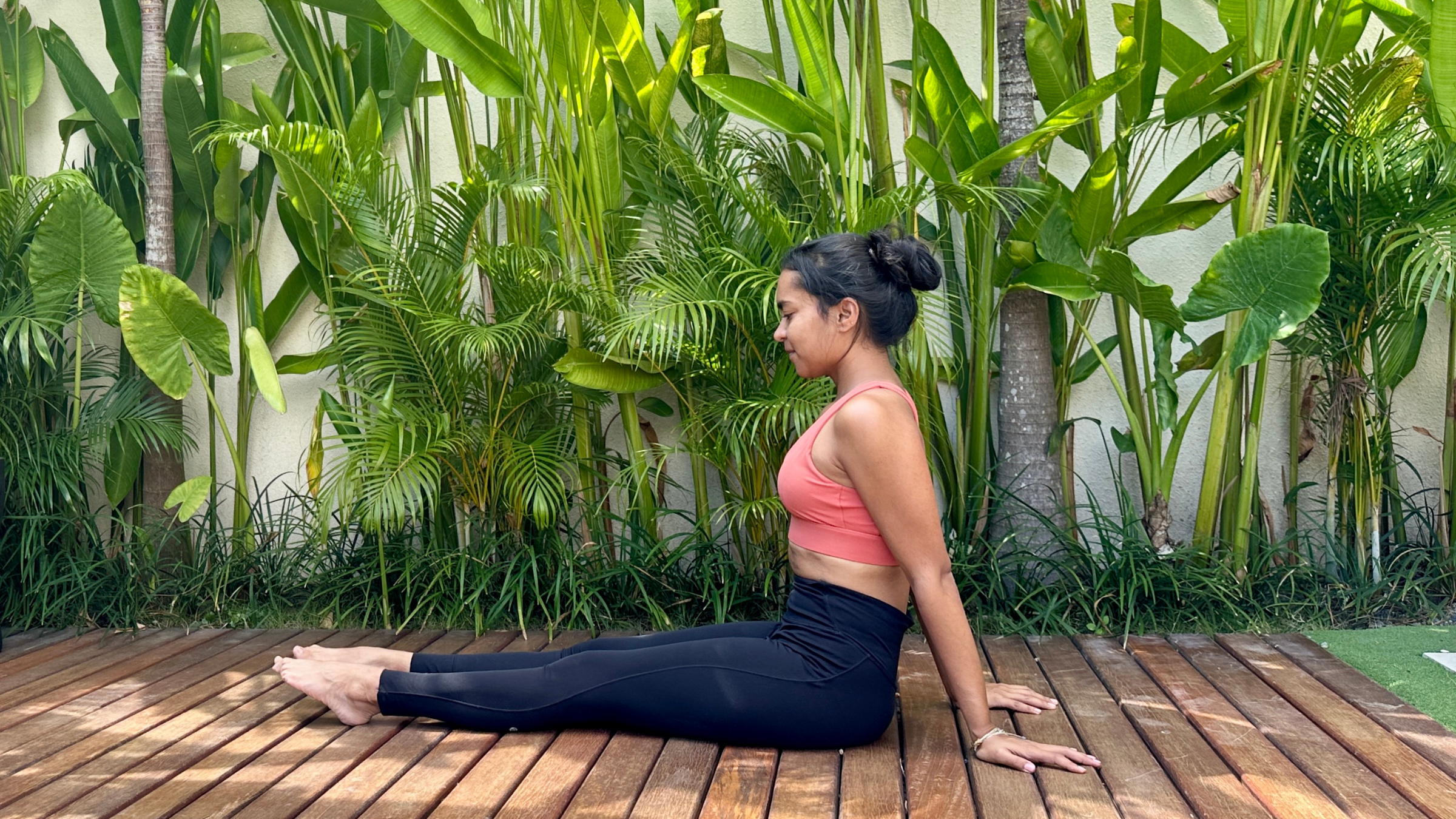
1. Ankle Rolls
These simple ankle rotations help improve range of motion in your ankles to help you lower your heels closer toward the floor —and you can practice them basically anywhere.
How to:
- Sit with your legs extended straight in front of you.
- Point your toes as much as possible. Hold for a few seconds.
- Draw 5 circles with your toes in one direction; then switch directions and do another 5 circles. Then release.
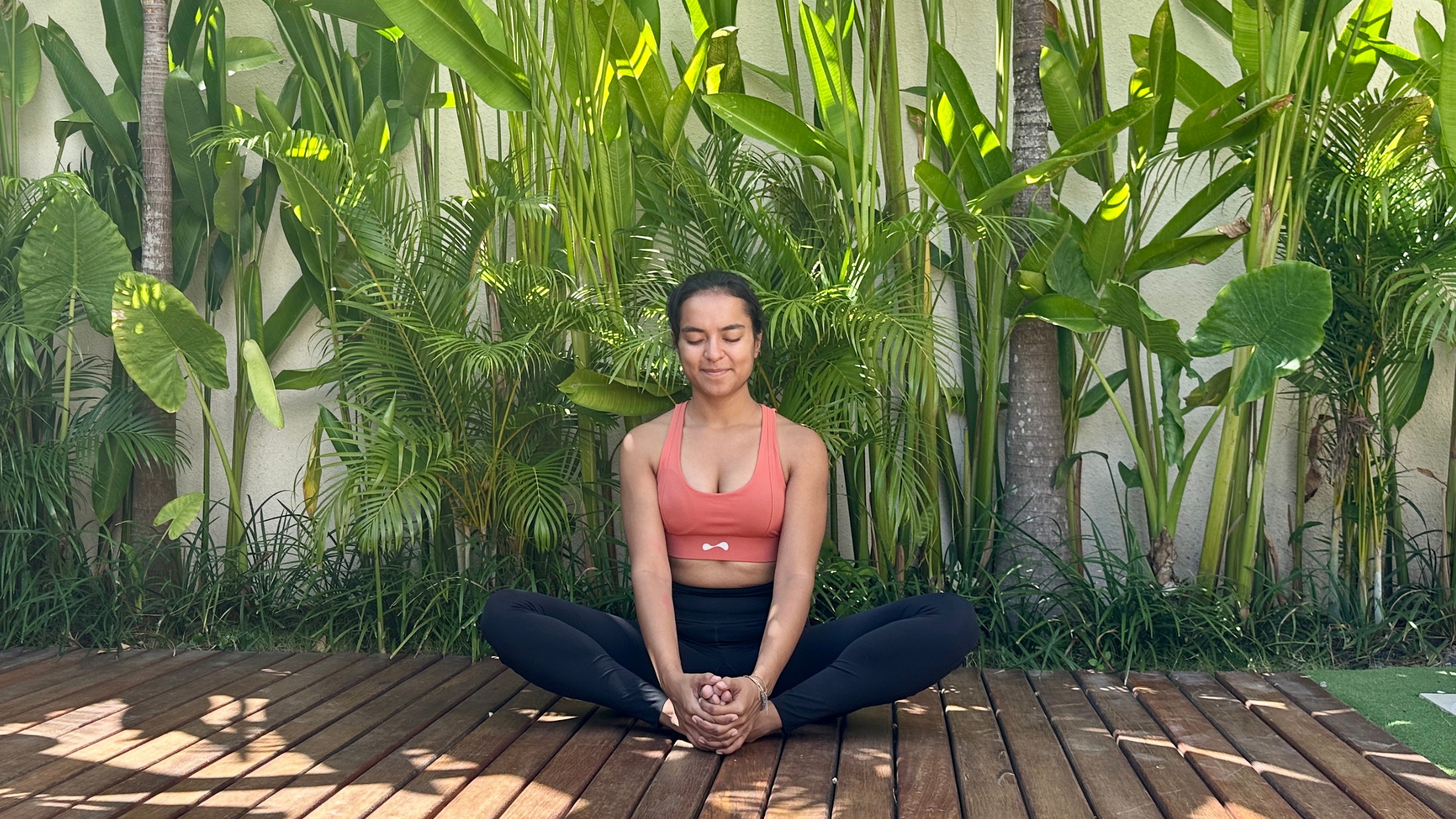
2. Bound Angle Pose (Baddha Konasana)
Tight inner thigh muscles can restrict you from coming into Malasana. Bound Angle Pose helps them become accustomed to opening up. It also familiarizes your knees with a similar angle as Malasana.
How to:
- Sit on the mat. Draw the soles of your feet together and allow your knees to open out to the sides in Bound Angle Pose. Grasp the outer edges of your feet or rest your hands on your thighs.
- Without forcing it, gently move your knees in a subtle up and down motion. Continue for 5 breaths, then release.
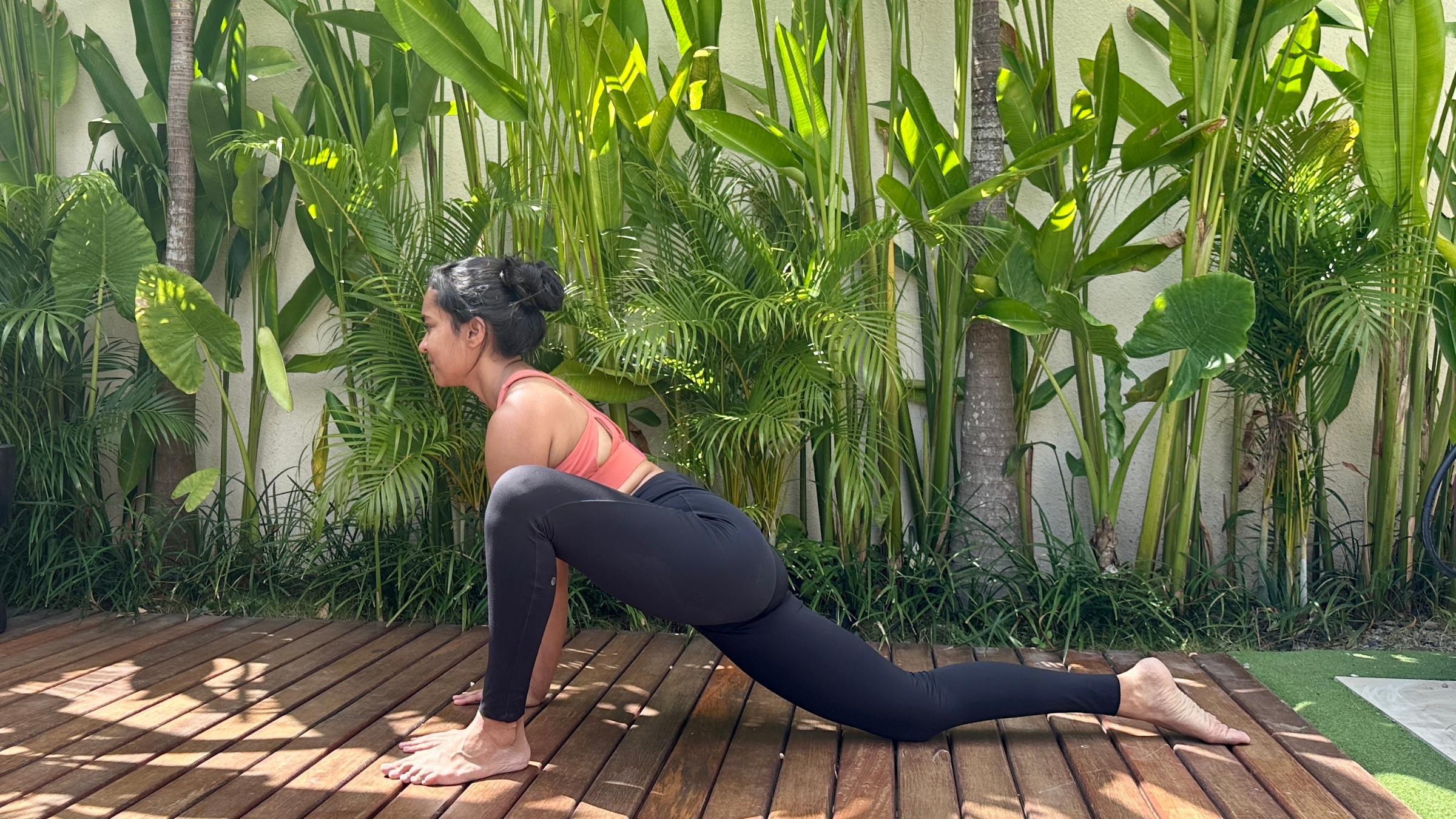
3. Lizard Pose (Utthan Pristhasana)
This lunge posture helps open the hips, hamstrings, and pelvis. It also works on the quadriceps of the back leg and adds to the foundational strength of the legs that you’ll use in Squat.
How to:
- Come to your hands and knees.
- Step your right foot just outside your right hand. Keep your right knee stacked over your ankle. Hug your right knee toward your right shoulder.
- Tuck your left toes and lift your back knee off the mat in Lizard Pose. Press your palms into the mat. If this feels too intense, keep your left knee on the mat. Pause here for 5-8 breaths, then repeat on the other side.
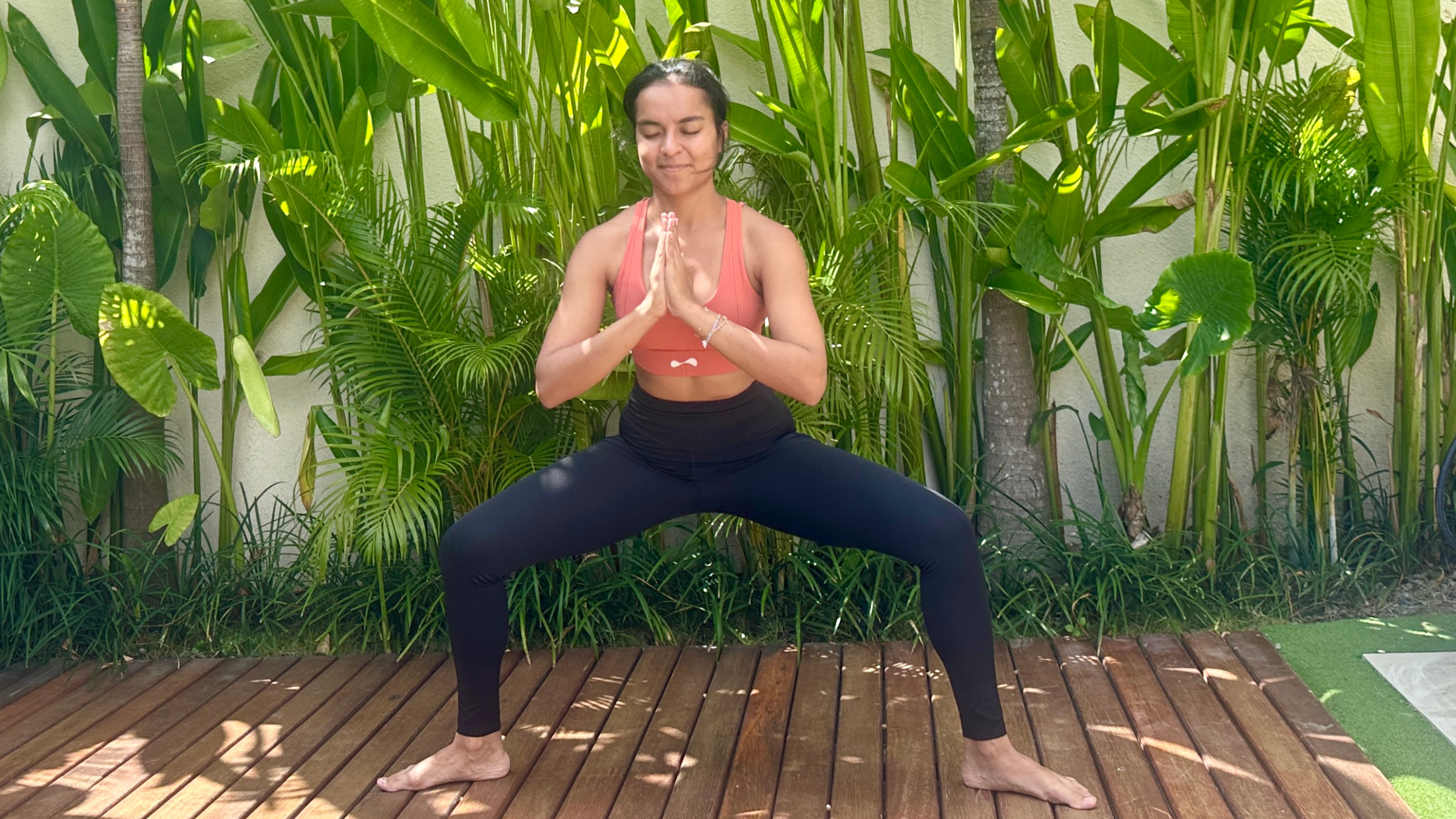
4. Goddess Pose
This pose is one of the best preparatory poses for Malasana, as it helps build strength in your hips, thighs, and knees all while the body is in a similar shape as Squat.
How to:
- Stand with your feet slightly wider than hip-width apart with your toes turned slightly out.
- Bend your knees and lower your hips. Imagine your thighs becoming parallel to the mat.
- Keep your spine tall and join your palms in prayer position (anjali mudra) in front of your chest in Goddess Pose. Pause here for 5-10 breaths.