
Published September 13, 2026 05:05AM
You already know that practicing yoga enhances your flexibility and your self-awareness. But the question that remains among many is whether it can actually build strength. And although yoga strengthening poses is typically associated with the core, glutes, and legs, one of the most common questions is whether yoga strengthens the arms. Think arm exercises without weights.
The answer is yes. An array of yoga poses are quite efficient at strengthening your arms. And we’re not just talking Chaturanga and Forearm Plank.
How Yoga Strengthen Your Arms
Research has demonstrated time and again that yoga can strengthen your arms in ways that are measurable and meaningful. One of the most commonly cited studies regarding the arm-strengthening benefits of yoga demonstrated that six weeks of practicing Sun Salutations every single day—basically, repeated Planks, Chaturangas, Upward-Facing Dogs, and Downward-Facing Dogs—caused a significant increase in arm and shoulder strength. Specifcally, as measured by both capacity to lift weight and endurance.
The style of yoga, and not just the specific poses, also determines the arm-strengthening potential of the practice. One study compared the benefits of six weeks of Ashtanga yoga and hatha yoga. Both groups saw measurable improvements in muscular strength and endurance. But those who took part in the vigorous and challenging sequences of Ashtanga experienced greater upper body strengthening. The more physically demanding the class, the more effectively it strengthens the arms.
Finally, recent research found that yoga poses activated more muscle synergies in the arms, shoulders, and upper body compared to traditional gym arm strengthening exercises. That means yoga was able to enhance the neuromuscular coordination of all the muscles of the arms and shoulders, not just the larger muscle groups. This supports stability in the joints which, in turn, helps protect against injury.
To be clear, it is not necessary to max out the arm-strengthening potential of your yoga practice. Almost any pose—weight-bearing or otherwise—has the potential to enhance your arm strength as long as you engage your arm muscles. You get to determine the intensity that you pursue it.
And almost anytime you build strength in your arms, you also build strength and stability in your shoulders. No push-ups or weights required. Bonus: Thinking about the muscles you’re engaging during these poses helps you stay present during your practice. Which means you boost not only the physical benefits of yoga, but the mental ones as well!
7 Underrated Arm Exercises Without Weights
Many yoga students and teachers unintentionally gravitate toward familiar yoga poses and practice them over and over again. But each time you challenge yourself with a relatively unfamiliar shape, you also challenge your body to build a more comprehensive strength in your arms. Following are some of the less common and easily overlooked yoga poses that are, effectively, arm exercises without weights.
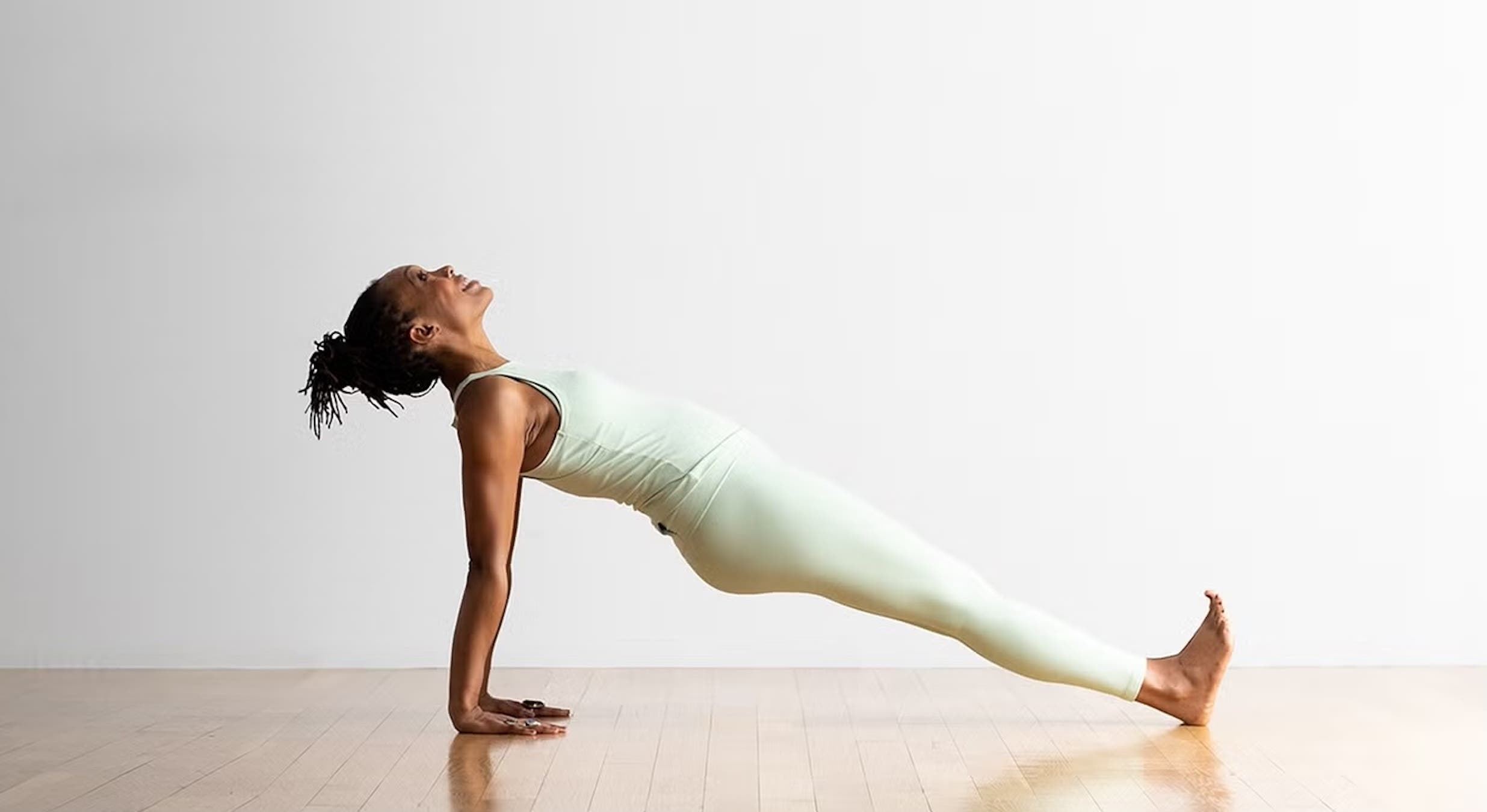
1. Reverse or Upward Plank (Purvottanasana)
Most vinyasa yoga classes feature Plank (or High Plank) and Chaturanga (Low Plank) as well as Side Plank. These poses constitute arm-strengthening exercises and also challenge your core muscles. But consider including their cousin, the easily overlooked Reverse Plank, when you are seeking arm exercises without weights.
Reverse Plank strengthens the triceps, shoulders (particularly the rear deltoids and rotator cuff muscles), and other upper body muscles that support your body weight against gravity. It also strengthens the muscles between your shoulder blades to help support proper posture.
When you practice, remember to squeeze your glutes. This brings your body into a straight diagonal line, which in turn distributes some of your weight toward your feet and ensures your hips don’t sag, which can draw the shoulders out of safe alignment.
2. Warrior 2 Pose (Virabhadrasana II)
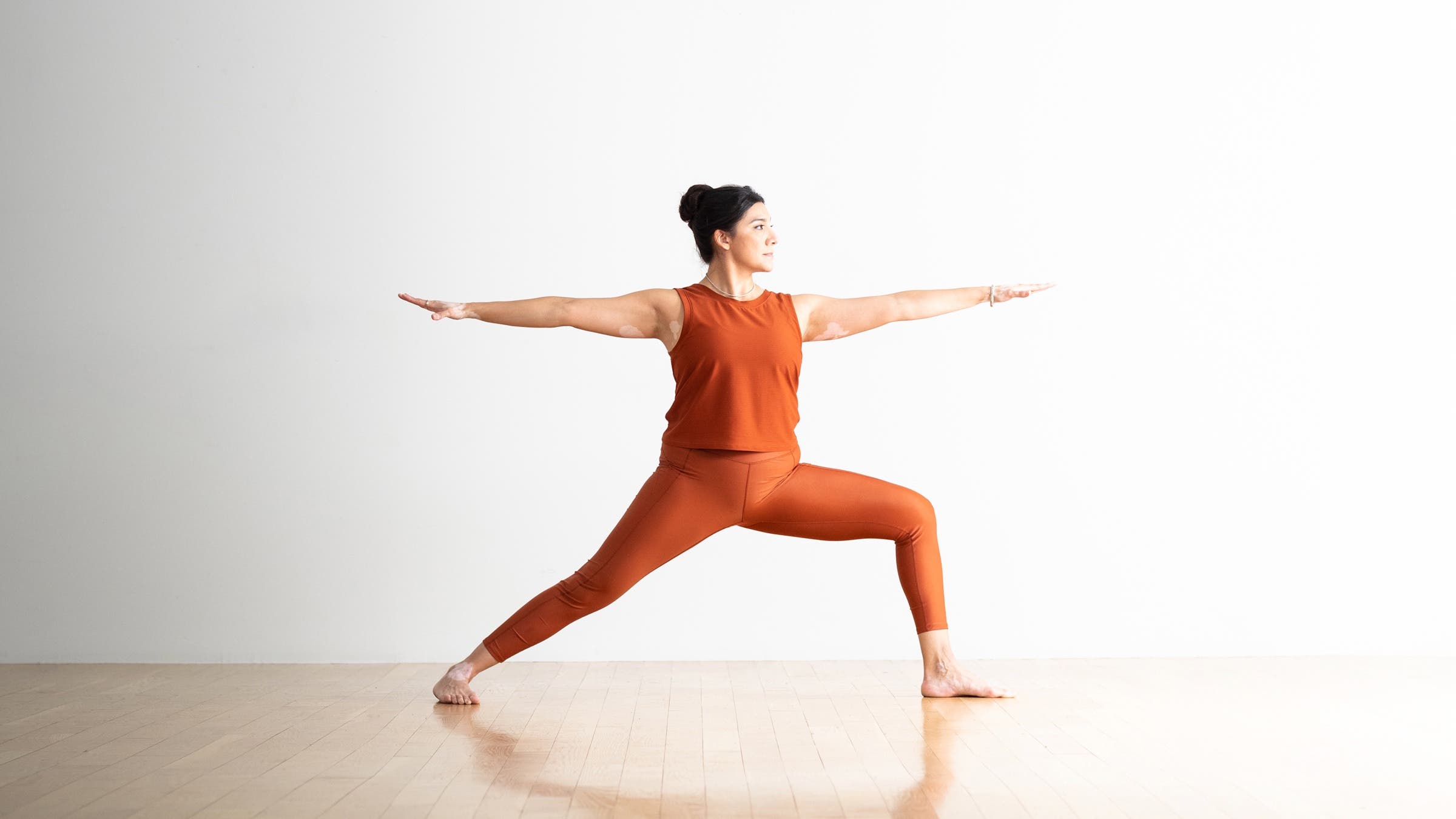
You don’t need to take yourself through a vigorous vinyasa class to strengthen your arms. When you hold your arms outstretched in Warrior 2, you challenge your muscles to resist gravity. Even though you remain still, your muscles contract isometrically. And any time you maintain a position that requires your muscles to act, it acts as an arm exercise without weights.
What that means is practicing Warrior 2 enables anyone—regardless of whether they are standing or seated in a chair—to benefit. This is especially helpful for anyone who struggles with wrist issues since most arm-strengthening yoga poses require bearing weight in your hands.
Don’t forget to breathe and think about keeping your body as erect and still as possible. Even the strongest athletes will feel their arms start to tremble after a while. That’s a sign your muscles are fatiguing—and strengthening. Bonus that Warrior 2 is a terrific strengthening exercise for the quads and glutes.
3. Dolphin Pose
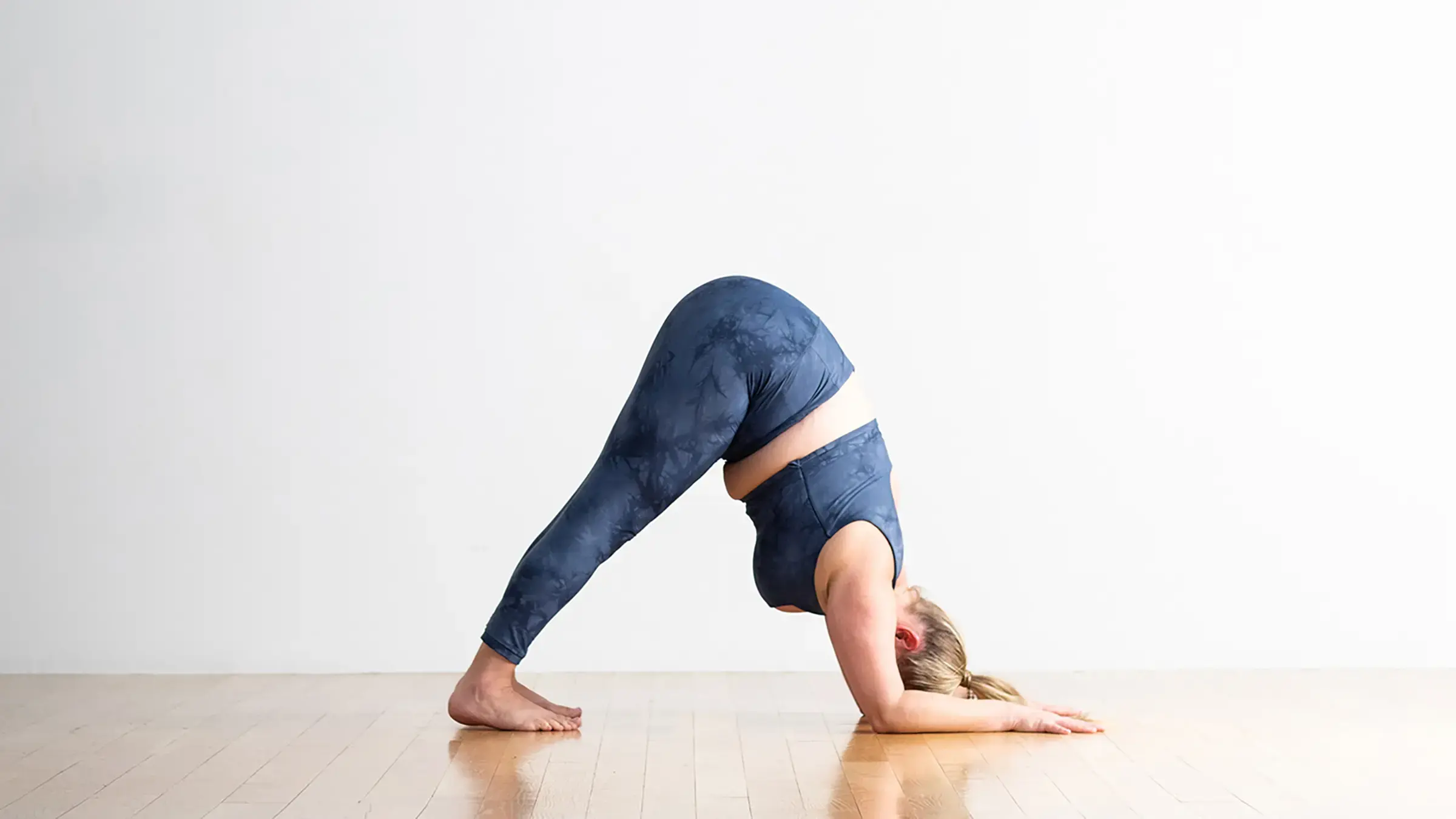
This overlooked pose is a terrific alternative to Downward Dog if you’re practicing yoga with wrist pain. But there’s another benefit for anyone. Keeping your forearms flat on the mat in Dolphin challenges the muscles in your arms, shoulders, and upper back (trapezius) differently than Down Dog. Here they are forced to contract in order to stabilize your body and maintain the position. So essentially, less load is transmitted to the wrists and more is taken over by the larger muscles of the upper body to support you.
Because this pose is essentially a full-body workout, approach it as you might any exercise and learn the shape, holding it for only a few seconds at a time, and do repetitions. Don’t forget to breathe.
4. Crow Pose (Bakasana)
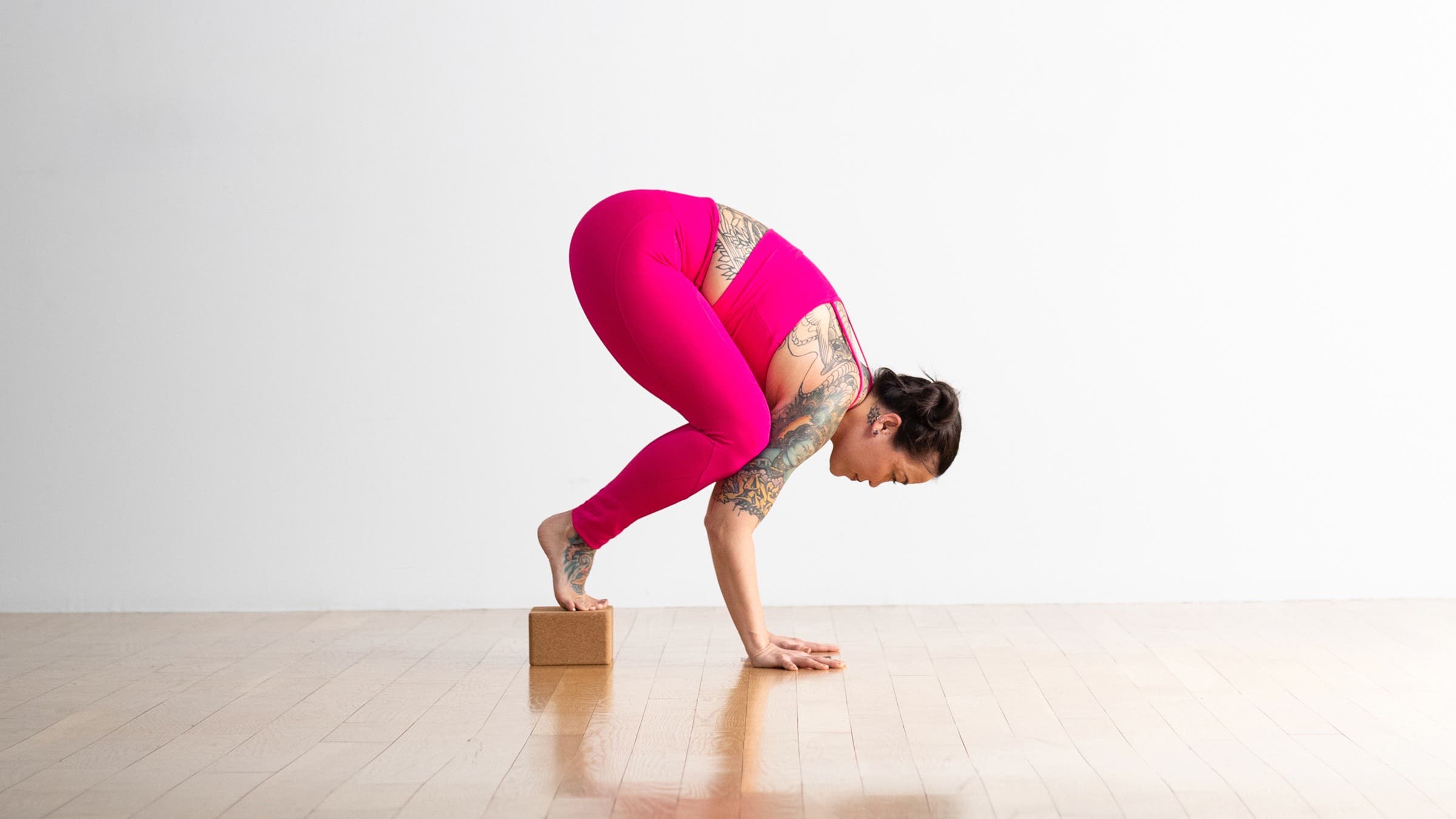
Most of us think of Crow as primarily an arm-balancing pose that demands a lot of core strength and, perhaps, a lack of fear. But there’s no denying the fact that supporting your body weight with your hands strengthens your forearms, triceps, and shoulders. If you have a challenging time bringing your knees high enough on your upper arms, slide a block beneath your toes.
If you navigate life with wrist pain, modify it by dropping to your forearms and taking Baby Crow. You’ll still engage the upper arms and shoulders while avoiding the obvious strain on your wrists.
5. Locust Pose (Salabhasana)
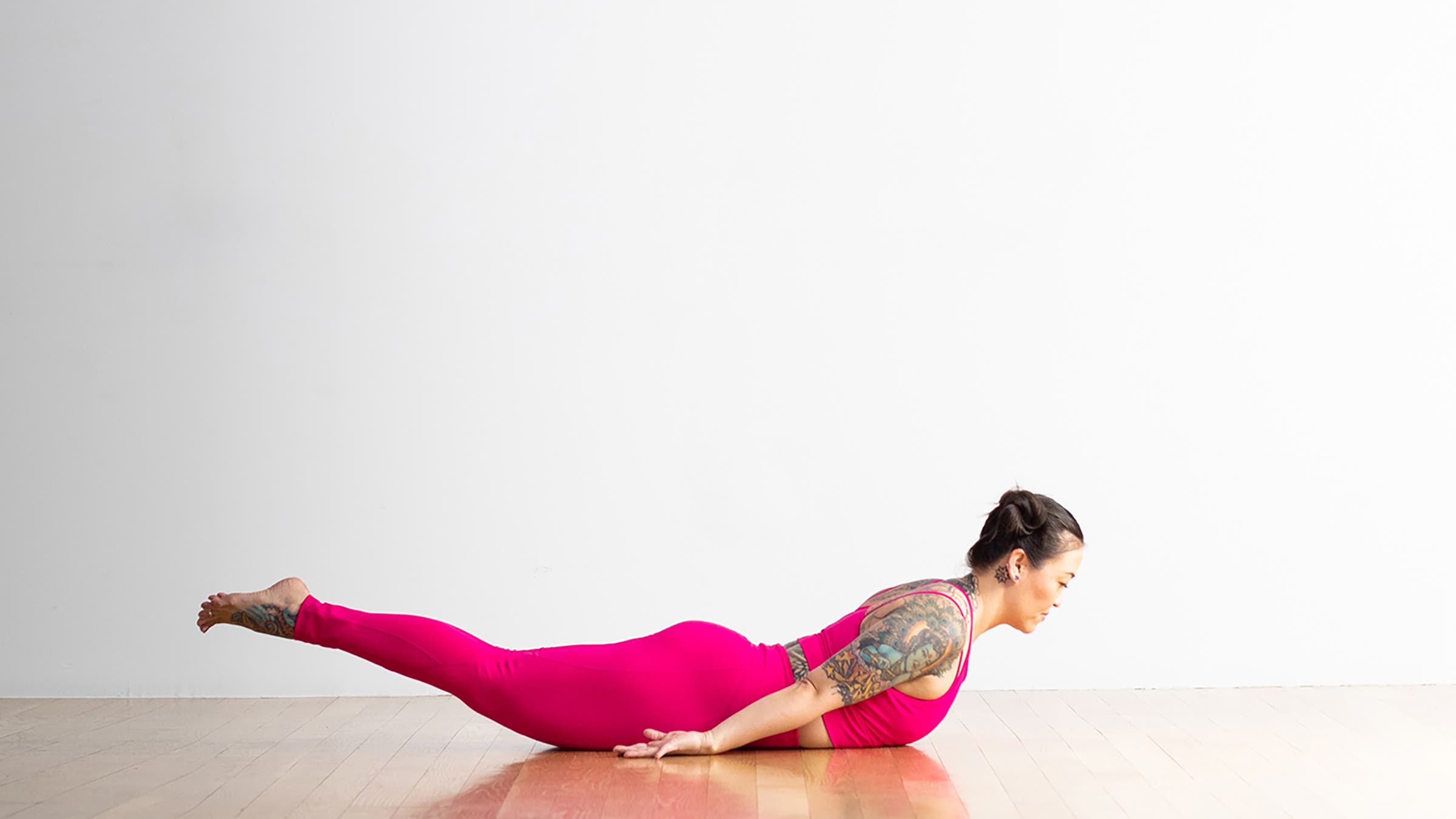
This seemingly simply but challenging backbend is rarely appreciated for its ability to strengthen the back and glute muscles. Yet it can also build arm strength in two significant ways.
First, starting with your arms alongside your body and pressing your palms or backs of your hands into the mat as you lift and hold your upper body off the mat engages your triceps and the rear deltoids, which are the muscles on the back sides of your arms and shoulders, respectively.
Second, lift your arms completely off of the mat and either extend them alongside your body or interlace your fingers behind you and reach your knuckles toward the wall behind you, it recruits isometric contraction of the triceps and shoulder muscles.

Here again, an important cue is to squeeze your glutes. This helps take some of the tension off of your lower back.
6. Upward Tabletop Pose
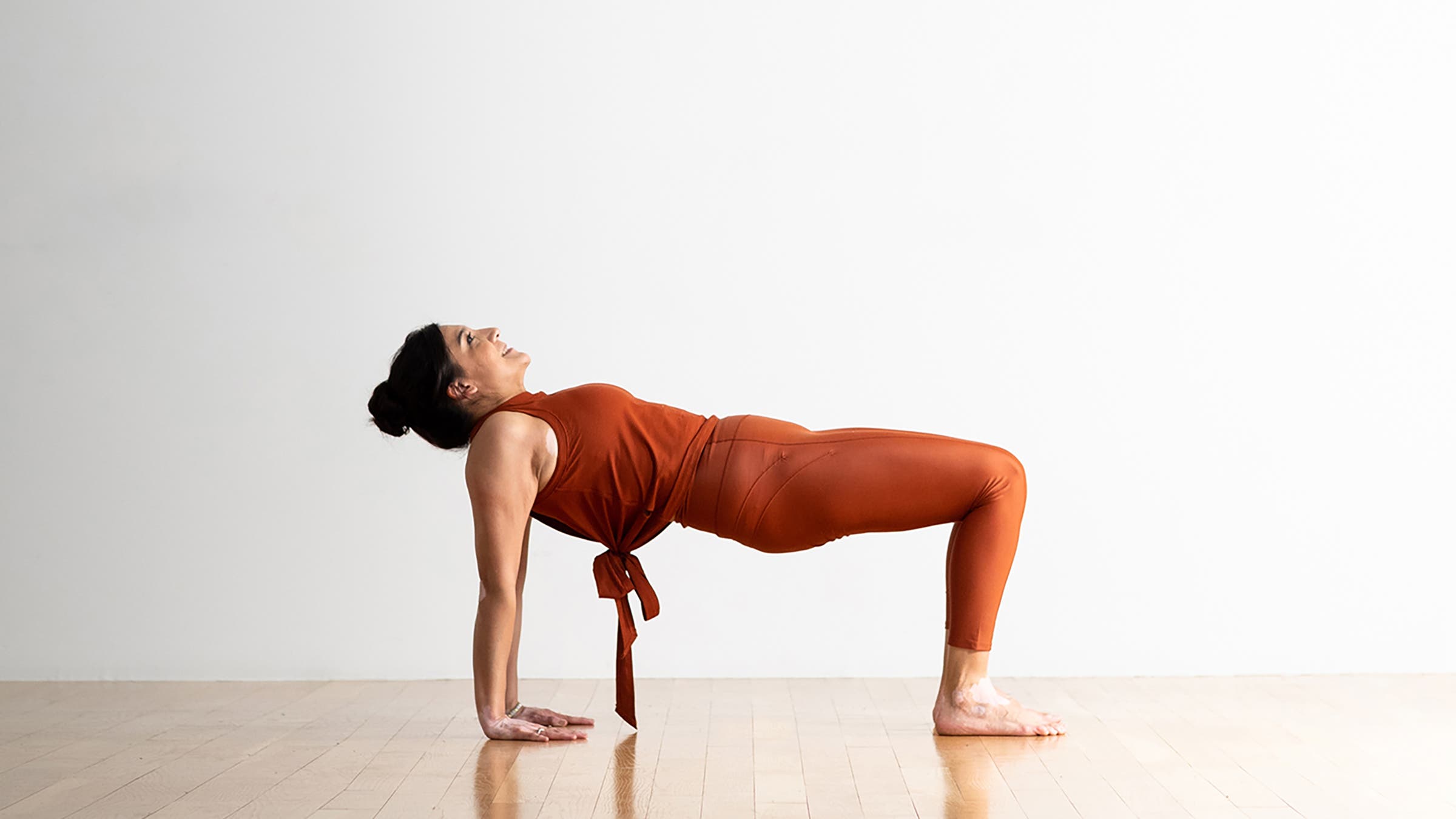
Similar to Reverse or Upward Plank, Upward Tabletop asks you to lift yourself off the mat by pressing your hands and feet into the mat. But rather than making a straight diagonal line with your body, you keep your feet flat on the mat and your knees bent 90 degrees. This one adjustment alters the angle of the shoulders, which alters the engagement of the arms (triceps and rear deltoids). The challenge is to lift your hips and keep them from sagging, which lessen engagement in the arms.
7. Puppy Pose (Uttana Shishosana)

This close-to-the-mat pose is typically considered a relatively passive way to stretch the chest and shoulders. Yet make a slight adjustment, and it becomes a powerful arm-strengthening pose that places minimal pressure on the wrists. strengthen the arms. Instead of allowing your arms to passively stretch alongside your head toward the front of the mat, actively squeeze the muscles in your upper arms and shoulders to engage these muscle groups isometrically.