
Published October 23, 2026 12:43PM
In Yoga Journal’s Archives series, we share a curated collection of articles originally published in past issues beginning in 1975. This article about Half Lord of the Fishes first appeared in the March-April 2002 issue of Yoga Journal. You can find more of our Archives here.
For many people, the word “yoga” conjures up images of bodies twisted into pretzel-shaped knots. But with all the stress we have in our lives, why would we want to further entangle ourselves? Rest assured, twisting yoga poses may be the very remedy we are seeking for our physical, mental, and emotional tension. The wringing-out action of seated twists, which have great tension-relieving effects, unties the knots we experience from our stressful lives.
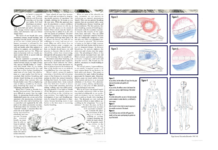
How does this work? Let’s examine the seated twist of Half Lord of the Fishes Pose (Ardha Matsyendrasana). This twist activates the third chakra area of the digestive system and solar plexus. The third chakra, the Manipura Chakra, governs our sense of personal power, will, and energy. Its element is fire; as we stimulate this area, we increase our sense of vitality and fan the flames that activate our self-esteem and the confidence we need to take risks. Manipura means “lustrous gem.” As we twist right and left, we are rubbing and polishing our inner gem, so that our internal sun shines brightly. Furthermore, the twist awards our body a wringing-out that helps us assimilate our food, release tension, and energize the entire spinal column from the lower back up through the neck. This action hydrates the vertebral discs and strengthens the spinal nerves, creating a sense of well-being.
A healthy third chakra exudes confidence, ease, and warmth. Half Lord of the Fishes Pose further takes us down that path by creating an integration between the right and left sides of our body. It’s no surprise that our two long body halves can feel different throughout the day; perhaps one side feels grounded and strong, while the other feels vulnerable or emotional. When we do a seated twist, the left side churns and blends to the right, and then the right side blends and synthesizes its attributes with the left.
After holding the pose for about a minute on each side, there is often a warm sense of integration. Twists are particularly beneficial for people with a musculoskeletal imbalance, such as scoliosis, to bring the sides into balance.
How to Practice Half Lord of the Fishes Pose
Begin by sitting on the edge of a folded blanket.
It’s important to maintain the natural curve of the lumbar spine throughout the twist, so increase the height of your blanket if necessary. Lengthen your legs straight forward into Staff Pose (Dandasana). Bend your right knee and cross it over your left leg, placing your right foot on the floor by your outer left leg. Then bend your left knee and draw your left foot to your outer right buttock (you may need to tuck the foot under your blanket). If you can’t bend your left knee, keep your leg straight, the kneecap facing the ceiling, and maintain a smooth reach through your calf muscle into the heel.
Before twisting, spend several breaths setting up the foundation of the pose. The foundation of any asana consists of whatever touches the floor. If the base is not well grounded, there’s not much hope for the stability of the rest of the structure. Further, if we wish to create length upward in the asana, our foundation needs to be able to press down so we can lift from that rootedness.
Wrap both arms around your right knee, hugging it closely. Inhale, sitting tall through your spine, and exhale, drawing the knee in comfortably. This movement is subtle, yet the closer your knee is to your chest, the deeper your twist will be.
Drop your right sitbone down into the blanket: You might feel a good stretch in the external rotator and gluteal muscle as you do this.
Deepen the Twist
Continue hugging your right knee with your left arm, and place your right fingertips on the floor about to inches behind your right hip (rest the hand on a block if you can’t reach the floor). Each time you inhale, press the right fingers, your sitbones, your right foot, and your outer left leg into the floor. As you do, also extend up to the crown of your head. Exhale and turn from your left belly toward the right shoulder; your right fingers might walk a little further to the right.
You may find that initially your breathing feels short and fast, as your diaphragm is squeezed. In time, your breathing will feel more normal.
If you don’t have a shoulder injury and can take a deeper version of the twist, hook your left upper arm to the outer right knee. Work this movement until you achieve a good seal. Your right fingers are still in contact with the floor. Continue to inhale as you stretch your pubic bone down, and visualize your spine elongated and free from constrictions. Exhale and like a corkscrew, one vertebrae rotating above the other, turn your belly, then ribs, chest, collarbones, and finally the neck and head. Feel the back ribs, shoulder blades, and left kidney gently draw in, and feel the flesh of your abdomen turn in the same direction as your shoulders.
Imagine that as you make the diagonal movement from the left hip toward the right shoulder in the front body, you revolve from the right shoulder to the left hip down the back body Resist any impulse to hurry or force your twist. It’s essential to work from your body and breath, not from any demand in your head that insists you be where you’re not organically ready to be.
When you are ready to release the pose, exhale and initiate the unwinding from your belly. The wringing-out movement you just did relaxes your muscles and floods your body with nutrients. When you are ready, take the second side. Please be cautious with this pose if you have any back problems, such as herniated discs, or if your doctor has counseled you not to practice twists. Also, be careful with any shoulder displacement.
Half Lord of the Fishes Pose stimulates peristaltic action, diminishes constipation, tones the abdominal organs, stretches the hips and external rotators, and improves the circulation and energy flow throughout the spine. The twist begins with the right thigh pressed against the abdominal region, which increases the peristaltic action of the ascending colon and stimulates the liver, gallbladder, and right kidney. The second side reinvigorates the descending colon, spleen, pancreas, and left kidney. In the upper body, shoulder movement is freed and the neck muscles gain tone.
Release Your Mind
As the body releases enormous amounts of tension in twists, the mind also benefits. We live in a culture that leads with the head. Instead of tuning into the heart or the intuition we experience in the gut, the intellect often dominates—and this isn’t always to our greatest benefit. As the mind thinks, the body creates. For example, people take on a forward-head posture, in which the misaligned head juts forward of the midline of the body, thus effecting the spinal curves and potentially stressing the discs, joints, connective tissues, and tendons of the spine.
Half Lord of the Fishes Pose asks us to first align and lengthen the spine before it turns. Then we initiate our twist from the belly, inviting that serpentine movement to spiral gradually up through the torso. If you lead the pose with your head, neck strain and great discomfort can develop. So the last to join in the twist are the neck and the head, giving the mind a needed break from leading. When we feel tangled in stress, our perspective of life can feel narrow, perhaps taking on a limited view as we hear old, negative inner messages that further contribute to our tension.
Half Lord of the Fishes Pose turns us around and helps us look in other directions. Our third chakra becomes reinvigorated, our head quiets down, and stale energy and thoughts are shed as we open to our greater wholeness.