
Published November 10, 2026 03:52AM
Longtime yoga teacher Amber Burke, graduate of two YogaWorks teacher trainings and former leader of a teacher training program at the University of New Mexico-Taos, shares her favorite stretches to do before walking her dogs. You can also explore other ways to stretch your entire body.
Confession time. I love my dogs, but I don’t always love walking them. Dog walking, I have found, bears little resemblance to normal walking. It is far more physically demanding than I ever imagined in my pre-dog-owning years, and sometimes it’s even a little scary. I have wrenched my back when my two big rescue mutts decided to dart in front of me while playing tug-of-war. I have been pulled after squirrels and tugged straight into lampposts. I have fallen into bushes. I have faceplanted. It is a small miracle that my shoulders are still attached to my body and I have (almost) all of my teeth.
Even when a dog walk goes smoothly, I usually end up feeling a bit crooked, hunched over, and frazzled by the end. If, like me, you walk big dogs, two or more dogs, high-strung or strong-willed dogs, and live anywhere with squirrels, you might value some yoga poses and movements that strengthen and stretch your shoulders, improve your balance, and stabilize your back, hips, and legs to help you survive the demands of your next dog walk.
10-Minute Yoga Sequence for Dog Walkers
This standing practice can be done in just a few minutes before your next dog walk, or simply do one or a few of these exercises while your dogs are busy running in the dog park. No mat or lowering yourself to the ground required. You will need a strap—or dog leash, after you’ve untangled yourself from it.
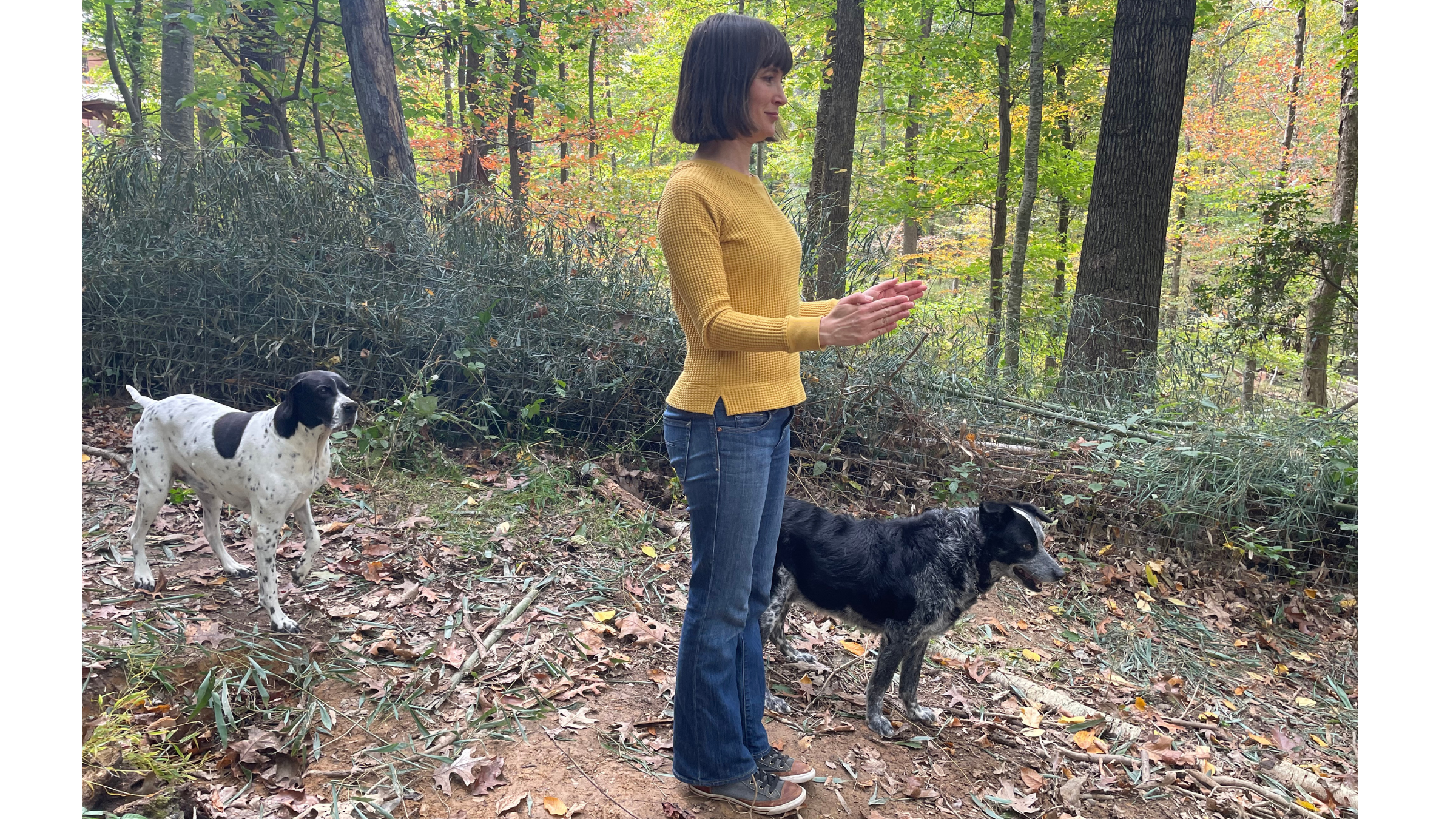
1. Mountain Pose With Robot Arms
The top priority for dog walkers is shoulder stability. Dogs yank, and when your dogs go after a squirrel, you don’t want your shoulders to go with them. Train your shoulders to resist every yank with this variation of Mountain Pose (Tadasana).
How to: Stand tall with your feet hip-distance apart in Mountain Pose and your arms alongside your body, squeezing inward in at your sides. Bend your elbows. Roll your shoulders up and back, and then down your back. Draw your shoulder blades toward each other, imagining that you’re creating a crease between them. Pause here for several breaths, then release.
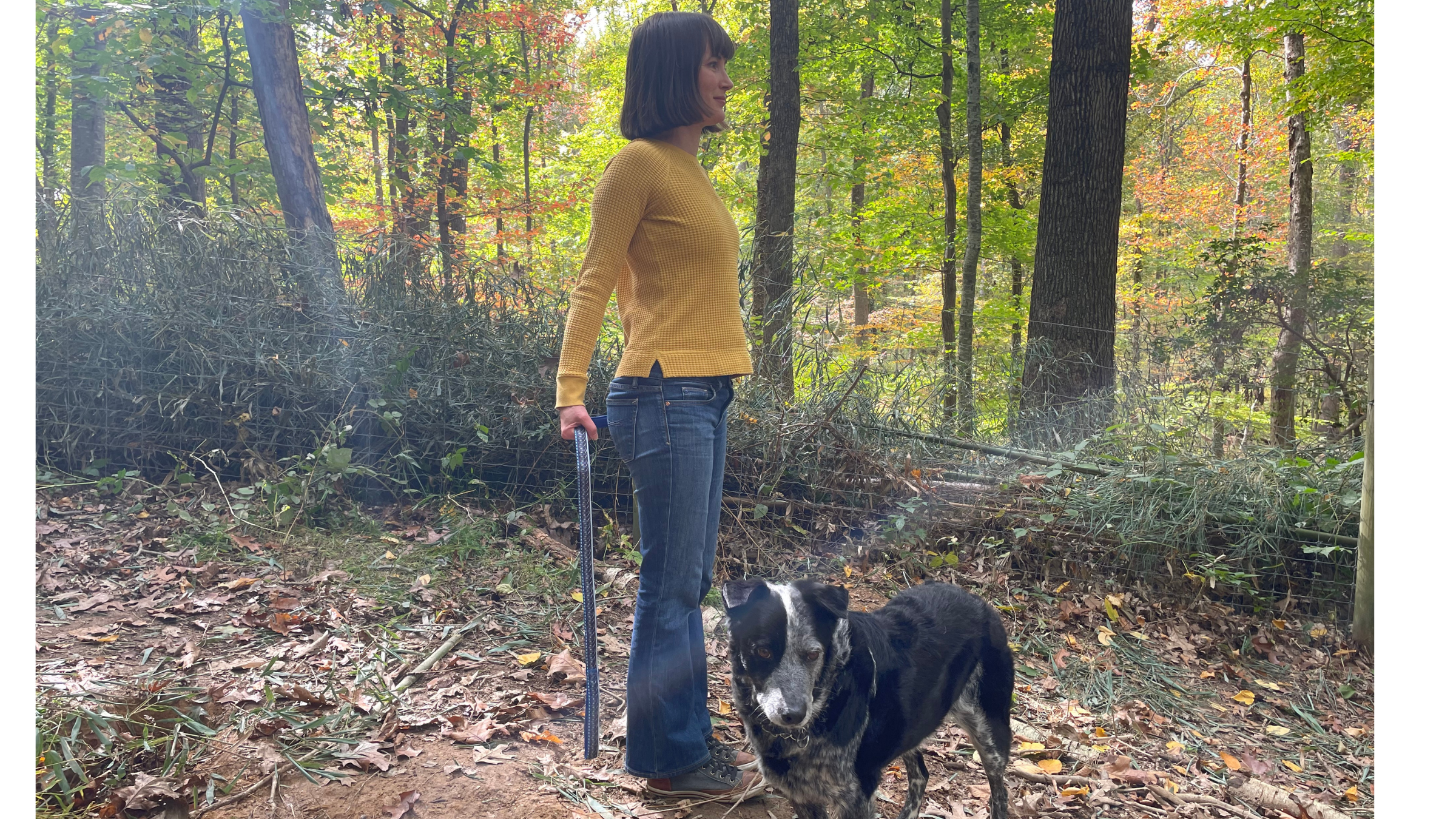
2. Mountain Pose With Bridge Arm Pulses
This exercise helps strengthen the muscles that keep your shoulder blades in place and reverses that forward-rounding back hunch that might result from holding a leash in front of you.
How to: Take a hold of a leash (or strap) behind your back with your palms facing forward, about shoulder-distance apart, or if your hands meet behind you, interlace your fingers behind you. Keeping your shoulders back and your arms straight, pulse your arms up and down several times, lifting them as high as is comfortable. Repeat for several rounds, then release.
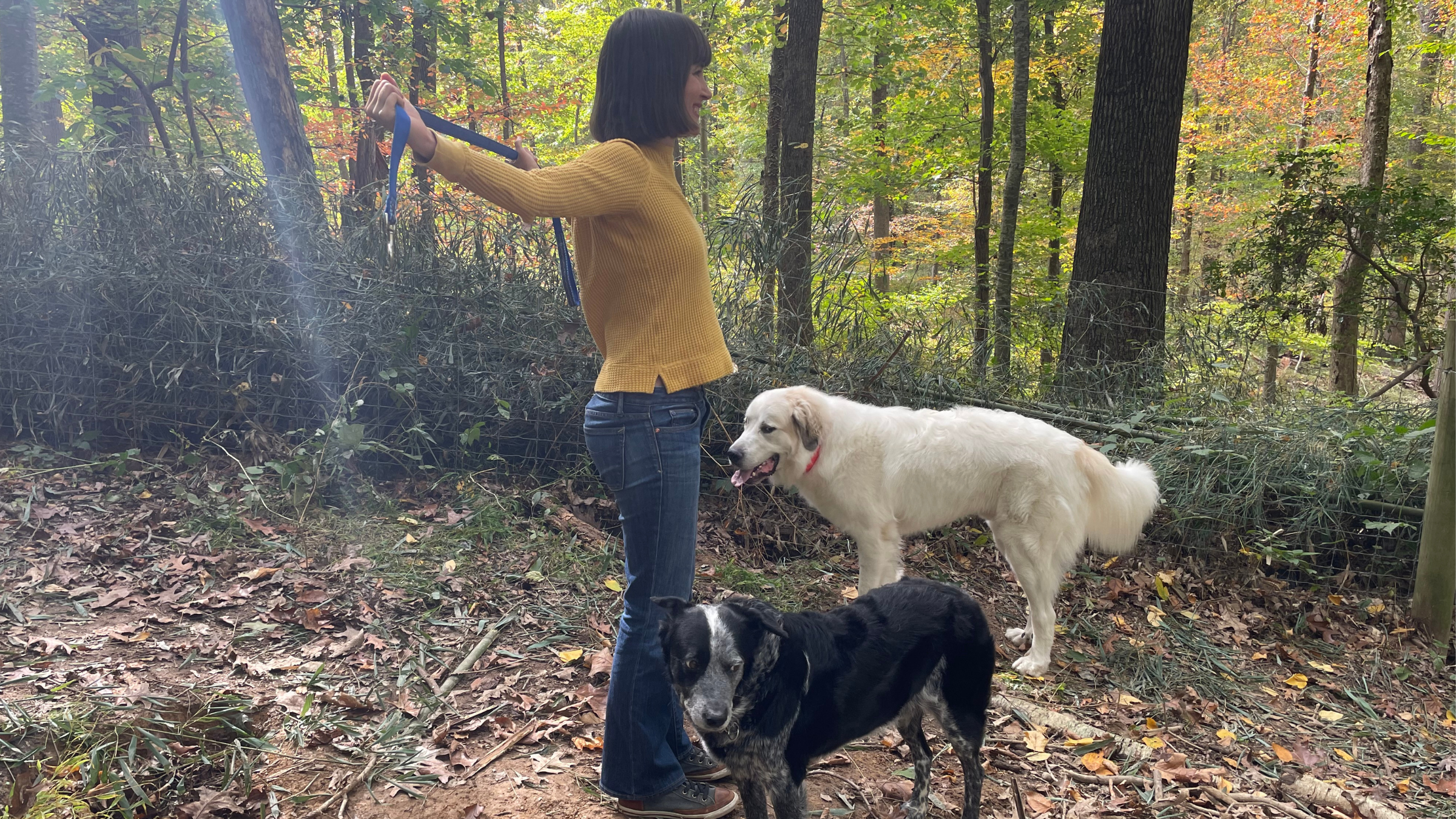
3. Shoulder Flossing with Leash
Dog walking takes your arms—and your attention—forward and down as you keep an eye on your dog, any potential obstacles, and tempting trash items. This exercise moves your body in the opposite direction, broadening across your chest and stretching the fronts of your shoulders.
How to: Reach your arms straight in front of your chest. Hold a leash between your hands, taking them slightly wider apart than shoulder-width. As you inhale, lift the leash overhead and lower it slightly behind your shoulders; as you exhale, bring it back in front of you, keeping your arms relatively straight the entire time. (If your arms bend a lot, move your hands wider on the leash.) Do this for several rounds.
You can also pause with the leash behind you, if that gives you a good stretch, for a few breaths. Then lower your arms and release the leash.
4. Criss-Cross Arm Stretch
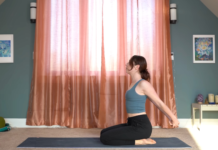
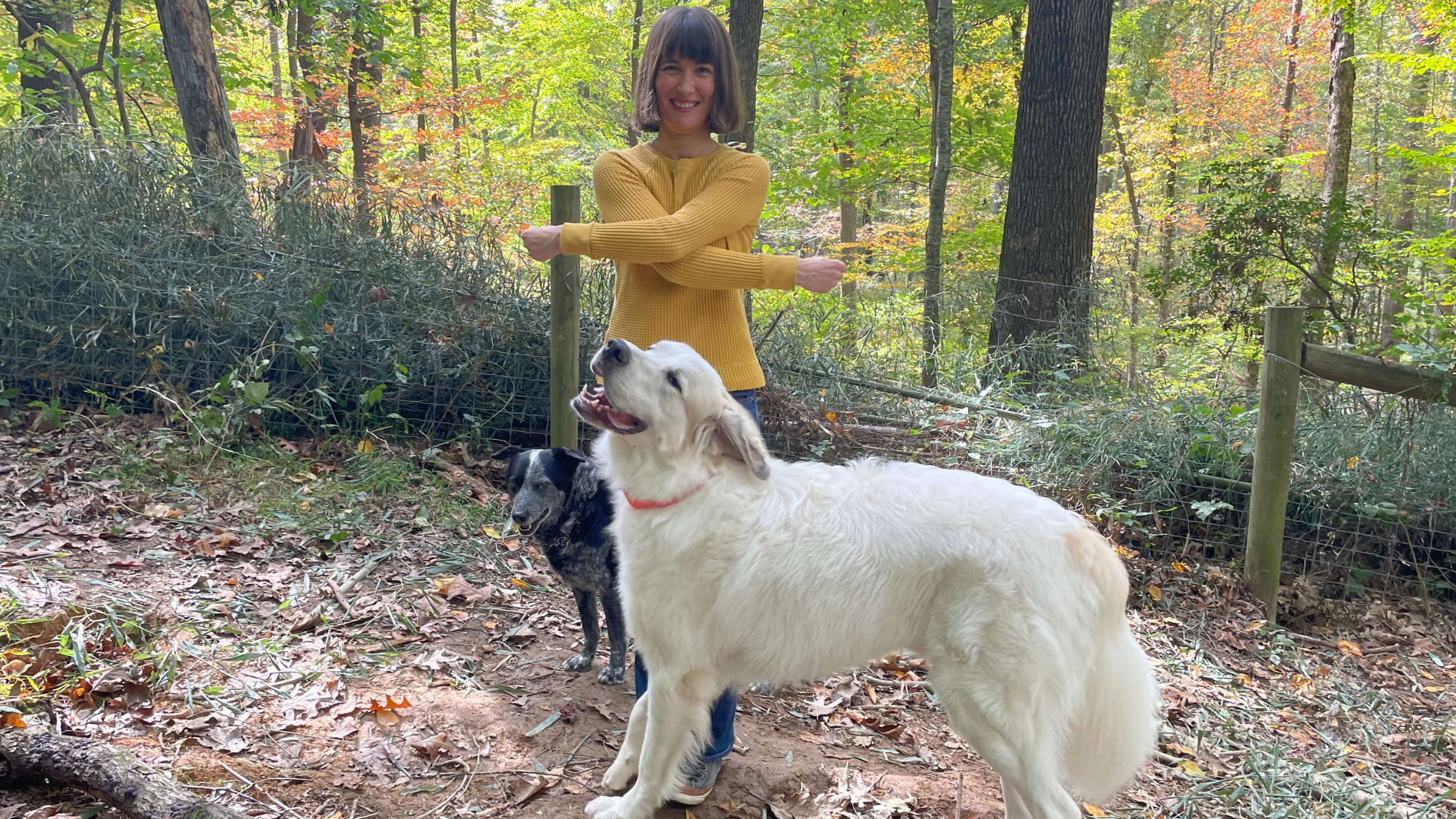
If you have more than one dog, it’s a good idea to be ready for that cumbersome moment when they criss-cross their leashes, going in opposite directions. This stretch allows you to practice that arm position by stretching the muscles along the backs of your shoulders and in between your shoulder blades.
How to: Cross your arms at the elbows in front of your chest. Your arms will be slightly bent. Make soft fists, then reach your hands away from each other as if you are trying to straighten your arms in opposite directions. Pause here for a few breaths, then release your arms and switch sides so the opposite arm is on top.
5. Mountain Pose With Heel Lifts
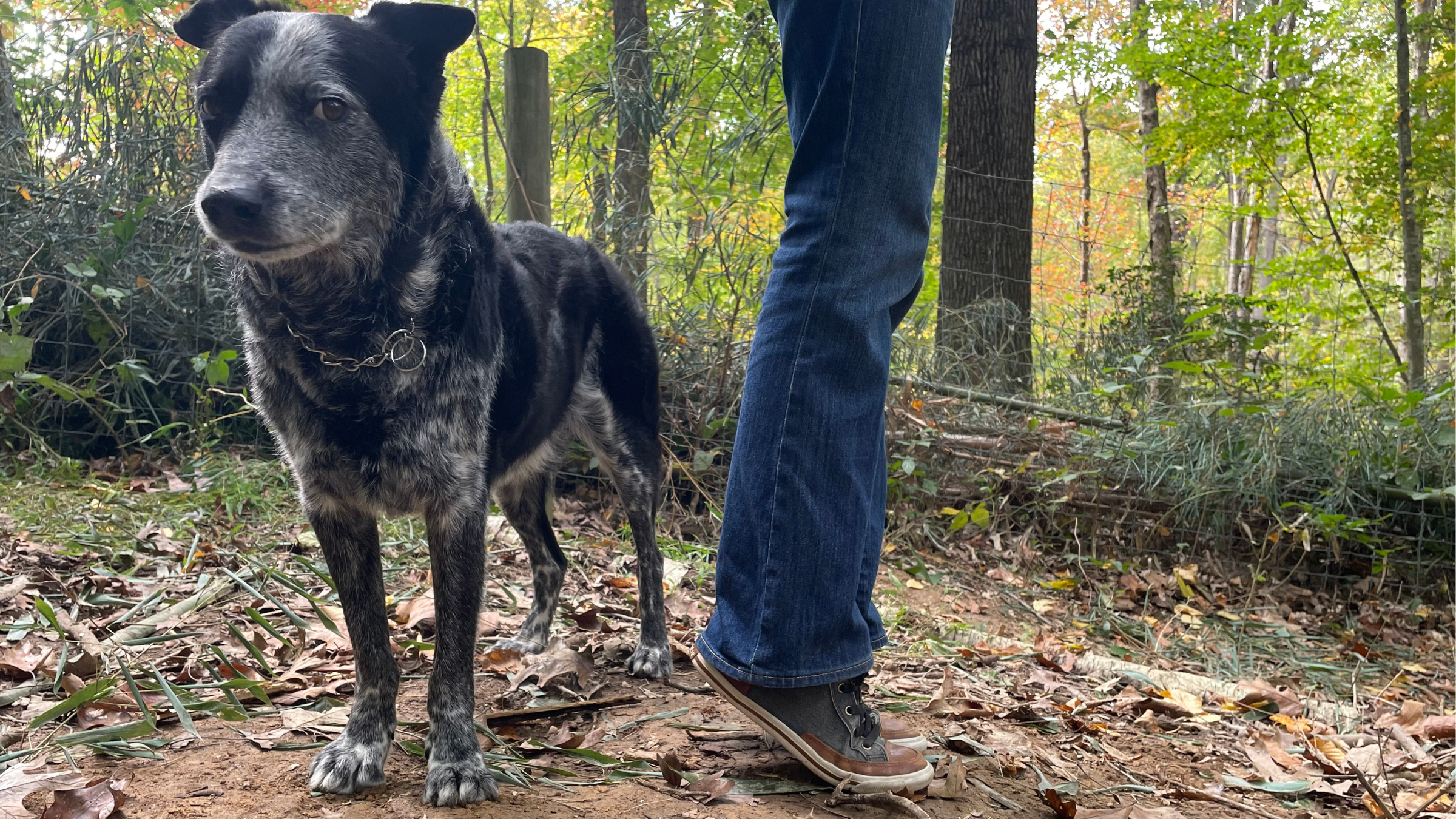
It‘s all too easy to twist an ankle if your dog pulls you sideways while you’re stepping off a curb or if you’re simply paying more attention to your furry friend than your own footing. Heel lifts help to strengthen your ankles and your balance.
How to: Stand with your feet together or hip-distance apart and your arms by your sides. Gaze at a steady point on the ground or, for more of a balance challenge, at a fixed point on the horizon. Press down with the balls of your feet. As you inhale, lift your heels; as you exhale, slowly lower your heels, without letting the ankles splay to the sides. Do this several times.
6. Chair Pose With Heel Lifts
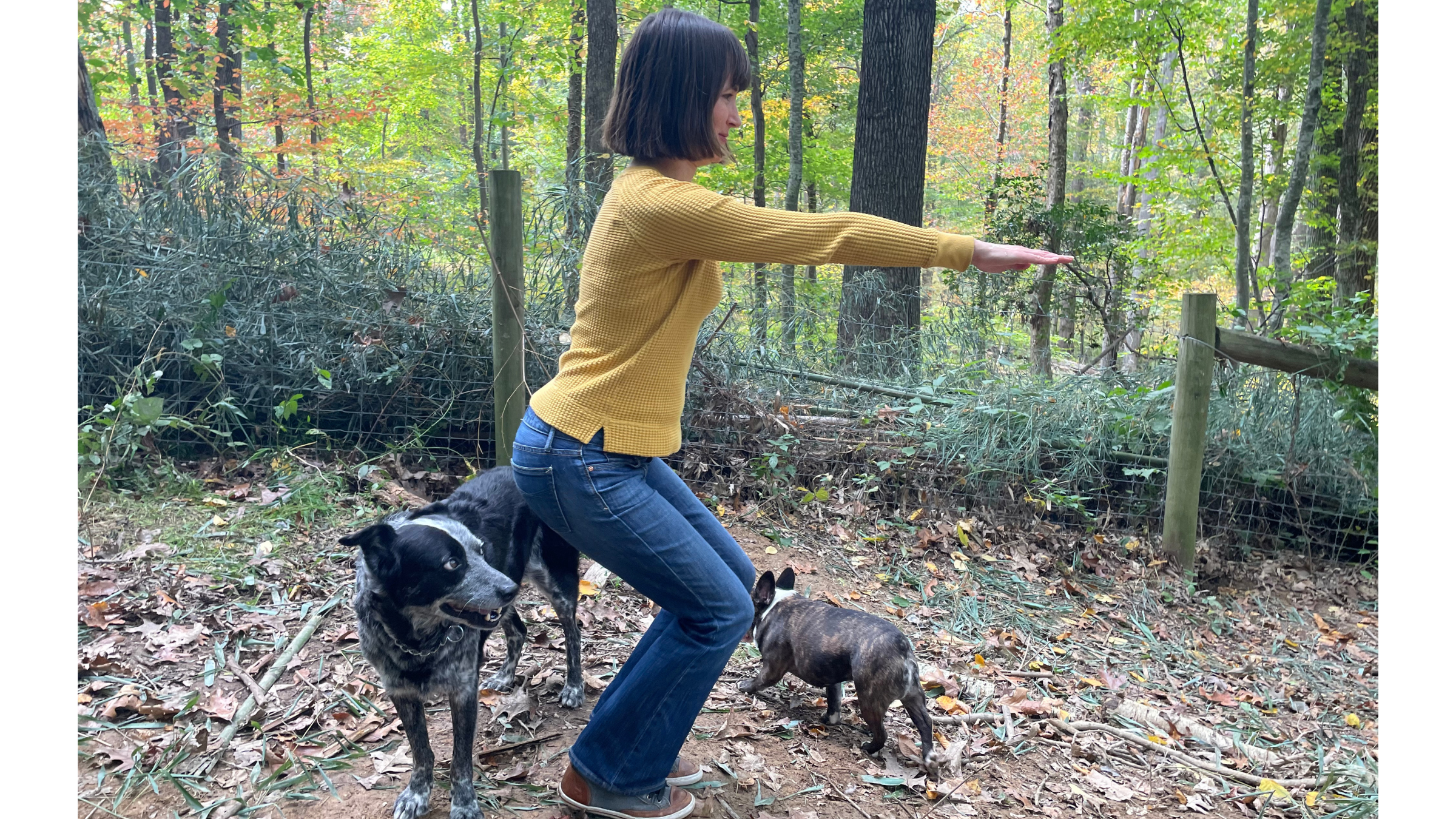
When your dog jumps on you unexpectedly, the last thing you want to do is take a tumble. This dynamic pose variation helps you cultivate leg strength and balance to prepare you to stand strong.
How to: With your feet together or hip-distance apart, gaze at an unmoving point in front of you. Press down into the balls of your feet, then lift your heels. Bend your knees, lean your chest slightly forward, sink your hips toward the ground, and reach your arms straight out in front of your chest in a Chair Pose variation. For more of a challenge, bend your knees more deeply to bring your hips closer to the ground, and try to keep your posture more upright instead of leaning forward, drawing your belly toward your spine. Pause for several breaths, then lower your heels and arms as you return to standing.
7. Squat
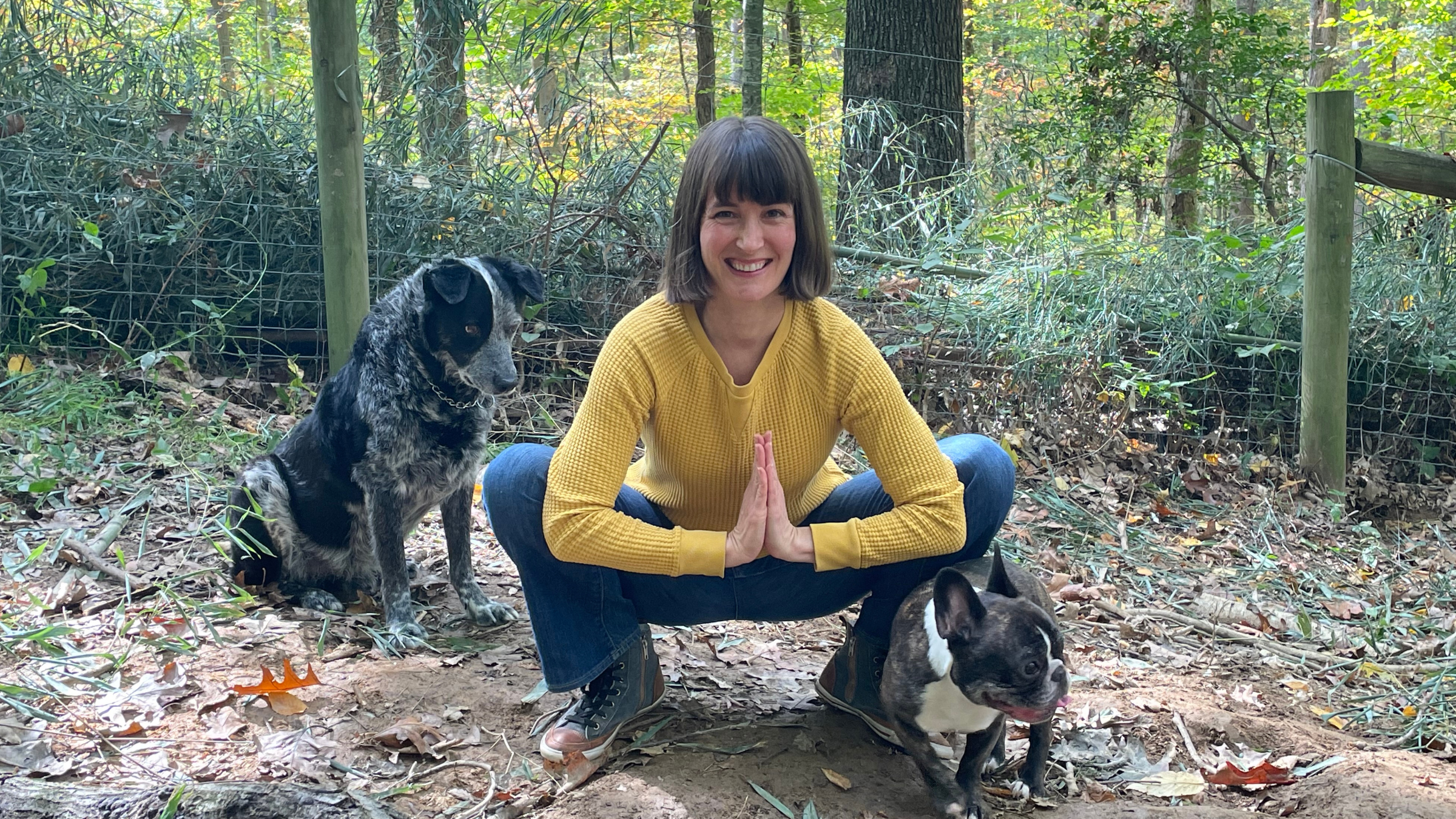
If your dogs have ever tried to take off, you know how important it is to be able lower your center of gravity fast so you can resist their pull. Get ready to drop down into a sturdy position by practicing Squat (Malasana).
How to: Stand with your feet a little wider than hip-width and turn your toes out slightly. Bend your knees and lower your hips as far as you like, tracking your knees over your toes. Bring your elbows inside your knees and your hands together in prayer position in Squat. Broaden across your chest and lift your heart space. Stay here for a few breaths, then press your feet into the ground to rise back to standing.
8. Pyramid or Side-Stretch Pose Variation
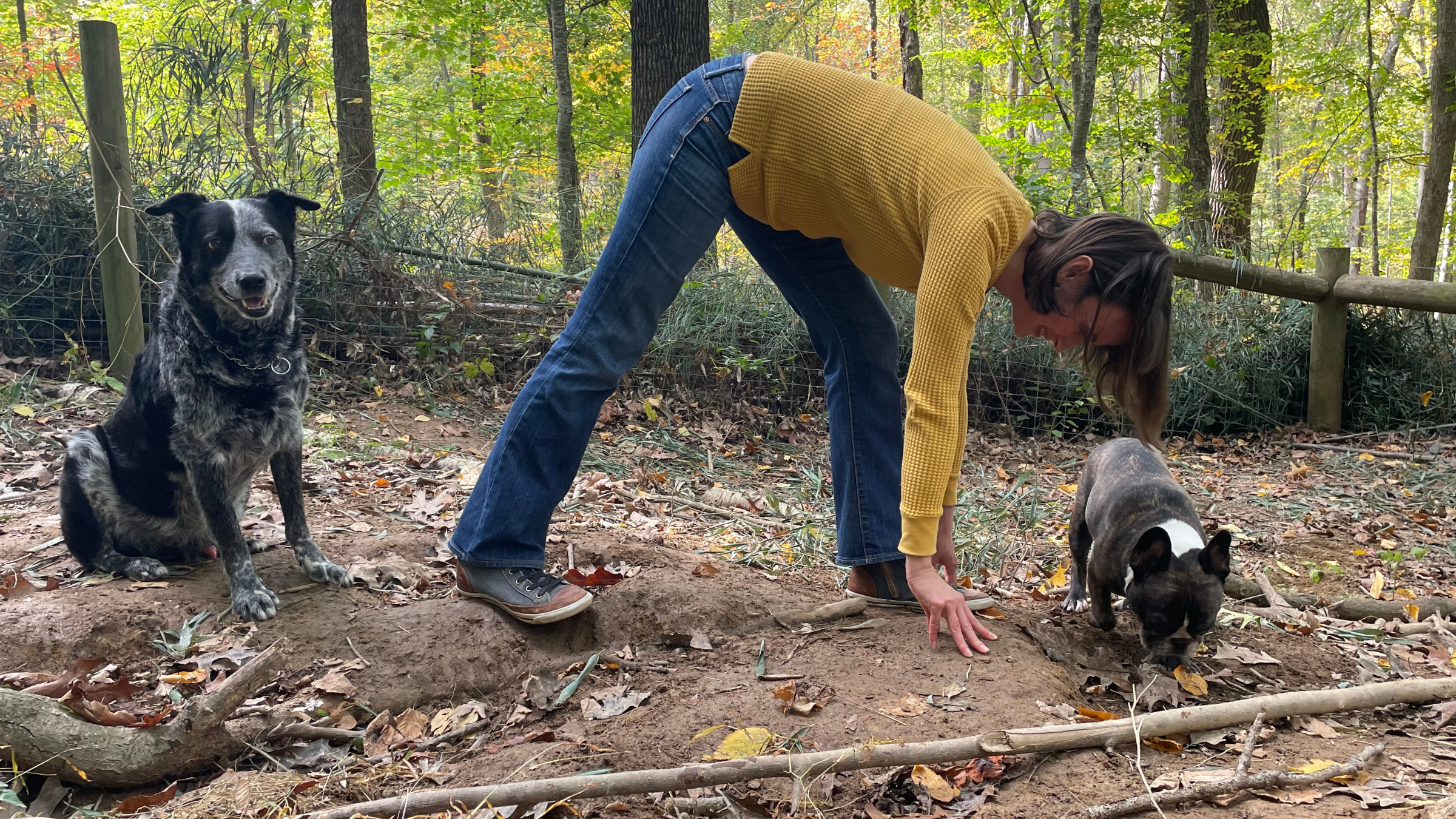
Dog walkers do a lot of forward folding—we bend down to pet our dogs, to pick up after them, to take their harnesses on and off, and to pry things that they really shouldn’t be eating out of their mouths. Pyramid Pose (Parsvottanasana) warms up your hamstrings and mobilizes your lower back to help you do all that with greater ease.
How to: Press down through your left foot and step your right foot around 12 inches behind you. Place your hands on your hips. Hinge from your hips and fold your chest forward as much as is comfortable, or about parallel to the ground. Bend your front knee if you like. Stay in Pyramid Pose, petting a dog if you like, or drape your upper body over your front leg and let your head relax for more of a more intense stretch. To come out of the pose, walk your hands up your front leg. Then change sides.
9. Speed Skaters
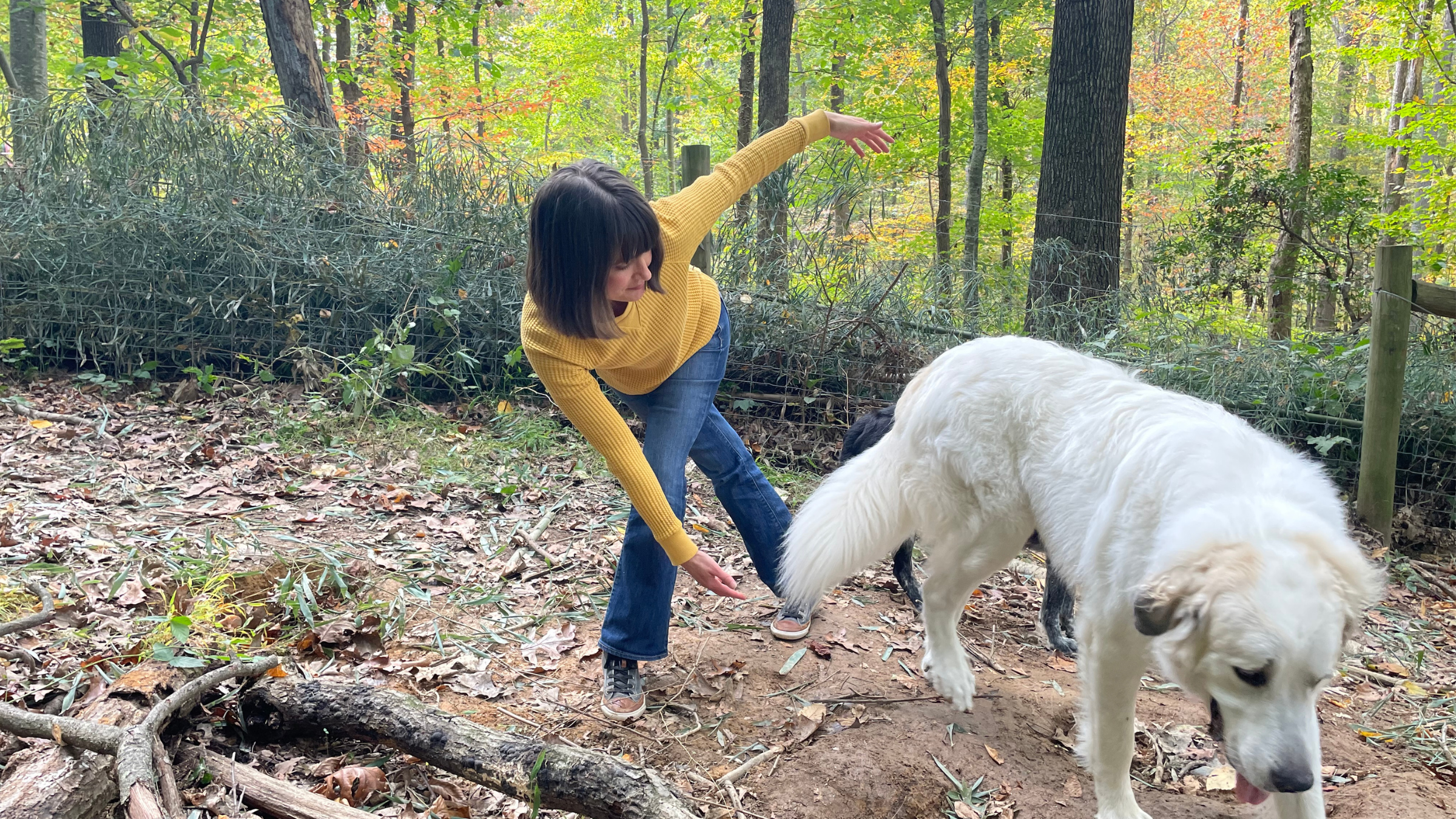
Dog walkers need to be able to preserve their stability, and also change speeds and directions on the fly. You might need to dart sideways out of the way of another walker who isn’t paying attention, or quickly escape an approaching off-leash dog. Use this move to practice fast footwork and energize your legs.
How to: Standing with your feet together, hinge from your hips and reach your chest forward. Cross your right foot behind your left, planting the ball of your right foot as far outside your left foot as feels comfortable. Bend your left leg slightly. Reach your arms toward the left, then step your right foot back to the starting position. Then cross your left foot behind and outside your right foot and reach your arms toward the right. Move from side to side several times, building momentum and going as slowly or quickly as you want. Then return to standing.
10. Dancer’s Pose Variation
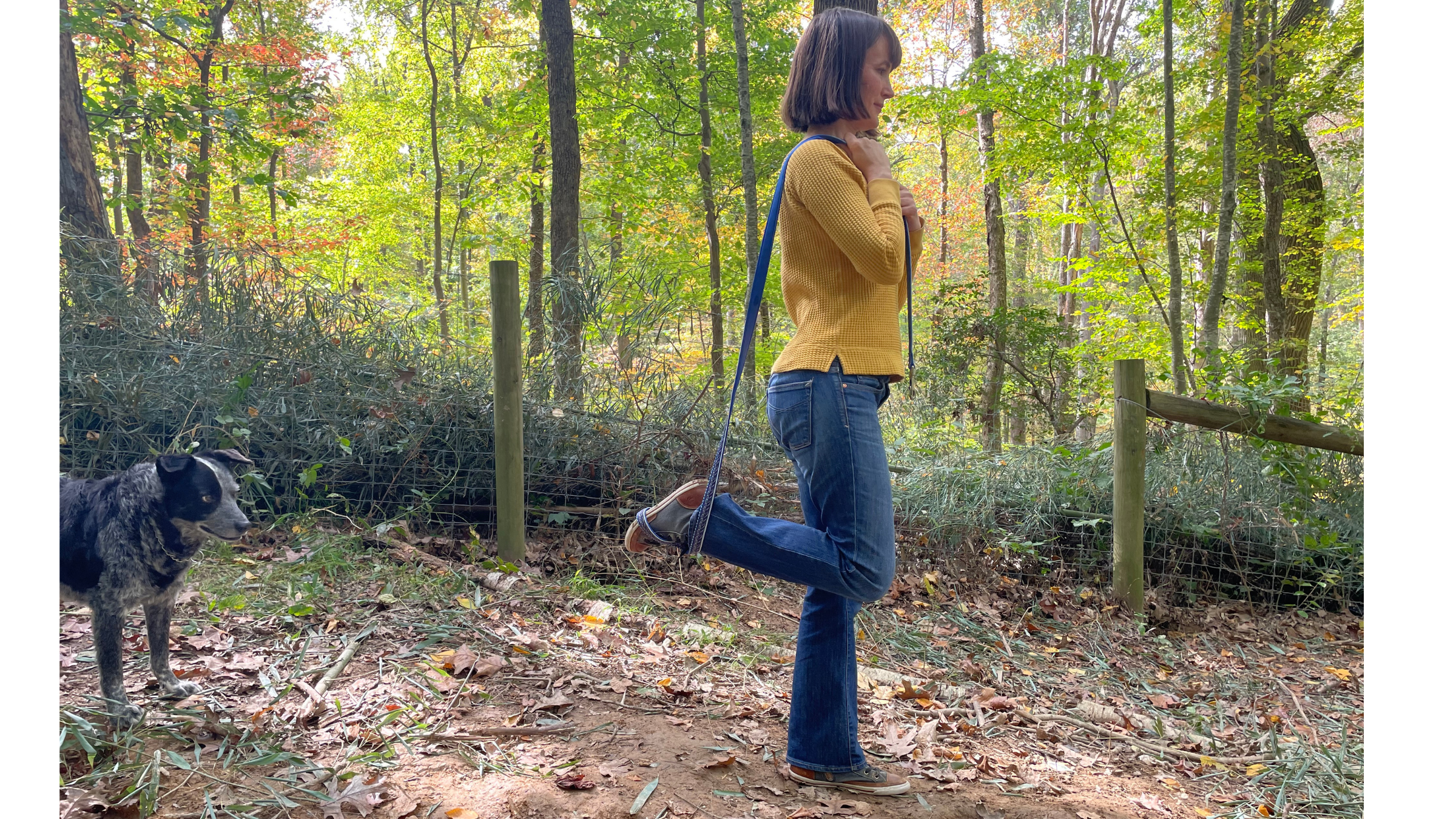
The front of your thighs might be feeling the work of the previous poses—and months or years of dog walking. Dancer’s Pose (Natarajasana) provides a stretch for the quadriceps, as well as a backbend that gently counterstretches all the forward reaching and bending of dog walking. It also gives you another chance to strengthen your balance.
How to: Shift your weight into your left foot. Bend your right knee and draw your right heel toward your buttock. Loop your leash or strap around your right foot or ankle, draw the strap over your right shoulder, and hold it with one or both hands in Dancer Pose variation. Stay here for a few breaths, or use both hands to lift the strap overhead and press your right shin behind you, arching into a backbend. Draw your elbows toward each other and lift your chest. Lower down and change sides.
11. Hand Stretch
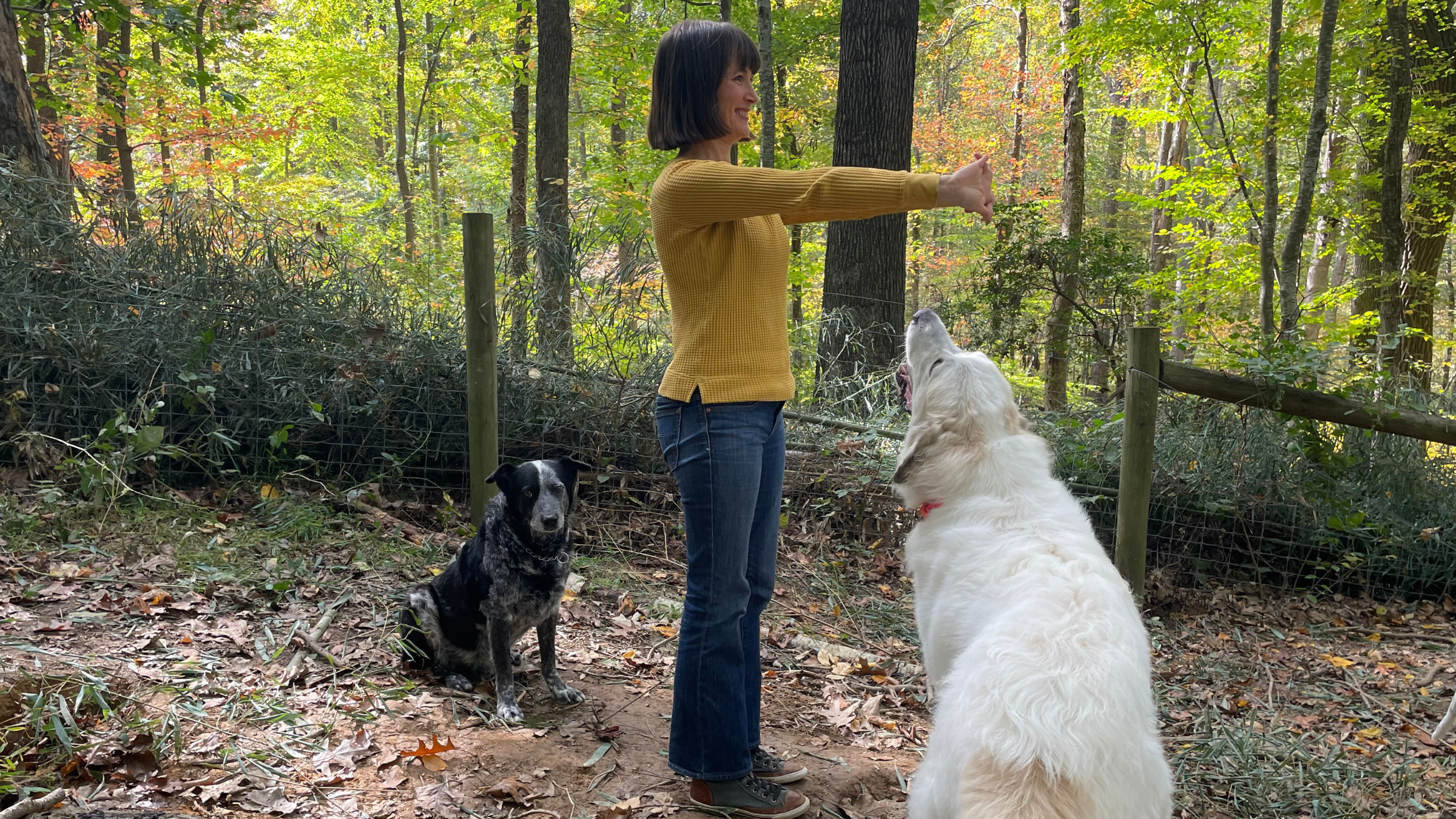
Do you find yourself holding onto the leash for dear life? All that gripping can create tightness in the hands and wrists. Here’s a way to relieve that tension.
How to: Reach your arms in front of your chest and interlace your fingers with your palms facing forward. Straighten your arms as you press your palms away from you. Stay here for several breaths, or lift your arms overhead to add a full-body stretch. Then release your hands and lower your arms by your sides.
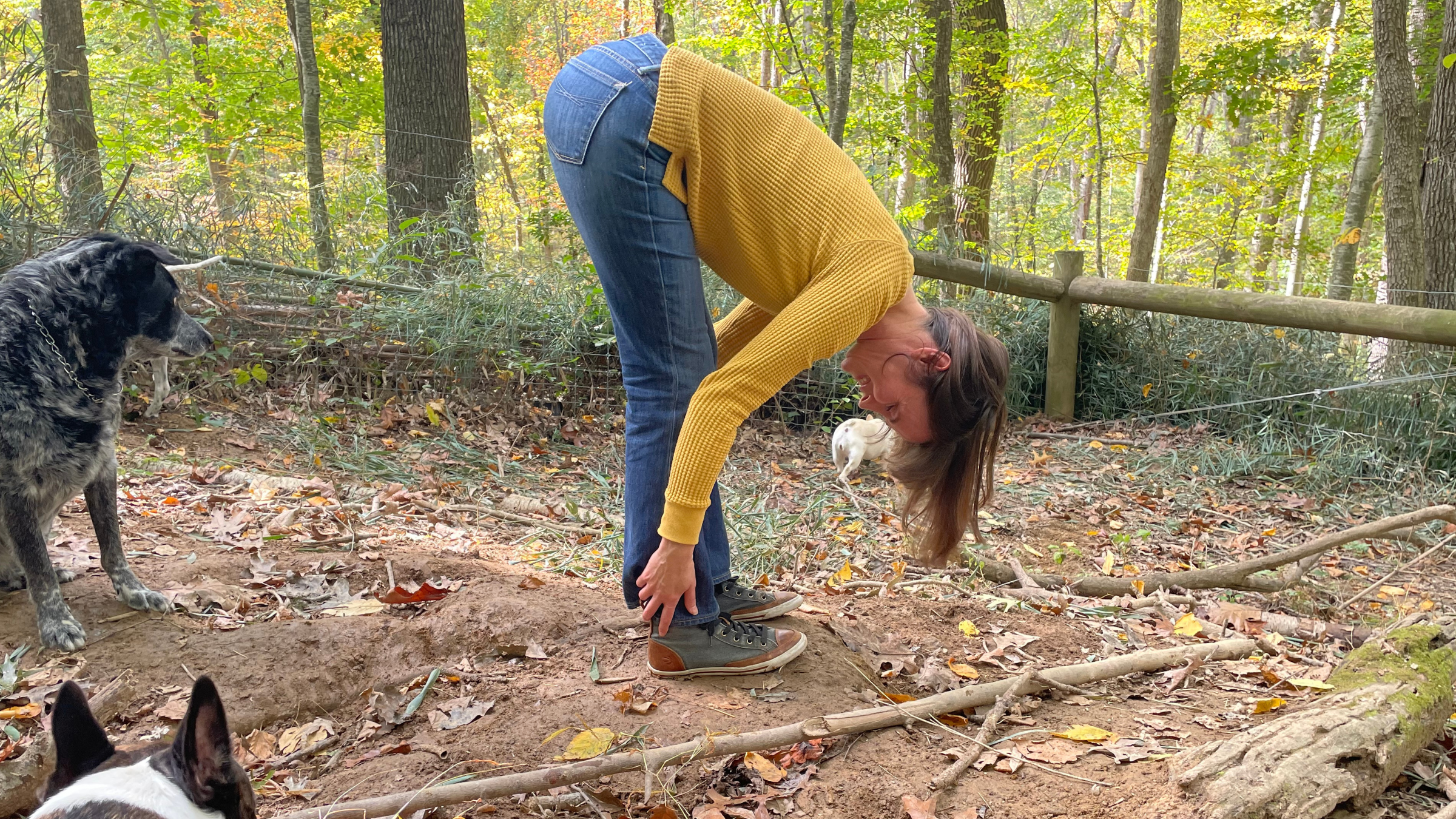
12. Standing Forward Bend
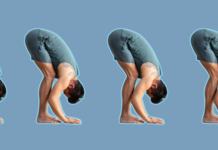
In addition to stretching your back and hamstrings, Standing Forward Bend (Uttanasana) can also be mentally relaxing, allowing you to breathe out the stresses that come with daily life…and dog walking.
How to: Plant your feet hip-distance apart. Fold forward, walking your hands down your legs and bending your knees as much as you need. Place your hands on the ground or your shins in Standing Forward Bend, grasp opposite elbows, or let your arms hang toward the ground in Rag Doll. Relax your neck. Pause here for several breaths, then walk your hands up your legs to return to standing.
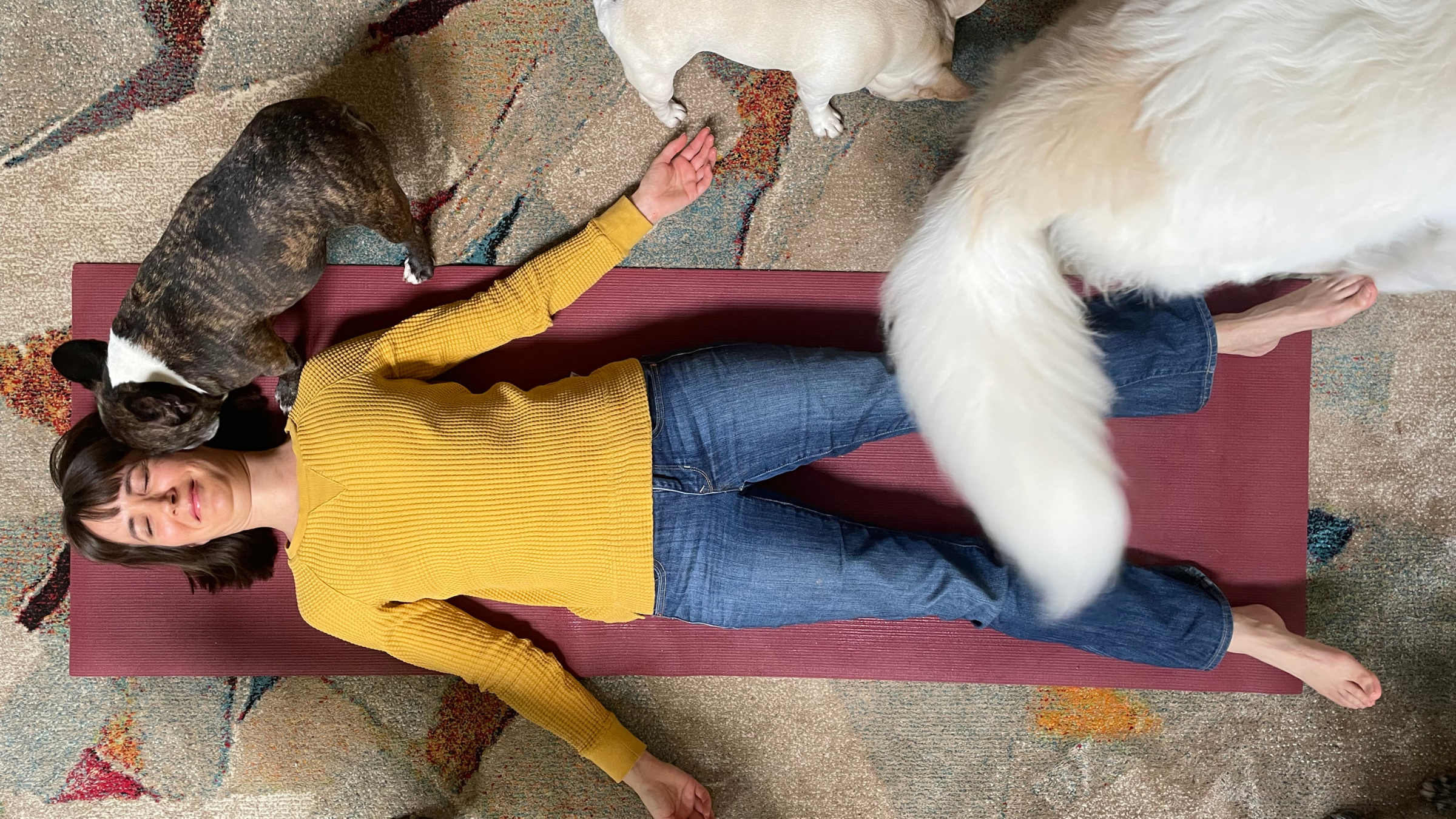
13. Savasana
After you’ve returned home from your dog walk, give yourself several minutes of well-deserved rest. You made it!
How to: Recline on your yoga mat, with or without dogs. (Only you know if they will enhance your relaxation or distract you from it!) Sigh out any remaining tension. Allow your shoulders to soften toward the floor with your hands out to the sides or resting on your body in Savasana. You don’t need to be on guard anymore. Give yourself over to relaxation, the way dogs know how to do when the fun is over. For a few minutes, surrender your weight to the earth, and let yourself be a big warm animal, gently breathing.