

Published November 20, 2026 05:55AM
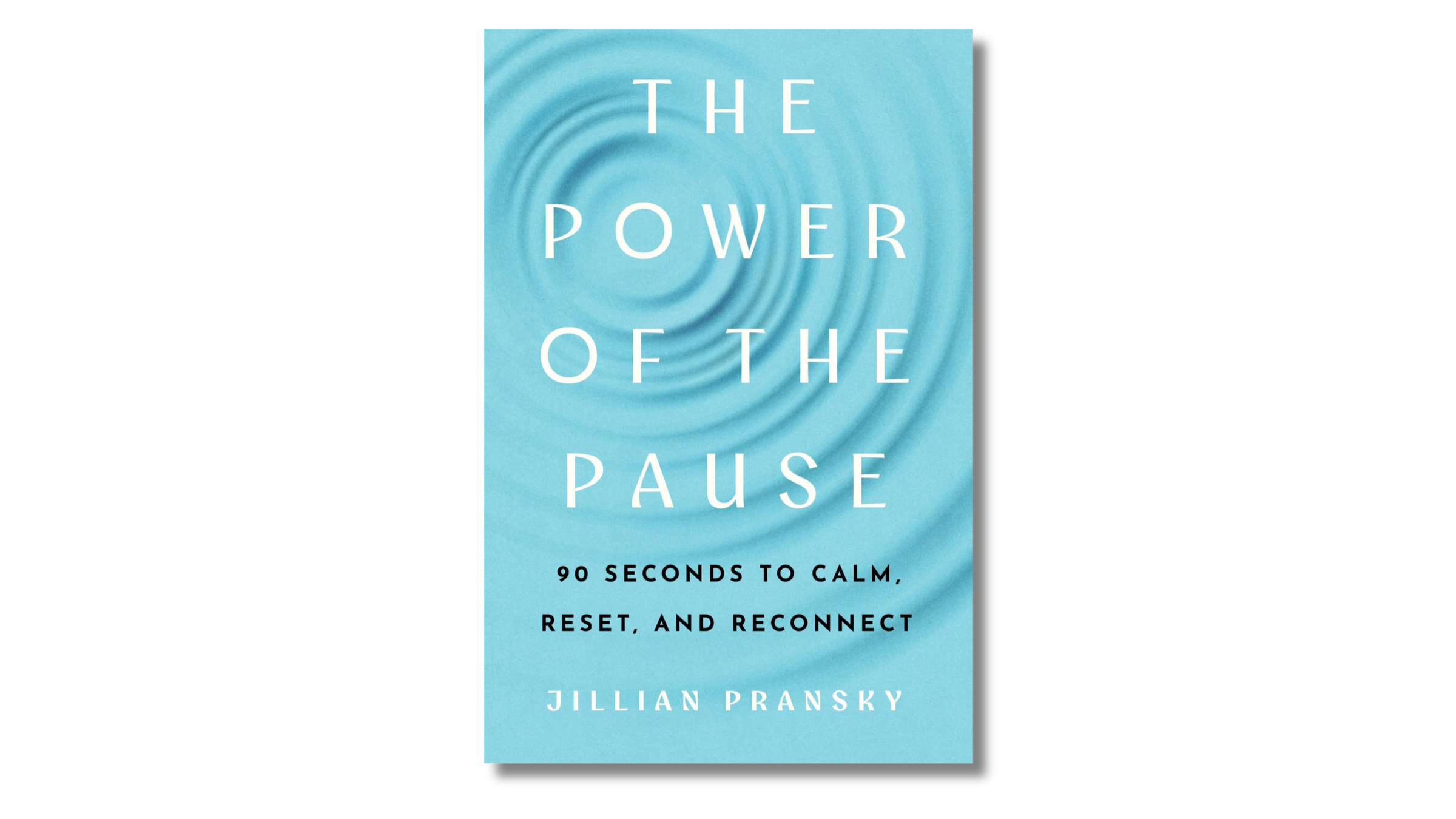
It’s one thing to be know you need to slow down in life—to slow your thoughts, your breath, your attention, your scrolling, your ambitions, even your assumptions. It’s an entirely separate thing to actually know how to slow down. Longtime mindfulness teacher, yoga therapist, and author Jillian Pransky addresses that disconnect in her recent book, The Power of the Pause: 90 Seconds to Calm, Reset, and Reconnect. In its pages, she explains exactly how pausing can alchemize everyday interactions in ways you’ve probably never considered. The following excerpt from the “Pausing in Our Discomfort Zone” chapter shows how slowing down can help you experience a more nuanced understanding of not only yourself but those who approach the world from a (dramatically) different perspective than you.—Renee Marie Schettler, Editor in Chief, YJ
Neuroscientists tell us that life changes at the end of our comfort zone. The ability to build new neural pathways is called neuroplasticity, and it happens not only from repeating “new” behaviors, but also when we reach beyond what we know and explore new territories. Whether learning a new skill or facing a fear, your brain actively creates new neural connections, enhancing cognitive abilities, memory, and overall brain health.
However, we often decide in advance how things will go, or assume we know how another person is feeling. These assumptions can keep us stuck in patterns of behaviors or relationship dynamics that simply strengthen our resistance to change. When we remind ourselves that we have space to change, we often begin to see that there might be more going on than we think. We can open up to paradox, contradiction, and complexity in ways we were not able to before.
We may realize that no way is the only way. That we don’t need to make anything one way. And that things don’t always have to be precisely the way we want them.
Pausing helps us create support and safety for ourselves, giving us the confidence and courage to go beyond our comfort zone. Gradually titrating, step-by-step, into new territory allows our brain to integrate these changes, leading to our personal growth and evolution.
Curiosity: The Cornerstone of Connection
Dr. Gail Parker, psychologist, international presenter, and author of the self-care book Restorative Yoga for Ethnic and Race-Based Stress and Trauma, emphasizes that curiosity is essential for opening space in our conversations for connection, particularly among disparate groups of people.
She says, “You can make someone else feel safe when you are curious rather than judgmental, assuming, or indifferent. In the face of listening to others, especially those we don’t know so well or those from another culture, it’s important to remember that we can’t know everything about others or every culture, but what we can do is be curious about others.”
Listening includes being aware of ourselves and how we feel while conversing with another. In this way, we can learn to notice our own expectations and emotions, stay curious about ourselves, and hold space for ourselves and the other person. Dr. Parker suggests Pausing to check in with ourselves during conversations, with questions like:
• Am I truly listening?
• Am I making assumptions?
• Do I have expectations?
• What am I feeling?
If we can stay aware of ourselves and curious about our feelings, we won’t get stuck in what we are feeling. “A key to remember is that if we can notice when we are in the stress response, we are not stuck in it,” she says.
Hala Khouri, author of several books, co-editor of Practicing Liberation: Transformative Strategies for Collective Healing and Systems Change, and co-founder of the social activism organization Off the Mat, Into the World, also emphasizes curiosity as an essential cornerstone for connection in difficult conversations.
Khouri, who is also a therapist, yoga teacher, and somatic experience practitioner, contends that curiosity is not only a portal for going deeper into our conversations, but is also the key to helping us know when it is time to leave a conversation—or not have one at all.
“When we are in conversation with another, I think it is important to ask ourselves, can I be curious right now? If we can’t get curious, that might be a good indicator that we need a break or need to remove ourselves from the conversation or situation, if that is an option,” she says.
The main point is that we need to stay connected to ourselves so we can sense our internal state. True listening requires curiosity. If we can’t be curious, that’s essential information for us. And, when we are highly activated in the stress response, we cannot simultaneously be curious. That part of our brain is not accessible when we are in fight-or-flight mode.
Whenever you notice you can’t be curious, take a moment to Pause and care for yourself until you can get your curiosity back.
You May Be Wrong, But You May Be Right
If we could consciously choose to enter conversations with the intention to Listen—to be curious—to understand the other person’s experience a little bit better, maybe even put ourselves in their shoes, we might be able to learn from people in our lives whose world views are different from ours or even opposed to ours.
It can be helpful to remember that leading with curiosity rather than certainty doesn’t automatically mean that someone else is right. Or that we are wrong. But it opens a space in which we might connect rather than shut down to each other. The goal is not necessarily to reach agreement with others, but to understand each other. For many, this is a radical idea.
Dr. Parker emphasizes that harmonious relationships require awareness, not agreement. In fact, insisting on an agreement can be a hostile act. She says that the search for agreement can often lead to arguments because it invalidates the other person’s perspective, whereas the search for understanding dissolves the barriers that result in discord and harm and allows us to get to know one another.
She explained it like this: “If I need to be right, then I’m not going to be able to listen to you unless you are in agreement with me. And, if I need to be right, it means either you have to agree with me or you’re wrong. The need to be right means that somebody else has to be wrong. Who likes to be wrong? Nobody. Nobody wants to be made to feel like they’re wrong. Making someone wrong will most likely push them into a protective stance. But, when we approach someone with curiosity, it creates a whole new opening to make a connection with each other. We might say to them, ‘Tell me more…I’m really interested in that…I never thought about it that way.’”
When we are in difficult or uncomfortable conversations, can we create space to listen to each other with our differences? Can we create space for communication and connection for its own sake rather than for someone to be right and another to be wrong? How can we learn to understand each other rather than agree? How can we treat each other (and ourselves) better while learning to better understand each other and our different perspectives?
Pausing with the intention to prioritize Listening before speaking helps us regulate our nervous system so that we can not only create this space, but we are also less likely to activate someone else’s stress response. Khouri says, “Imagine two nervous systems on high alert trying to have a conversation, it’s almost impossible! Especially if both parties are vying for being right. If you want to disrupt that pattern, you need to figure out how to self-regulate; part of that is about tolerating the discomfort of disagreeing with someone or being in conflict.”
“One of the most interesting things I’ve discovered in my work, is that when people feel really, really listened to, they themselves are more willing to try to understand the other person, even when they don’t agree,” continues Khouri. “Through this type of listening, I’ve seen some people with very strong convictions and beliefs loosen their grip on their own fixed ideas and start to open up their perspective or get greater understanding and empathy for a different perspective.”
If we can Pause during a contentious situation and shift into curiosity, we might stay in the conversation long enough to ask questions that help us get to know someone, and listen in a way that makes them feel genuinely heard. When people feel heard and acknowledged, they are more likely to feel safe enough to listen in return. If we want to be heard and understood, it often starts with ensuring that the other person feels heard first. This of course takes practice.
Excerpt reprinted with permission from The Power of the Pause by Jillian Pransky © 2026. Published by Union Square & Co., an imprint of Hachette Book Group.