
…with a little help from your props.
(Photo: Andrew Clark; Design in Canva)
Published October 1, 2026 05:55AM
A supported yoga practice—aka one modified with props—can be as essential as a full-on power flow. Yoga Journal editor, certified teacher, and longtime student Calin Van Paris shares some of YJ’s favorite yoga poses to approach with a little help from our props.
Some days ask that you adjust your yoga poses to suit your needs, whether for body, mind, or spirit. Just as one morning might demand a power vinyasa flow, another might ask you to slow things down with some restorative shapes. Those days when calmer moments are in order, it can be easiest to adjust your favorite shapes to reduce the amount of effort you exert rather than seek out an entirely different poses. These supported yoga poses can be more profoundly restorative than you might imagine.
Yet even in yoga, asking for help can be hard. Fortunately, yoga props are notoriously understanding, accessible, and always eager to support your practice. Your bolster, blocks, straps, blankets, and more can become your BFFs when your body needs some downtime.
5 Supported Yoga Poses for When Your Body Needs a Break
The best part of finding supported variations of yoga poses is allowing space to make the shape your own. Modify as needed by adding or subtracting props to find your unique level of ease and release.
1. Supported Easy Pose
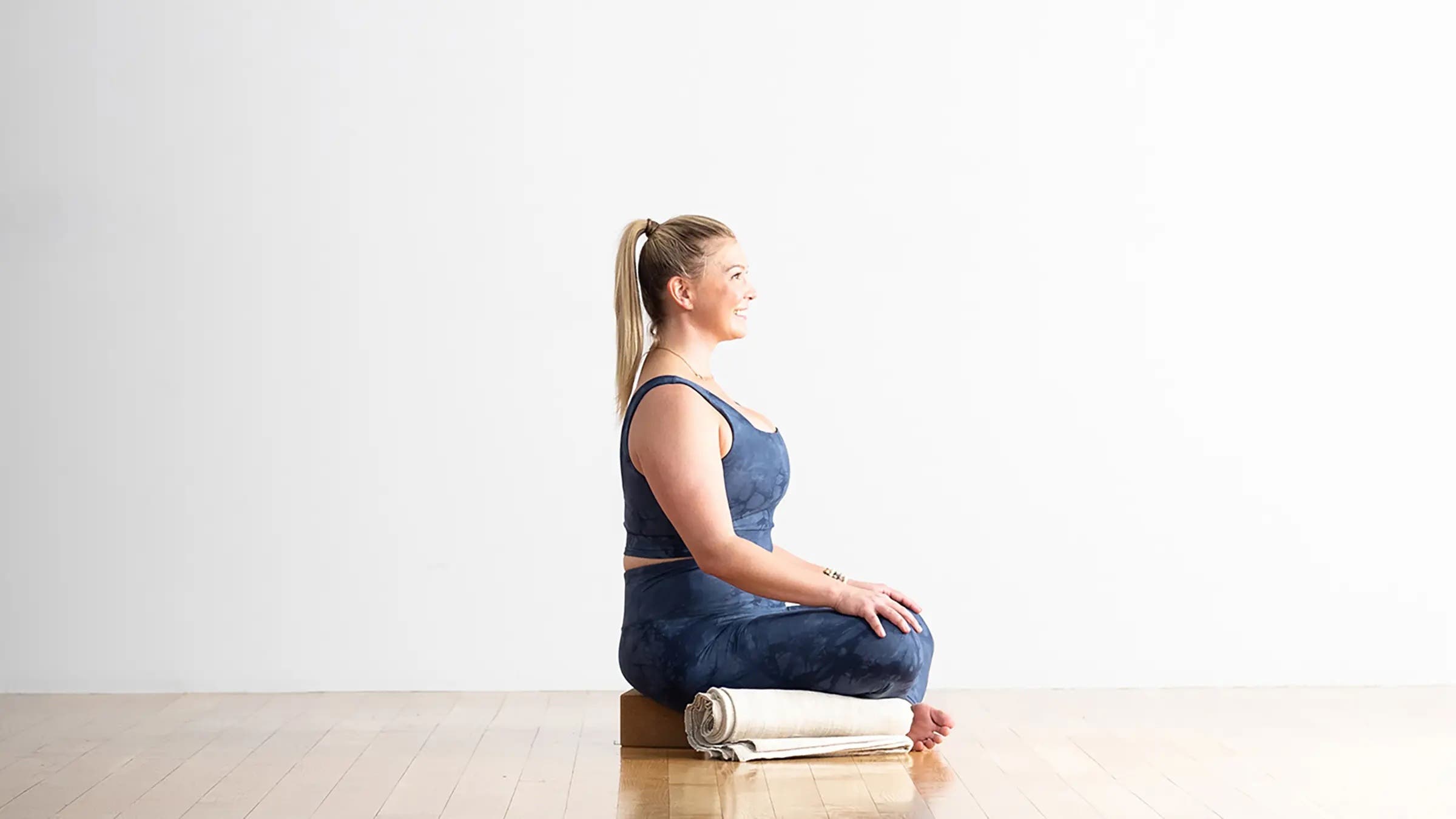
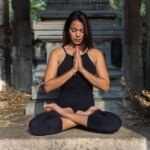
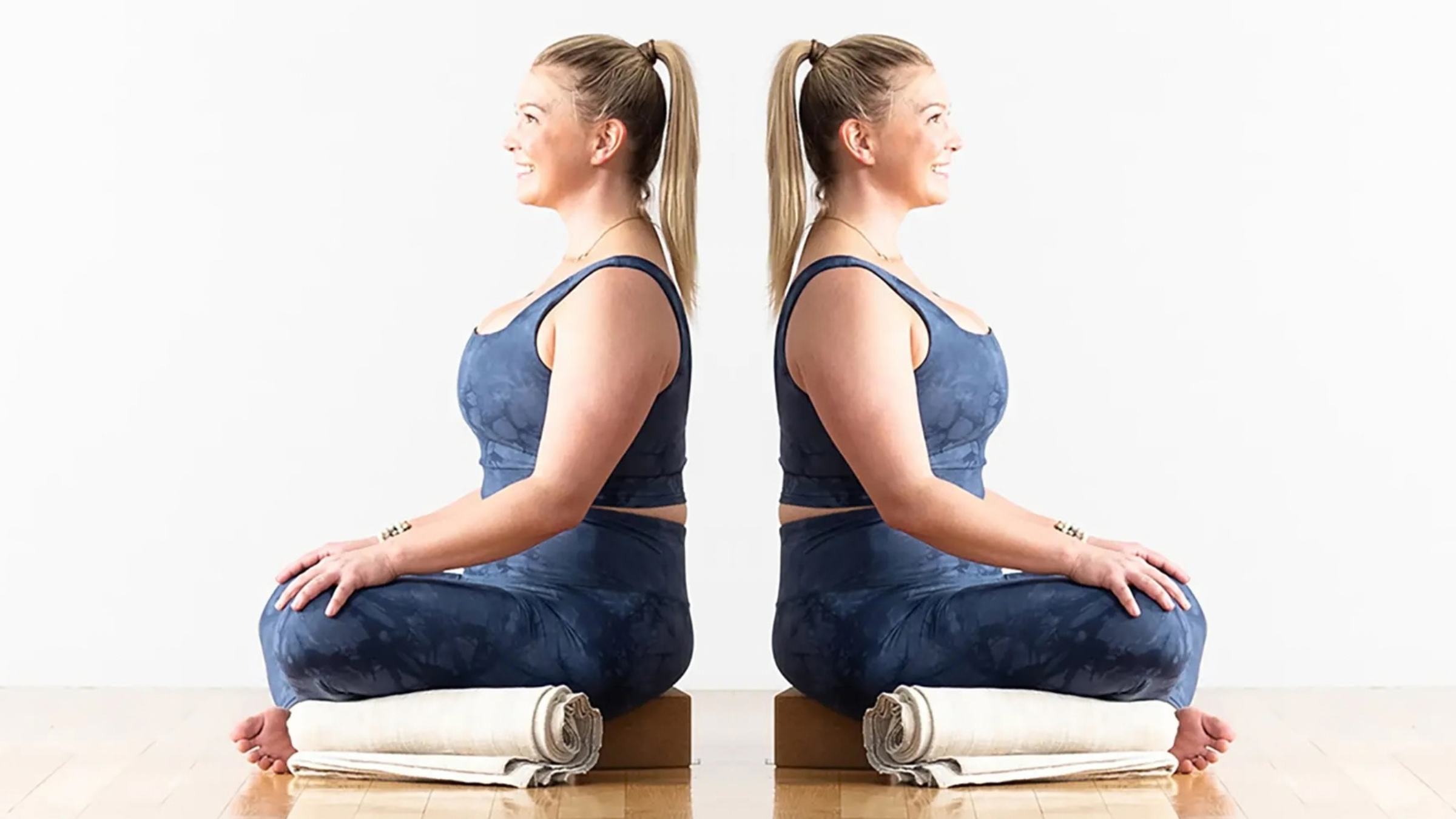
Taking a simple seat in Easy Pose might seem easy (it’s in the name), but it can actually be a challenging posture. The meditative shape asks a lot of your joints, which means finding the solace you seek can be more effortful than relaxing.
On days when you want to sit cross-legged with a straight spine and less stress, perching yourself on a block or bolster can make the pose more accessible. For an even comfier experience, tuck a rolled up blanket or towel (or even another yoga block) under each knee and let gravity do the work for you. Now you’re free to focus on your deepest inhalations and exhalations.
2. Supported Fish Pose
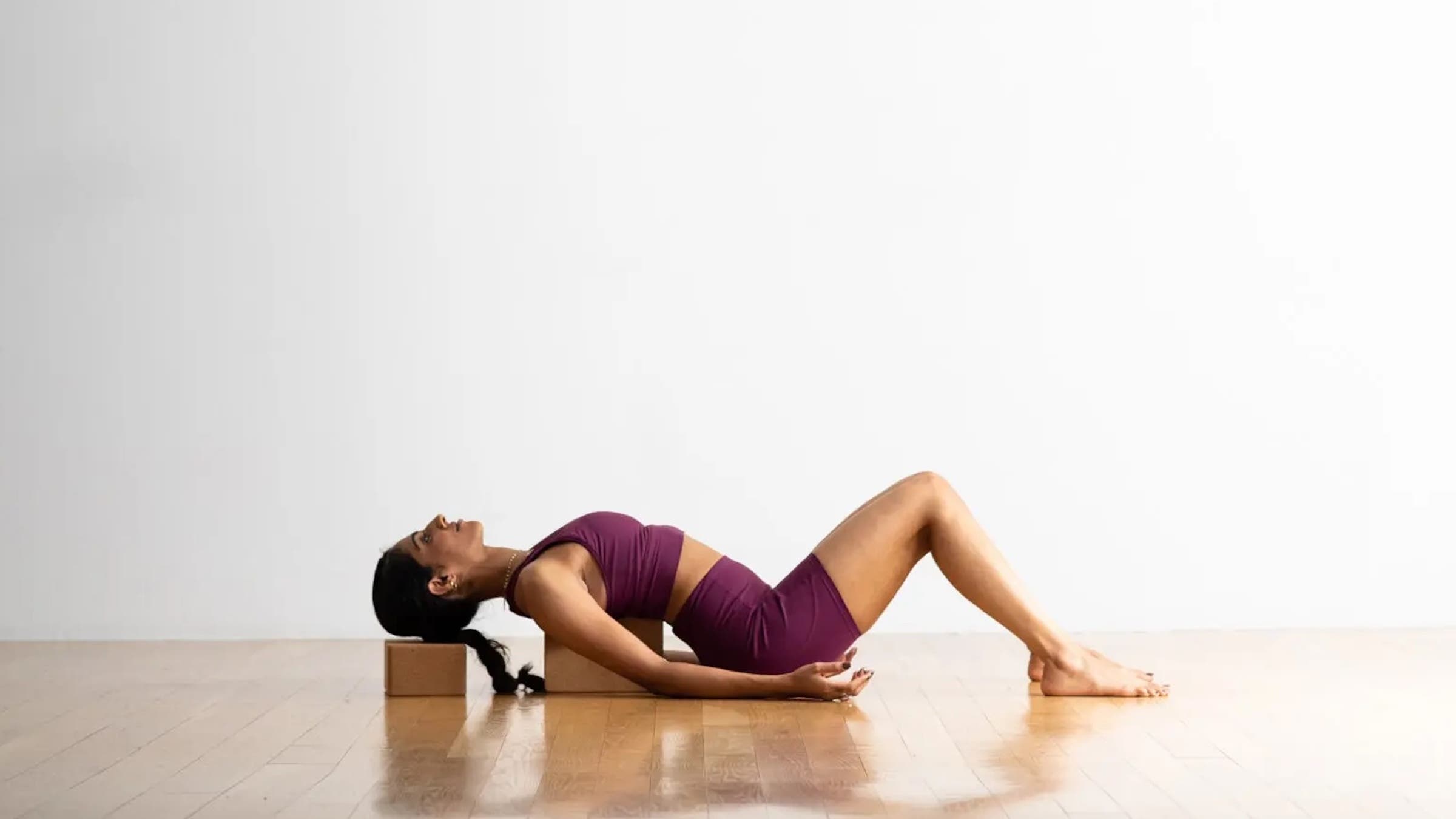
Opening your heart is simpler with the right support. This variation of Fish Pose invites you to place yoga blocks (or pillows or bolsters) beneath your head and upper back, allowing you to more effectively—and passively—broaden across your chest.
As a bonus, bending your legs bent and placing your feet on the mat can keep your lower body relaxed as well, reimagining a challenging full-body pose as something slightly softer.
3. Supported Bridge Pose
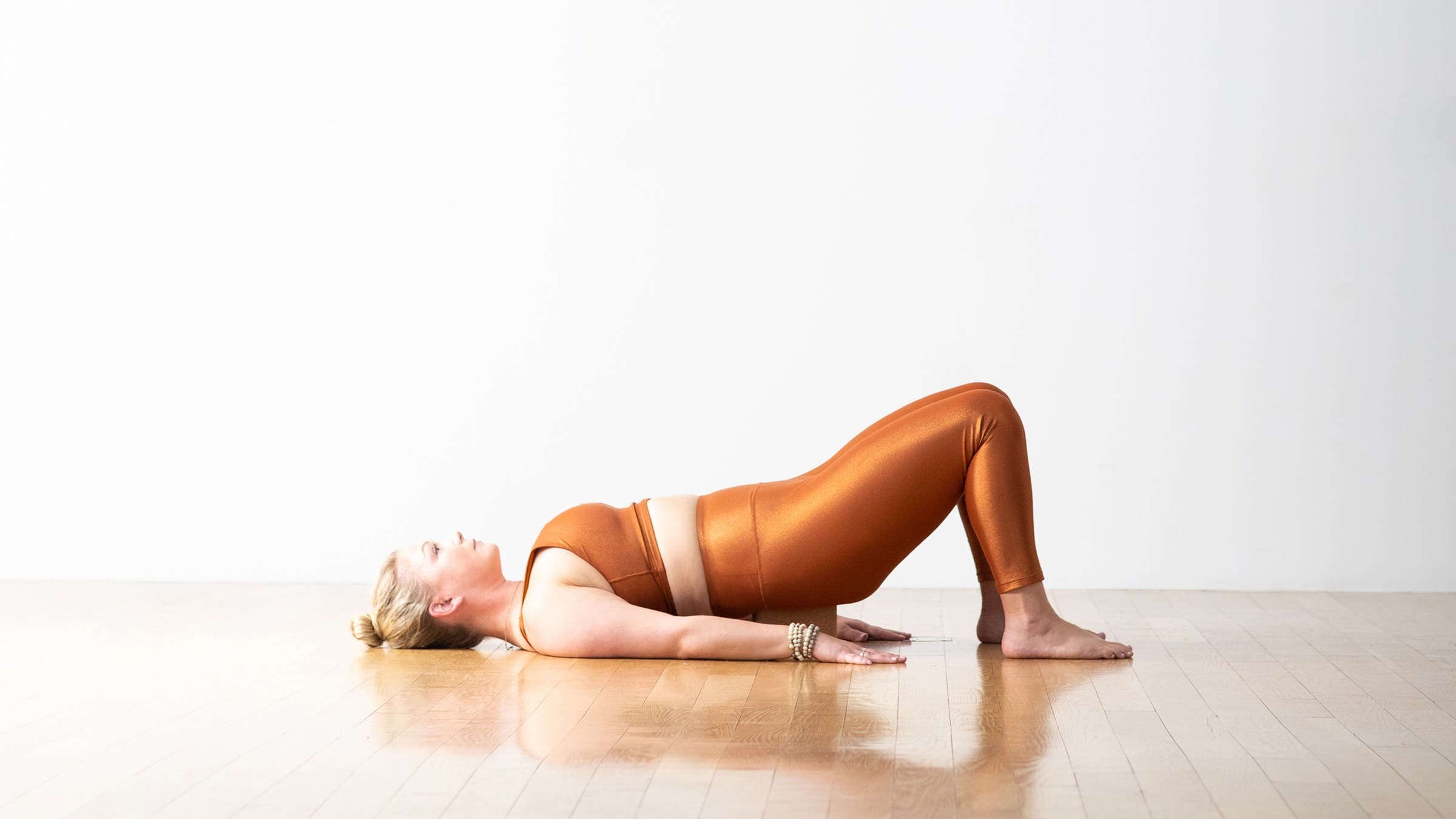
The same yoga pose can be super dynamic or incredibly restorative, and the separating factor is often the use of yoga props. Such is the case in Bridge Pose.
Without a block or bolster, this gentle and subtle inversion calls for a certain amount of core and low body strength. Sliding a block or bolster under your sacrum takes the pressure off of your body, inviting you to sink into the pose and let its benefits (namely, an activated parasympathetic nervous system) wash over you.
4. Supported Camel Pose
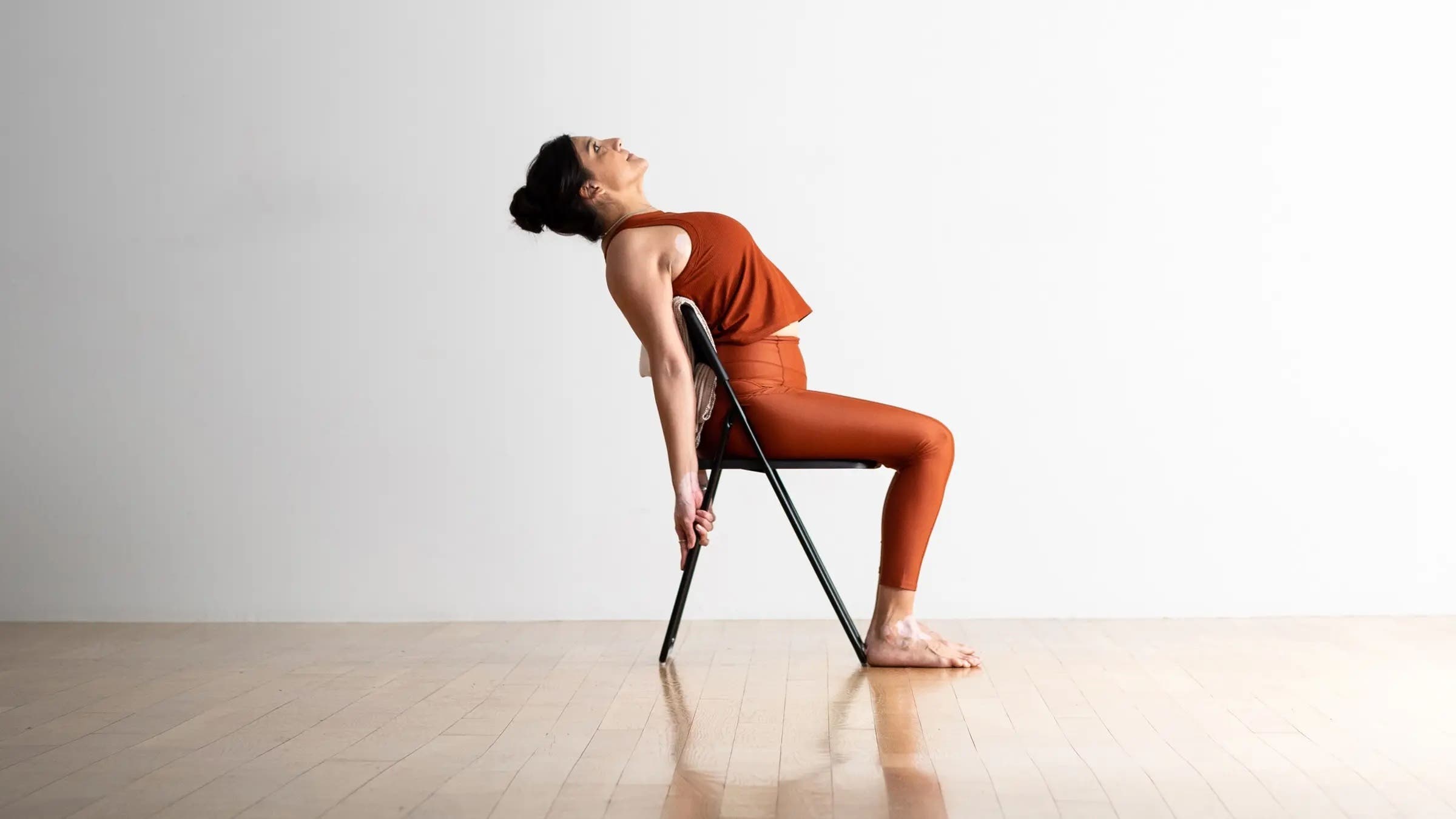
Bending back in Camel Pose can be tricky both physically and because it calls for a certain amount of trust. Adding a chair to the mix shifts the experience.
Rather than reaching through space to find your ankles, lean back against the study seat and seek out its legs with your hands instead of blindly fumbling for ankles that your fingertips might never reach. For additional softness, drape a blanket over the back of your chair to protect your back as you lift your sternum.
5. Supported Child’s Pose
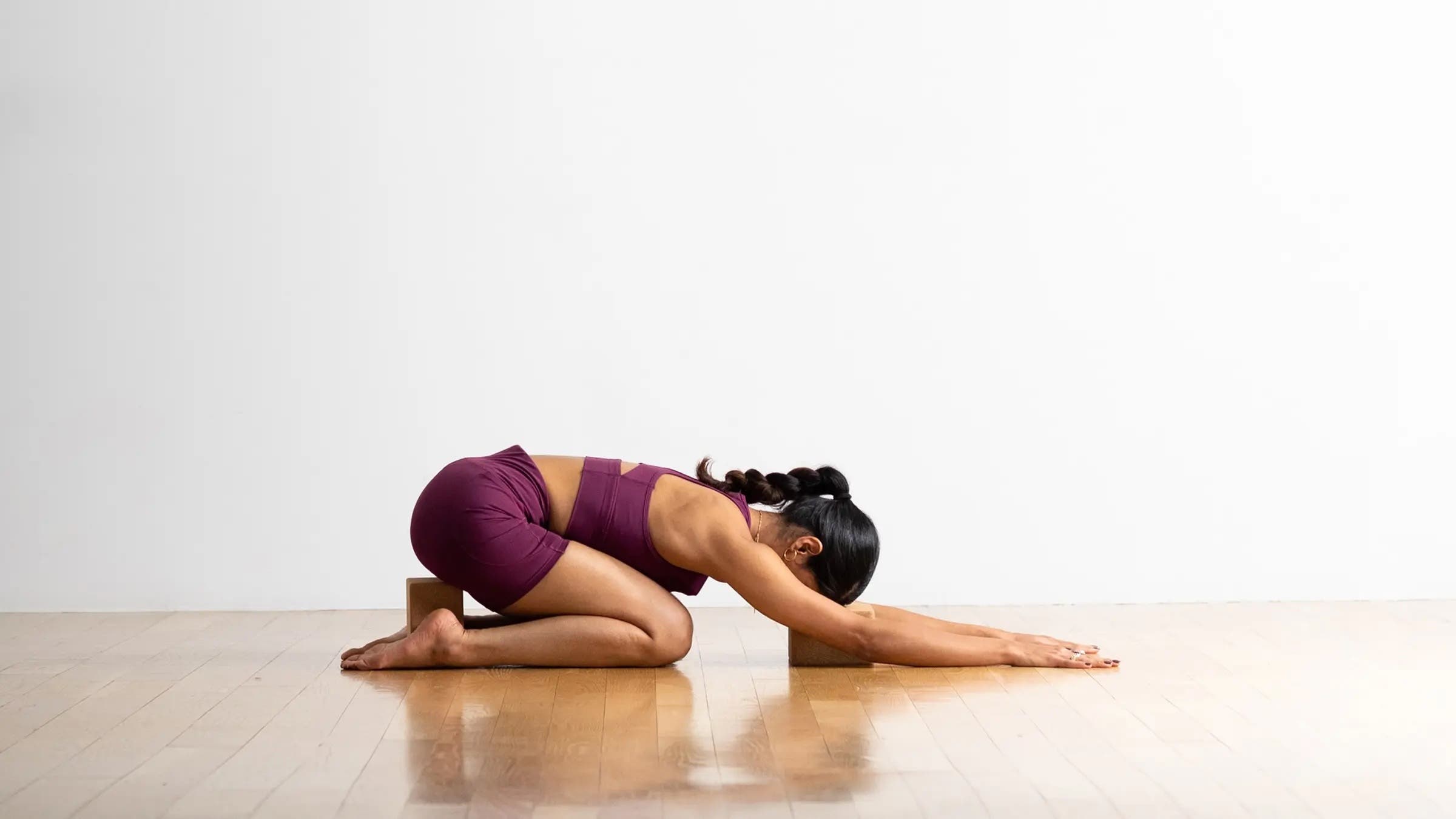
Yes, Child’s Pose can become even more chill. Adding support beneath your bottom and forehead remove some of the most common forms of strain from the restorative shape. And if reaching through your arms and engaging your back to enliven the pose doesn’t sit right with you right now, feel free to rest them along your sides instead. The goal is to find a position that takes the burden off you and your body.