
Everything you need to know.
(Photo: Andrew Clark)
Published July 1, 2026 05:05AM
Even if you’re uninterested in anatomy or have only practiced yoga a few times, you probably have a vague familiarity of certain muscle groups. It’s likely that a teacher mentioned the abs, glutes, quads, hamstrings, and hip flexors during class. But there’s another underappreciated muscle group that isn’t mentioned as frequently in yoga classes, likely because it’s literally located out of sight on the upper back.
The muscles all relate to the shoulders, and there’s one triangular muscle in particular that merits attention. It covers most of the back shoulder blades and then crosses the shoulder joint at the top and back of the upper arm bone. It’s known as the infraspinatus and it’s a muscle that quietly works to counteract some of our poor postural habits. Basically, everyone who practices or teaches yoga should know how to strengthen it.
What Does the Infraspinatus Muscle Do?
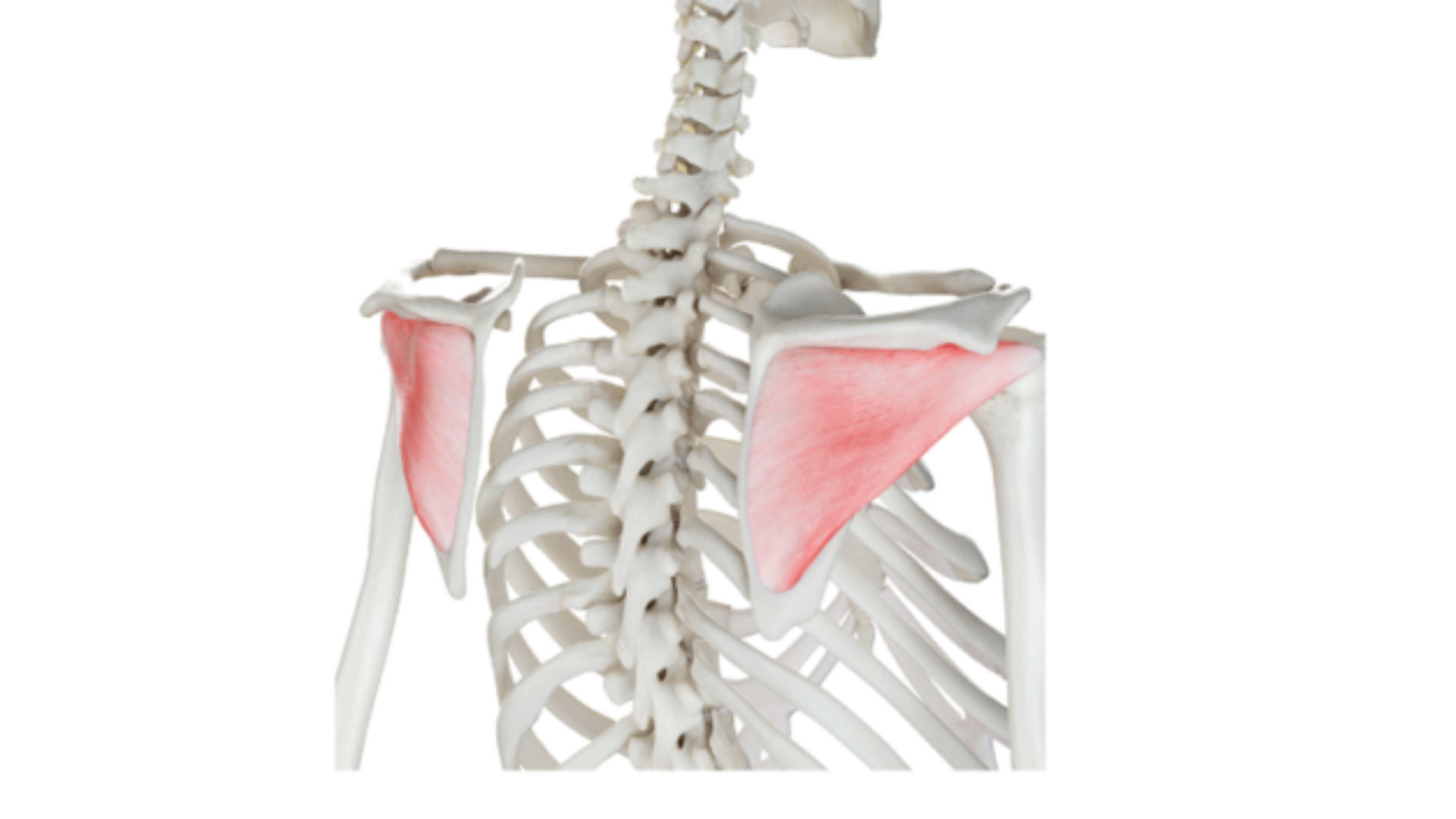
The primary action of the infraspinatus muscle is to externally rotate your arms when it contracts. (Rest your arms alongside your body. Then turn your palms forward. That’s external rotation.)
The infraspinatus is also a major shoulder stabilizer due to its role as part of the rotator cuff, a group of muscles that surround the head of the upper arm and fine-tune its position in relation to the shallow socket on the shoulder.
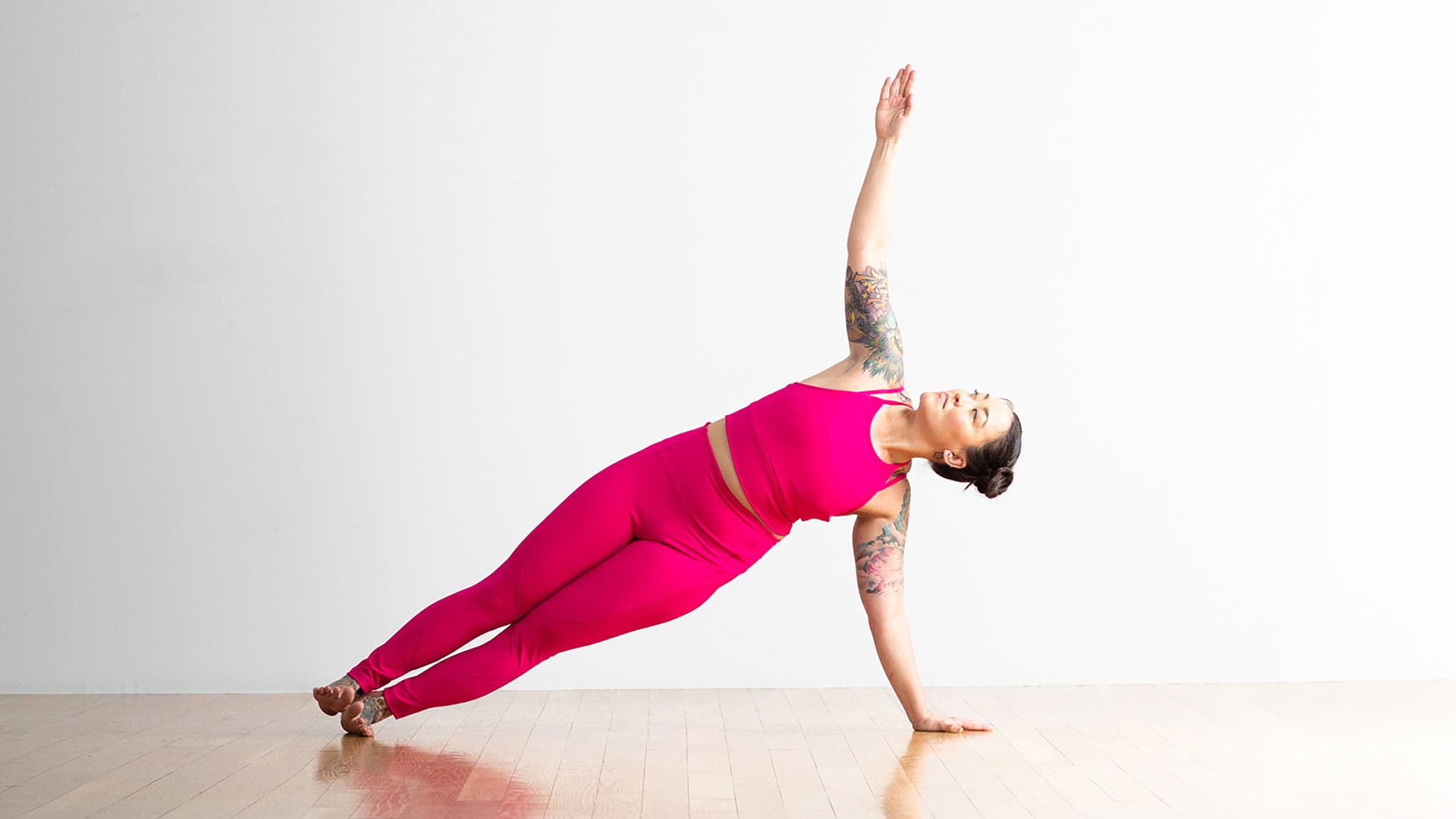
As a result of both of these functions, the infraspinatus has the potential to counter the ingrained tendency to round the shoulders and hunch the upper back as we move through yoga and life. Many of the common actions of life—typing and using devices, driving, cooking, or just about any dextrous task—involve our hands working together in front of us, our arms rotating toward each other and the chest. Taking that unhelpful patterning onto the yoga mat can result in the more familiar muscles on the fronts of our shoulders taking over and rolling the humeral head forward, especially in poses such as Chaturanga and Side Plank.
This central position creates well-balanced support for the shoulder joint in weight-bearing yoga poses. It does so by countering the forward pull of gravity in Chaturanga Dandasana and recruiting extra stability from the back of the shoulder in Side Plank as well as other arm balances and inversions. The work of the infraspinatus is also a subtle yet powerful contributor to the heart-opening effect of backbends and can even help create more space for the breath in pranayama.
In each of these roles, the muscle is a hidden source of strength and stability. But because the muscle is hidden, it takes specific Infraspinatus exercises to connect to its capacity.
4 Best Infraspinatus Exercises
You don’t need to care about anatomy to strengthen the infraspinatus muscle. You simply need to understand where in your practice you can emphasize and exercise it.
1. Seated Shoulder Awareness
Begin seated with your arms by your sides. Let your shoulders release away from your ears. Rotate your palms forward and outward, away from your body. See if you can feel a subtle sensation along your shoulder blades. Imagine hugging the back of your upper arm into its socket.
Next, lift your arms to shoulder height, bend your elbows into a cactus shape, and reach your fingertips toward the ceiling. Instead of squeezing your shoulder blades toward the middle of the back to create a chest stretch, keep your shoulder blades where they are. Rotate your elbows to face forward, keeping your upper arm bones steady as you slightly rotate them in their sockets. If you glance at your right hand, and visualise it as the minute hand of a clock, it will have moved from 12 o’clock to a few minutes past the hour. Feel a more nuanced sense of your chest lifting as your shoulders release backward.
2. Warrior 2 Arm Variation
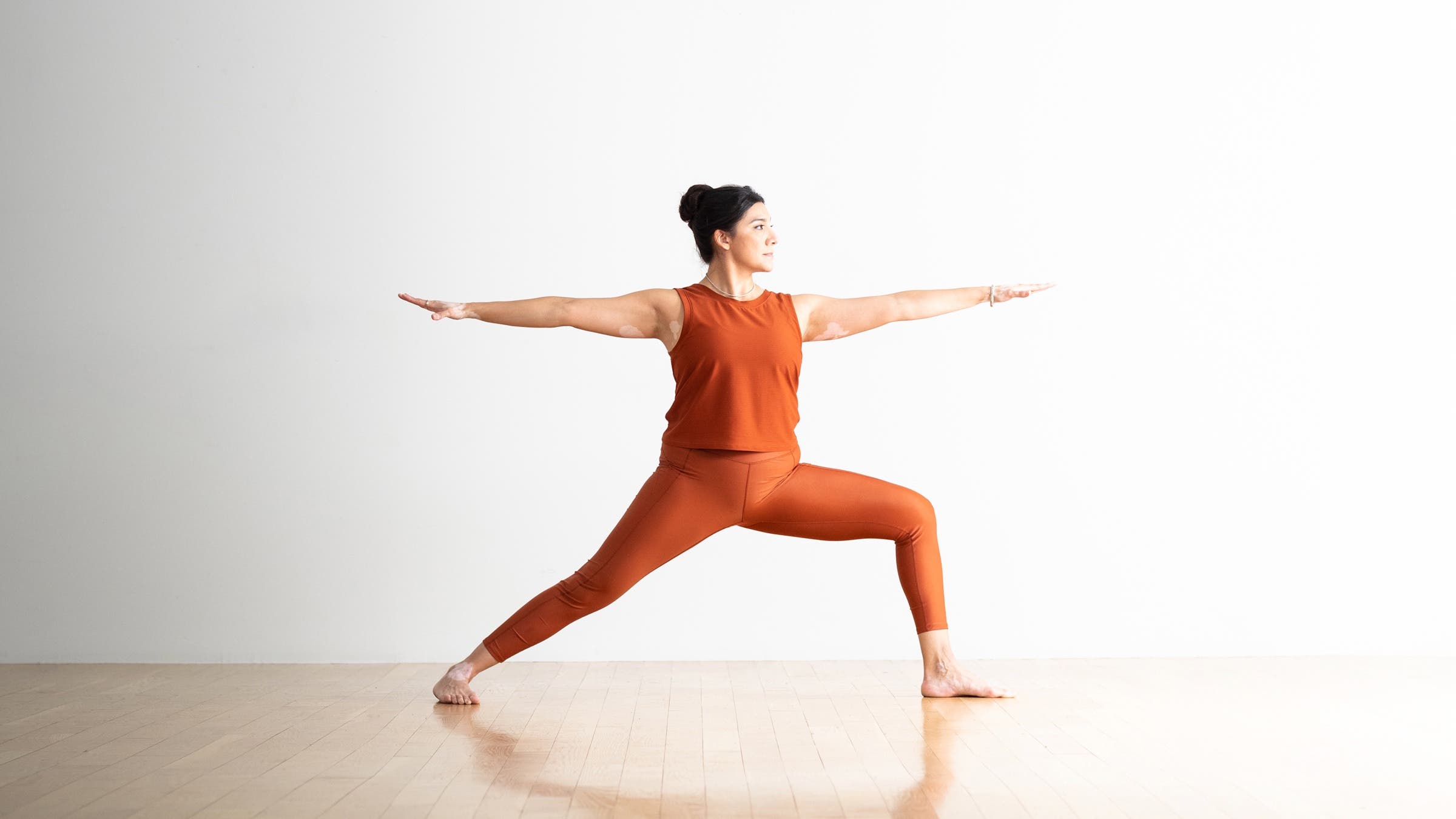
Keep that same engagement that you experienced in Seated Shoulder Awareness (above) as you straighten your arms, reaching out to a T-shape. Keep your upper arm bones rolling backward as you slowly rotate your palms toward the floor as you would in Warrior 2 (Virabhadrasana II) and notice how alive the backs of your shoulders feel.
3. Side Plank
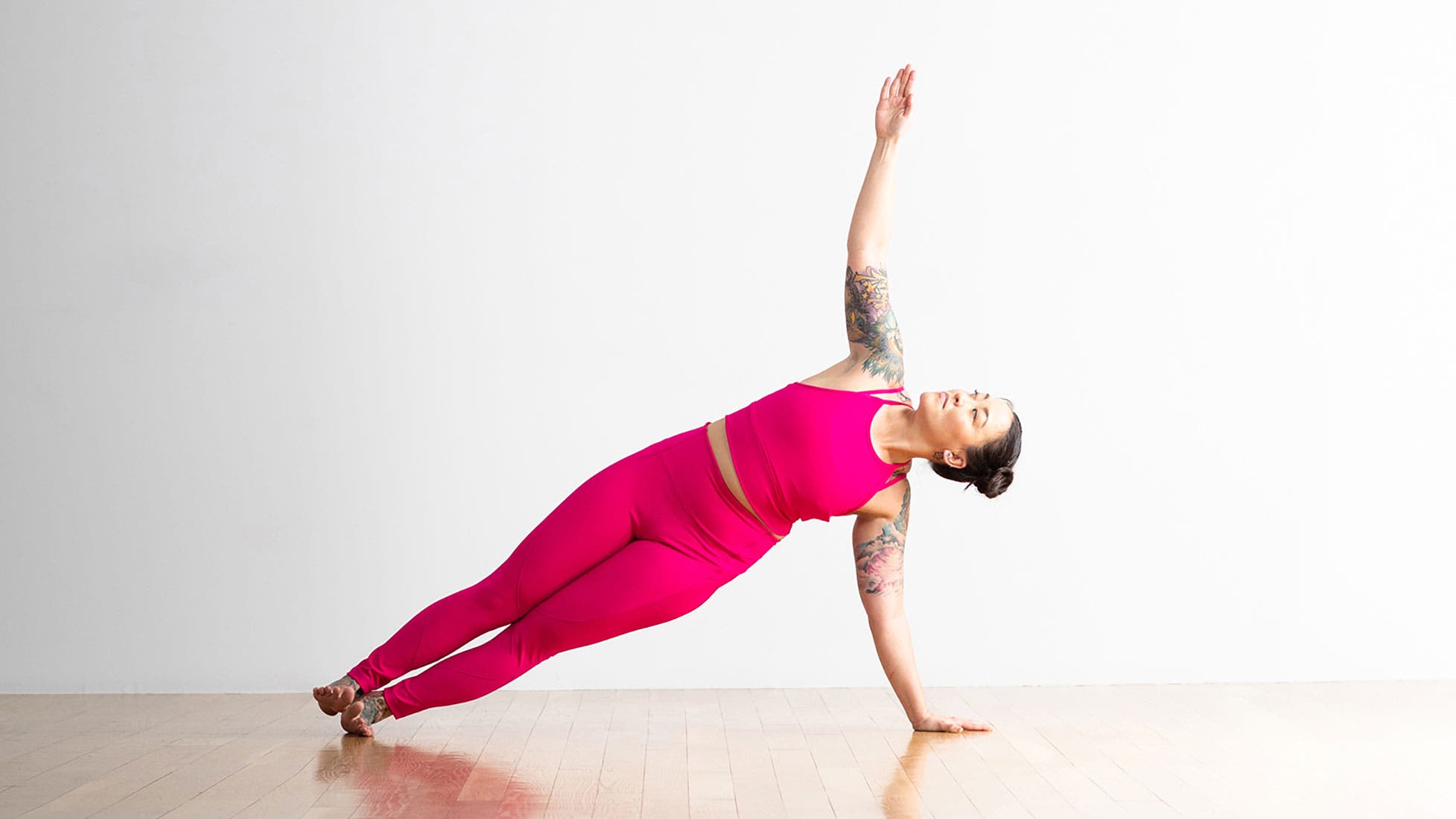
Still sitting, challenge yourself to retain that same engagement as you transition your right hand to the mat, keeping the T-shape of your arms as you face the long side of the mat and extend your left leg straight toward the back of the mat in supported Side Plank (Vasisthasana). Continue to hug the back of your right arm bone into its socket, and notice the strength and steadiness that generates as you balance. After a breath or two, try it on the other side..
4. Chaturanga or Low Push-Up
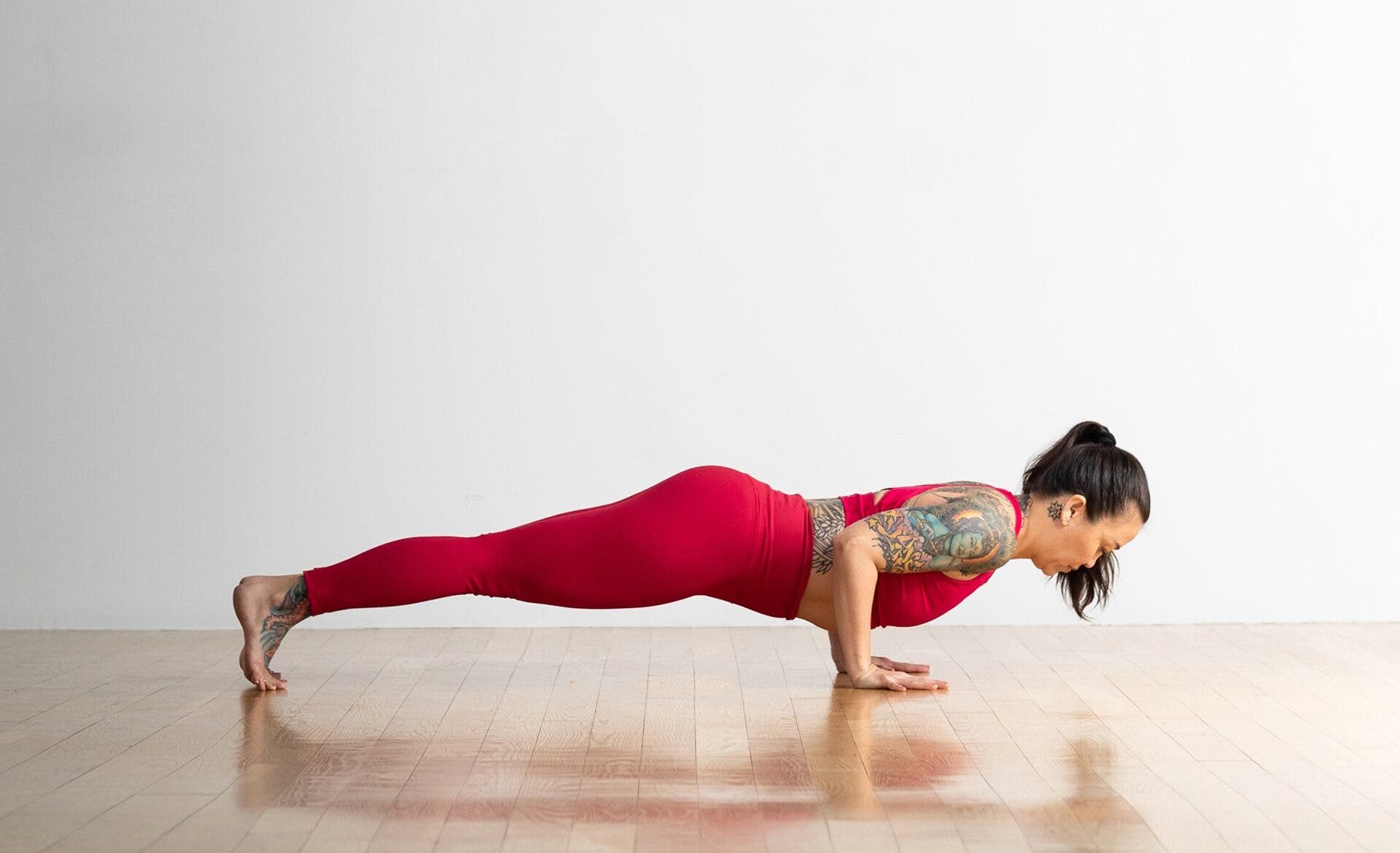
Once that feeling of back shoulder engagement is familiar, transition into Plank or High Push-Up. Without moving your hands, roll your upper arm bones slightly backward as you reach your sternum slightly forward. This engages the infraspinatus. Feel your entire shoulder joint strong and supported on all sides.
Keep that engagement as you slowly bend your elbows and lower yourself partway in Chaturanga Dandasana. Pause there and notice how your chest feels more spacious and buoyant than it might normally in this familiar shape. Then either lower yourself all the way to the mat or drop your knees and sink back to Child’s Pose (Balasana) to rest.