
Published August 17, 2026 05:05AM
Ever confide in someone that you were feel more rattled than usual and unable to quiet your racing thoughts, only for the response to be something like, “Slow down. Breathe. Have you tried yoga for anxiety?”
So maybe you signed up for a restorative or yin yoga class, desperately hoping the swirl of thoughts and emotions would dissipate by settling into some passive poses. But your mind had other plans for you. As you attempted to find some quiet, the silence seemed to create even more space for your thoughts to race ahead or ruminate about the awkward conversation you had that morning at work, the oppressive to-do list that you have been ignoring, and what, exactly, that most recent text actually meant.
Then the thoughts continued until the end of class, when you rolled up your mat feeling more agitated than when it began. Instead of the noise in your head lessening after lying in some still poses, paradoxically, it became louder.
Experiencing anxiety during a passive yoga class that’s supposed to be relaxing doesn’t mean you’re “bad” at yoga. It means your nervous system might benefit from a less abrupt approach to quieting your mind than slamming on the brakes at 180 mph and expecting it to dwindle to zero mph in a matter of seconds.
Why Stillness Can Trigger Anxiety—And What Polyvagal Theory Says
Your nervous system is constantly scanning for cues that potentially signal danger, according to Polyvagal Theory. When your nervous system senses something that it perceives as threatening, it switches to fight-or-flight mode, which is essentially a state of hyperarousal that can cause racing thoughts, tensed muscles, and shallow breathing. When you live with anxiety, this hyperarousal can become your everyday baseline.
Imagine attending yoga class in this state and being asked to sit perfectly still for several minutes at a time in a yin or restorative yoga pose. Your nervous system might struggle to experience the poses as calming. The sudden attempt at stillness and silence challenges the usual strategies your body relies on to stay safe, such as running away from or thinking its way through a perceived threat.
As a result, restorative poses that are held for a longer amount of time might make you feel like you’re trapped riding the roller coaster of your thoughts. Instead of coming to a sudden halt, gradually slowing down to a state of stillness can be more helpful in transitioning the nervous system from a heightened state to a calmer one. That’s why sitting in stillness can feel like bliss for some and torture for others.
That doesn’t mean yin and restorative yoga aren’t helpful for anxiety. Your ability to be still, as with anything, improves with practice. Instead of attempting to force stillness in an instant, you can slowly build your capacity to slow down.
10-Minute Yoga for Nervous System Regulation
The following yoga routine keeps you close to the ground, where you are encouraged to sway, rock, wiggle, or otherwise take subtle movements as you slowly shift into eventual stillness, allowing your nervous system to slow down at its own pace. Maybe you start with one minute of not moving and then, when you’re ready, increase it to two. Each of these yoga poses can also be practiced on its own. However you practice them, the gradual settling into stillness helps you slow down without feeling trapped in your thoughts. Eventually, you might even find that true safety resides in learning to feel secure within oneself.
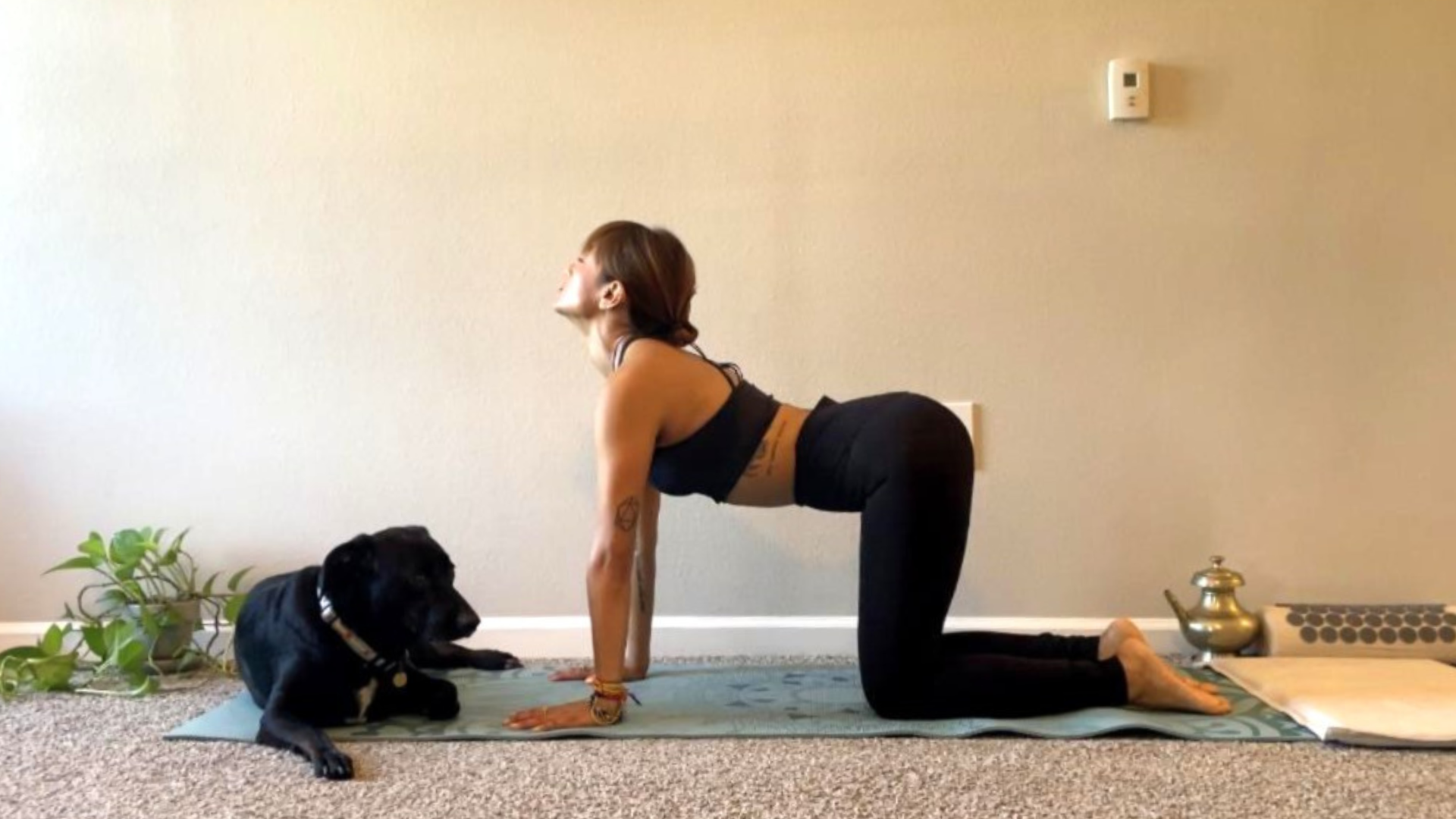
1. Cat-Cow Pose (Marjaryasana-Bitilasana)
The repeated arching and rounding motion in Cat-Cow Pose can have a soothing effect on the nervous system. It also helps draw attention to your every inhalation and exhalation. Try lengthening your breathing cycle slightly, which research suggests can reduce anxiety and positively affect your nervous system response.
How to: Begin on your hands and knees with your wrists underneath your shoulders and your knees underneath your hips. As you inhale, arch your back, lift your chest, and look slightly forward and up (Cow Pose).
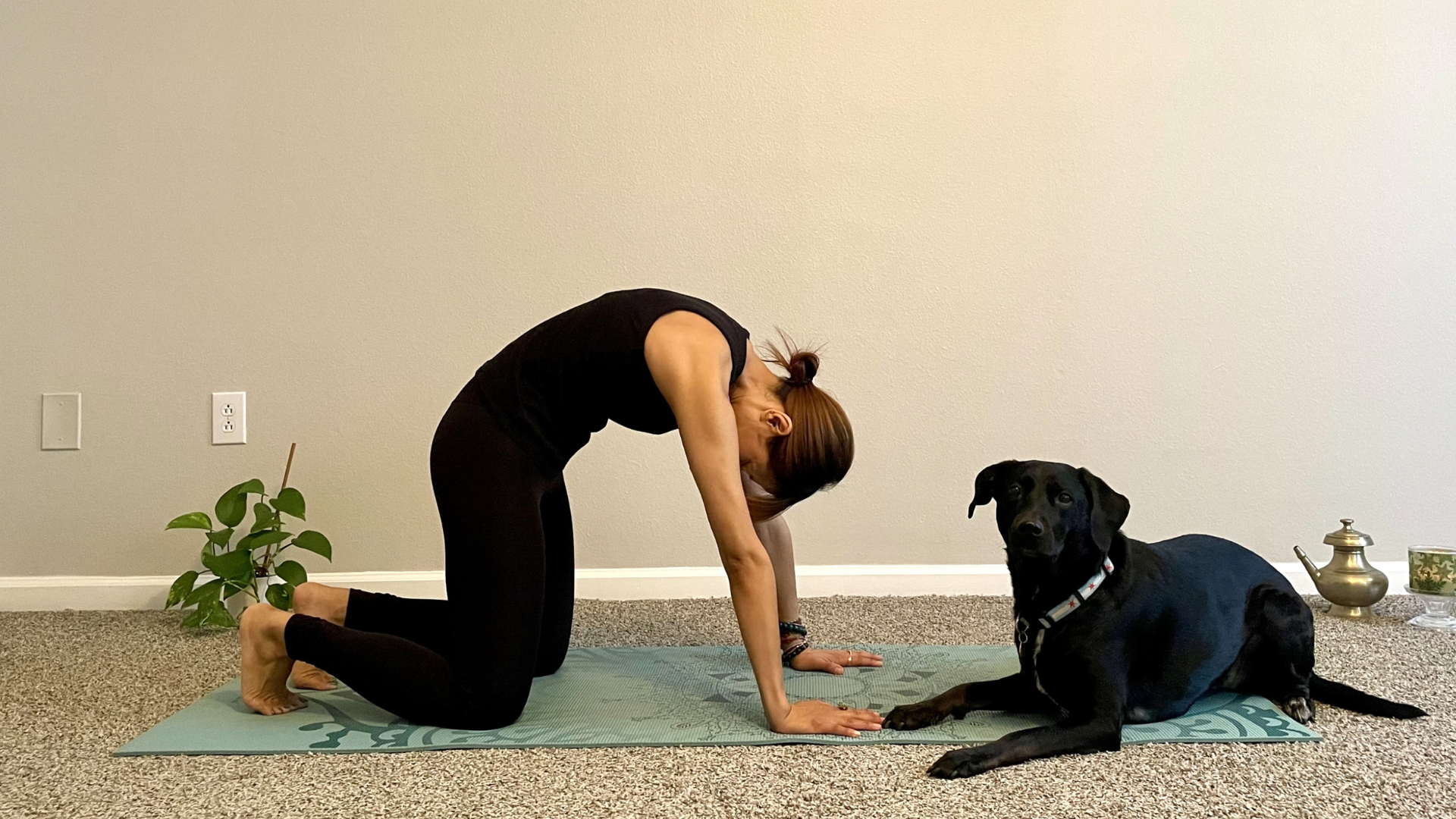
When you exhale, round your spine, bring your chin towards your chest, and press the floor away as you engage your core (Cat Pose). Continue moving with the rhythm of your breath for 1 to 2 minutes.
Focus on: Try to exaggerate how much your spine arches and rounds. Feel free to sway your ribcage side to side or do barrel-rolls with your spine. Imagine collecting all your anxiety in every inhalation, and then letting it leave your body with each exhalation.
2. Sphinx Pose (Bhujangasana)
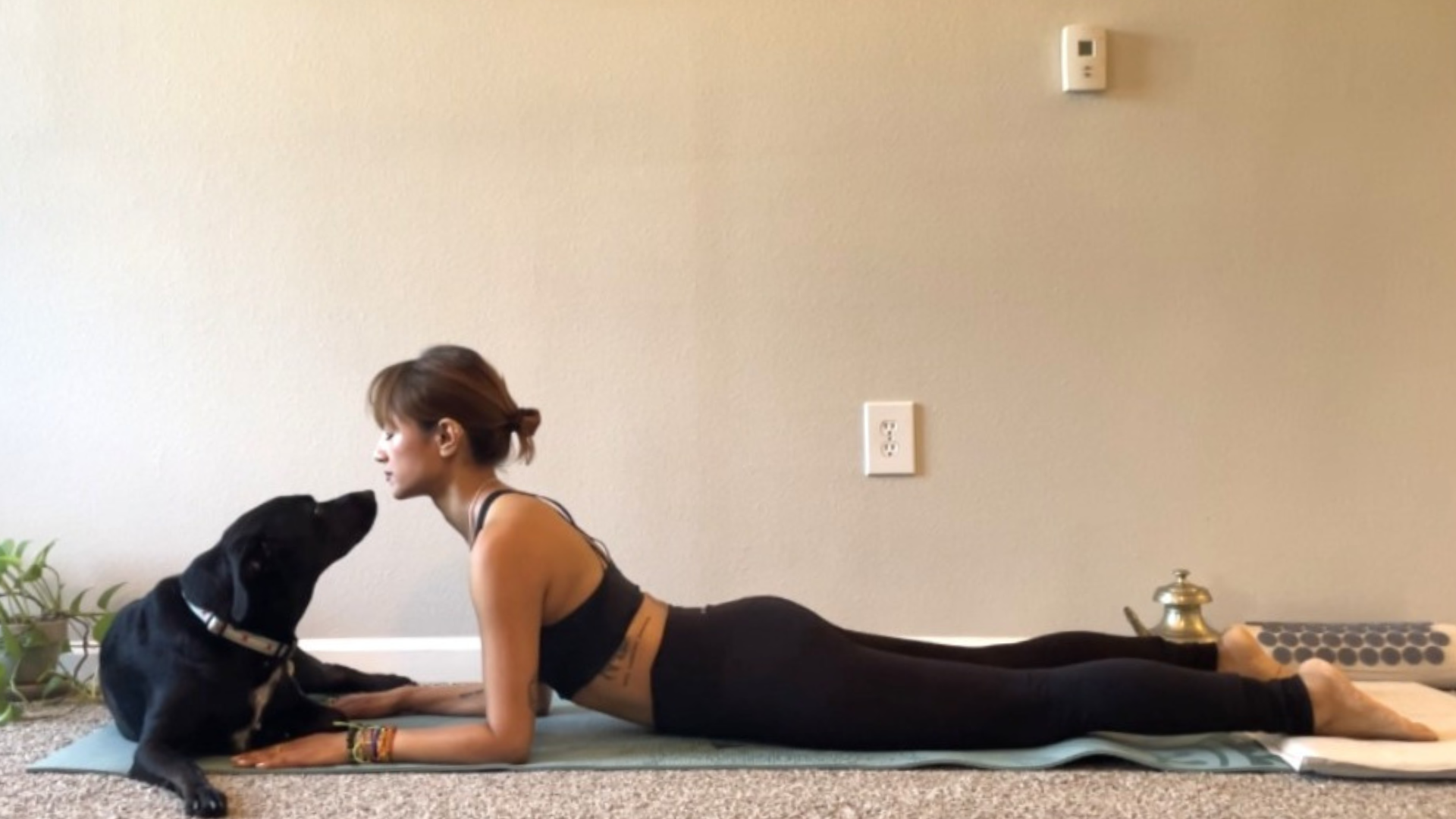
Sphinx Pose can be the grounding middle ground between effort, as you slightly push the ground away while holding still. Even that slight action can make the pose easier on an anxious mind than complete passivity. The pose also offers a slight backbend and gentle opening of the chest without being such an intense heart-opening pose, such as Cobra or Seal Pose.
How to: Lie on your belly with your legs straight behind you, hip distance apart or wider. Rest your forearms on the mat with your elbows beneath or slightly in front of your shoulders. Gently press yourself away from the mat to lift your chest. Relax your shoulders away from your ears with each exhale and breathe here for 1 to 2 minutes.
Focus on: The gentle push of your forearms away from the floor and the stretch across your chest. Slowly turn your head side to side to loosen the tension in your neck or wiggle your toes if you’re still feeling restless.
3. Child’s Pose (Balasana)
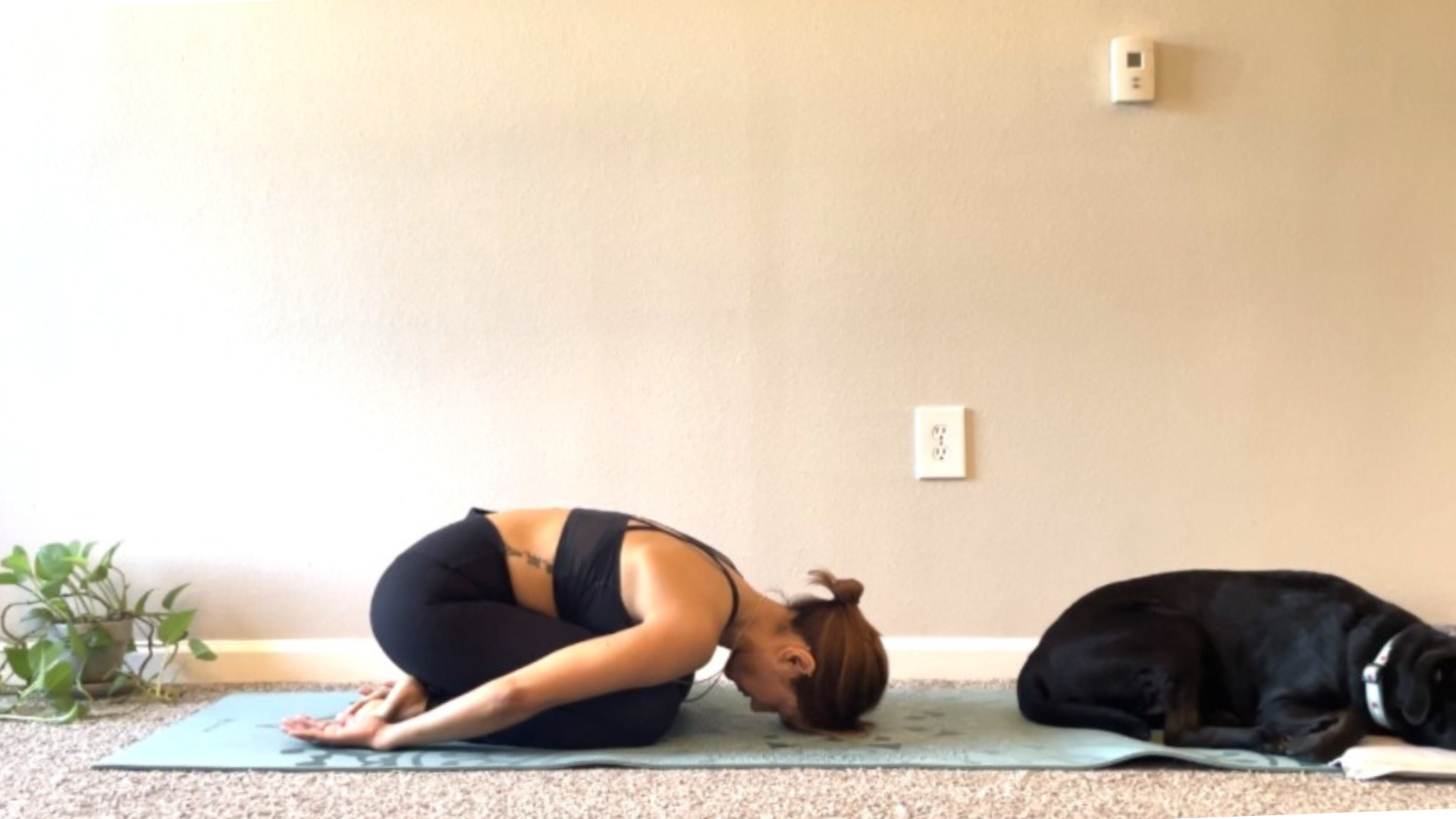
When you rest on the ground in Child’s Pose, you might experience a sense of comfort and safety. Though forward folds can’t automatically erase anxiety, choosing to slow your breath, block out the external world, and quiet your thoughts helps calm your nervous system.
How to: Kneel on your mat with your big toes touching and your knees either close together or wide apart, whichever feels most comfortable for you. Slowly sink your hips towards your heels and rest your arms along the sides of your body or stretch them out forward. Rest your forehead on the mat and stay for 1 to 2 minutes.
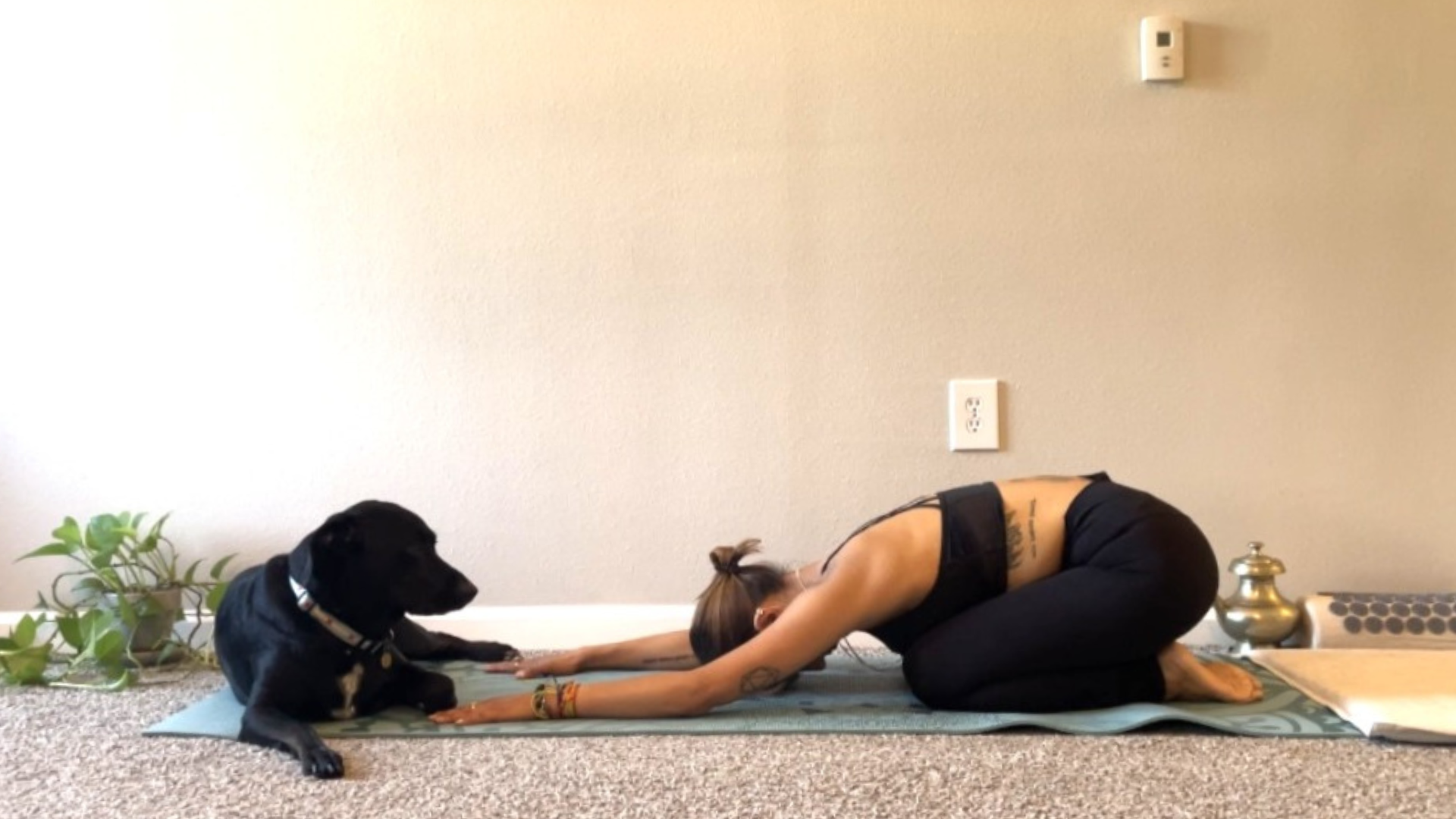
Focus on: Feel the areas where your body touches the mat. Notice your breathing and allow your body to get soft and heavy as you exhale. If this feels too still, bring your palms together in the center of your back in Anjali Mudra, bend the elbows, and bring the thumbs towards the back of your neck.
4. Reclined Figure Four
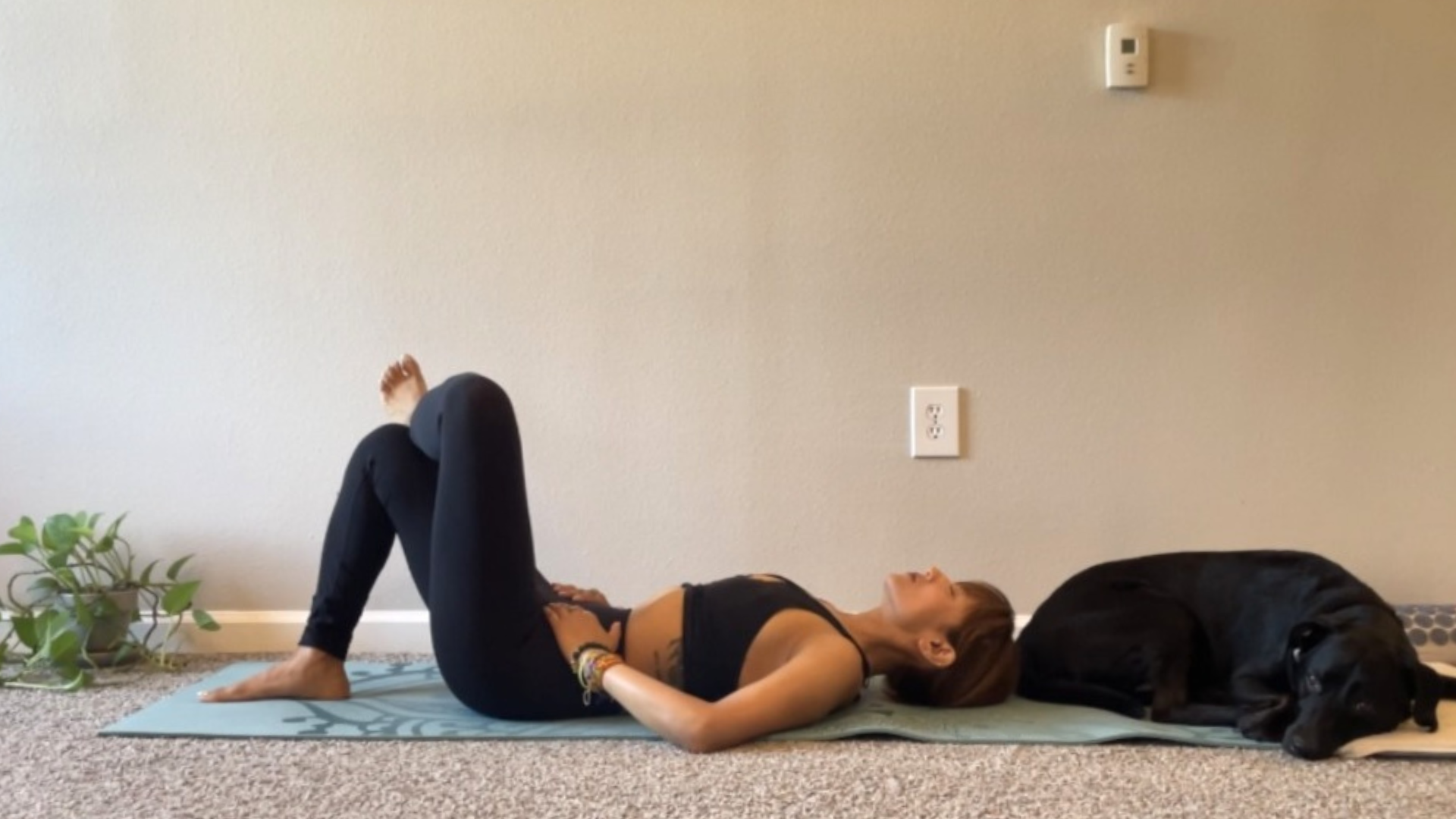
The glutes and hips can get tense without you even realizing it. Reclined Figure Four can bring awareness to those tight areas by releasing the stiffness so you can catch yourself next time you’re gripping.
How to: Lie on your back and bend your knees with your feet flat on the floor. Cross your right ankle over your left thigh and flex your right foot. You can stay here or interlace your hands behind your left thigh, and bring your legs closer toward your chest for a more intense stretch. Wherever you are in the Reclined Figure Four, you can stay still or sway slightly side to side while breathing slowly for 1 to 2 minutes. Then switch sides.
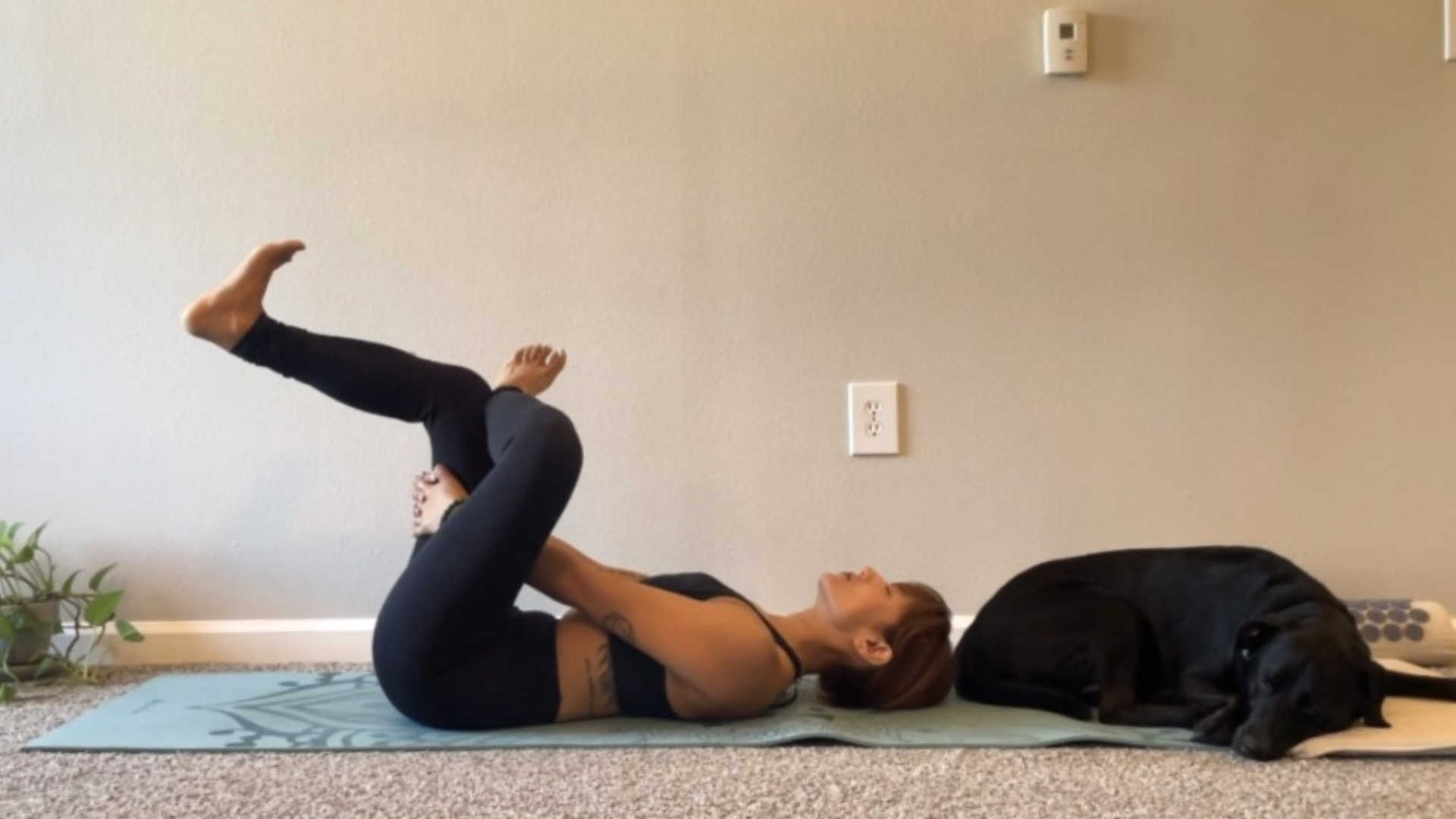
Focus on: Feel the stretch alongside your outer hip and glute while keeping your neck, shoulders, and forehead relaxed and heavy on the mat. You can point and flex your lifted foot or gently rock to your left and right giving your lower back a gentle massage if your legs are closer to your chest.
5. Legs Up The Wall Pose (Viparita Karani)
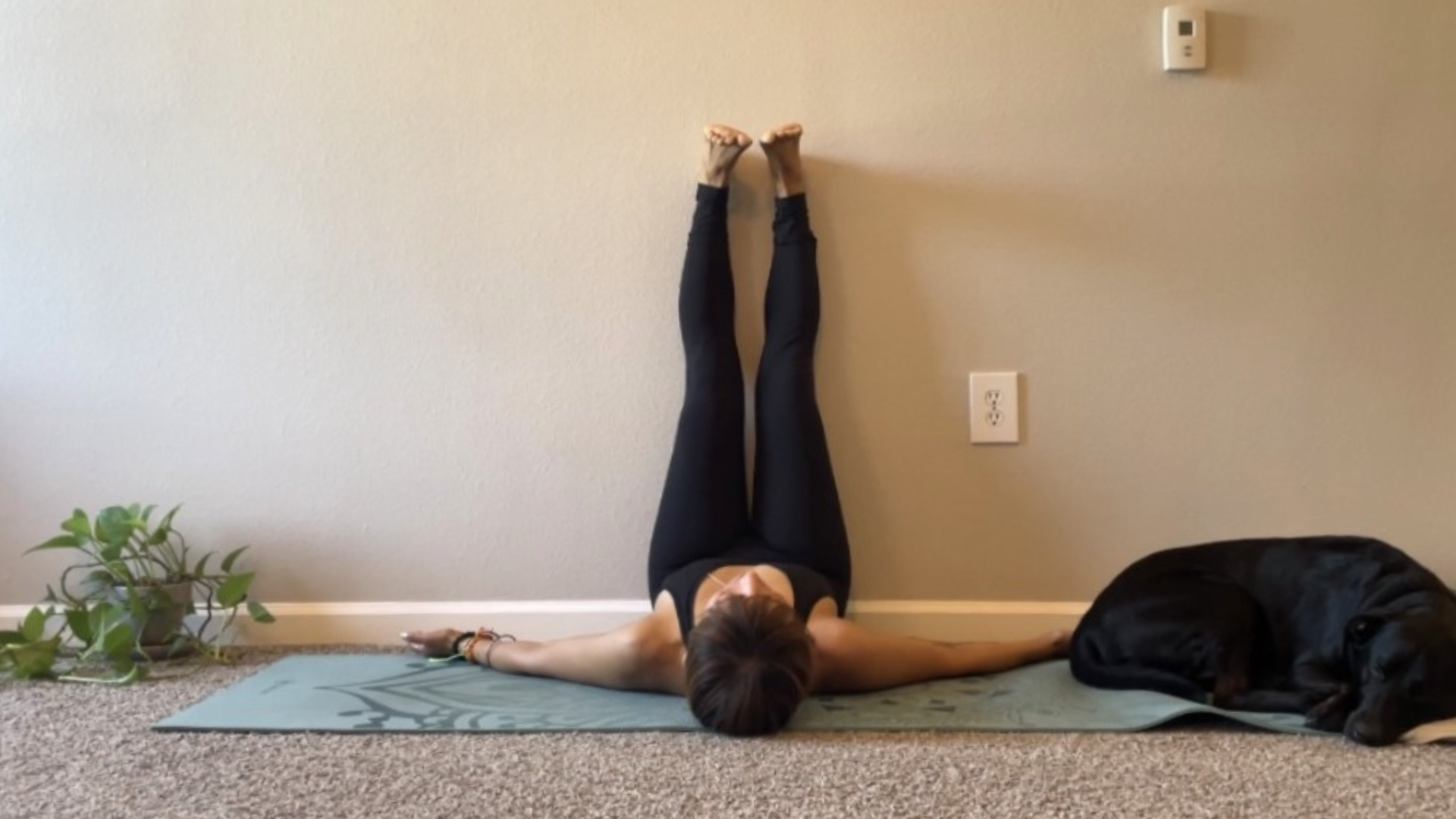
When you elevate your legs above your heart, gravity assists the circulation of the blood toward the heart. The slight surge in blood flow signals the heart rate to slow and calms the nervous system via the vagus nerve. This can help reduce anxiety.
How to: Sit on the floor alongside a wall with one hip touching it. Carefully swing both legs up against the wall and, at the same time, slowly lower your back onto the floor. Gently inch your hips a little closer to the wall, but not necessarily touching it, so your legs can comfortably rest against it for support. Relax your arms by your sides, palms facing up. Bring your attention to areas of your body where you might be holding tension, such as your shoulders and jaw, and use every exhale to loosen that tightness. Allow your facial muscles to relax and close your eyes if you feel comfortable. Let gravity do its thing as you linger here for 1 to 2 minutes. If this stillness feels tricky, flex and point your toes, roll your ankles in circles, or let out a long, slow, audible sigh while resting your heels against the wall.
Focus on: The weight of your body on the mat and the support behind your legs. Let yourself settle into that support and experience gravity making your body heavier with each exhale.