
Published October 29, 2026 02:06PM
Looking for the best inexpensive yoga mats? With the following picks from our expert testers, you’ll experience more than sufficient grip and cushiness while keeping to a budget. The standouts are the Gaiam Premium 5mm Yoga Mat ($24), which is the best yoga mat for beginners, and the All in Motion Peak Rubber Yoga Mat ($35) for the best overall inexpensive yoga mat, especially for hot yoga. Whether you’re new to yoga or simply don’t want to spend a lot of money, these are the most reliable options to consider.
No one talks about this. But you can experience some serious B-rated horror movie moments when you practice on a lot of yoga mats. Your hands slowly and inexorably sliding forward as you try to find stillness in Down Dog. Your mat wrinkling and sliding beneath you as you attempt to transition from Low Lunge into Warrior 2. It’s enough to make you want to silently and helplessly scream.
You would think that throwing money at the problem helps. And I’m not gonna lie, sometimes it can when you splurge on stand-out yoga mats that support you in ways that are unspeakably better than other mats. But not every absurdly expensive mat ensures you avoid these cringe situations. Just as not every inexpensive mat guarantees you’ll experience challenges. And not everyone wants to or is able to spend a lot of money on a mat. And until you’ve actually practiced on a mat, it’s pretty much impossible to discern what it’s like.
So we did the testing for you. I spent the first decade of my yoga practice on a $17 mat quite similar to one of the selections below, and throughout the next decade of my yoga practice, I’ve slipped, slided, and sweated my way through poses on dozens of different yoga mats in all price ranges, and so have our other testers of all experience levels. In so doing, we’ve culled the options for spending less than $50 down to the two most reliable, decidedly non-nightmarish, unequivocally best inexpensive yoga mats.
Because you don’t need to let price deter you from your practice, whether you’re a beginner or simply someone who thinks of everything else you could put that extra money toward (ie your electric bill, groceries, those vintage 90s cargo pants on Poshmark that you can’t stop thinking about). You just need to avoid the ones that make you question your decision to try yoga. Instead, you should simply be questioning your discretion in choosing a mat.
Here’s everything you need to know to make the right decision.
Best Inexpensive Yoga Mats Under $50 At a Glance
Inexpensive Yoga Mats Comparison Chart
| Specs | Price | Materials | Thickness | Dimensions |
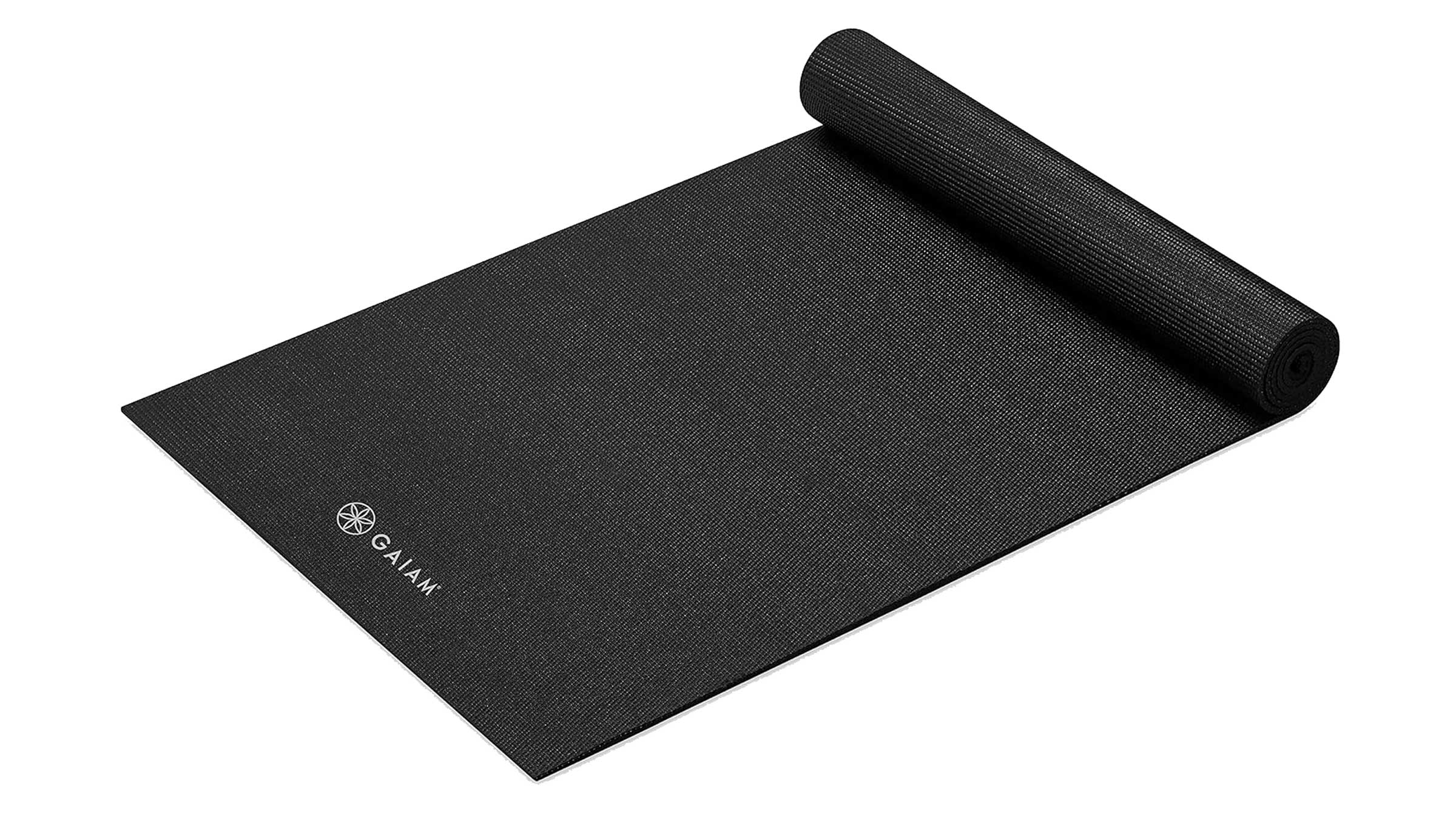
| Gaiam Premium 5mm | $24 | PVC | 5mm | 68 x 24 inches |
| All in Motion Peak | $35 | Polyurethane surface + Rubber base | 5mm | 68 x 26 inches |
Best for Beginners
Gaiam Premium 5-mm
Material: Latex-free PVC
Thickness: 5mm
Dimensions: 68 x 24 inches
Weight: 2.6 pounds
Pros and Cons
+ Sufficiently sturdy, grippy + cushy
+ Ethereally lightweight
+ Price!
– Slightly slippery, especially when wet
– Smaller dimensions than most mats
This is what you buy when you want to spend as little as possible on a mat that delivers rather than disappoints. Not surprisingly, it’s from longtime mat maker Gaiam, which offers dozens of styles, although the Premium 5mm is my choice for its textured surface, decent enough traction for hands and feet even during arm balancing, and spongy cushiness that lets you sink ever so slightly into the mat.
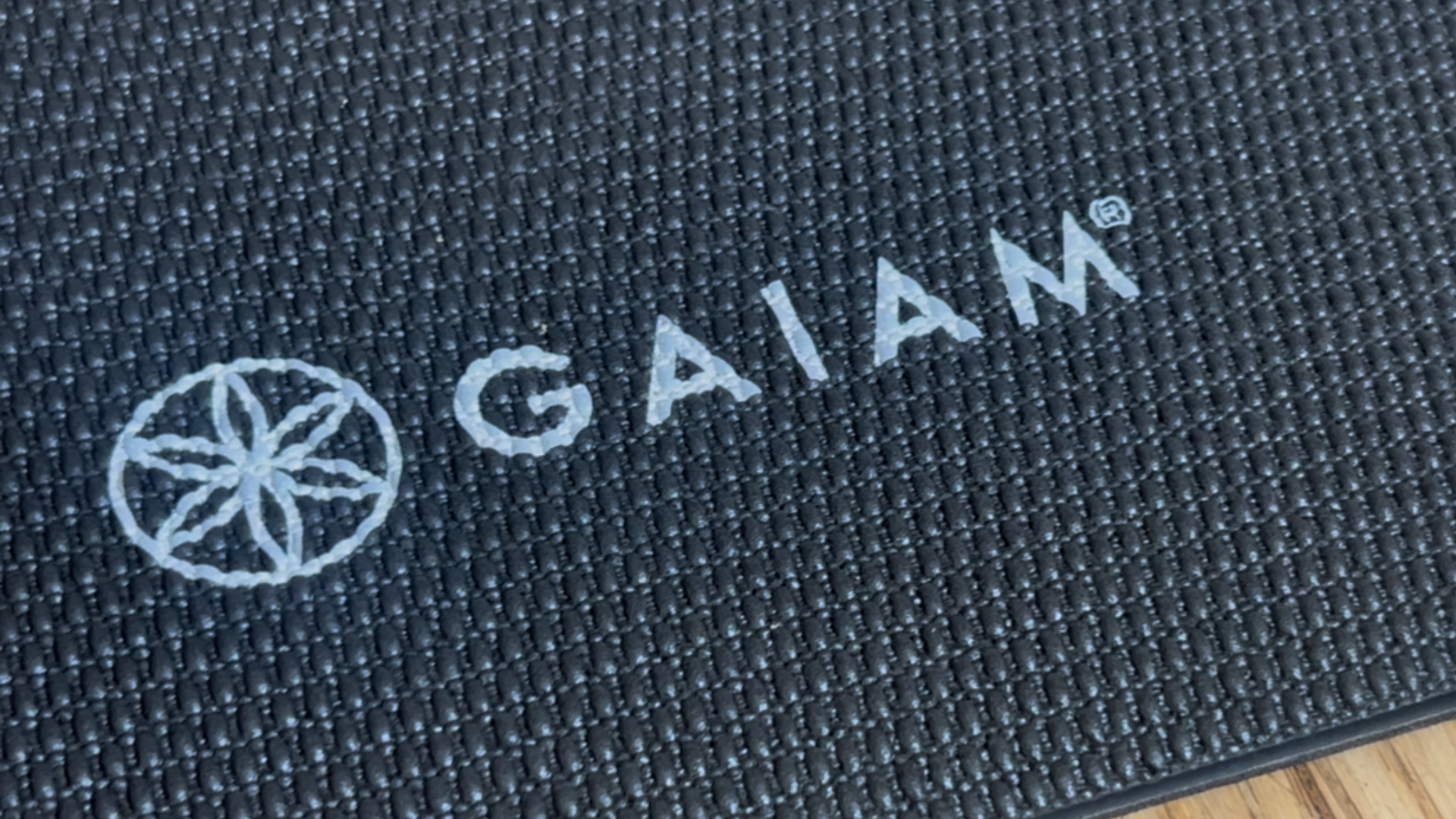
Although it’s not as densely cushioned as most more expensive mats, the Premium 5mm was preferred by beginners who found the texture to be reassuringly supportive during standing postures and sufficiently comfortable during shapes that require kneeling, sitting, or reclining. That said, if you think you’ll practice primarily yin or restorative yoga, in which you’re sitting or lying on your mat the entire class, you might want something cushier.
Look, it’s not flawless. In testing during recent years, it sometimes wrinkled slightly beneath my feet as I transitioned, although not in an overly distracting way. It sometimes felt as though my hands or feet were beginning to slide on the slick surface, but not to the extreme experienced on other mats in this price category. Although when practiced on during heated or sweaty conditions, that slide factor increased, so consider yourself warned. As for longevity, if you end up practicing several times a week, the mat might show signs of the surface wearing down wherever you commonly place hands and feet, although Gaiam does offer a lifetime guarantee.
Whatever the mat lacks in longevity, it more than makes up for in lightweightness. At just 2.6 pounds, it’s easy to lug along with you to class, even if you walk several city blocks to a studio or gym. (Trust me, pricier mats get heavy quite quickly.) Part of that seeming weightlessness might be due to the fact that it’s a couple inches narrower than a lot of mats, making for a slightly constricted experience in terms of square footage beneath you during your practice.
The mat is made of PVC. Some retailers refer to the material as “non-toxic,” which might sound like an anomaly. Gaiam’s website states it is made without the phthalates DEHP, DBP, BBP, DINP, DIDP and DNOP.
This is almost the same Gaiam mat that I started practicing on years ago, and although I haven’t used the ones I’ve tried in recent years for as long, at some point they, too, seem to start showing signs of wear in places where I regularly place my hands and feet. I don’t regret having chosen Gaiam and I strongly encourage others do the same. But if I had to do it again, I’d know when to let it go.
Bottom Line: It’s an inexpensive yoga mat that’s ideal for anyone curious to try yoga but not certain if they’ll want to stick with it in the long run. Or someone who practices occasionally, whether at home or at a studio or gym. Or as a suitable stand-in for someone who’s still deciding what, exactly, they prefer in a pricier mat before making that commitment.

Best Overall (Especially for Hot Yoga)
All in Motion Peak Rubber Yoga Mat
Material: Polyurethane + rubber
Thickness: 5mm
Dimensions: 68 x 26 inches
Weight: TK
Pros and Cons
+ Grippy surface
+ Doesn’t wrinkle or slide on the floor
+ Comparable to mats twice its cost
– Heavy
– Surface scratches easily
The Peak has a sleek surface, quite similar to that of more expensive brands designed for hot yoga that cost exponentially more. (IYKYK.) If I didn’t know better, I’d guess it cost closer to $100 based on how well it handles during my intermittent usage of it during vinyasa practices the last couple years.
The mat literally did not budge beneath me during any sort of transition in between poses thanks to its rubber base that practically adhered the hardwood floor beneath it. And don’t be fooled by that smooth polyurethane surface, because it capably held my hands and feet in place, even when sweating or in a heated space.
The mat also brings a dense cushiness, one that doesn’t feel spongy, unstable, imbalanced, or anything other than supportive and amply comfortable for seated and reclined poses. I’ve practiced yin yoga on it and had no complaints.
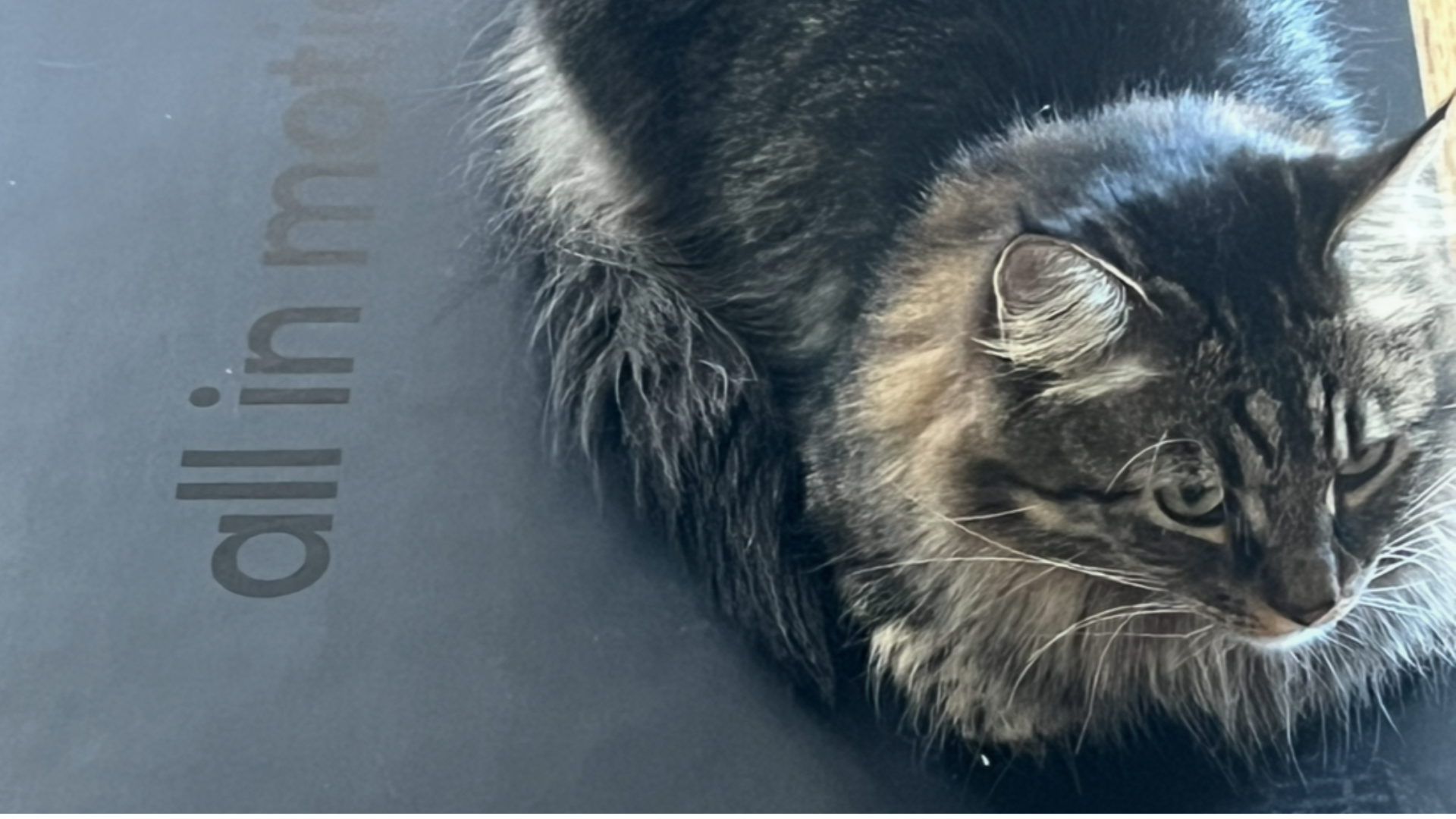
It is heavy, though. So you probably want to commute with it in the trunk rather than carrying it along sidewalks. And that sleek surface doesn’t remain unscathed if, like me, you have four-pawed friends who like to stretch their claws beneath you while you’re in Down Dog or Warrior 2. But the rest of the mat is as rugged as its heft would suggest. Mine has no signs of breaking down so far.
Bottom Line: When you want durability or just a decent grip to see you through any style of practice, this is the most acceptable mat priced below $50.
What You Need to Know About Inexpensive Yoga Mats
Not surprisingly, there are caveats for any inexpensive yoga mat that costs less than $50. So depending on how you practice, perhaps you think of the mat as one that’s “enough.” As in, cushy enough. Grippy enough. Supportive enough. And good enough to keep you from being distracted by what’s happening beneath you as you practice. Because as much as I appreciate the way these mats handle for the money, they are not designed the same as mats that cost exponentially more. Adjust your expectations accordingly.
Also, and importantly, neither of these mats is an altogether sustainable option. (With my sincerest apologies to the planet.) If eco-friendly options are a priority for you, rest assured, you can find an array of yoga mats, although most are in the $60-plus realm.
Consider, though, that sustainability can be defined in several ways. If either of the above mats meets your short-term needs yet ultimately ends up being your starter mat rather than your long-term mat, you can always donate it to a local school, community center, studio, or thrift store and let it become someone else’s starter mat. That, too, is sustainability. Or if that mat has become worn in ways you wouldn’t want to practice on, neither will someone else. In that case, repurpose it around the house or donate it to a local animal shelter.
How We Test
Three years ago, we looked beyond the mats we typically practice on and canvassed online comments from users for dozens and dozens of brands of yoga mats of all price points. Then we asked 18 yoga students and teachers of all experience levels with yoga to try various yoga mats that received the highest ratings. And each year since then, we look to see which mats are surging in popularity or new to the market and test those as well. This year, we took special interest in budget options that might not have made our list of overall best, and took into consideration our experience while standing, transitioning, balancing, kneeling, sitting, and reclining on several mats.