

Published July 13, 2026 05:55AM
Muscle recovery is the part of training you probably skip. You finish the workout, maybe stretch for a minute or two, and move on with your day and our life. But the body repairs itself primarily when you are in a calm, resting state. Yin yoga helps gets you there.
Most styles of yoga work your muscles. Yin yoga addresses the deeper connective tissue, primarily the fascia that wraps around the muscles you just trained and that quietly stiffen after effort. You reach that recovery-friendly state by slowing down, holding each shape for a few minutes, and letting gravity do the work.
Three things to keep in mind as you practice yin yoga. First, think about sensation. Rather than pushing yourself 100 percent (the goal is never to strain), aim for 50 percent. You want to challenge yourself enough to feel something in the target area and then back off a touch. If you push any deeper, the body braces to protect itself, which is counterproductive to muscle recovery. In yin, less is more. This matters even more when the tissue is already sore.
Next, think about time. Longer holds are how you reach the deeper tissues. The times below are suggestions. Stay as long as you like, but give each pose at least 2 minutes. Less than that and the connective tissue is not adequately targeted.
And finally, once you’re in the shape, be still. A mindful adjustment as the sensation fades is fine, as you might find yourself sinking into the stretch a little more. But pain indicates that you should come out of the pose.
So meet yourself where you are, settle in, and stay awhile.
6 Yin Yoga Poses for Muscle Recovery
The following sequence also serves as a cool down and takes you from seated to reclined poses. Once you’re on your back, you get to stay there. Come out of each pose slowly and pause for a few breaths before moving on.
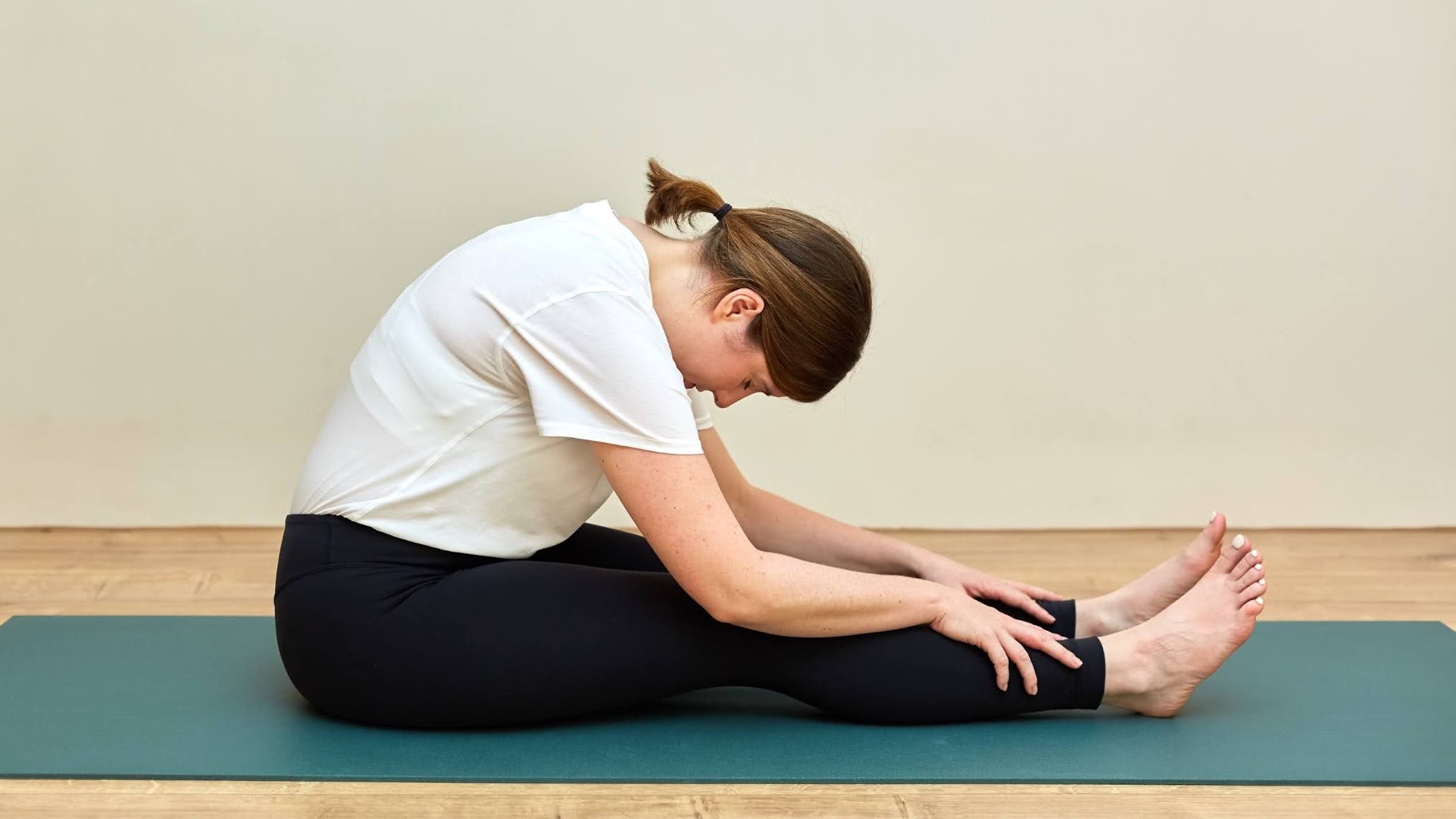
1. Caterpillar Pose
Targets: Hamstrings and the whole back of the body
Suggested hold time: 3 minutes
Sit with your legs out long and fold forward in Caterpillar Pose or Seated Forward Bend. Let your spine round and your head hang—nothing is working here. If the hamstrings feel tight or sore, bend your knees slightly or sit on a cushion to elevate your hips. Don’t worry about how the pose looks; focus on how it feels.
2. Saddle Pose
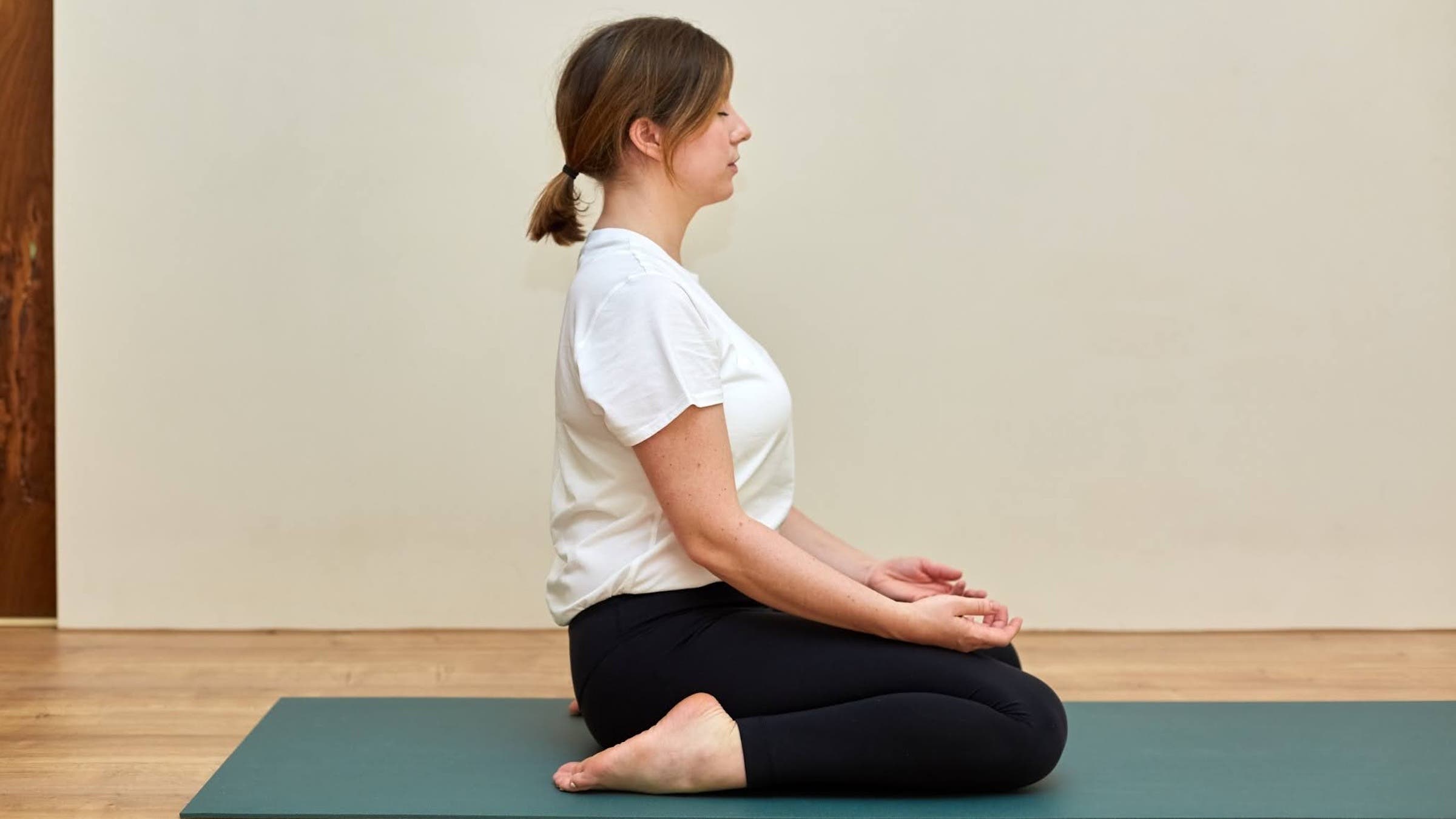
Targets: Quads and hip flexors
Suggested hold time: 3 minutes
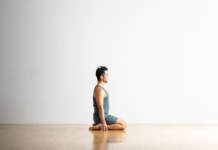
Begin in a kneeling position and sit down between your heels. You might need to take your feet slightly wider so they frame your hips. This is called Saddle Pose and is also known as Hero Pose. You can sit on a block or some folded blankets to make the pose feel less intense.
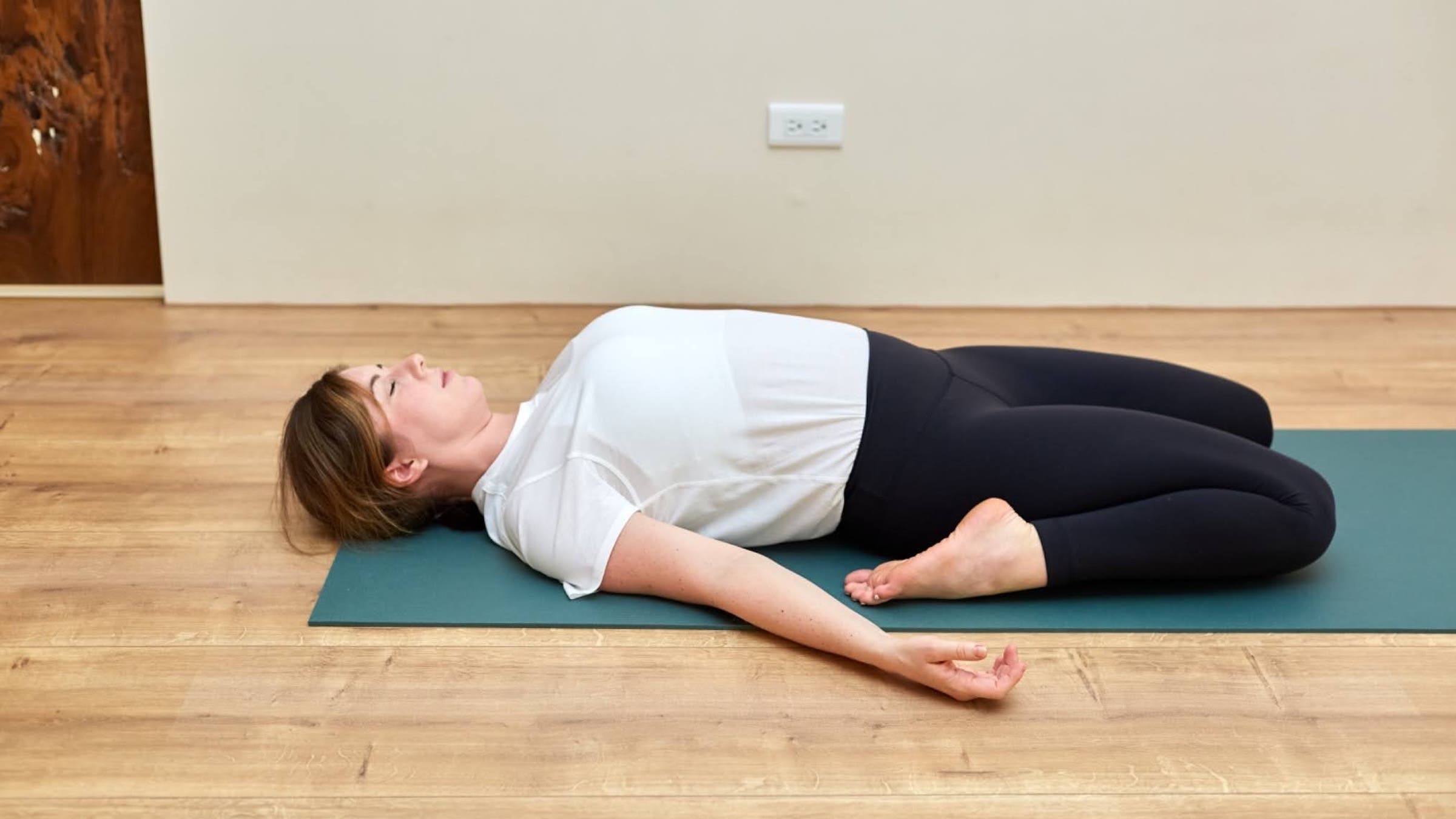
From kneeling, you can remain upright, lean back and prop yourself up with your hands or your forearms, or lower yourself all the way down onto the mat. Go only as far as your 50 to 60 percent allows. Reclining fully is not the goal; the stretch along the front of the thighs is.
If lying back with both legs back feel too intense, take Half Saddle instead. Slowly sit up, extend the other leg straight in front of you, and then lean back the same way but with only one knee bent. (Don’t forget to do the other side.) If the knees or lower back complain, come out and skip ahead to the next pose.
3. Reclined Swan Pose
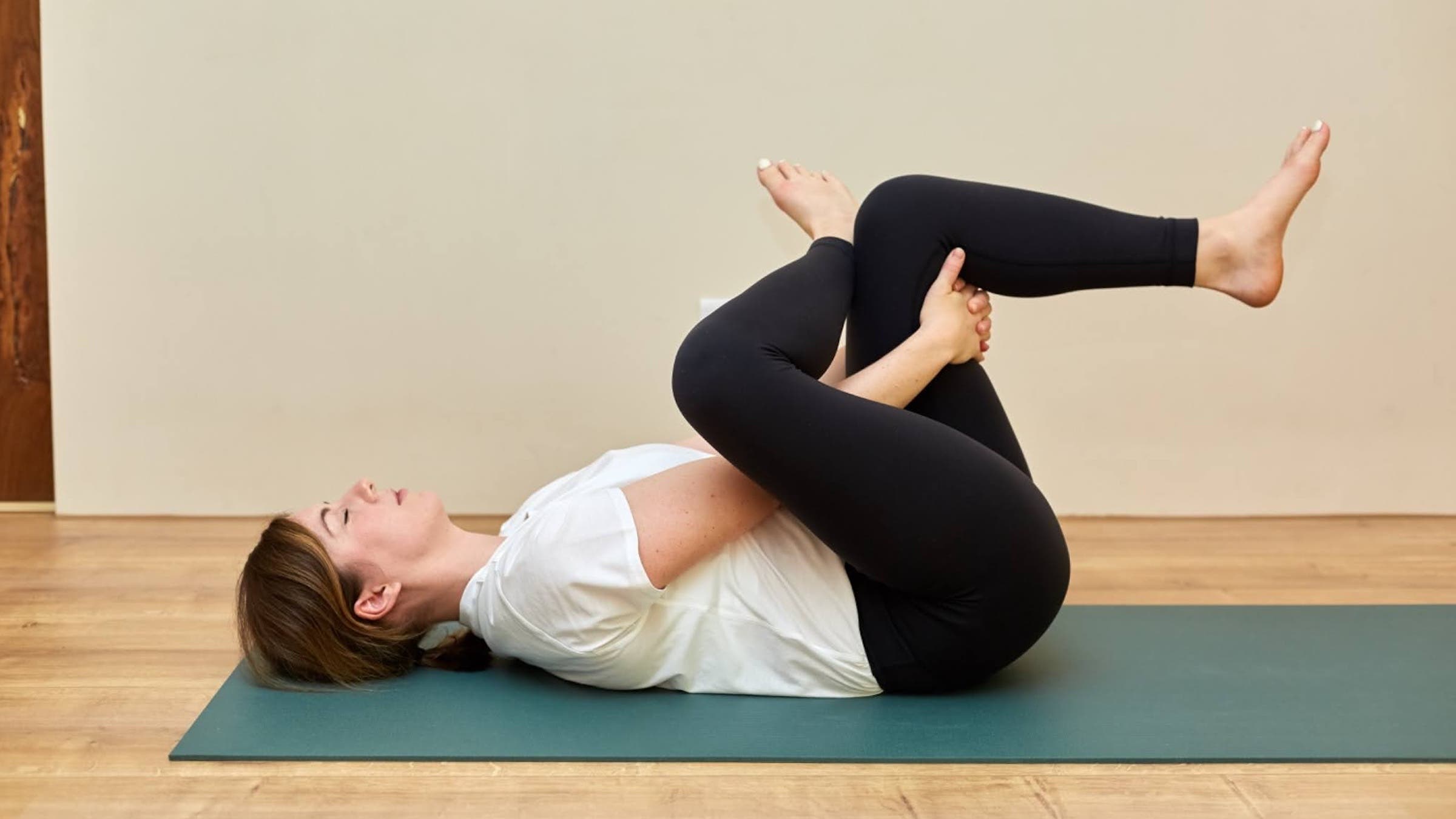
Targets: Hips and glutes
Suggested hold time: 3 minutes on each side
Lie on your back with your knees bent and feet on the mat about hip-distance apart. Cross your right ankle over your left thigh in Reclined Swan or Reclined Figure-4. Stay here or thread your hands behind your left thigh and draw your legs gently toward you. No pulling. The glutes work hard in training and hold on for days afterward—give them the long hold and let them release on their own time. Repeat on the other side.
4. Two-Knee Reclined Twist
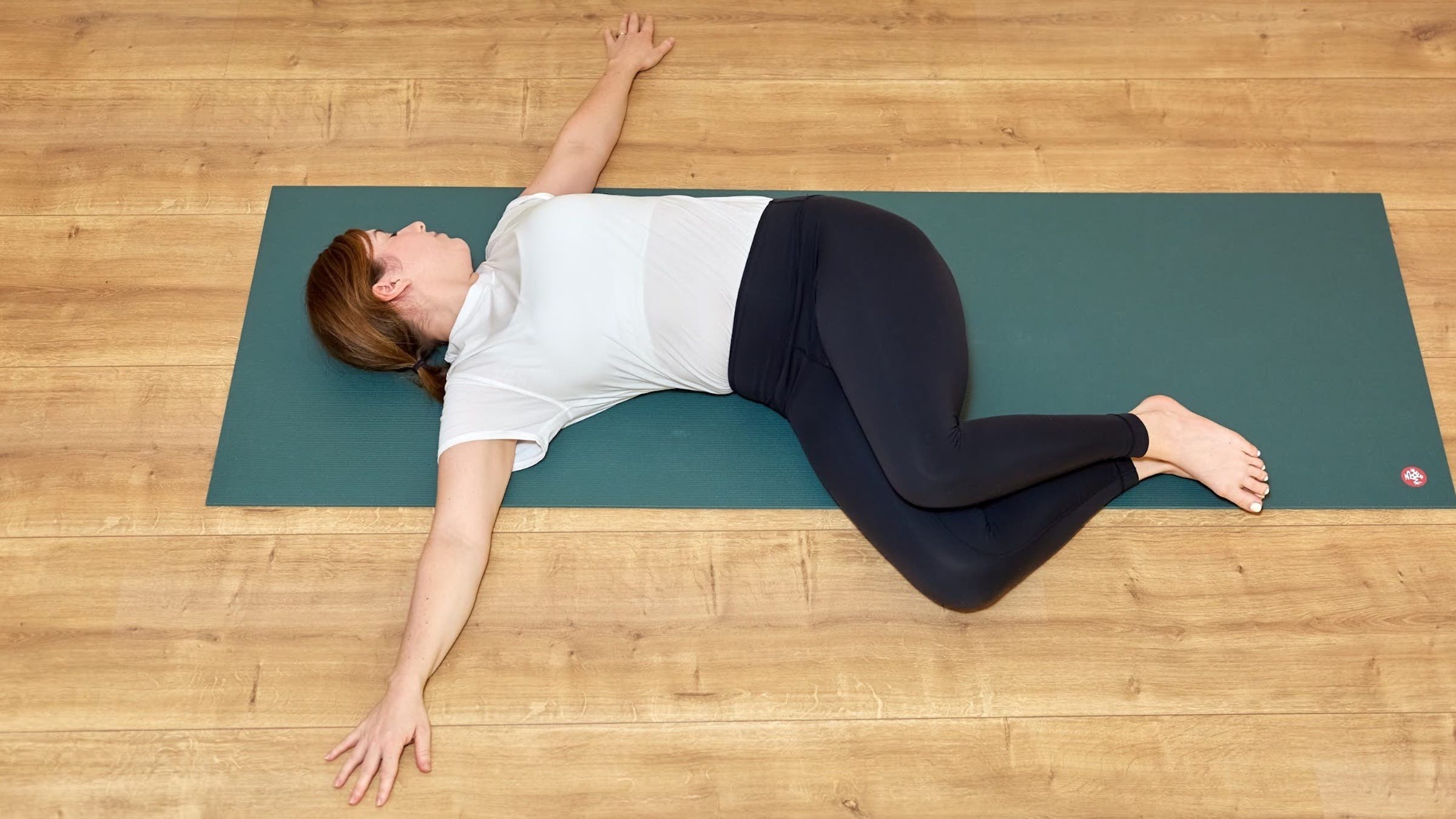
Targets: Glutes, spine, and lower back
Suggested hold time: 3 minutes on each side
Hug your knees in slightly and then let them fall to one side with your arms open wide, palms facing up or down. For a deeper twist, turn your gaze away from your knees. If your knees remain lifted above the mat, you can slide a block or a sweatshirt underneath them, which helps your muscles switch off. Rest your attention on the sensation and your breath as you let the twist gently wring out the back. Switch sides.
5. Legs Up the Wall
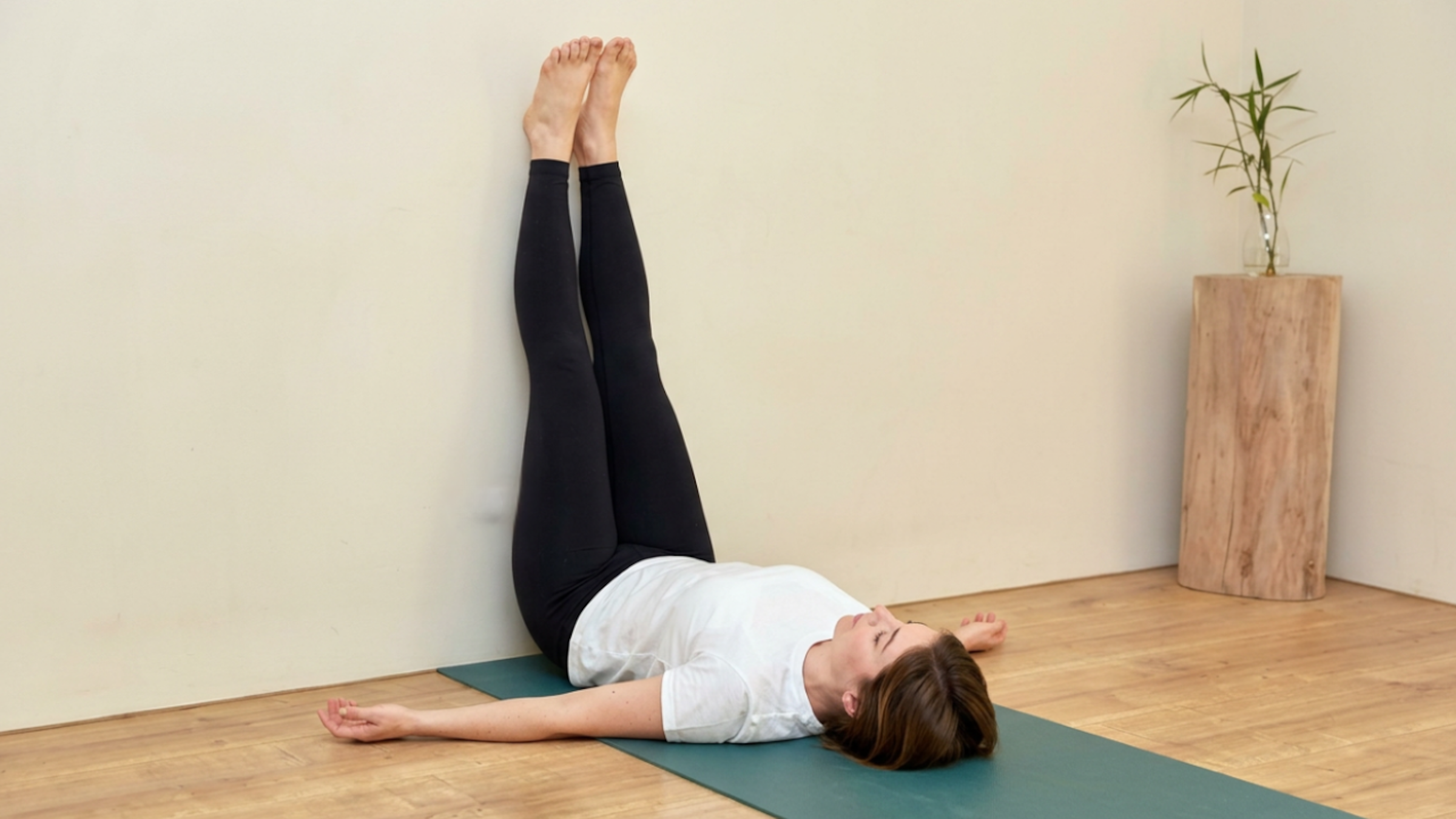
Targets: Tired legs and a switched-on nervous system
Suggested hold time: 5 minutes or more
Bring your hips flush to a wall and swing your legs up for Legs Up the Wall. If the hamstrings protest, slide the hips away from the wall a few inches. With the legs elevated, the heaviness drains out of them, the heart rate settles, and the body gets a clear signal that the effort is over and it’s time to relax.
6. Corpse Pose
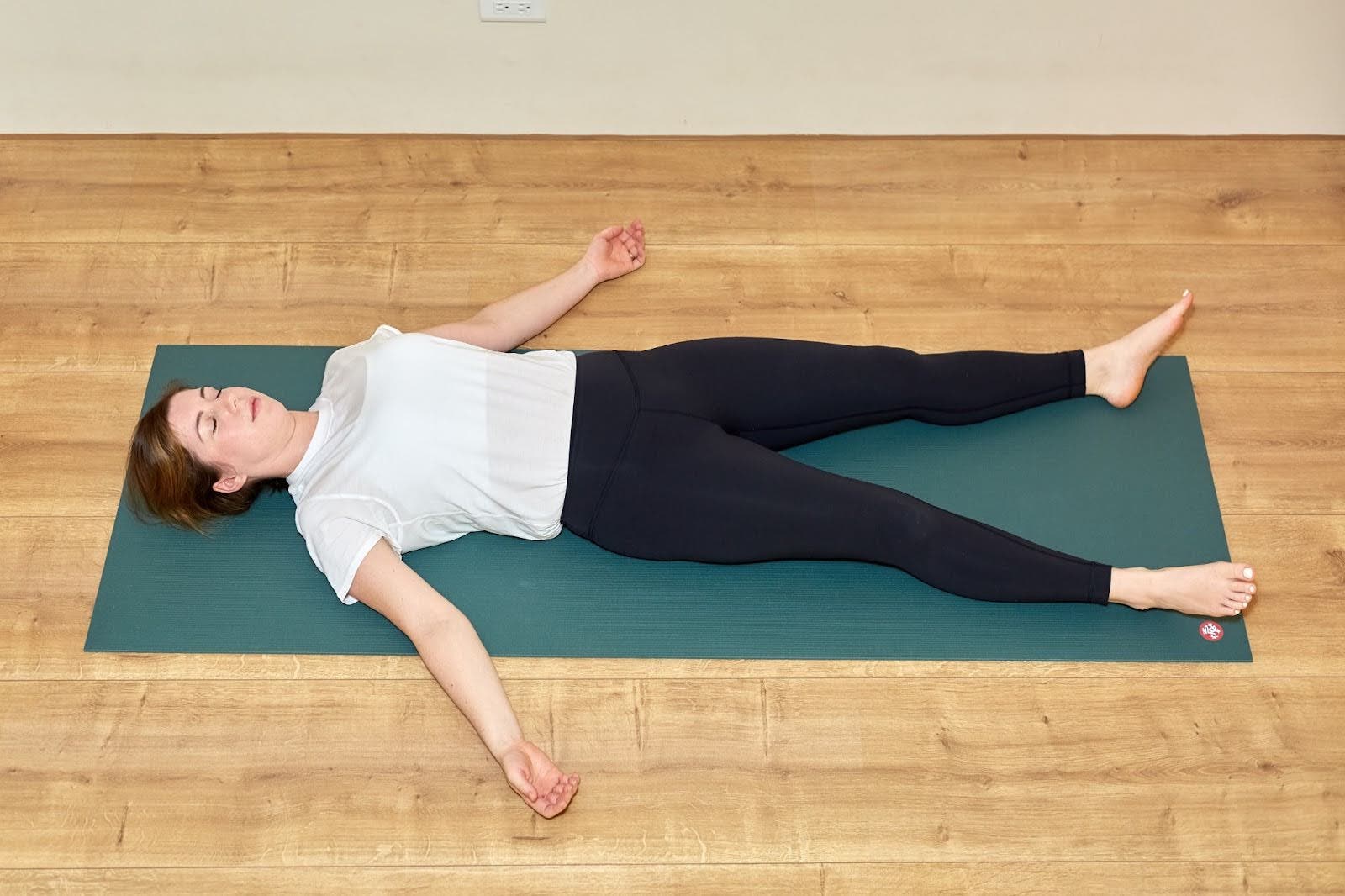
Targets: Nothing and everything
Suggested hold time: As long as you’d like
If you have a few more minutes, finish flat on your back in Savasana and take some time do nothing at all. On a recovery day, that might be the most useful shape there is.






tdarTPGQaYcPYRmQGxSdoe