
It’s a little counterintuitive. And it works.
(Photo: Canva)
Published August 9, 2026 05:55AM
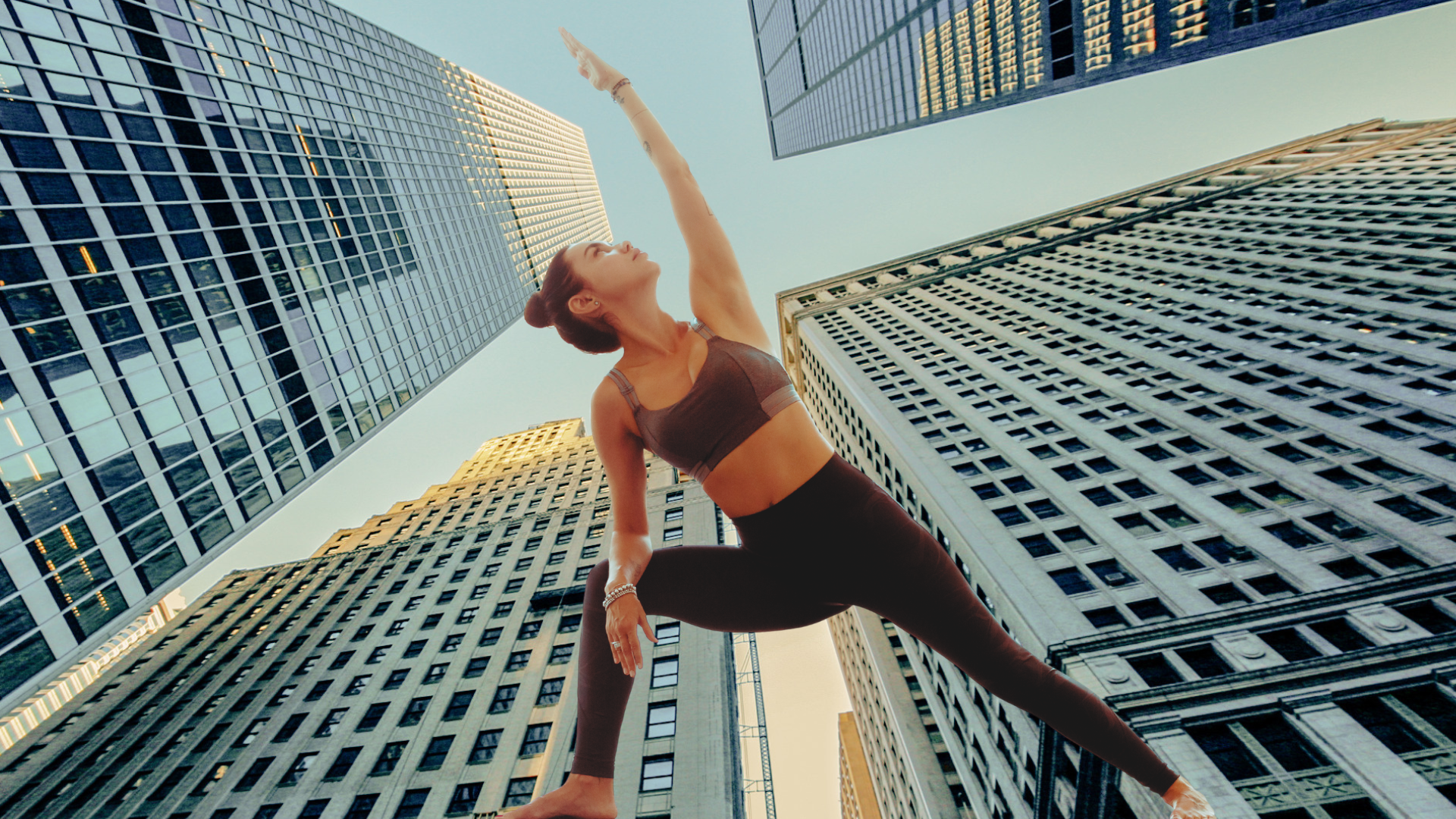
When I lived in New York City, I spent a fair share of my work days in tall buildings that would sway in high winds. Granted, the sway was barely perceptible. In fact, it was so subtle that I initially questioned whether or not I was actually feeling anything. Following hours of panic-driven research, I learned that expertly constructed skyscrapers are engineered to be flexible enough to move with the wind. In fact, absolute rigidity causes glass and steel to crack.
Eventually, after starting to practice yoga, I learned that this is similar to why teachers tell students to “embrace the wobble” in balancing poses or to learn how to “bend so you don’t break.” It’s not only normal to waver slightly when trying to remain steady on the mat, but attempting to remain perfectly still actually compromises the posture.
Just like skyscrapers, we need some measure of bendability in order to remain resolute. Transitions in between standing poses are one way to physically explore this concept as we can feel the physical experience of remaining grounded and being adaptive to change. The concept of creating stability through allowing action in a challenging yoga posture can also be understood by looking at micromovements in stillness, such as allowing a sway in a balancing pose, pressing down through the outer edge of the back foot in a Warrior pose, or making a subtle shift in the alignment of our hips.
Learning to let ourselves veer a little in one direction or another is definitely a practice. No matter how many times someone explained to me that the sway of the building was safe, I found it incredibly disconcerting. It was only with time and experience that I learned when we prioritize rigidity over flexibility, we find ourselves more apt to fall—not only in yoga but in life.
4 Yoga Poses to Help You Find Steadiness Despite Movement
Explore the concept of steadfast flexibility with some experimentation in these four postures. As you do, notice how maintaining a slow, steady rhythm of breath assists with your physical steadiness.
1. Warrior 2 to Extended Side Angle
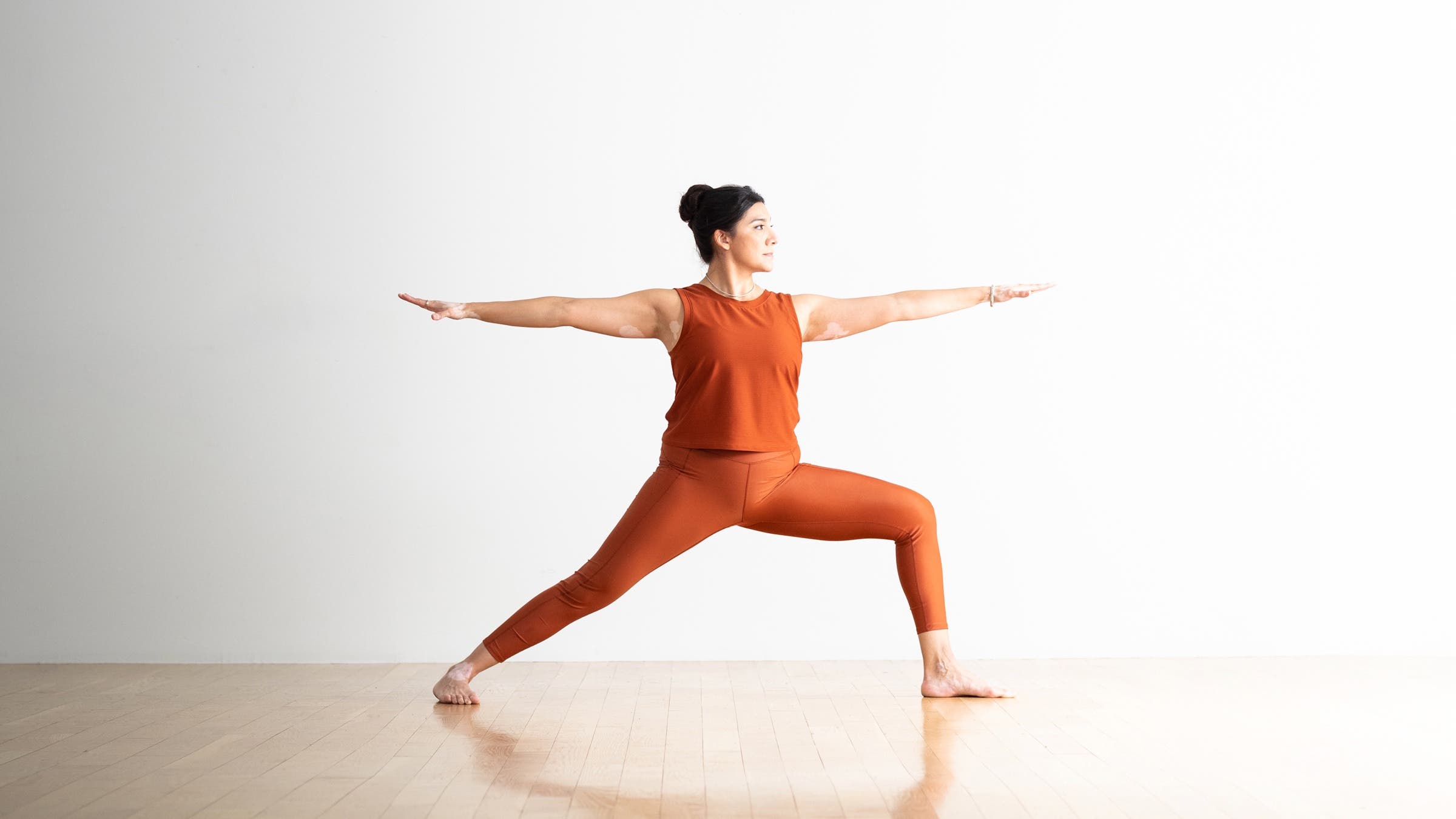
How to: Start with your feet in Warrior 2 (Virabhadrasana II) with your right foot forward. Place your hands on your hips as a reminder to turn your hips and chest toward the long side of the mat. Feel the crown of the head extending upward even as you ground into your feet. Reach your arms straight out from the shoulders toward the front and back of the mat. Take a few slow breaths here.
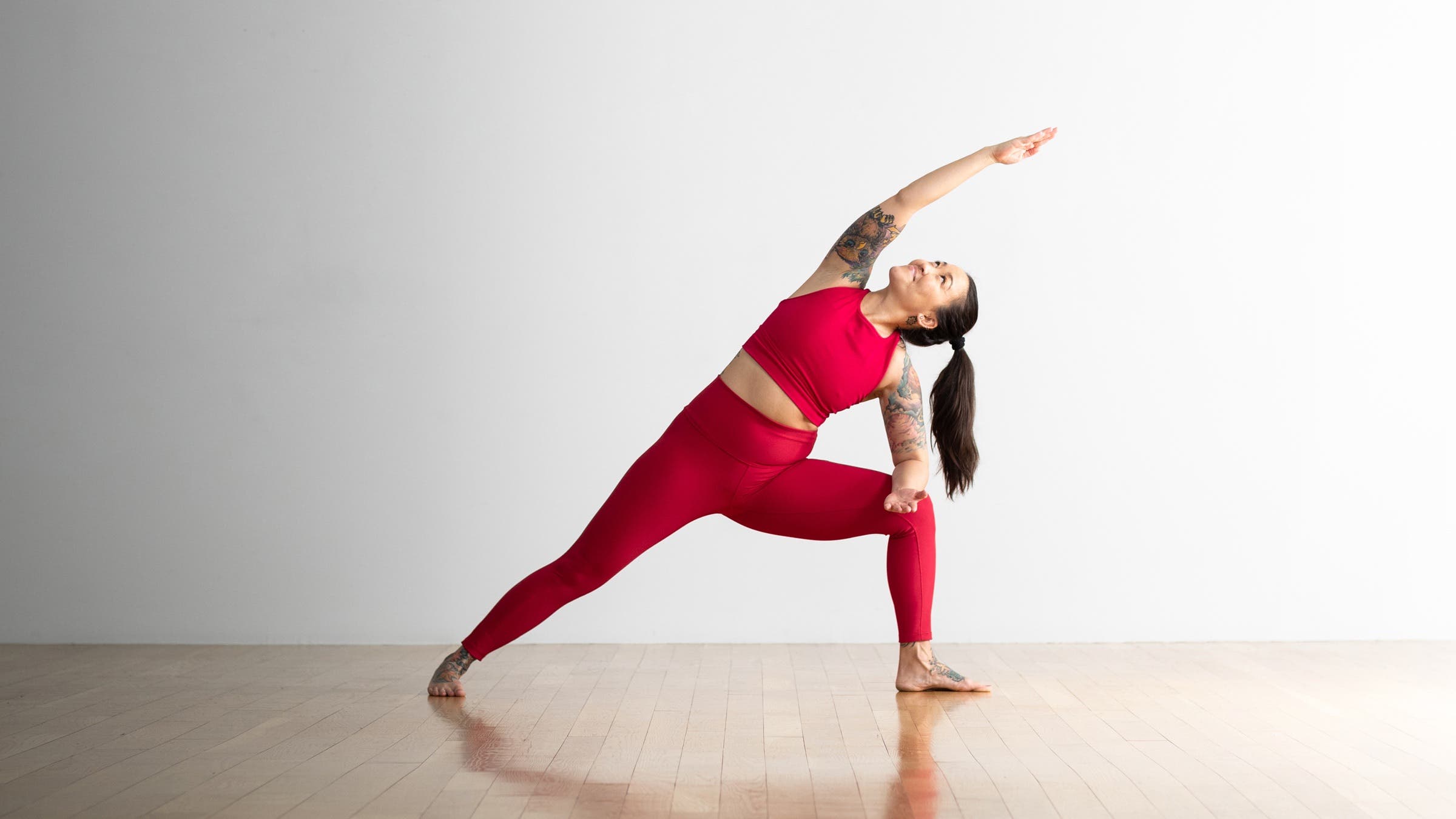
Keep your body facing the long side of the mat as you exhale and lean toward the front of the mat and press your right forearm against your right thigh. Reach your left arm overhead in Extended Side Angle (Utthita Parsvakonasana). Use your next inhalation to spiral the left side of the chest upward. Use your next exhalation to ensure your right forearm remains grounded against the front thigh.
Focus on: The micromovements of pressing and spiraling simulates the sensation of being simultaneously rooted and moving.
2. Warrior 2 to Reverse Warrior
How to: Start in Warrior 2.
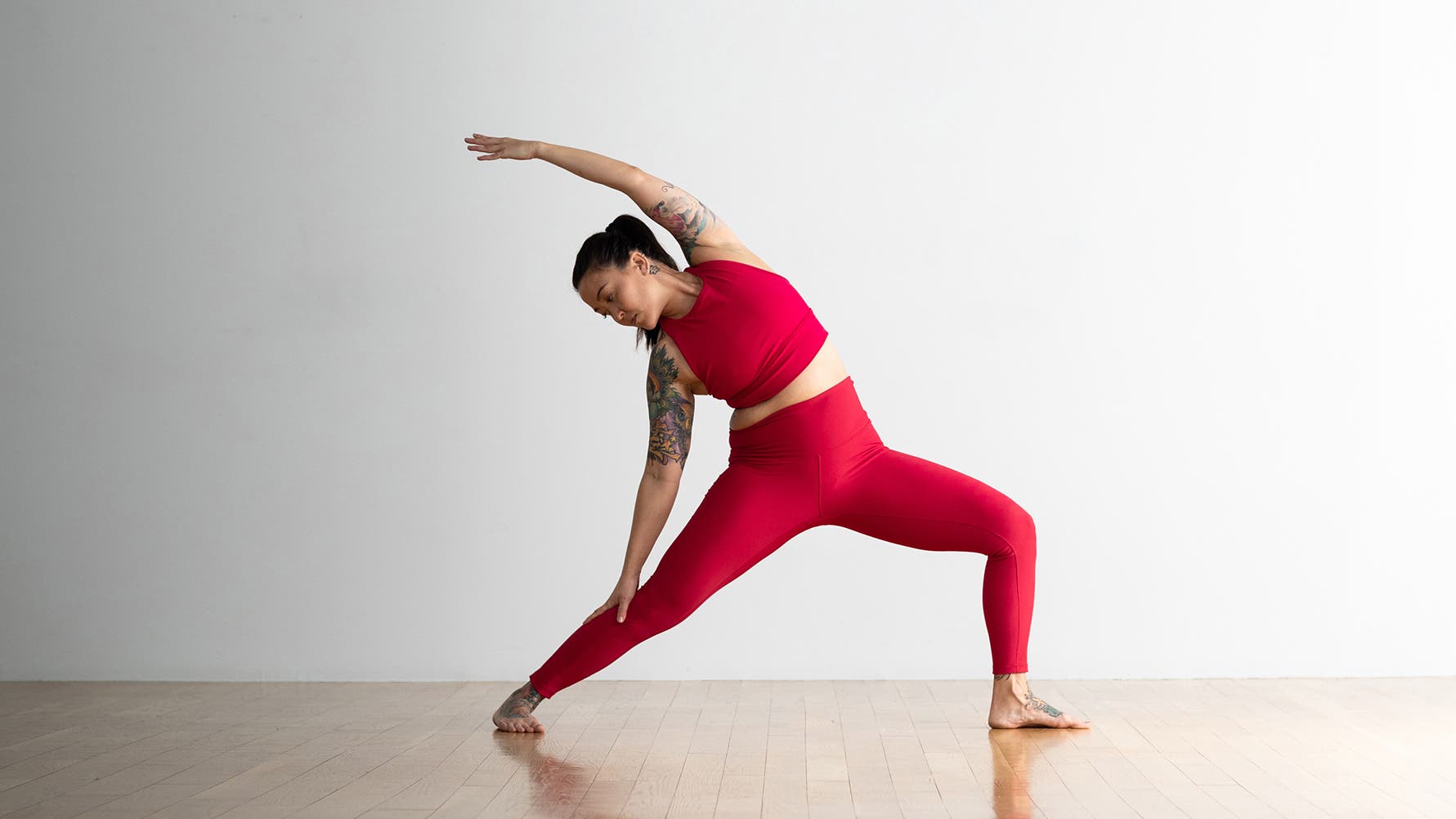
As you exhale, release your left hand toward your left thigh and reach your right arm overhead in Reverse Warrior (Viparita Virabhadrasana). Keep your hips and chest facing the long side of the mat. Fill the ribcage on your next inhalation, and then use the exhalation to spiral the right side of the chest upward. Keep the bend in your front knee and focus on the micromovements of balancing the pressure in your back foot between the pinky toe and the big toe mounds.
Focus on: Press down through the outer edges of both feet and shift your emphasis from one edge of the foot to the other to help ground you in equilibrium.
3. Standing Forward Bend
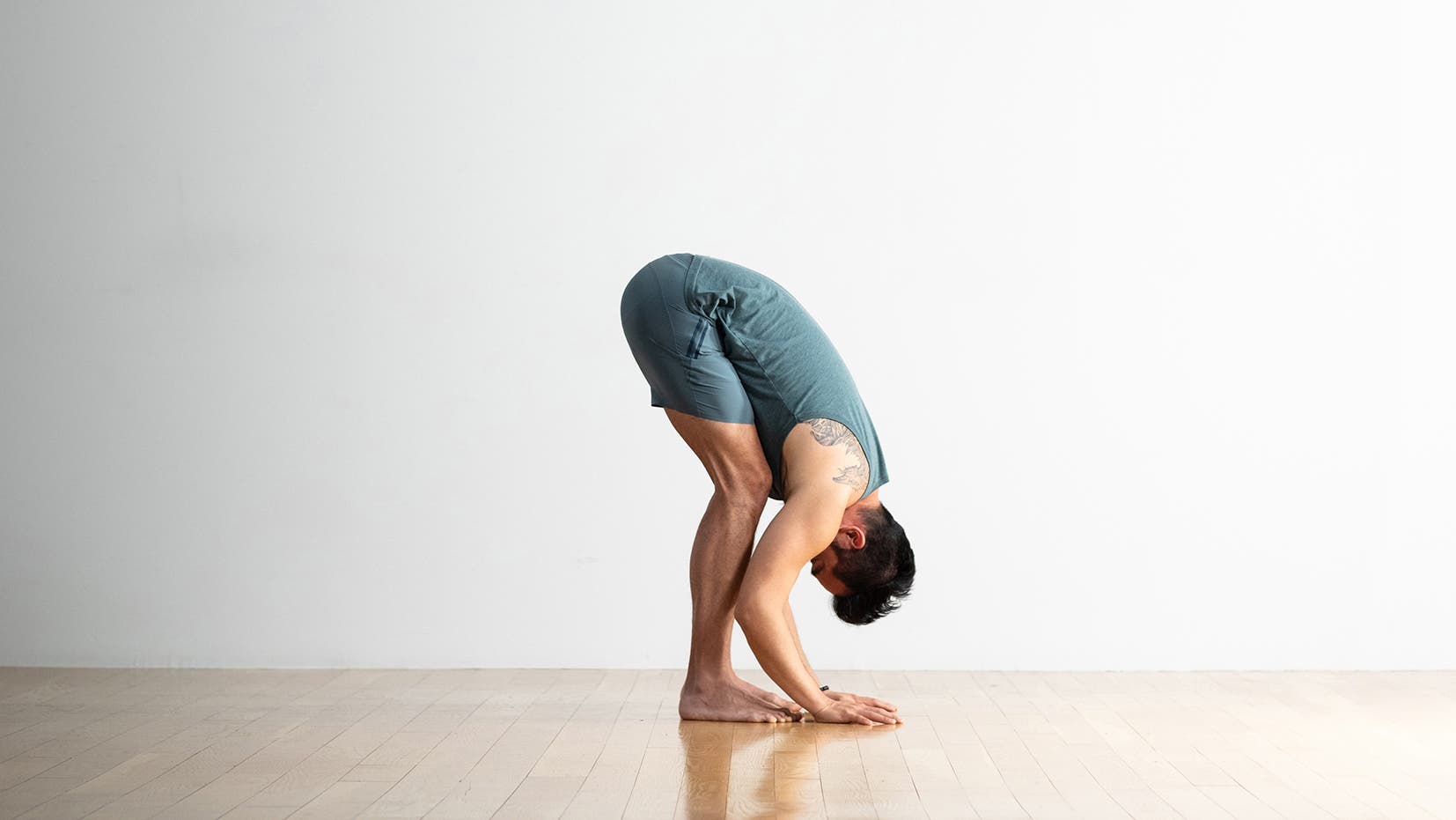
How to: Stand with your feet together or slightly apart. Press into the outer edges of your feet while slightly bending your knees in a nearly imperceptible movement as you fold forward. You can let your arms dangle or reach for opposite elbows. Shift the weight slightly from one foot to the next. Notice where the stretch feels most intense, and send the breath to that place, whether the hips, backs of the thighs, lower back, etc. Bring stillness to the feet, and, being mindful of dizziness, bring a slight sway to the upper body as the feet stay rooted.
Focus on: The standing forward bend known as Uttanasana is one of the most stable, unmoving postures in a yoga class, but you can still explore what it means to be flexible in stability here. Exploring flexibility in asana asks us to counter rigidity of our own expectations not only of how the posture looks, but how it feels in our body from day to day. Feet together is a greater hamstring stretch and balance challenge; feet apart may feel more stable and functional for folks with back issues. What feels good one day might not the next.
4. Mountain Pose to Tree Pose
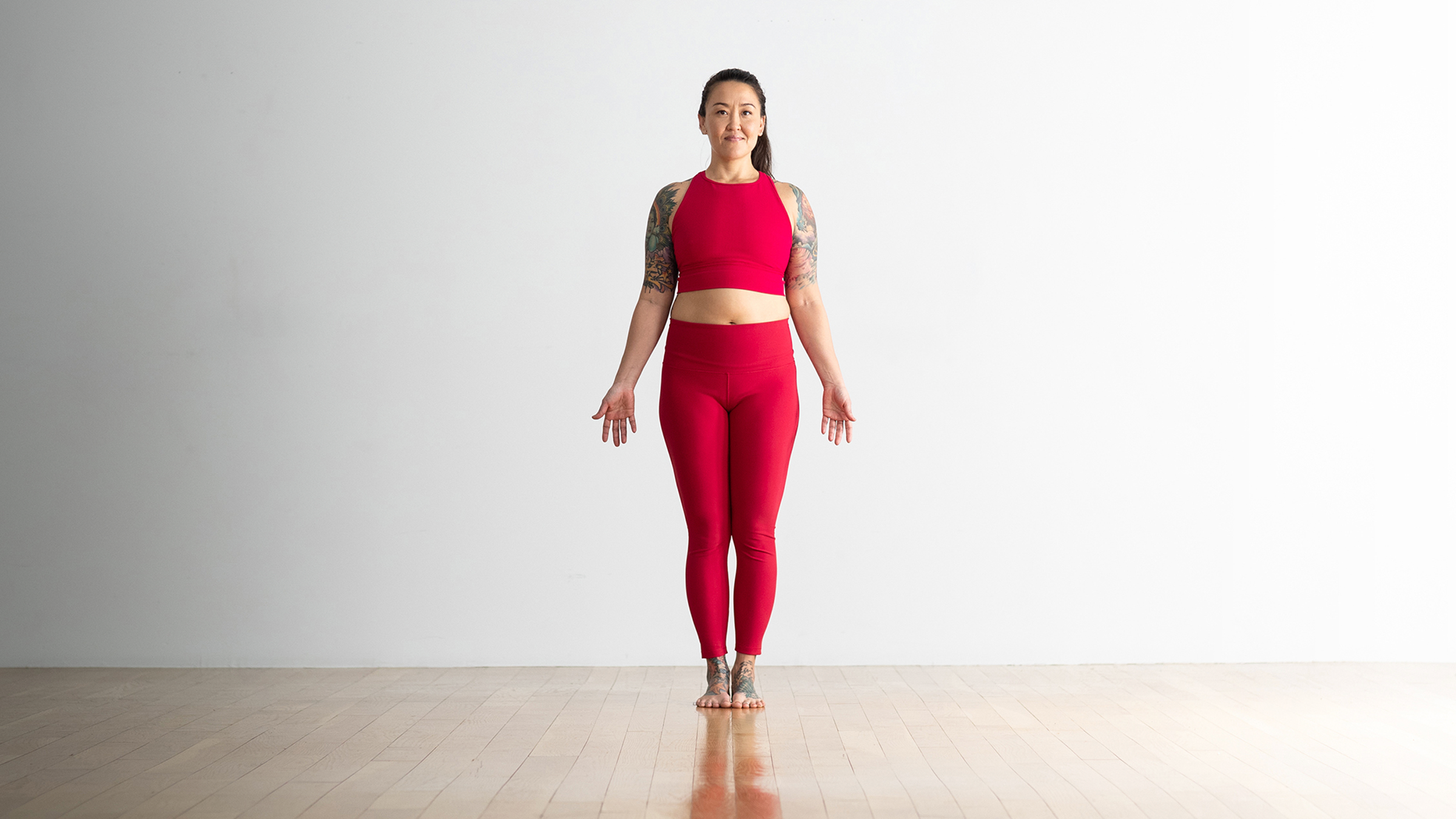
How to: Stand with your feet together as much as feels comfortable and bring a slight bend to your knees in Mountain Pose. Place your hands on your hips and press into the outer edges of each foot to feel a slight external rotation of the hips. Tune into the evenness in the right and left hip.
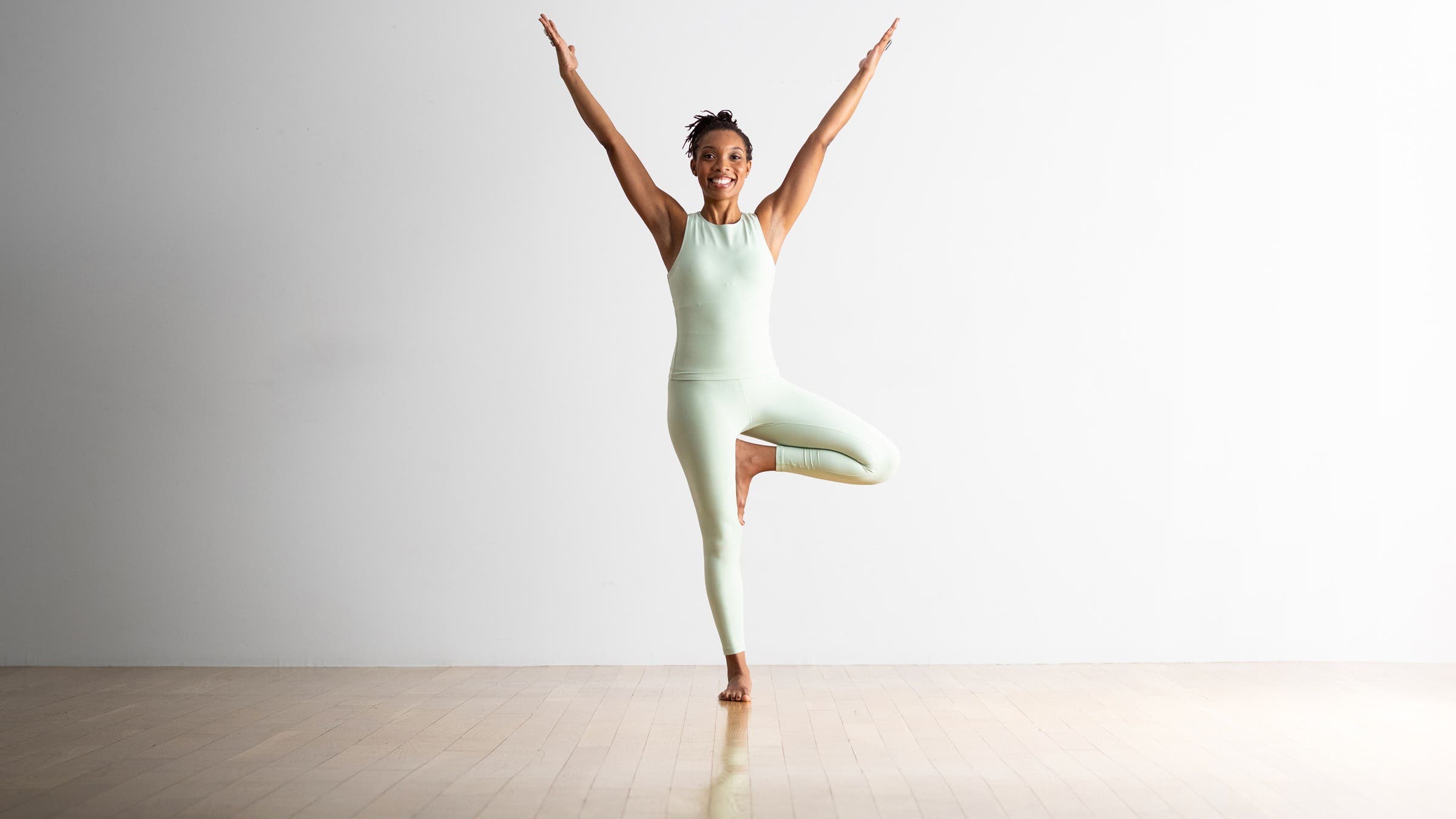
Your hands can stay on your hips for extra support or press your palms together in Anjali Mudra at the heart. As you lift your right foot to the left ankle, shin, or thigh, focus on exerting equal pressure from the foot to the leg and the leg to the foot in Tree Pose. Pressing the foot into the standing leg without equal pressure from the other direction causes the hip of the standing leg to lean out to the side. Keep the chin slightly lifted and gaze straight ahead, focused on an unmoving spot. Continue to make slight adjustments to the hips and the pressure between foot and leg to explore the idea of flexibility in steadfastness. You can also explore lifting your arms overhead while the bottom half of the body remains stable. Embrace the wobble! Keep pressing the foot into leg and leg into foot equally to stay rooted. Explore fluidly by moving the arms like tree branches or a skyscraper in the wind.
Focus on: After you lift one foot, pay attention to your micromovements as you adjust the hips to return them to evenness.