
Authenticity still matters.
(Photo: Canva | Design by Laura Harold)
Published June 26, 2026 05:46AM
For several years, I worked as an English professor at a small college where I also led a yoga teacher training (YTT). Introducing minds to two of my favorite topics in the world was an incredible experience. I even looked forward to grading homework—especially in the YTT.
The majority of the grades in YTT depended on students’ practice teaching. But being a believer in writing-as-reflection, I also asked students to submit personal responses to questions including, “Tell me about your reactions to today’s practice,” and “What Sanskrit word would you like to remember from the reading and why?”
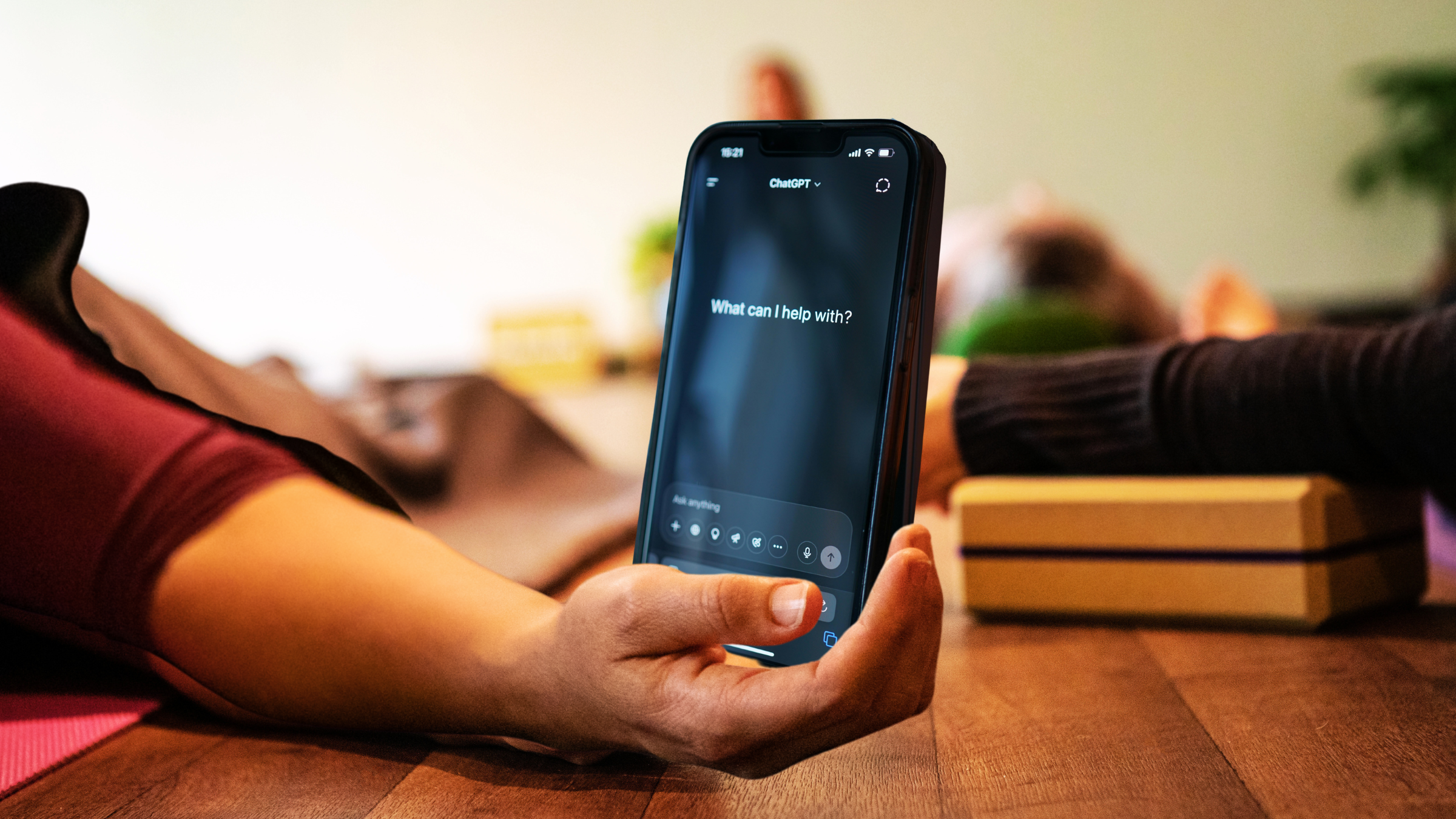
Often, the responses they shared were staggeringly insightful, relatable, and impressive. Then, ChatGPT launched in 2022. And suddenly some of their responses were not so insightful, relatable, or impressive.
Each time a YTT student submitted a personal response that I suspected to be AI-generated, I was hit with denial. “Surely I must be wrong,” I thought. Since no AI detector is foolproof, I told myself that the reaction in my gut to robotic-sounding writing wasn’t evidence.
However, when a student who had previously written in all lowercase letters and sentence fragments suddenly turned in a reflection that was grammatically perfect, or someone discussed poses that we didn’t actually do together in class, or a student referenced a Sanskrit term not covered in the reading, my suspicions heightened.
Admittedly, part of me was offended on behalf of yoga—and on my own behalf. Did we not discuss asteya, or “non-stealing,” during class? Did we not go over the syllabus policy which said that AI is off-limits when it comes to personal reflections, because they’re, well, personal?
I had an easier time understanding the urge for students to resort to AI in the English classes that I was teaching. Many signed up because they were core requirements. But no one had to take YTT. They were there, presumably, because they wanted to be yoga teachers or learn more about the subject.
So I’d take a few deep breaths, and while exhaling my sense of indignation, I’d remind myself that it wasn’t about me or even about yoga. Students might have taken the easy route because they were experiencing feelings of anxiety, insufficiency, or vulnerability, or navigating problems with time management, to which I am no stranger myself.
I realized my concern ran deeper than whether students used AI or not. Really, I wondered whether students who relied on AI weren’t missing the point of YTT, which wasn’t just a diploma. It was to be ready to guide someone into an experience of yoga, for which they ultimately would need to trust themselves. Was using AI a sign that they weren’t ready? Or that I wasn’t helping them get ready?
Then again, my YTT students didn’t sign up for a writing course, either.
I needed to find a way forward, which meant that it was time to cope with my own nervous system’s urge to flee instead of having the face-to-face conversations no part of me wanted to have. I don’t even like telling my dogs “no,”so I certainly wasn’t comfortable playing the AI police.
The YTT’s AI policy was to ask students to redo the assignments but avoid making accusations. “This isn’t what I’m looking for,” I’d say to them. Then I tried to be more of a permission-giver than a penalizer. “I want to know what YOU think. You aren’t graded on grammar, so I’d rather you turn in your honest, personal reactions even if they are hastily written and imperfect.”
Most of the time, I was the one sweating through these conversations—not the students. They usually took me up on the request for a redo. Sometimes they thanked me for the second chance and said they’d had a lot going on when they turned in their last assignments. Often, their next assignments were much better, and that was a relief. I found that, over time, they started sharing thoughts and teaching sequences in a way that seemed more authentic to them.
And if sharing authentically is a valuable skill for yoga teachers (and humans) to have, then so, too, is being able to initiate the conversations I had with them about using their real voices…and moving on from those conversations. Adopting a position of permanent suspicion toward students felt disheartening, and not very yogic. If I was going to keep taking joy in teaching, I realized, I had to find a way to have confidence in my students, even if they were still working on their own sense of confidence.
And if they do go on to teach, they’ll eventually learn that they are the ones standing in front of the class—no one else. They are the ones who will have to respond to their own students without any AI assistance. To do that, they’ll have to trust themselves.