
Published July 19, 2026 09:09AM
By nighttime, most of us are tired yet unable to truly rest. Our bodies are in bed, but our minds are still working overtime by replaying conversations, revisiting unfinished business, rehearsing tomorrow’s tasks, worrying about loved ones, and searching for solutions to problems that we have yet to encounter.
Part of the problem is we tend to approach sleep the way we approach everything else—as something to fix or accomplish. We track it, optimize it, and search for the perfect formula. This keeps us on high alert. But sleep has a way of resisting effort. The harder we attempt to force it, the more elusive it becomes.
Practicing yoga stretches for sleep takes an alternate, and perhaps more helpful, approach. It helps us create the conditions in which sleep naturally takes place, becoming a reminder that rest is not something we achieve. It is something we allow.
How Yoga for Sleep Works
The nervous system sometimes remains on duty long after the work itself has ended, notably when we experience difficulty dropping the identities we carry throughout the day—parent, teacher, caregiver, planner, problem-solver. One of the teachings from the tradition of yoga nidra addresses this and can be expressed in three simple phrases:
Akinchan I am nothing.
Aprayatan I do nothing. I make no effort.
Achaha I want nothing. I desire nothing.
These words offer a release from the burden of constant becoming. For a few moments, we step out of our roles and responsibilities and simply rest.
The short practice that follows is designed to help us make that transition. The movements are gentle and designed to be practiced in bed. As the practice helps us make the shift from doing to being, it sends an important message to the nervous system. Namely, that we’re allowed to let go of the day.
10-Minute Yoga Stretches for Sleep
As you move through the following bedtime yoga routine, let your breath set the pace. There is nowhere to reach and nothing to accomplish. The stretches for sleep practice itself is enough. There is no need to stretch intensely to the point of strain.
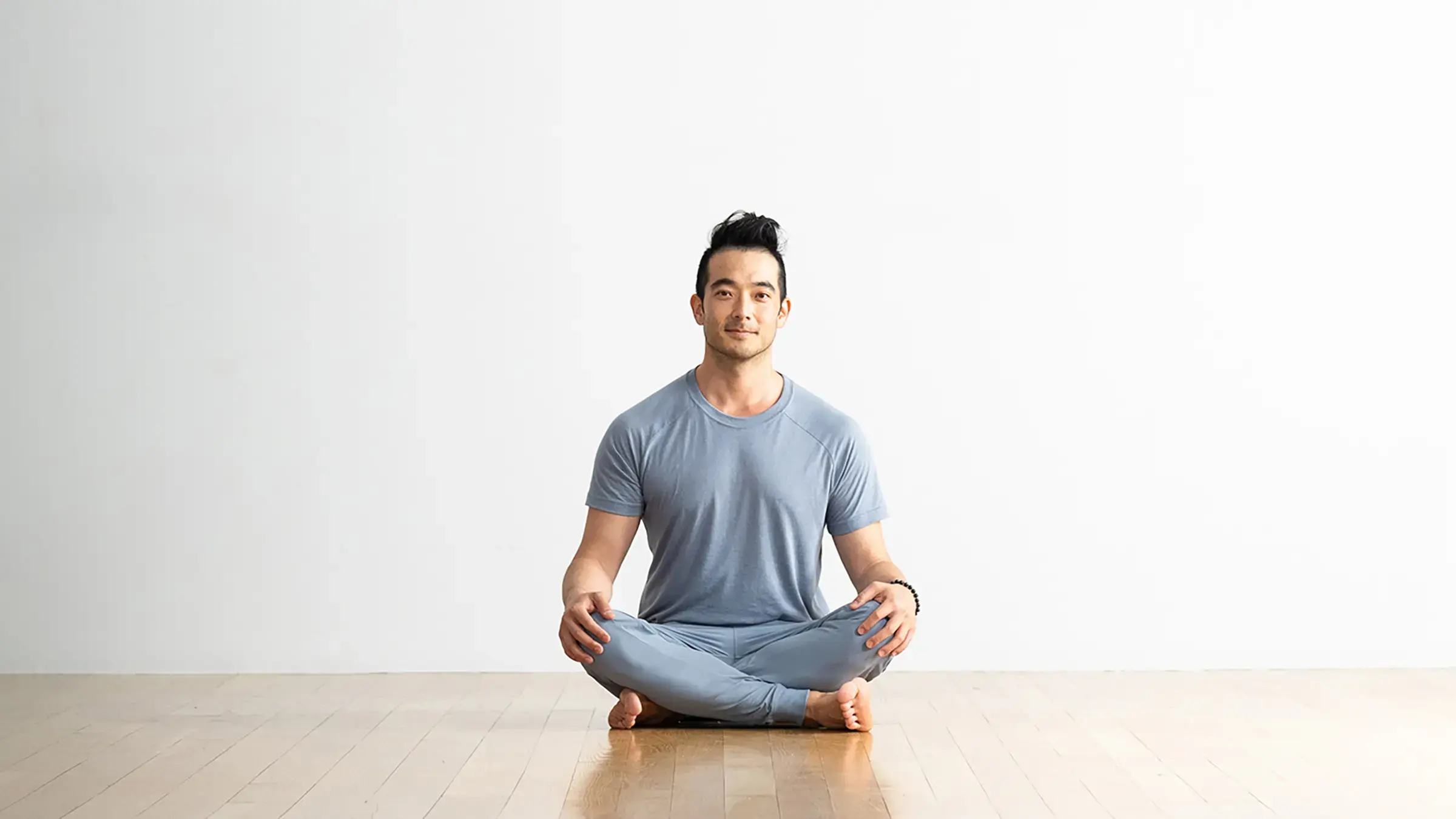
1. Arrive in Stillness
Sit comfortably on your bed with your legs crossed. Rest your hands on your thighs and sit tall, allowing your spine to feel as if it’s lengthening.
Take several slow, unhurried breaths for about 30 seconds. Let each exhalation become a small act of release.
Notice what remains of the day in your thoughts. Perhaps it’s a niggling conversation or a worry revolving through your mind. You do not need to solve any of it right now. Simply notice.
2. Seated Side Bend
The next time you exhale, slowly lean to your left. Stay here for about 30 seconds. Let your breaths be easy. Notice the sensation of yielding rather than striving. Feel your side body soften with each breath. Slowly return to center.
Now lean gently to the right. Again, there is nowhere to reach. Simply settle into the shape instead of trying to perform it. Stay for several slow breaths before returning to center.
3. Seated Cat-Cow
Slowly straighten your legs and rest your hands lightly on your thighs. As you inhale, lift your chest and broaden across the collarbones in a slight backbend. As you exhale, gently round your spine. Move slowly through 2 or 3 rounds, taking about 20 seconds for each pairing of arching and rounding.
Imagine the breath carrying the movement rather than the muscles creating it. As the body begins to find its rhythm, the mind quietly follows.
4. Knees to Chest
Lie comfortably on your back. Draw one knee toward your chest and hold it lightly for 5 breaths. Release and repeat on the other side.
Then hug both knees gently toward your chest. Notice the lower back settling into the bed. Notice the quiet sense of being supported.
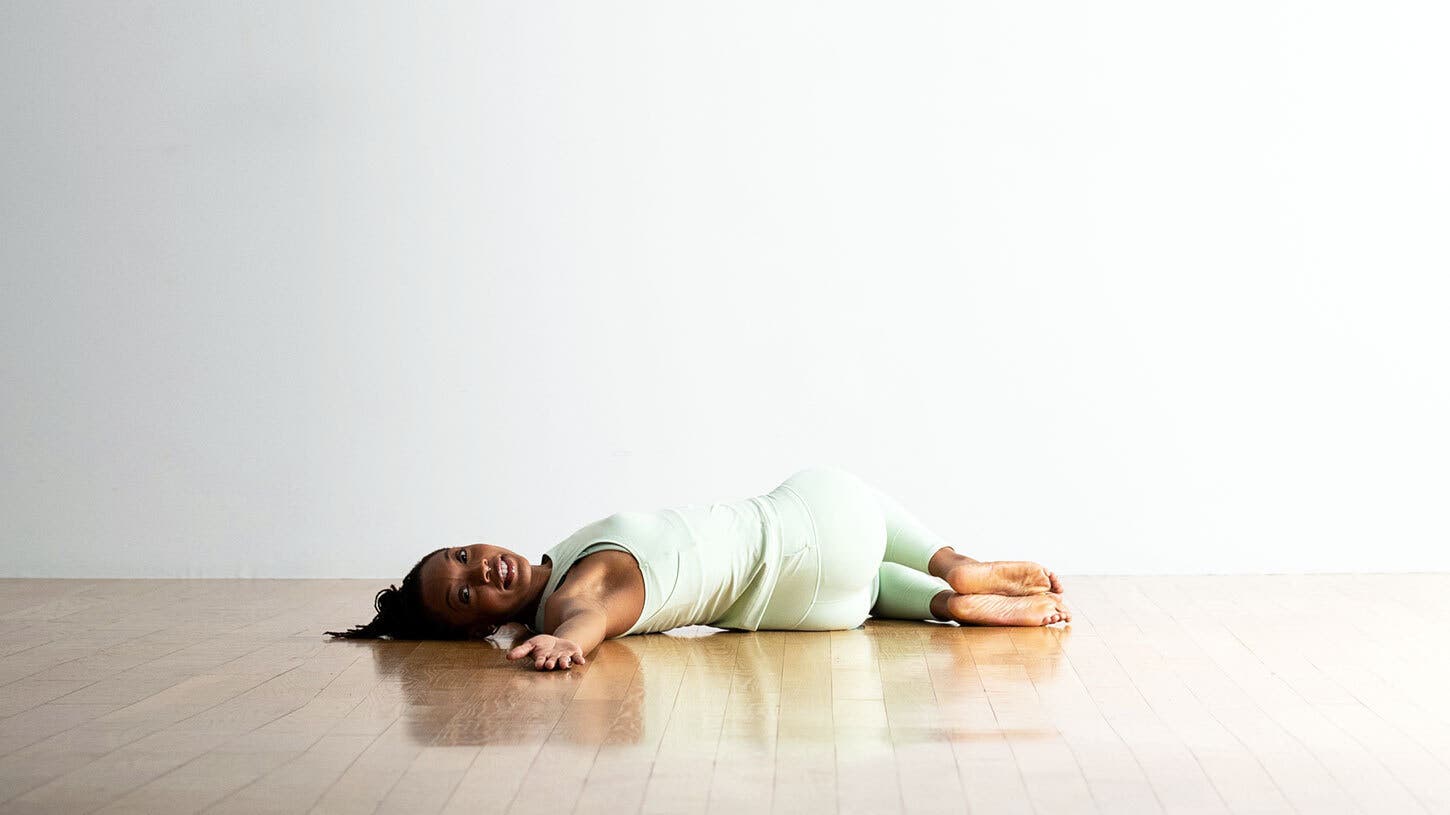
5. Reclining Twist
Keep your knees bent and let them shift slowly to one side. Pause for several breaths. Bring them back through center and let them shift toward the opposite side.
Move gently from side to side a few times. Nothing forced. Nothing hurried. Let the rhythm itself begin to soothe you.
6. Full-Body Stretch
Return to center and extend your legs straight and comfortably on your bed. Reach your arms overhead and stretch through your entire body as though you’re just awaking from a long sleep. Stretch and lengthen from your fingertips to your toes. Repeat 3 or 4 times.
Then let everything go. Let your arms rest. Let your legs rest. Let your effort dissolve.
7. Rest and Remember
Close your eyes. Bring your attention to the natural flow of your breath. The inhalation arrives. The exhalation leaves. Nothing needs to be controlled.
If any thoughts arise, silently repeat with understanding.
I am nothing.
Pause.
I do nothing.
Pause.
I want nothing.
Allow the words to settle into your awareness.
For these few moments, you are not the employee, the parent, the daughter, the doctor, or the planner. You do not need to accomplish anything. You do not need to improve anything.
You are allowed to simply rest.
Continue breathing naturally. Let each exhalation carry away a little more of the day’s tension.
Feel your jaw soften.
Feel your shoulders release.
Feel your mind loosening its grip on the day.
Somewhere between one exhalation and the next, you might find that sleep becomes a natural consequence of your actions as you lie down not only the body, but the burdens you’ve been carrying throughout the day.