
Published October 5, 2026 01:55PM
It can be challenging to find oblique-strengthening exercises that don’t involve a lot of twisting or contorting. The following yoga poses for oblique strengthening from longtime yoga teacher and personal trainer Amber Sayer do exactly that. Remember, simple works.
I teach yoga to students of all ages, backgrounds, shapes, sizes, and reasons for practicing. Yet despite the diversity of students, almost everyone I encounter is interested in one thing. Namely, strengthening the core. Yet there’s a component of core-strengthening that almost everyone overlooks, and that’s the oblique muscles.
The core muscles include not only the superficial abdominal muscles along the front body but also the muscles along the side body. Specifically, the superficial external obliques and the underlying internal obliques, which run perpendicular to one another. When contracted, these muscle groups work together to enable you to twist your spine, bend from side to side, and stabilize your position in challenging balancing poses. Yet many of us forget to consider oblique-strengthening exercises.
Yoga tends to underserve the obliques, and when attention is brought to them, it tends to focus on stretching rather than strengthening. The yoga poses that activate and challenge the obliques require you to hold a position in which your body has limited contact with the mat, meaning your core muscles need to engage to hold you steady and in place. Following are some of the best oblique-strengthening yoga poses to help you work these oft-forgotten muscles.
Many people assume that yoga for oblique muscles must innately involve complicated poses in which the body is twisted or the torso is bent to one side. But the internal and external obliques help ensure the torso doesn’t rotate or bend when we don’t want it to. In this way, they resist these motions as much as they assist them, which means you can start strengthening the obliques with longer holds in certain common yoga poses.
5 Yoga Poses for Oblique Strengthening
Remember to breathe slowly, bringing your inhalations toward your back and side ribs, and try to draw your mind to the sides of your abs to make sure the obliques are working in concert with the rectus abdominis, deeper transversus abdominis, and back muscles.
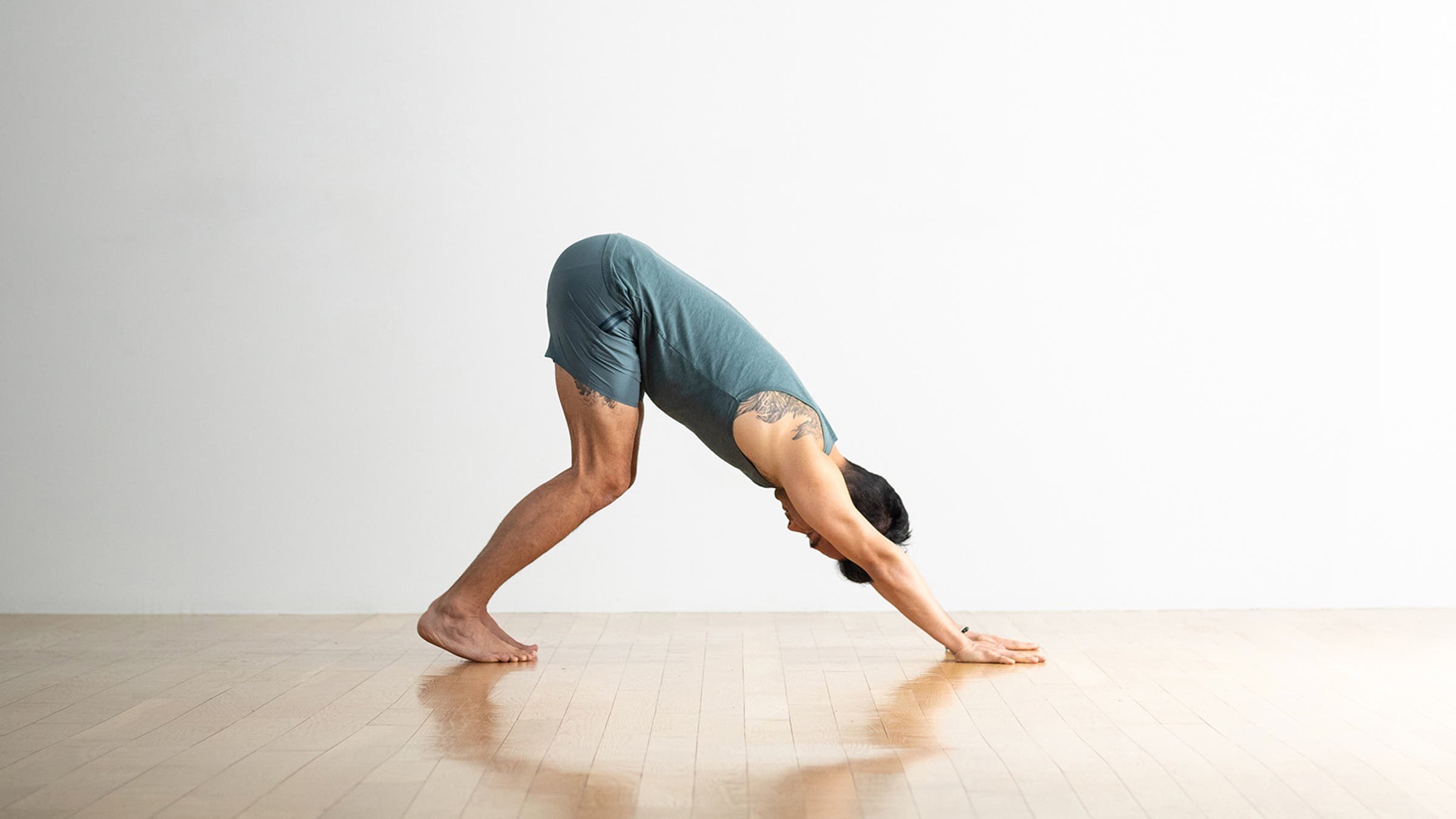
1. Downward-Facing Dog Pose
A study examining core muscle activation during various yoga poses found that High Plank, Low Plank (Chaturanga), and Downward-Facing Dog (Adho Mukha Svanasana) are each effective at activating the external obliques. Down Dog serves more to support endurance of the muscles rather than active strengthening, making it a helpful warm-up prior to practicing other oblique-strengthening poses.
To emphasize activation of the oblique muscles, try to draw your lower ribs slightly toward your front hip points in Down Dog while still keeping your spine long.
How to practice Downward-Facing Dog.
2. Fallen Triangle Pose
One of my favorite yoga postures for the obliques is Fallen Triangle pose (Patita Tarasana). I think of this as a hidden pose of sorts because it’s not a standard in most yoga core routines.
Fallen Triangle retains elements of the basic shape of standard Triangle Pose (Trikonasana), which has been found to activate the external oblique muscles, among other core muscles, such as the rectus abdominis and glutes. Yet Fallen Triangle builds on that by also incorporating elements of Side Plank and twisting, each of which specifically targets the obliques. When you attempt to balance with one hand in contact with your yoga mat and one leg reaching toward the side while the other arm is reaching upward, your internal and external obliques have no choice but to engage.
Beginners can start with regular Triangle Pose. This position still challenges your balance and activates the obliques because you are twisting the trunk while also resisting further rotation. As your balance, coordination, and upper body strength improve, you can try Fallen Triangle.
How to practice Fallen Triangle.
3. Dolphin Pose
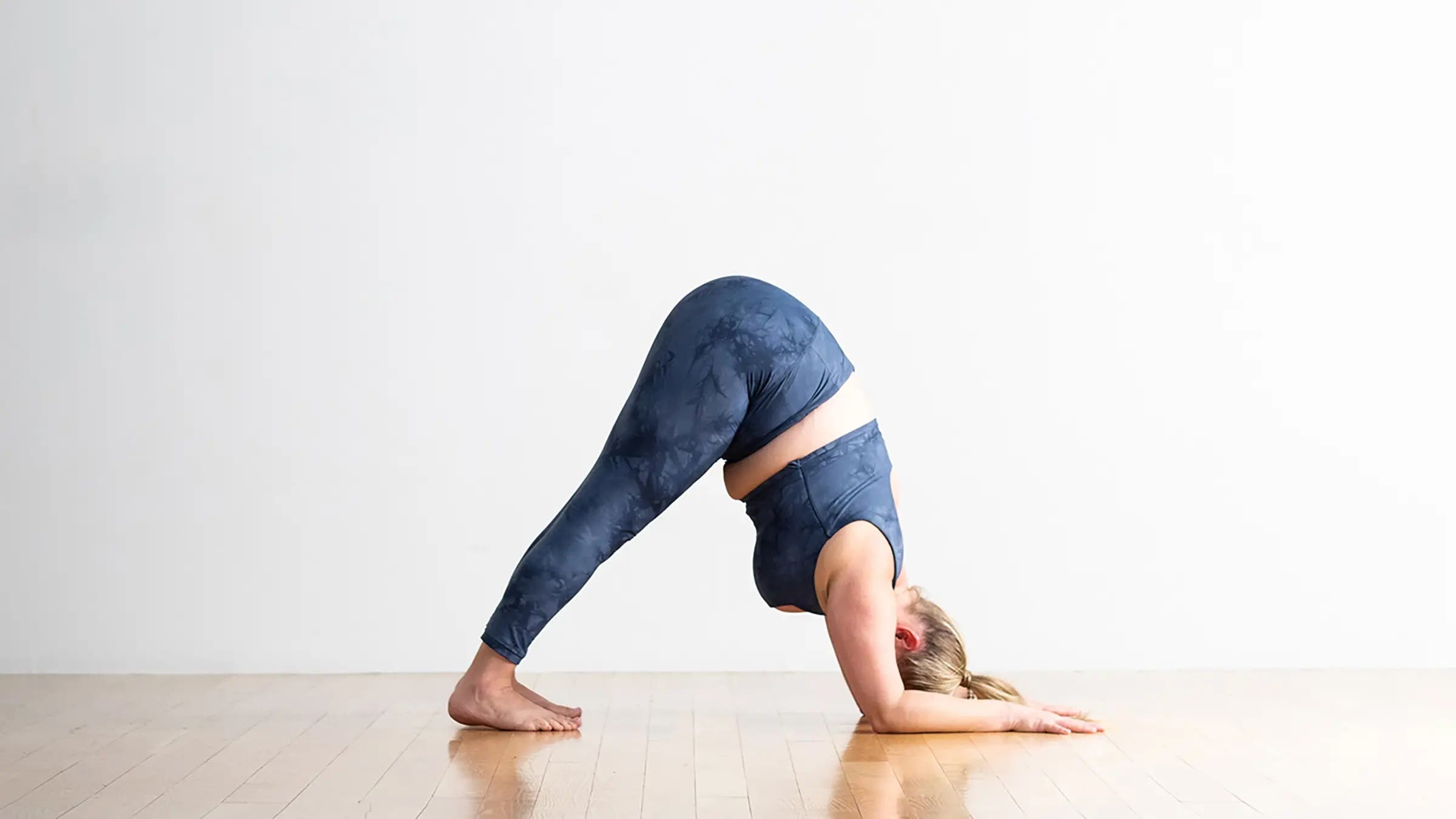
A study that relied on electromyography (EMG) to assess muscle activation in various yoga poses found that Dolphin Pose excelled at strengthening the internal and external obliques. It also promoted strength in the erector spinae, a key supportive muscle group in the back that is also part of the core.
When you press into this pose, think of pressing your sit bones toward the ceiling and maintaining a neutral spine to keep optimal length and alignment in the spine.
How to practice Dolphin Pose.
4. Bear Pose
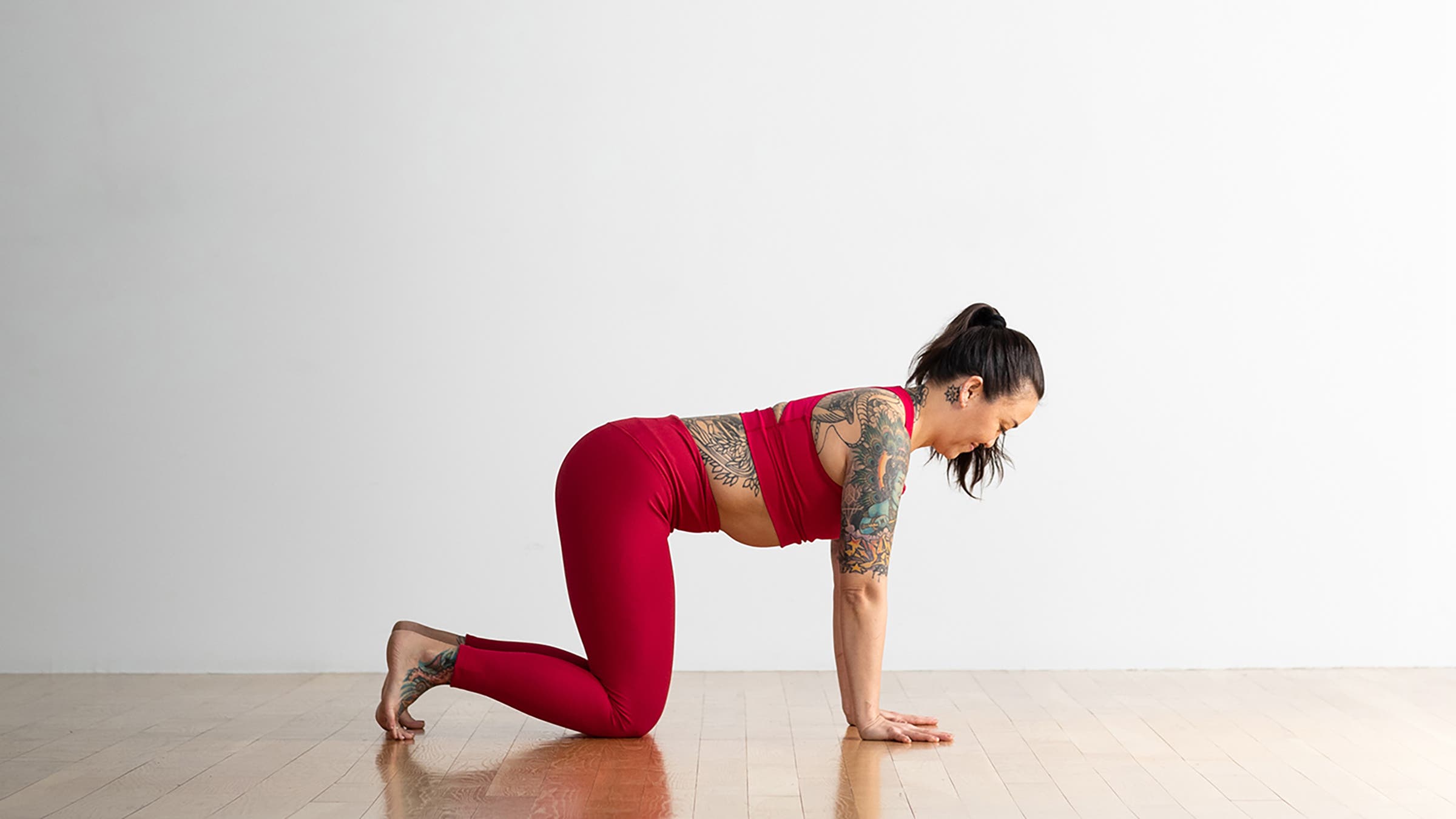
Bear Pose, in which you start on your hands and knees and then hover your knees a couple inches above the mat, is one of several yoga poses that is quite similar to common strength-training core exercises seen at gyms. The obliques work as synergistic muscles here, engaging along with the other core muscles to prevent your trunk from rotating or sagging as your body struggles to remain stable. It also strengthens your upper body and other core muscles.
You want to feel each side of your abdomen engage equally to keep your spine neutral. Try to distribute your body weight equally through your hands and feet.
How to practice Bear Pose.
5. Side Plank (Vasisthasana)
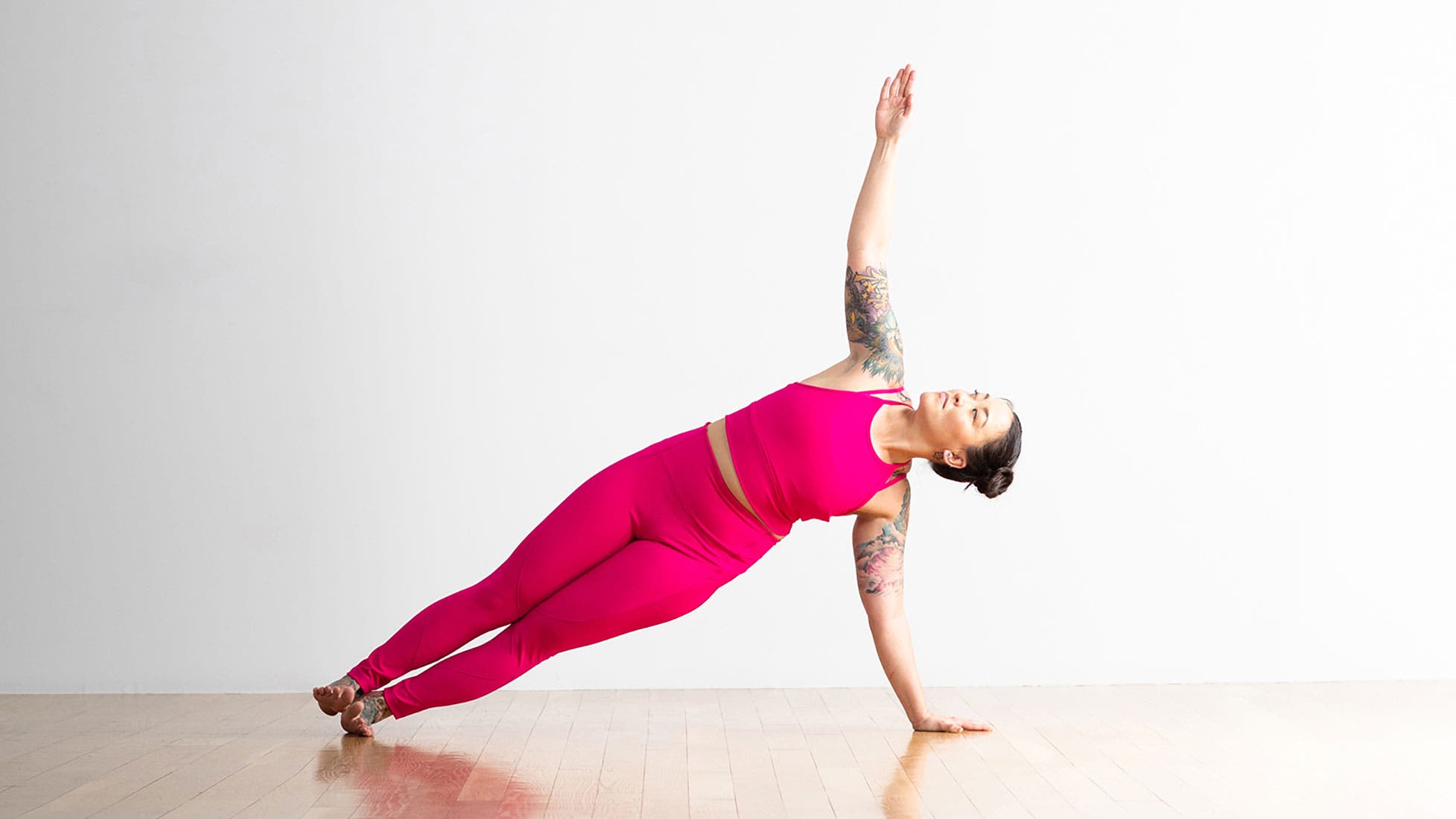
Any plank pose—including High Plank and Low Plank (Chaturanga)—activates the core muscles. Yet Side Plank brings a specific emphasis to the obliques due to the demand to hold your body stable rather than allow it to rotate to one side or sink toward the mat as you balance. It also targets the back, glute, and shoulder muscles.
The exact thing that makes this such a terrific core strengthener is also what makes it tricky to find stability. Balancing your body on a narrow base of support can take some practice. Whatever version you practice, make sure to keep your hips in line with your body so you are forming a straight line from your head to your heels.
If you’re new to the pose, start with your feet staggered on the mat, rather than stacked atop one another, to increase your contact with the mat. You can also lower your knees on the mat and practice Side Plank from the knees to the head, which lessens the balancing challenge.
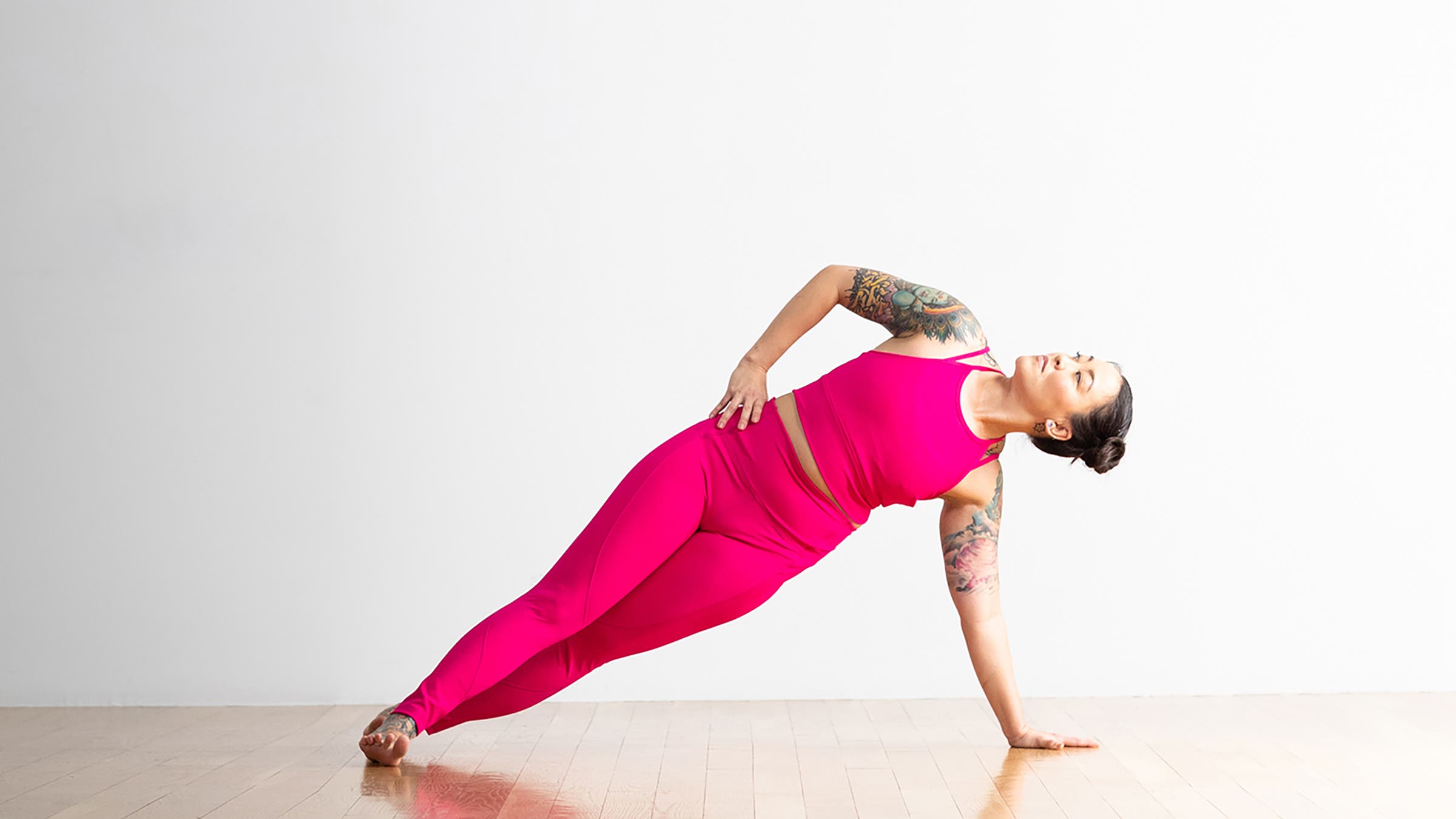
To intensify the challenge, slowly lift your top leg toward the ceiling so that you are essentially in a jumping jack position but on the side. To maximize the strengthening benefits for the obliques, bring your top leg slightly in front of or behind your body while it is extended to force your oblique and other core muscles to prevent rotation while your weight is asymmetrically distributed over the narrow base of support.
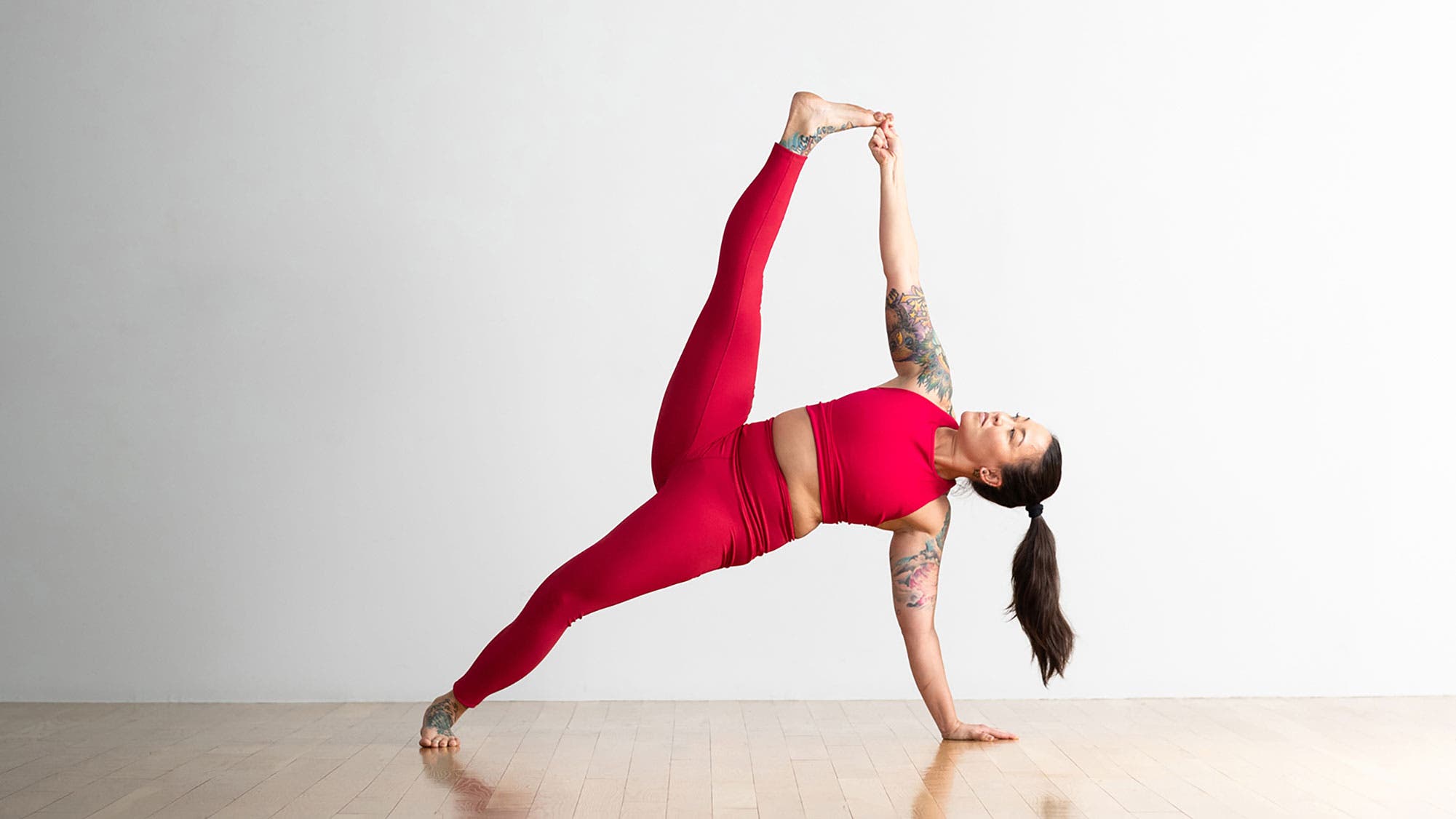
How to practice Side Plank.
Learn more about the best yoga for core strength here.