
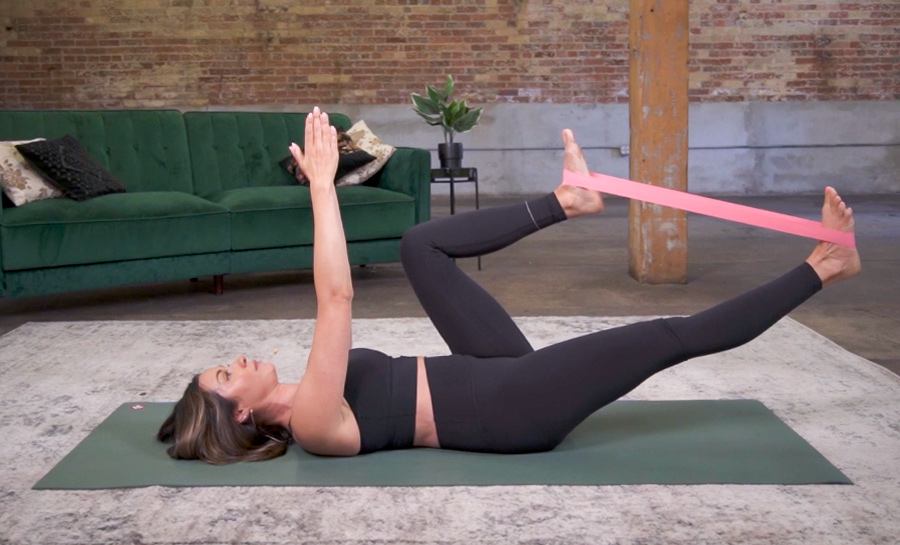
If you’ve recently had a baby, you may have noticed that your abdominal muscles don’t feel quite the way they used to. Maybe getting out of bed feels surprisingly difficult. Or you find yourself bracing your stomach every time you pick up your baby.
Pregnancy changes the way your core muscles work together, and rebuilding that strength takes time. That’s where Pilates can be particularly helpful.
Pilates emphasizes controlled movements, breathing, and core stability, making appropriately modified exercises a useful option for postpartum recovery. In fact, many foundational movements used in postnatal Pilates are simple exercises you can practice right at home.
These seven gentle postpartum core exercises draw on Pilates principles to help you gradually rebuild strength, stability, and confidence after pregnancy.
Before trying them, make sure you’re medically ready for this level of activity. Your recovery timeline will depend on your delivery and any complications, and you may need individualized modifications.
First, What Happens to Your Core During Pregnancy?
Your core is a group of muscles that work together to stabilize your spine and pelvis. It includes your abdominal muscles, diaphragm, pelvic floor, and muscles surrounding your back and hips.
As your baby grows, these muscles adapt. Your abdominal wall stretches, your center of gravity shifts, and your pelvic floor manages increasing pressure.
After delivery, you might experience abdominal weakness, changes in balance, or difficulty coordinating movements that once felt effortless.
Some women also experience diastasis recti, a separation of the abdominal muscles caused by stretching of the connective tissue between them. It’s common during pregnancy and can persist afterward.
And here’s something worth knowing: A visible gap between your abdominal muscles doesn’t automatically mean your core is weak or damaged. Your ability to move comfortably, manage pressure, and perform everyday activities matters, too.
The goal of postpartum core training is to gradually improve how these muscles function together.
7 Gentle Postpartum Core Exercises to Try
You don’t have to do all seven at once. Start with a few that feel comfortable, pay attention to your breathing, and build from there.
These exercises incorporate many of the same principles you’ll find in postnatal Pilates, including slow, controlled movement and an emphasis on stability rather than intensity.
1. Diaphragmatic Breathing
It might seem strange to begin a core workout with breathing, but your diaphragm and pelvic floor are important parts of your core system.
Breathing is also a foundational element of Pilates, helping coordinate movement and muscular engagement.
Try it! Here’s how: Lie on your back with your knees bent, or sit comfortably in a chair. Place your hands around your lower rib cage.
Inhale slowly through your nose, allowing your ribs to expand naturally. As you exhale, let your ribs soften. Avoid forcefully pulling your stomach inward.
Continue for five to ten slow breaths.
Why it helps: This exercise encourages coordination between your diaphragm, abdominal muscles, and pelvic floor. It’s also an opportunity to become more aware of how your body feels before introducing movement.
2. Pelvic Tilts
Pelvic tilts are small movements that help you reconnect with your abdominal muscles and improve awareness of your pelvis.
They’re also commonly used in introductory Pilates classes to explore spinal and pelvic movement.
Try it! Here’s how: Lie on your back with your knees bent and feet flat on the floor.
As you exhale, gently tilt your pelvis so your lower back moves slightly toward the mat. Inhale as you release back to a neutral position.
Repeat eight to ten times.
Why it helps: Pelvic tilts encourage gentle abdominal activation without requiring a traditional sit-up or crunch.
3. Heel Slides
Heel slides look deceptively simple. But keeping your pelvis steady while moving one leg requires coordination from your core.
Try it! Here’s how: Lie on your back with both knees bent and feet flat.
Exhale and slowly slide one heel along the floor, extending your leg only as far as you can comfortably control.
Slide your heel back to the starting position and switch sides.
Try five to eight repetitions per leg.
Why it helps: Heel slides introduce a small stability challenge while keeping the movement controlled. This type of coordination is central to many Pilates core exercises.
4. Bent-Knee Fallouts
This is another exercise where less movement can actually be more effective.
Try it! Here’s how: Start on your back with your knees bent and feet hip-width apart.
Keeping your pelvis steady, slowly allow one knee to move out to the side. Only move as far as you can without shifting your hips.
Bring your knee back to center, then repeat on the opposite side.
Aim for six to eight repetitions per leg.
Why it helps: Your abdominal muscles work to keep your torso stable while your hips move. It’s a great example of how Pilates-inspired exercises can build strength through small, intentional movements.
5. Glute Bridges
Your glutes are essential for everyday activities like standing, lifting, and walking. Strengthening them can complement your postpartum core exercises.
Bridges are also a familiar movement in Pilates, where they’re often used to strengthen the hips and improve control through the pelvis.
Try it! Here’s how: Lie on your back with your knees bent and feet flat.
Press gently through your feet as you lift your hips a comfortable distance off the mat.
Pause briefly, then slowly lower.
Repeat six to ten times.
Why it helps: Bridges strengthen the glutes while challenging your hips and trunk to work together.
If this movement causes pelvic pressure, pain, or discomfort around a healing C-section incision, leave it out until you’ve received appropriate guidance.
6. Modified Bird Dog
Bird Dog is a great exercise for practicing stability while moving your arms or legs.
Try it! Here’s how: Come onto your hands and knees, placing your hands beneath your shoulders.
Keeping your torso steady, slowly reach one arm forward. Return it to the mat and switch arms.
If that feels comfortable, try sliding one leg backward along the floor.
Start with five repetitions on each side.
Why it helps: This exercise trains coordination and core stability, which can translate to everyday movements like reaching, bending, and lifting.
7. Side-Lying Clamshells
A postpartum core routine doesn’t need to focus exclusively on your stomach.
Your hip muscles also play an important role in pelvic stability, which is why Pilates often incorporates exercises that strengthen the muscles surrounding your pelvis.
Try it! Here’s how: Lie on your side with your knees bent and your feet stacked.
Keeping your hips steady and feet touching, slowly lift your top knee a short distance.
Lower it with control.
Repeat eight to twelve times before switching sides.
Why it helps: Clamshells target the muscles around your hips, particularly your glutes, which help support your pelvis during walking and other daily activities.
How Often Should You Practice These Postpartum Core Exercises?
There’s no need to turn this into another demanding item on your to-do list.
Once you’ve been cleared for exercise, five or ten minutes of intentional movement can be a reasonable place to begin. You might practice a few exercises several times per week, gradually adding more as your recovery allows.
Pay attention to how you feel afterward, too. Exercise shouldn’t leave you with increasing pain, worsening bleeding, pelvic heaviness, or symptoms that persist into the next day.
If you experience urine leakage, significant abdominal bulging, pelvic pressure, or pain during these movements, stop and consider an evaluation with a pelvic floor physical therapist.
Your recovery doesn’t have to follow anyone else’s timeline.
What About Crunches and Planks?
You may have heard that certain abdominal exercises are completely off-limits after pregnancy.
The reality is more nuanced.
Crunches, planks, and other challenging core exercises aren’t automatically inappropriate forever. But they may be too demanding at certain stages of recovery, depending on your symptoms and ability to control the movement.
Instead of following a universal list of exercises to avoid, focus on gradually building strength and choosing movements you can perform comfortably.
A qualified postpartum fitness professional or pelvic health physical therapist can help you determine when you’re ready to progress.
Why Postnatal Pilates Is Worth Exploring After Pregnancy
If you enjoy these exercises, you might also enjoy a more structured postnatal Pilates practice.
Pilates combines controlled movements, breathing, and strength training in a way that encourages different muscle groups to work together.
Rather than focusing exclusively on abdominal strength, postpartum Pilates exercises can also help improve coordination, posture, and stability throughout your body.
And since mat Pilates can be practiced at home, you don’t need to arrange childcare or travel to a studio every time you want to move.
Ready for a more guided approach?
Explore the Postnatal Pilates program with Emily Judd on YouAligned. It’s a way to bring guided Pilates into your routine while you gradually return to exercise.
Pilates Program
With Emily Judd
A Final Thought About Postpartum Strength
It’s easy to measure fitness by how much weight you can lift, how long you can hold a plank, or how your stomach looks in the mirror.
But after having a baby, strength can show up in much smaller ways.
Getting out of bed more comfortably. Carrying your baby without feeling as fatigued. Having greater confidence in how your body moves.
Those things matter.
Whether you begin with these seven postpartum core exercises or explore a guided Pilates program, start with what feels manageable and give yourself time to recover.
Your body has plenty of strength worth celebrating, exactly where you are today.
Recommended Read: Postnatal Pilates: Benefits and How to Get Started After Pregnancy
Note: This article provides general educational information and is not a substitute for individualized medical advice. Consult your healthcare provider before beginning postpartum exercise, especially after a C-section or complicated delivery.