
It’s subtler than you think.
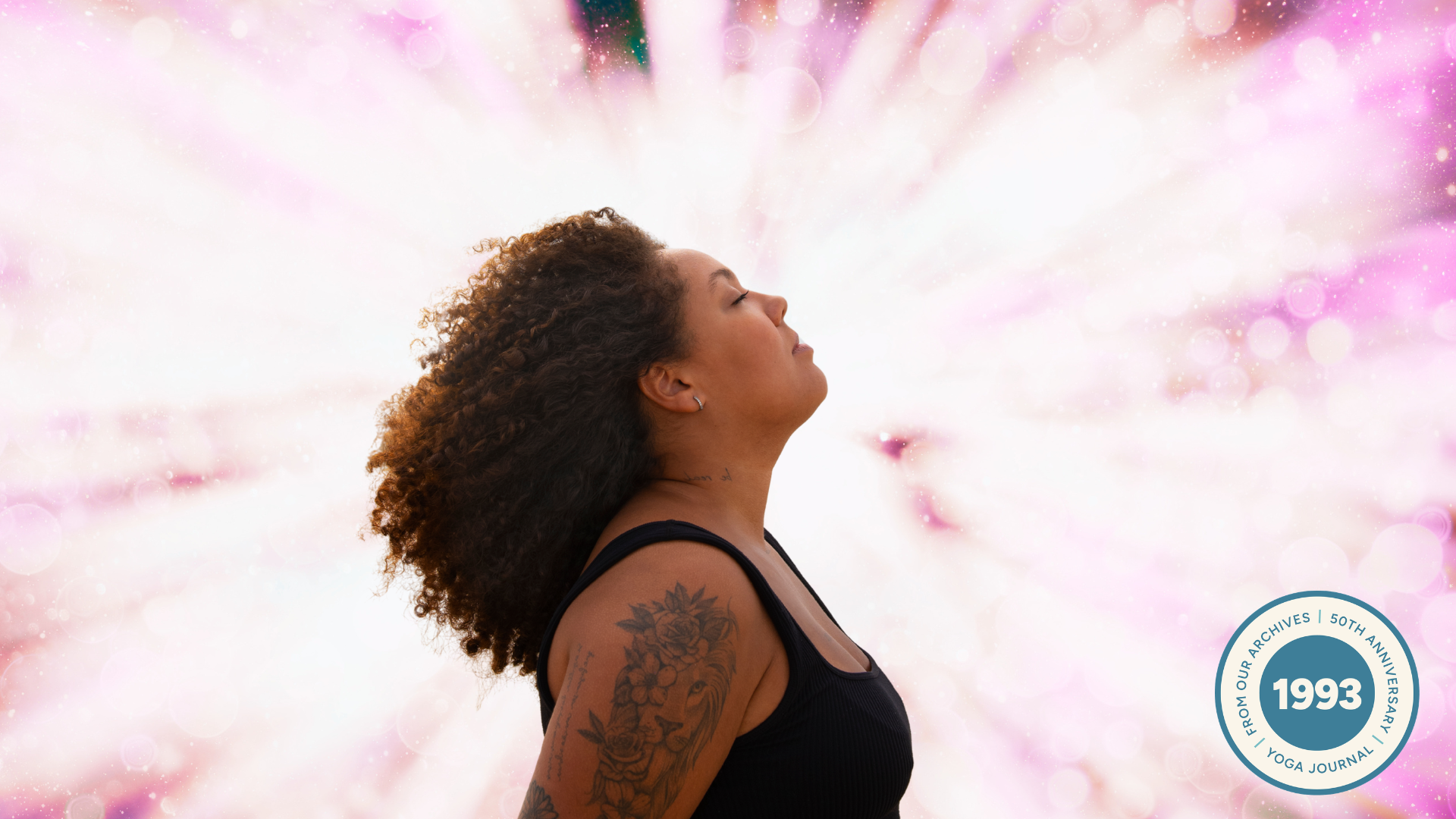
(Photo: Freepik | Canva)
Published July 3, 2026 04:41AM
Yoga Journal’s archives series is a curated collection of articles originally published in past issues beginning in 1975. This article about yoga as unification of body, mind, and spirit first appeared in the March-April 1993 issue of Yoga Journal.
Yoga is often defined as the unification of body, mind, and spirit. The Latin word spiritus meant breath, indicating the crucial link between the movement of the breath and the life of the spirit. Similarly, the Greek words pneuma and psyche both meant breath as well as soul.
For those of us who practice hatha yoga, one of the most profound ways that we can bring the spiritual into the physical practice of asana is to focus on, feel, and trust the breath that moves through us. And yet we often find ourselves restricting or holding our breath in order to perform a yoga posture. Imagine an ocean without waves—that’s inconceivable! Then it should be just as inconceivable to imagine asanas without the internal tide of the breath.
In the last 20 years, transformational technologies such as psychotherapy and bodywork have begun to reflect our growing awareness that mind, body, and breath are one. However, hatha yoga has lagged behind in its integration of these elements. Yoga traditions that give only lip service to breath awareness during asana (or so-called “physical” practice) and teach pranayama (breath and energy practices) and meditation later as separate modalities presume and foster a hierarchical division between mind, body, and breath. These traditions function within the old paradigm of dominating nature—”mind over matter”—rather than the emerging new paradigm (supported by quantum physics) that holds that mind literally imbues matter.
Other traditions explicitly designate breath patterns (for example, inhale as you raise your arms to a count of four) that don’t respect the natural intelligence of the breath. We say that we are concerned with integrating body, mind, and spirit, but in practice we actually continue to separate them.
Here’s How Body, Mind, Spirit Apply to You
Three simple strategies can help us bring about a true integration of the body, mind, and breath: Slow down; practice simple movements before progressing to complex ones; and make freedom of the breath the first priority.
Slowing down allows us to focus our attention on the subtle movements of the breath rather than the gross movements of the musculoskeletal system. Once our attention is engaged, we can observe the breath as it is—not interfering with or manipulating it, but respectfully sensing the natural movements that occur during the cyclic rhythm of respiration. Having made these observations, we can progress to conscious integration, so that movement is supported and nourished by the breath.
The second step in this reunification is to deliberately work with simple movements and positions in which we are less likely to fall back on old coping strategies (like holding the breath) in order to “get there.” As we master the skill of riding the breath, we can gradually practice more and more complex movements without compromising free breathing.
The third step is to make the free movement of the breath the first priority in body alignment, rather than something added like optional vanilla extract at the end of a recipe. (“When I get it all perfect, then I’ll worry about breathing.”). Breath is the prime ingredient of all movement. When you adjust the core structure of the diaphragm so that free breathing is possible, all other musculoskeletal alignment falls into place with an underlying coherent logic. The natural position of the diaphragm is a dome-shaped sheet of muscle and tendon that forms the floor of the thoracic cage. If you contort or compress the diaphragm to achieve the external form of a posture, free breathing will be restricted.
The simplicity of this allows us to focus on the breath more easily. One of the basic tenets of body-breath integration is the principle of oscillation—allowing the body to move with the rise and fall of the breath. Let the joints, muscles, and internal organs—as well as the overall position of the body—move as the breath swells and expands. Then equally honor the receding, settling motions that come on the exhalation. These natural motions are tremendously therapeutic. When you practice in this way, you move from a static, fixed position into a dynamic and fluid state with open-ended possibilities.
When our practice is directed by the breath rather than the ambition of the ego, the mind becomes quiescent. Practicing hatha yoga in this way, we make our own unfolding more important than the attainment of a yoga posture. Hatha yoga can then become a vehicle for experiencing how life expresses itself through us. In honoring the fluid nature of our being, we can make choices based on our own authentic inner experience. We can contact a deep knowing that is carried by the breath, the messenger of the soul.
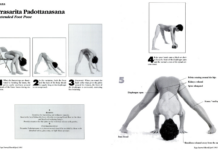
Continue to explore how to navigate body, mind, and spirit in the physical practice of yoga in this companion article on Prasarita Padottanasana.