

Simple pose, a variety of skills.
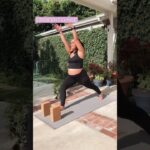
(Photo: Andrew Clark; Design in Canva)
Published June 5, 2026 05:40AM
Yoga Journal’s archives series is a curated collection of articles originally published in past issues beginning in 1975. This article first appeared in the 1985 issue of Yoga Journal.
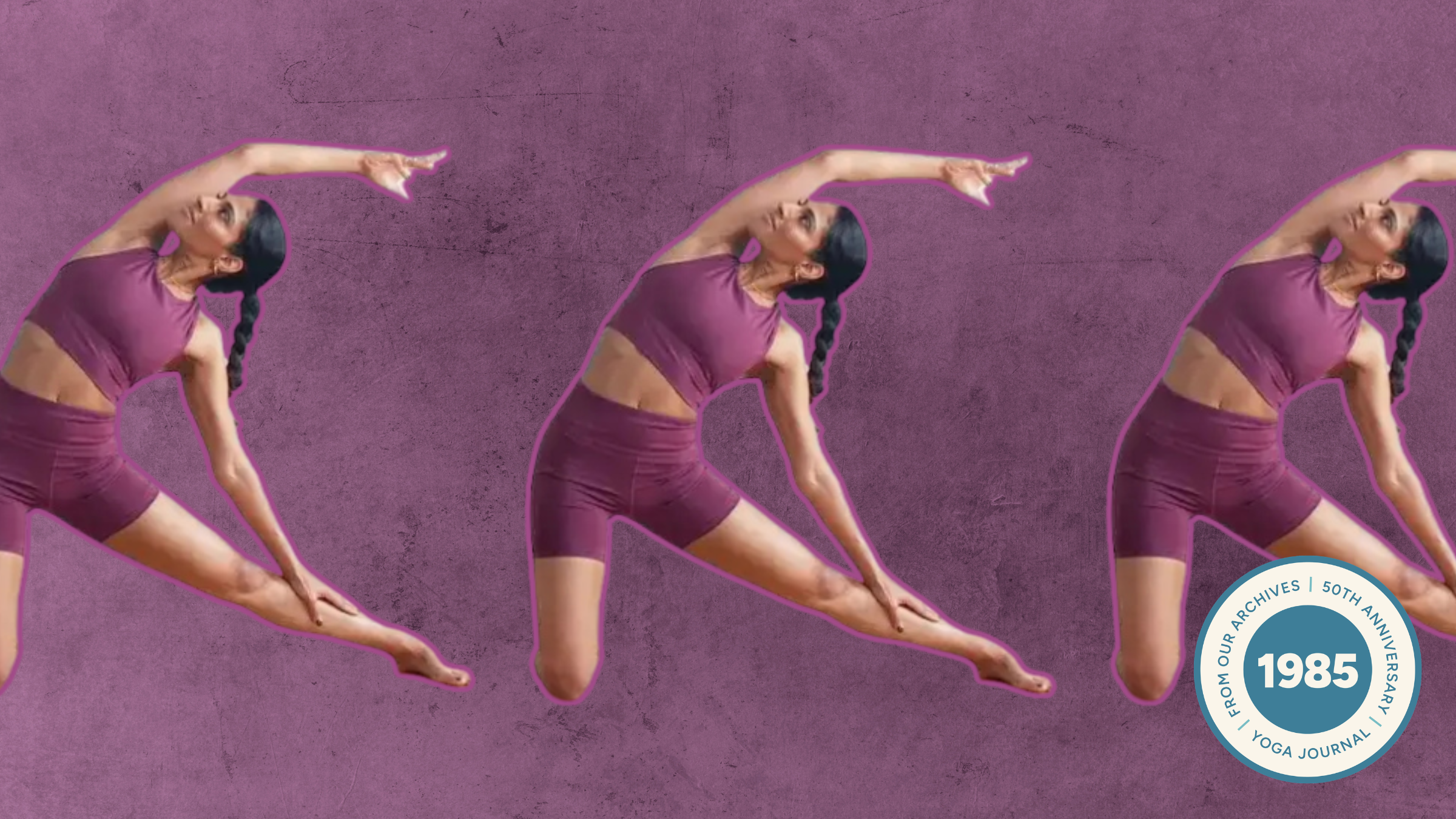
Gate Pose (Pangnasana), is one of the few poses in yoga that gives a deep stretch to the sides of the body. Most poses concentrate on a forward or backward movement or on a twist rather than a true side-bend. For this reason, Gate Pose is a beneficial addition to a student’s practice.
The side-bending stretch afforded by this asana is advantageous for several reasons. First, it stretches the intercostal muscles, the muscles connecting the ribs. Increased mobility in this area allows greater freedom of movement in the lungs. As one progresses to the practice of pranayama (conscious breathing exercises), the suppleness and sensitivity of the lungs and the structures around them are of utmost importance.
Increased freedom in side-bending is also important because it allows greater freedom in all twisting poses. One of the laws of movement of the spinal column states that side-bending and rotation go together. Thus, when the spinal column is bent to the side, it is rotated; and when it is rotated, it is bent to the side. This reciprocal action is caused in part by the wedge shape of the discs between the vertebrae and by the angle with which the posterior (back) surfaces of the vertebrae come together at the facet joints. Therefore, if one wishes to improve the range of movement in side-bending, practice of the twisting asanas is helpful.
Finally, Gate Pose is a beneficial pose for the effect it has upon the abdominal muscles. A section of these muscles, the oblique abdominal muscles, runs in a crisscross pattern over the mid and lower abdomen. Gate Pose stretches and strengthens these muscles as well as stimulating the abdominal organs.
Gate Pose requires a variety of skills. One needs balance and flexibility in the hip joints and muscles of the thigh and leg, and, of course, flexibility in side-bending. But to understand the asana, one needs to understand its spirit as well as its form. Like all asanas, Gate Pose can teach one a great deal about how the mind works.
Perfect execution is not the point of asana practice. A very flexible student may be able to perform a seemingly perfect pose, but because the asana is performed and not expressed, its inner beauty is lost. Unless the mind is brought into stillness, the stillness of the body is incomplete. Without the integration of body and mind, there is no asana.
Because the average yoga student has spent years with a mind that is constantly moving, he or she often has difficulty understanding not only what a still mind is, but also how to allow it. Exerting too much effort to create stillness is counterproductive. As in trying to force sleep, the very effort prevents the desired result. How then is one to create a still mind in asana?
The first step is to create distance between one’s thoughts and one’s perceptions. When thoughts and perception are indistinguishable, one tends to identify with one’s thoughts and to wrongly perceive them as “self.” To be still in Gate Pose, one may begin by creating a space between how one thinks about the pose and how one perceives it. Do not let the intellectual understanding of the pose dominate the mental screen.
Instead, give preference to simply receiving the sensations of the moment without analyzing or carrying on a mental conversation about them. Gradually the mind will become quieter. Paradoxically, when one just observes the pose, the clarity achieved allows one to correct the technique of the pose more easily than when one tries to analyze the technique and then correct it.
When this clarity occurs, not only is Gate Pose still on the outside, it also expresses an inner stillness that is the spirit of the asana. This ability to stay still and quiet and yet totally aware—which is at once extremely difficult and surprisingly simple—is at the core of the practice of yoga. Without the understanding of inner stillness, Gate Pose or any other pose becomes a mere exercise, lacking the profound effects that yoga can create in body and mind.
How to Practice Gate Pose
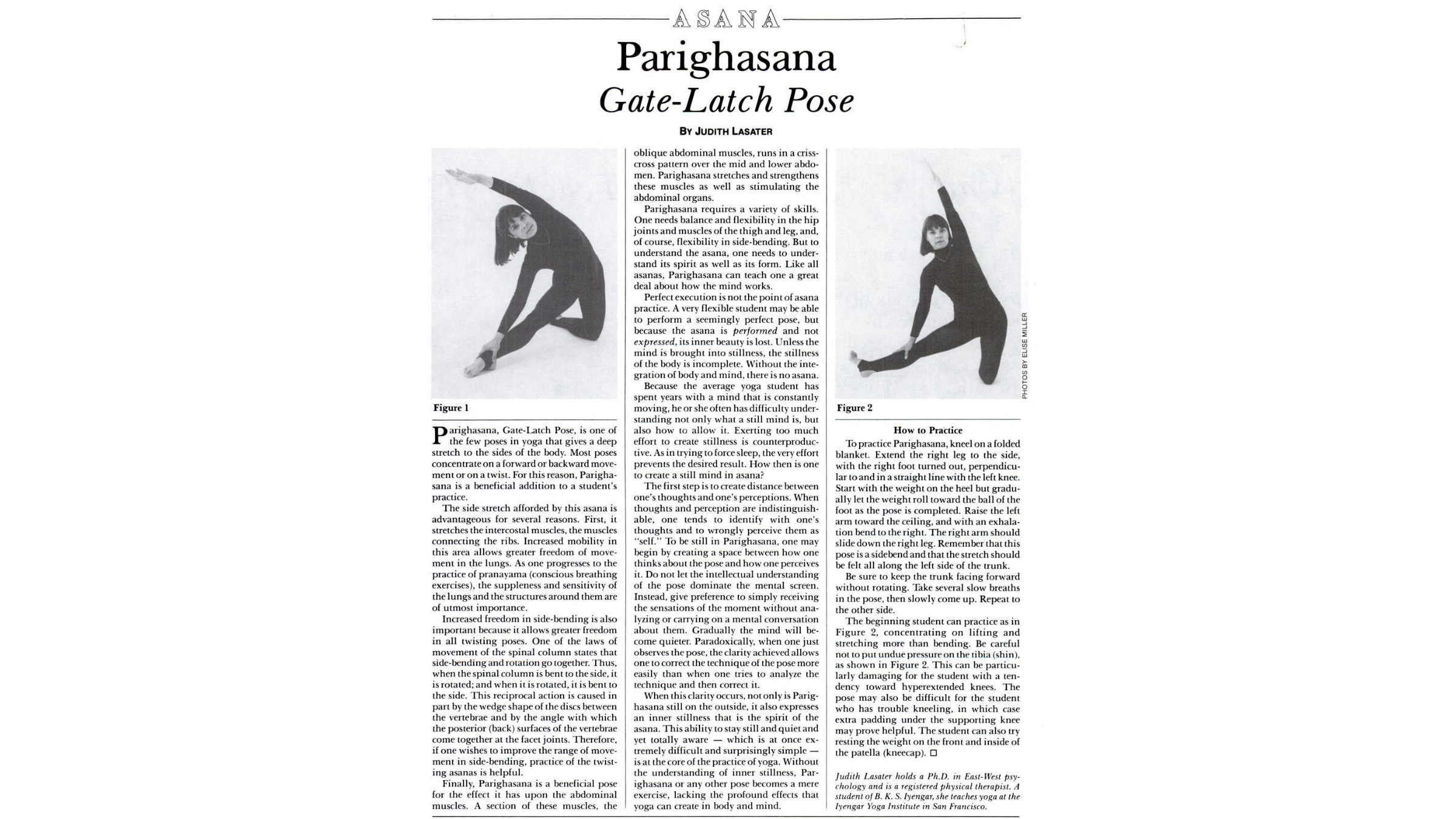
To practice Gate Pose, kneel on a folded blanket. Extend the right leg to the side, with the right foot turned out, perpendicular to and in a straight line with the left knee.
Start with the weight on the heel but gradually let the weight roll toward the ball of the foot as the pose is completed. Raise the left arm toward the ceiling, and with an exhalation bend to the right. The right arm should slide down the right leg. Remember that this pose is a side-bend and that the stretch should be felt all along the left side of the trunk.
Be sure to keep the trunk facing forward without rotating. Take several slow breaths in the pose, then slowly come up. Repeat to the other side.
The beginning student can practice as in Figure 2, concentrating on lifting and stretching more than bending. Be careful not to put undue pressure on the tibia (shin), as shown in Figure 2. This can be particularly damaging for the student with a tendency toward hyperextended knees.
The pose may also be difficult for the student who has trouble kneeling, in which case extra padding under the supporting knee may prove helpful. The student can also try resting the weight on the front and inside of the patella (kneecap).








lqygClUNBtVVZejeBKsopeR