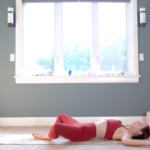

The right bra does more than keep things in place. It lets you breathe with ease, fold forward without a wardrobe check, and hold an inversion without wondering what’s going to fall out. When your bra stops asking for your attention, you focus on the pose instead of adjusting your clothes. I’ve learned most of this the hard way, one disappointing purchase at a time. I wish someone had handed me this list years ago: what to look for, what to skip, and how to test a bra before you buy one.
Disclosure: This post may contain affiliate links. If a purchase is made through these links, we may earn a commission at no extra cost to you. Your kind support helps us create more mindful articles!
Low Impact Is Not the Same as Low Movement
Yoga doesn’t involve much jumping around or wild dance moves. It’s mostly gentle, but it’s certainly not static. A Vinyasa class has you twisting, folding forward, arching back, and reaching side to side. It’s a constant conversation with gravity, especially if the class includes inversions, and you will need support to keep things in place.
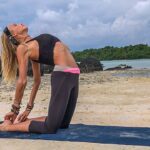
Jogging involves up-and-down bounces. Sports bras built for the treadmill or the track do one thing: control bounce. Yoga demands a lot more in support and coverage. What fits well for the upright portion of a mountain pose can gape embarrassingly as you bend forward. Kneeling is fine, but the backward stretch of a camel pose will test any bra. One slipped up toward my collarbones every time and quickly ended up on the “never wear it again” pile.
You need support and coverage, but you don’t want to squeeze everything as tightly as possible. Yoga requires comfortable movement and the ability to breathe deeply. If your ribs can’t fully expand, you’re restricting your breathing and compromising your entire practice.
Be Honest About Your Yoga Level and Practice
Everyone has goals, but your sports bra doesn’t care what you plan to do a week or month down the road. Not tomorrow’s practice. Today’s. Choose a support level that matches your current practice.
If you’re focused mostly on restorative, yin, or meditative work, pick soft, lightweight materials with moderate support. These let you lie flat on your back, breathe into your belly, and hold a stretch for minutes without anything pressing on you. A bra with seams, multiple straps, and clasps will dig into you and disrupt your focus and flow.
Middle ground practice and Hatha add sun salutations and standing poses, but nothing that spikes your heart rate. Go for a comfortable combination of structural support and softness. Your bra will do its job but fade into the background of your consciousness.
Power classes, hot yoga, and Ashtanga demand more from your fitness clothing. Fast transitions between poses can bounce a loose bra right out of place. Holding arm balances requires concentration, not worrying about where your bra is. You’ll sweat more, too, which can make things slide around even more.
The last thing you want is foam padding that makes you sweat more, especially in a hot or warm class. Supportive push-up sports bras use molded cups and real seaming to lift and shape you, not a layer of foam stapled to the inside. Choose the cut that fits your unique body to get the lift you want.
Here’s a quick reference chart to quickly find the right support for your practice:
| Support level | Best for | What to look for |
|---|---|---|
| Light | Yin, restorative, meditation, gentle stretching | Soft, stretchy fabrics, minimal structure, no clasps |
| Medium | Hatha, Vinyasa, most general classes | A balance of softness and structure, wider straps, snug band |
| High | Hot yoga, Ashtanga, power Vinyasa, arm balances | Firm compression or encapsulation, thick straps, secure band |
Two Ways to Hold Things in Place
Sports bras come in two designs, and picking the wrong one means finding out mid-pose instead of in the dressing room. Compression bras press everything flat against your chest. Pull one on and you’re done: no clasps, no adjusting, a snug layer built for smaller cup sizes. They squash rather than shape. Support depends primarily on how tight the fabric fits. For a slow class, a light compression bra can feel like a second skin, which is precisely what you want.
Encapsulation bras give each breast its own cup, like a regular bra built for movement. They hold things in place without flattening them, which makes them the better choice for larger cup sizes. Because the cups do the shaping, a weak band or thin strap digs in or slips as you move. You’ll usually find these with adjustable straps and a clasp in the back.
Some bras combine both approaches, with molded cups inside a compression shell. Those can be an excellent middle ground, though the removable pads can migrate mid-practice and go missing in the laundry.
Size and Shape: What Works for Different Bodies
Cup size decides almost everything here, so measure yourself before you shop instead of guessing off a size chart.
If you’re on the smaller side, you have the most freedom. Compression bralettes, light racerbacks, and even shelf-bra tops can all work because there’s less weight to hold in place. You can prioritize comfort and style and still get enough support for a high energy Vinyasa class.
If you’re well-endowed, support decides which bra works, not looks. Look for encapsulation bras with wider straps and a firm band, because those spread the weight across your shoulders and ribcage instead of letting it pull on one spot. A thin-strap bralette might look great, but it will dig in during downward dog and leave you adjusting all class.
No matter your cup size, the band is what keeps a bra in place, not the straps. It should sit level around your ribcage, snug enough to stay put but not so tight it leaves marks. If the band rides up in the back, it’s too loose, and no amount of strap tightening will fix that.
Straps Make the Real Difference
Lots of athletic wear uses racerback styles because they free up overhead range and anchor across your shoulder blades. I find the center pull distracting in some poses.
Halter-style sports bras solve that issue. The neck strap holds you up and leaves your shoulder blades bare. This makes it a top pick for people who do a lot of backbends and heart openers.
One of the most stylish options uses multiple thin straps in a crossback pattern. The thin straps mean more skin, more airflow, and better shots for your feed. Before you buy, check the strap width and whether they shift, rub, or dig in during weight-bearing poses.
The classic wide-strap scoop-neck style is a dependable choice, especially if you’re well-endowed up top. The thicker straps spread out the pressure, and a higher scoop keeps everything covered.
The Unsexy Stuff Matters More Than Appearance
We all want to look good, but feeling good is what lets you fold, twist, and breathe without your bra getting in the way.
Check the fabric first. Cotton holds too much sweat and heat. Nylon-spandex blends wick it away and dry quickly. In a hot room, cotton gets heavy and stays wet against your skin for the rest of the class.
Feel inside for raised seams. Even the smallest line becomes a pressure point that distracts or hurts. Look for flat or bonded seams instead.
Avoid removable pads. They sound like a great idea until they bunch up in the laundry or fold over in the middle of class. You want sewn-in or molded cups that you never have to worry about.
Band size matters most. It’s what really supports you, after all. If you can fit two fingers under the band, it’s too tight. Always measure with the band snug around your ribcage. Remember, elastic loosens over time, so buy a sports bra that’s a bit snug on the loosest hook. Too tight? You’ll get angry red marks and aggravation.
Heat destroys elastic. The sports bra gets enough heat in class already. Wash it with cold water and air dry for longevity.
Give Every Bra the Three-Pose Test
I won’t buy another sports bra without trying out a few movements in the fitting room. First, I do a standing forward fold and check for slipping or gaping at any angle. Then, I raise my arms overhead and do a backbend, making sure the band stays put and the straps don’t dig in. Finally, I sit down for a twist and breathe until I can feel my ribs pushing against the band. My ribs need to expand completely.
Only when the bra passes all three tests, do I know it’ll support me through every sun salutation and savasana. Without distracting me. Without showing off more than my yoga abilities. The best sports bra does more than look good. It does its job so well you forget you’re wearing it, and every bit of attention goes back to the pose, the breath, the practice.