
Published August 27, 2026 11:50AM
Almost everyone could benefit from a stronger core, although not for the “six pack” or the ability to nail Crow Pose (Blakasana). Building core strength creates more stability and ease in how you move through the demands of everyday life. When the core muscles are strong, they function in the exact multi-purpose way you need them to navigate work and play.
But it’s not always obvious how to build core strength. A common misunderstanding is that the “core” consists only of the superficial abdominal muscles, yet it’s so much more than that. The muscles that make up the core include those that support the low back and pelvis on all sides, including:
- The relatively superficial rectus abdominis (the six-pack muscle)
- The side body oblique abdominals and deeper transverse abdominis
- The back muscles, including the erector spinae (also called paraspinals), quadratus lumborum, and latissimus dorsi or “lats”
- The back and side glutes (gluteus maximus and medius)
- The hip flexors, including the psoas and iliacus
- The pelvic floor muscles
Some yoga poses provide more direct core strengthening than others. But you can engage—and thereby strengthen—your core muscles in almost any yoga pose or transition. You simply need to know how.
The following yoga for core strength essentials are designed to help you experience sufficient stability to support your low back and spinal cord, enough mobility to allow you to move in all directions, and adequately transfer force between your upper and lower bodies, which often move in different directions or in different ways, like when you bend and twist from standing to pick something up or put it down, when you throw or catch a ball, or steady yourself when you slip or trip.
How to Practice Yoga for Core Strength in Any Pose
With a few subtle tweaks to your alignment, you can activate the muscles that strengthen your core in (almost) any yoga pose.
1. Try A Different Way to Engage Your Core
Imagine yourself kneeling on the mat in Tabletop with your shoulders stacked over your wrists and your hips over your knees. If you’re not careful, your arms and legs will end up doing much of the work. .Common cues in this situation include “hug toward the midline” and the relatively vague “engage your core.”
But there’s a simpler way to activate the muscles of the core. Notice what changes when you think about dragging your hands and knees toward each other, as if you wanted to wrinkle the mat between them, but without moving an inch. You’ll feel your front abs, lats, and hip flexors wake up. And that’s exactly what you want to experience.
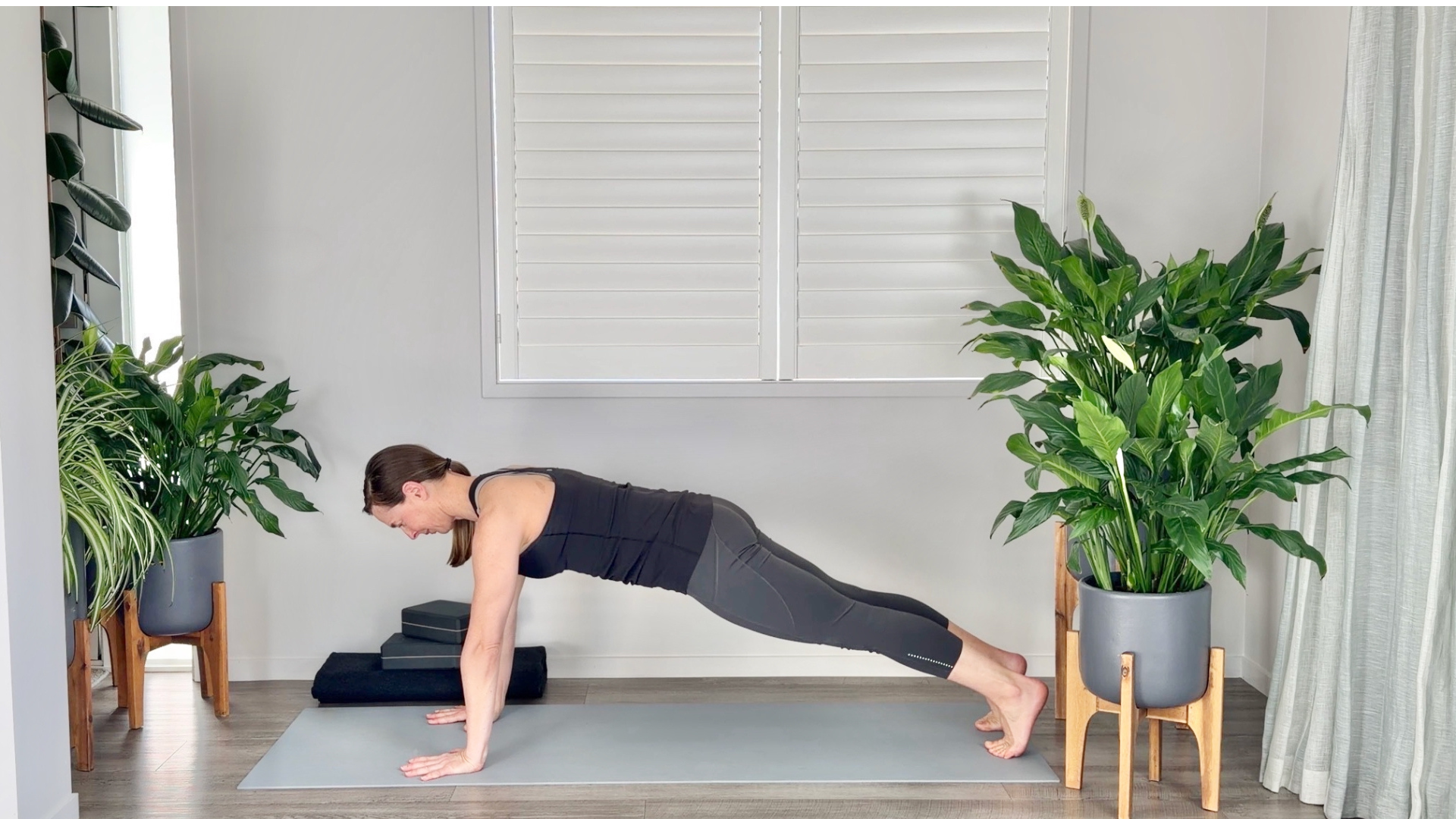
Apply that same approach to activate and strengthen the core muscles in High Plank or Plank Pose, Low Plank or Chaturanga Dandasana, even Upward-Facing Dog (Urhdva Mukha Svanasana) and Downward-Facing Dog (Adho Mukha Svanasana). You can also employ it in Side Plank (Vasisthasana) to fire up those bottom side obliques and side glutes.
Even in standing poses such as High Lunge (Ashta Chandrasana) and Warrior 1 (Virabhadrasana I), squeezing your feet toward each other triggers extra engagement in your front leg glutes and back leg hip flexors.
2. Minimize Your Contact with the Mat
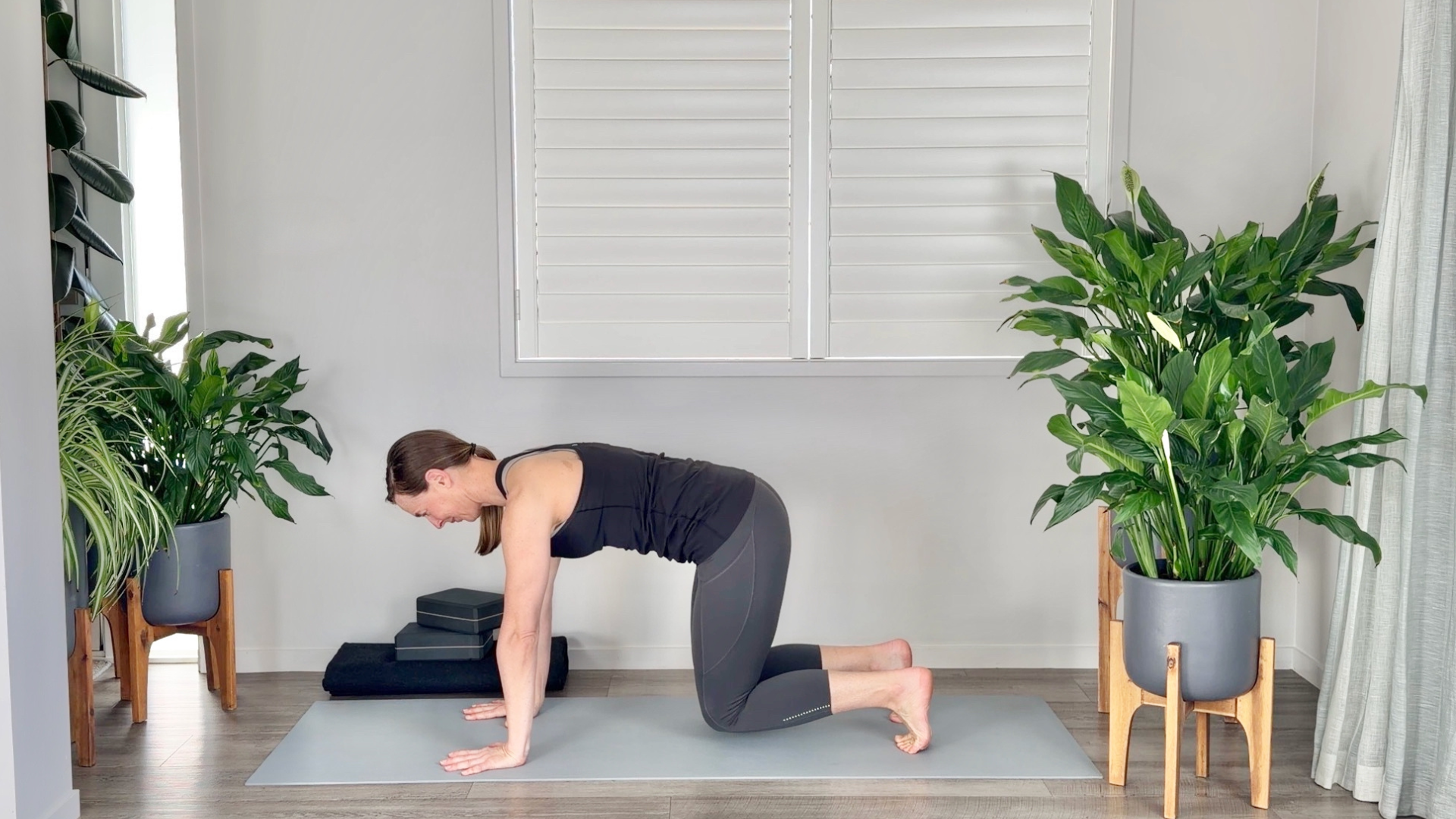
The more your body touches the mat in a yoga pose, the less muscular effort is required. This is part of the reason why standing balance poses with one foot lifted off the mat require more activity in your core and hip stabilizers than standard standing poses.
You can take advantage of this principle in any pose by reducing your contact points with the mat, which requires your core and hip stabilizer muscles to kick in and stabilize your position.
For example, from Tabletop, hover your knees to make it the hovering version sometimes known as Bear Pose. Also from Tabletop, you can lift one knee or hand off the mat or you can lift your opposite arm and leg in Bird Dog. Do the same thing in Plank and it turns into Balancing Plank. You will immediately feel the demand on your abdominals and hip flexors.
In standing postures, try shifting from a full footprint on the mat to lifting your heels and balancing on the balls of your feet.
3. Hover Your Hands
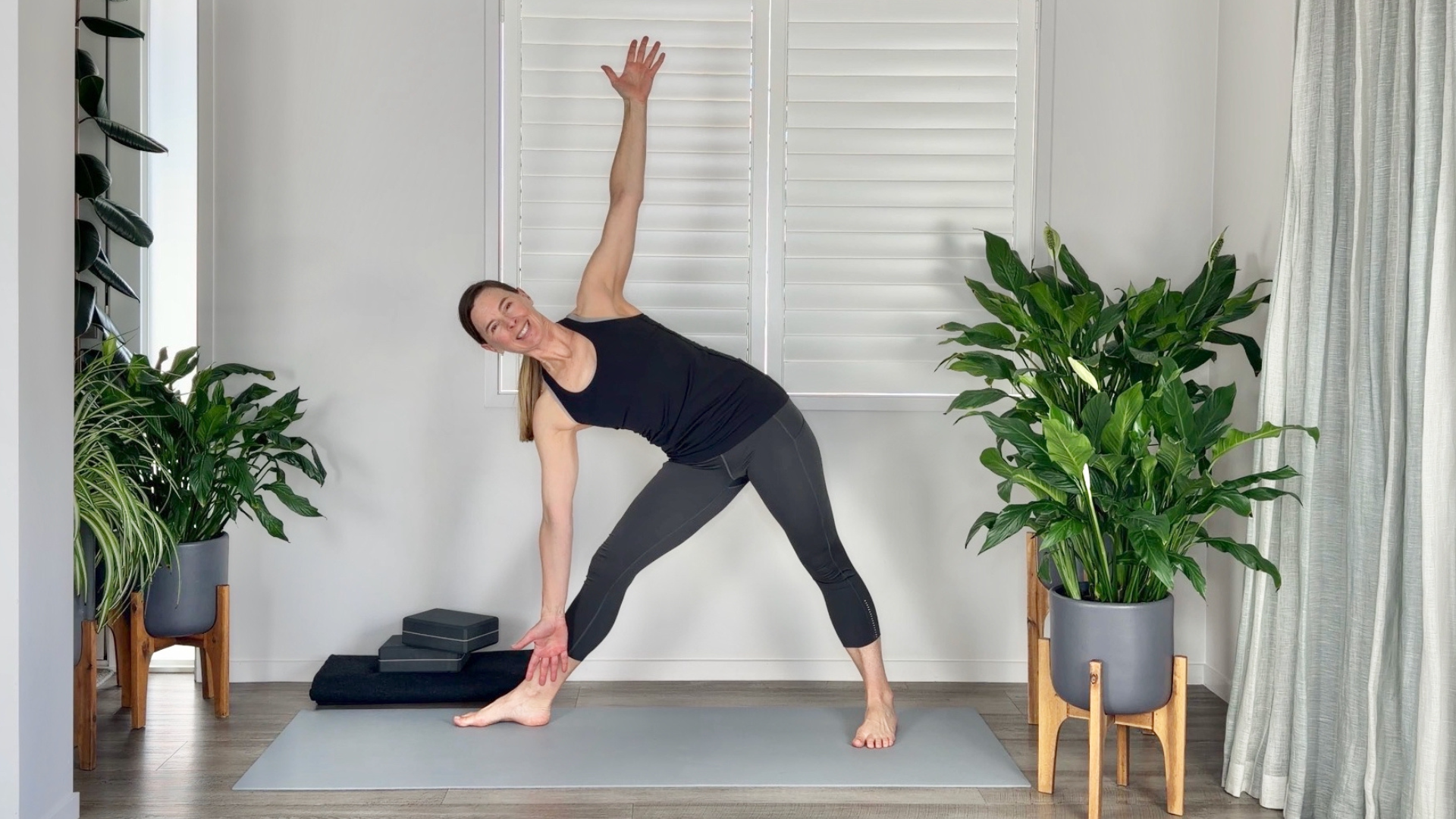
Choosing not to lean into props or support from other body parts forces your core muscles to engage more fully.
In Halfway Lift, for example, instead of resting your hands on your blocks, shins, or mat, float your hands or extend your arms along your sides to encourage your glutes and back muscles to support more of your weight.
In Extended Triangle (Utthita Trikonasana), Extended Side Angle (Utthita Parsvakonasana) and Half Moon (Ardha Chandrasana), rather than resting your bottom hand on a block or your front leg, hover your bottom hand and feel your top side waist and outer hip pick up the slack. In Reverse Warrior (Viparita Virabhadrasana), lift your back hand off your back thigh and notice your front side muscles engage.
You can also apply the same technique in twists. Hover your lead elbow above the knee that you’re rotating toward in standing twists such as Revolved Chair (Parivrtta Utkatasana), Revolved Side Angle (Parivrtta Parsvakonasana), Revolved Triangle (Parivrtta Trikonasana), Revolved Half Moon (Parivrtta Ardha Chandrasana), and Seated Twist or Half Lord of the Fishes (Ardha Matsyendrasana). This forces your oblique abdominals and hip stabilizers to do the work.
Other seated poses also allow you to tap into your core muscles (especially those of the low back and deep core) by sitting tall, lifting your ribcage away from your pelvis, and floating your hands. Think Staff Pose (Dandasana) and “Easy” Pose (Sukhasana).
You can even boost your core strength in backbends. Replace Upward-Facing Dog with Locust (Salabhasana) to make your back and glutes muscles do the work instead of gravity for greater back strength. Or forgo the bind between your hands and feet in Bow Pose (Dhanurasana), even though you continue to reach your arms back, so the core muscles take the place of the connection you would otherwise create between hands and feet. You can even try this in Camel Pose (Ustrasana) by lifting through your sternum and barely touching your fingertips to your heels.
4. Extend Your Reach
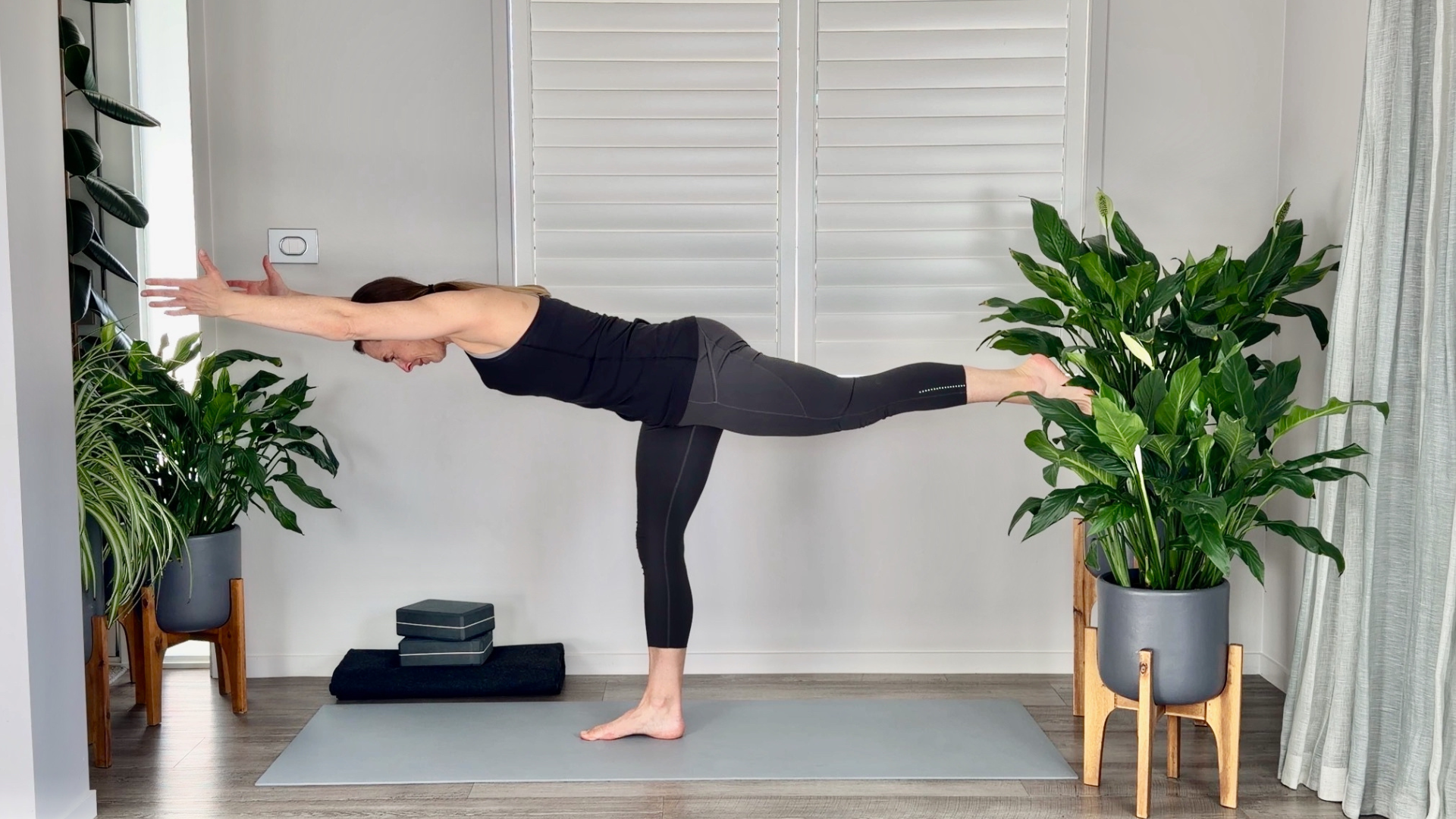
The further you move any part of your body away from your midline, the heavier it feels and the more strength it requires to lift. Don’t believe me? Try holding your grocery bags out at arms length instead of hanging them by your sides or holding them at your chest.
Apply this principle in yoga by reaching your arms overhead in Warrior 3 (Virabhadrasana III) or the forward-leaning variation of High Lunge sometimes known as Arrowhead. Notice the immediately increased activation of your back muscles and the glutes of the standing leg.
You’ll experience the same boost to your side and glutes if you extend both arms overhead in Extended Triangle, Side Angle, or (oof!) Half Moon. Even Plank Pose gets an upgrade when you walk your hands forward, farther away from your feet, so that you no longer receive the energy-saving benefit of stacking your shoulders over your wrists.
5. Move With Control
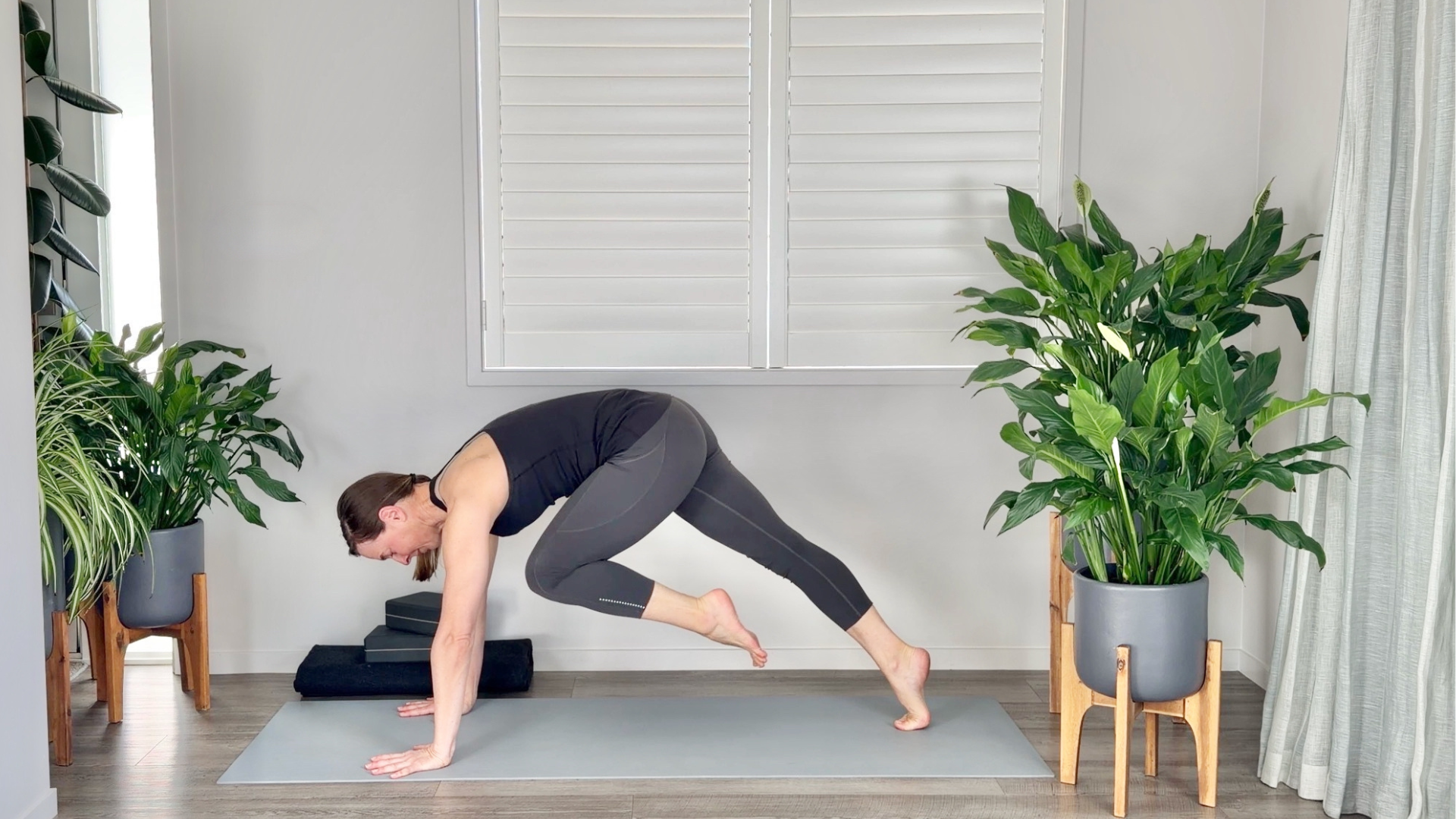
You aren’t always holding yourself steady in yoga. A major part of most classes is movement. Moving slowly and with control encourages the core muscles to engage more than moving from momentum and the resulting swinging action. For example, stepping forward from Down Dog to a Lunge, instead of swinging your leg forward demands more from your hip flexors and abdominals.
With these principles in mind, you can make slight adjustments to your alignment and muscle activation for a stronger core workout in (almost) any yoga pose. But even the most effective muscles aren’t always at work. They also release when engagement is no longer required. So when you can, encourage your mid-body to relax. Observe as it expands as you inhale and releases as you exhale, knowing that allowing these muscles to rest ensures they are more ready to work when the time comes.
RELATED Ready to put these cues into practice? Try our yoga for core strength routine.