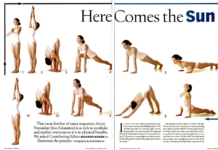

Standing tall in Tree Pose, I had one of those flash thoughts—a moment of truth that floats in on a breeze.
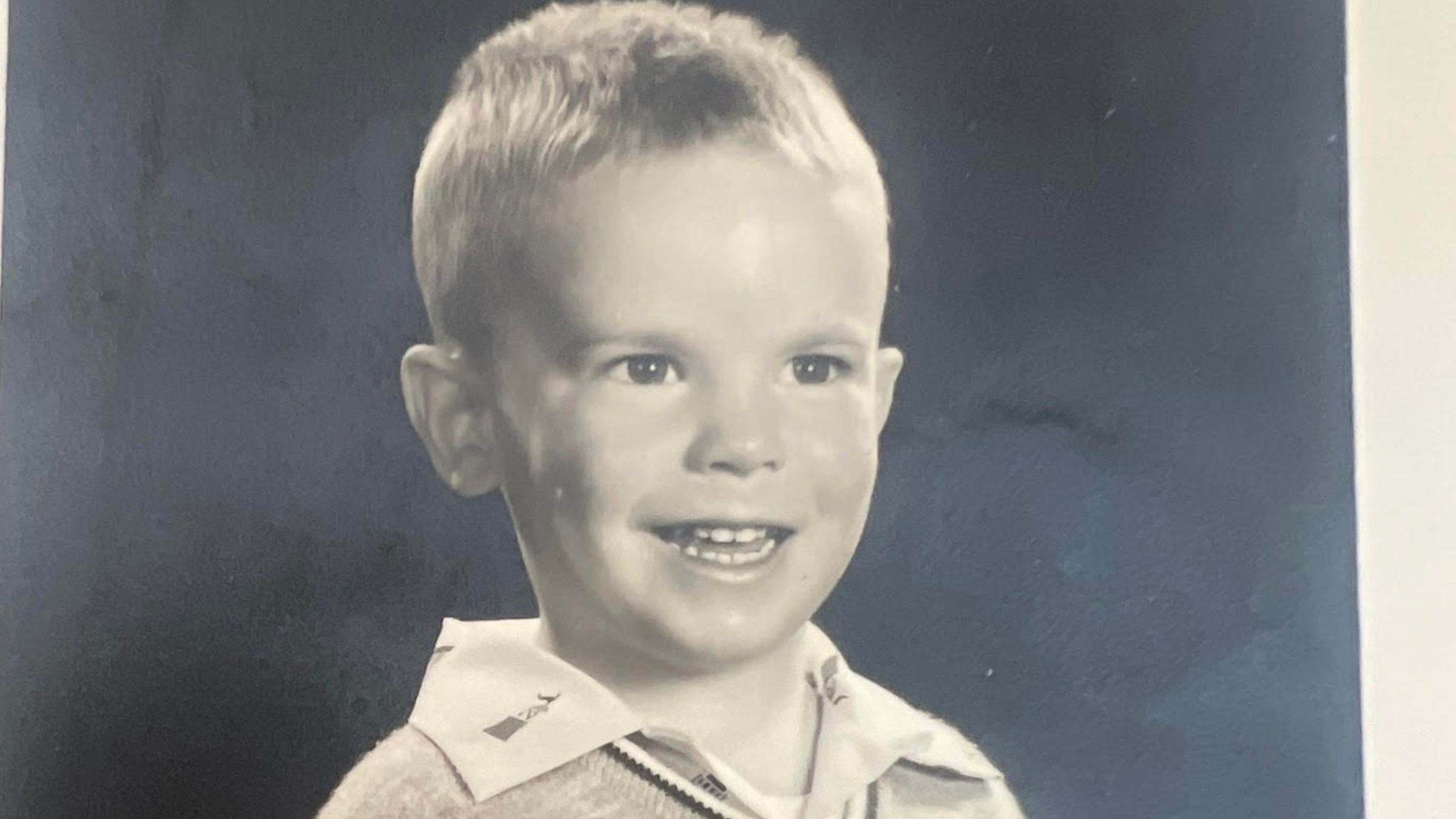
Image of writer Michael J. Norton at four years old. (Photo: Courtesy Michael J. Norton)
Published June 19, 2026 05:26AM
“I am not my father. But now I wonder if my father wished he could’ve been me?”
It was only a few years ago when this question snuck up on me in a flash of OMG realization.
I was standing in Tree Pose, quietly breathing in the serenity of a yoga class, when this provocation prompted a rewrite of the story of my life with a fresh perspective and a slightly happier ending.
My dad was an angry man. Some men golfed. He sported a temper. Any father-son talk was just a monologue steaming with criticism and disappointment. I never took it personally—if you were living under “his roof,” he was mean to everyone in equal measure.
But please, no sympathy is required here. My dad insisted that I read the newspaper, so I knew from a young age that there was a big world out there. There would be more to life. I also saw that there were plenty of bad guys in the world. They were all someone’s son, father, or brother. One of those guys just happened to be my dad. Luck of the draw.
After school one day, little second-grade me, neatly attired in my Catholic school uniform, snuck off to confession to have a chat with my favorite priest. I had a brilliant idea. Calmly, rationally, and with adult-like authority, I presented my case, “…you see, we’re all much happier when he’s not home. As soon as his car pulls into the driveway, my mother’s smile evaporates. All of us scatter to our rooms. We would all be happier if they got divorced.” Even a seven-year-old could see that this was the logical conclusion.
The priest could barely utter, “I’ll see what I can do.” So much for the confidentiality of the confessional booth. The priest counseled my father, whose calculated contrition expertly masked his fury. But he kept a lid on it. This child—his child—was unpredictable. I wasn’t one to cower. I had a spine. I could and would fight my own battles. Back then, in a small town, reputations still mattered. From that moment on, we lived life like boxers huddled in our corners, acutely aware that a formidable opponent was always ready for the next round. I think he also knew that I was right—he was a man trapped in the wrong life.
I grew up and grew beyond my father. I went to school in Boston and London. I lived in New York and Santa Monica. I traveled to strange places. Vacations required a passport. He spent the entirety of his life in Philipsburg, New Jersey. He was a big fish in a small pond. I was a small fish in a big pond.
I have no memory of my father smiling or laughing except for what might have been the last time I saw him. I had taken him to the bank. He grabbed my arm as we crossed a street in Easton, Pennsylvania. That was a first—my father needed me. Looking around, I wondered if there was a yoga studio anywhere in the area. With a spontaneous chuckle, my father said, “Yoga?!” I was a mystery to him; a son that lived in a world that was foreign to him. A world with yoga, frequent flier miles, and hummus.
Father’s Day was always an oxymoron to me—the celebration of a man who had no interest in playing Father to his kids. His kids were an annoyance. A disappointment.
When he passed, I cleaned out his stuff: oh-so-cool cufflinks, spectacularly ugly ties, and a box of matchbooks and pens from every steak house within three hundred miles. Tucked away—physically and metaphorically—was a box of photos. All black and white. Pictures of a young man before kids. Before the grind began. There was my dad, looking dapper, wearing a smile I had never seen. He was at the track. He and a buddy owned a horse. They raced him. This was the world he loved. The energy of risk. The glamour of a clubhouse lunch. And always, a hand-blocked hat. This is the world he gave up.
Standing tall in Tree Pose, I had one of those flash thoughts—a moment of truth that floats in on a breeze. My dad never had the luxury of getting into his Lululemons and heading off to yoga class. He worked. Constantly. This high-school graduate had six kids and a self-imposed mandate that all of them would get a college degree. There was very little me-time in his days. “Om” was not in his vocabulary.
The physical benefits of yoga are powerful: agility, flexibility, strength, and stamina. But I truly value the transformative emotional benefits. I found a greater sense of calm. I was able to quiet the squirrels in my head—to silence the noise of life that gets in the way of clarity.
Yoga helped me see who my father was—not as my opponent in a lifelong tug-of-war but rather, as a young man saddled with the pressures of providing for his family. I never saw the compromises and sacrifices that defined his existence. A fleeting image of my dad at peace in Mountain Pose unleashed an exhalation—not from a single breath but from my whole life.
I’ve been able to see that even if I didn’t have the perfect dad, I can understand what it was like to be him. A man who never had all that much time to enjoy his life. He had his kids. His Sunday mornings. As a runner for more than 40 years, I estimate that I’ve spent about 15,000 hours soaking up the sun on a six-mile run. My father never owned a pair of sneakers. I have the luxury of getting “pissy” when a Zoom call cuts into my pickleball plans. Seven days a week, my father was always minding his businesses. Instead of indulgences, he had bills to pay. He was never the father I always wished I had, but I finally saw him as a man who gave me all that he had.
Now, whenever I take the first sip of a perfect martini, step onto my paddle board, or bring my hands into prayer position, I remind myself that I am where I am because I had a clear vision of what I didn’t want to become. And sometimes, that can be all you need to find who you want to be in your own life.