
Published November 20, 2026 07:55AM
In Yoga Journal’s Archives series, we share a curated collection of articles originally published in past issues beginning in 1975. This article about the effects of inversions in yoga first appeared in the November-December 1983 issue of Yoga Journal. You can find more of our Archives here. You can also read more about inversions.
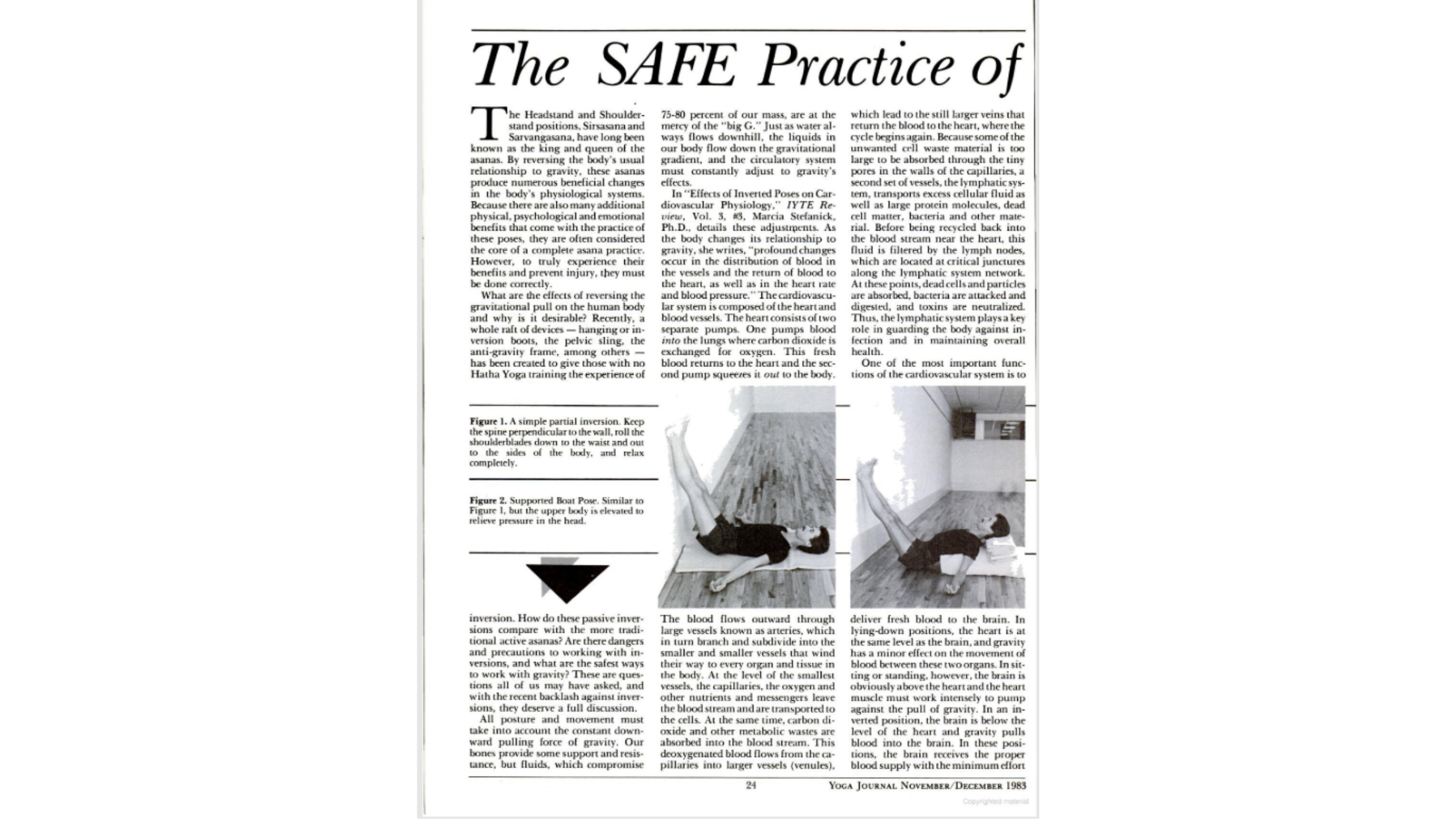
The Headstand and Shoulderstand positions, Sirsasana and Sarvangasana, have long been known as the king and queen of the asanas. By reversing the body’s usual relationship to gravity, these asanas produce numerous beneficial changes in the body’s physiological systems. Because there are also many additional physical, psychological, and emotional benefits that come with the practice of these poses, they are often considered the core of a complete asana practice. However, to truly experience their benefits and prevent injury, they must be done correctly.
What are the effects of reversing the gravitational pull on the human body and why is it desirable? Are there dangers and precautions to working with inversions, and what are the safest ways to work with gravity? These are questions all of us may have asked, and with the recent backlash against inversions, they deserve a full discussion.
All posture and movement must take into account the constant downward pulling force of gravity. Our bones provide some support and resistance, but fluids, which compromise 75 to 80 percent of our mass, are at the mercy of the “big G.” Just as water always flows downhill, the liquids in our body flow down the gravitational gradient, and the circulatory system must constantly adjust to gravity’s effects.
In “Effects of Inverted Poses on Cardiovascular Physiology,” IYTE Review, Vol. 3, #3, Marcia Stefanick, Ph.D., details these adjustments. As the body changes its relationship to gravity, she writes, “profound changes occur in the distribution of blood in the vessels and the return of blood to the heart, as well as in the heart rate and blood pressure.” The cardiovascular system is composed of the heart and blood vessels. The heart consists of two separate pumps. One pumps blood into the lungs where carbon dioxide is exchanged for oxygen. This fresh blood returns to the heart and the second pump squeezes it out to the body.
The blood flows outward through large vessels known as arteries, which in turn branch and subdivide into the smaller and smaller vessels that wind their way to every organ and tissue in the body. At the level of the smallest vessels, the capillaries, the oxygen and other nutrients and messengers leave the blood stream and are transported to the cells. At the same time, carbon dioxide and other metabolic wastes are absorbed into the blood stream. This deoxygenated blood flows from the capillaries into larger vessels (venules), which lead to the still larger veins that return the blood to the heart, where the cycle begins again.
Because some of the unwanted cell waste material is too large to be absorbed through the tiny pores in the walls of the capillaries, a second set of vessels, the lymphatic system, transports excess cellular fluid as well as large protein molecules, dead cell matter, bacteria and other material. Before being recycled back into the blood stream near the heart, this fluid is filtered by the lymph nodes, which are located at critical junctures along the lymphatic system network. At these points, dead cells and particles are absorbed, bacteria are attacked and digested, and toxins are neutralized. Thus, the lymphatic system plays a key role in guarding the body against infection and in maintaining overall health.
One of the most important functions of the cardiovascular system is to deliver fresh blood to the brain. In lying-down positions, the heart is at the same level as the brain, and gravity has a minor effect on the movement of blood between these two organs. In sitting or standing, however, the brain is obviously above the heart and the heart muscle must work intensely to pump against the pull of gravity. In an inverted position, the brain is below the level of the heart and gravity pulls blood into the brain. In these positions, the brain receives the proper blood supply with the minimum effort of the heart.
Tests done by Shanker Rao, as described in Science Studies Yoga by James Funderburk, show how the heart rate varies with gravity. His subjects, medical students with some experience in yoga, exhibited an average heart rate of 67 beats per minute in the supine position, rising to 84 beats per minute upon standing. In the Headstand position, these subjects displayed a 69 beats-per-minute average. This heart rate variation was accomplished by a variation in fluid pressure in the arteries, veins, glands and organs. The regular increase in pressure in the head, neck and chest regions brought about by inversions maintains the elasticity of the vessels and tissues, and it is this elasticity that is a key factor in maintaining health.
Just as it affects arterial blood flow, gravity affects the flow of venous blood back to the heart. There are three ways in which the deoxygenated blood can be returned to the heart. The first is gravity, which will drain the region above the heart of the venous blood and lymphatic fluid, but will resist the return of fluids from the lower body. The second two mechanisms, the respiratory pump and the skeletal musculature, must do all the work of returning the fluids below the heart. The changing pressure in the thoracic cavity, which pulls air into the lungs, pulls fluids toward the heart. Exhalations are quite important in this respiratory pumping action. Also, the contraction and releasing of the skeletal muscles serve to pump the venous and lymphatic fluids through their respective vessels. These vessels are equipped with a series of one-way valves that allow blood to flow toward the heart only, thus preventing backflow.
Unfortunately, these two mechanisms cannot compete against gravity for long periods of time. During the course of a typical day, most humans will spend 16 or more hours with the head above the heart and the legs and the pelvic area below. Thus, gravity has a negative effect on the venous and lymphatic return from most of the body, and if the muscles of the legs are not continuously contracting and releasing, fluid begins to accumulate in the lower body. This will almost always occur where there is not much opportunity for movement.
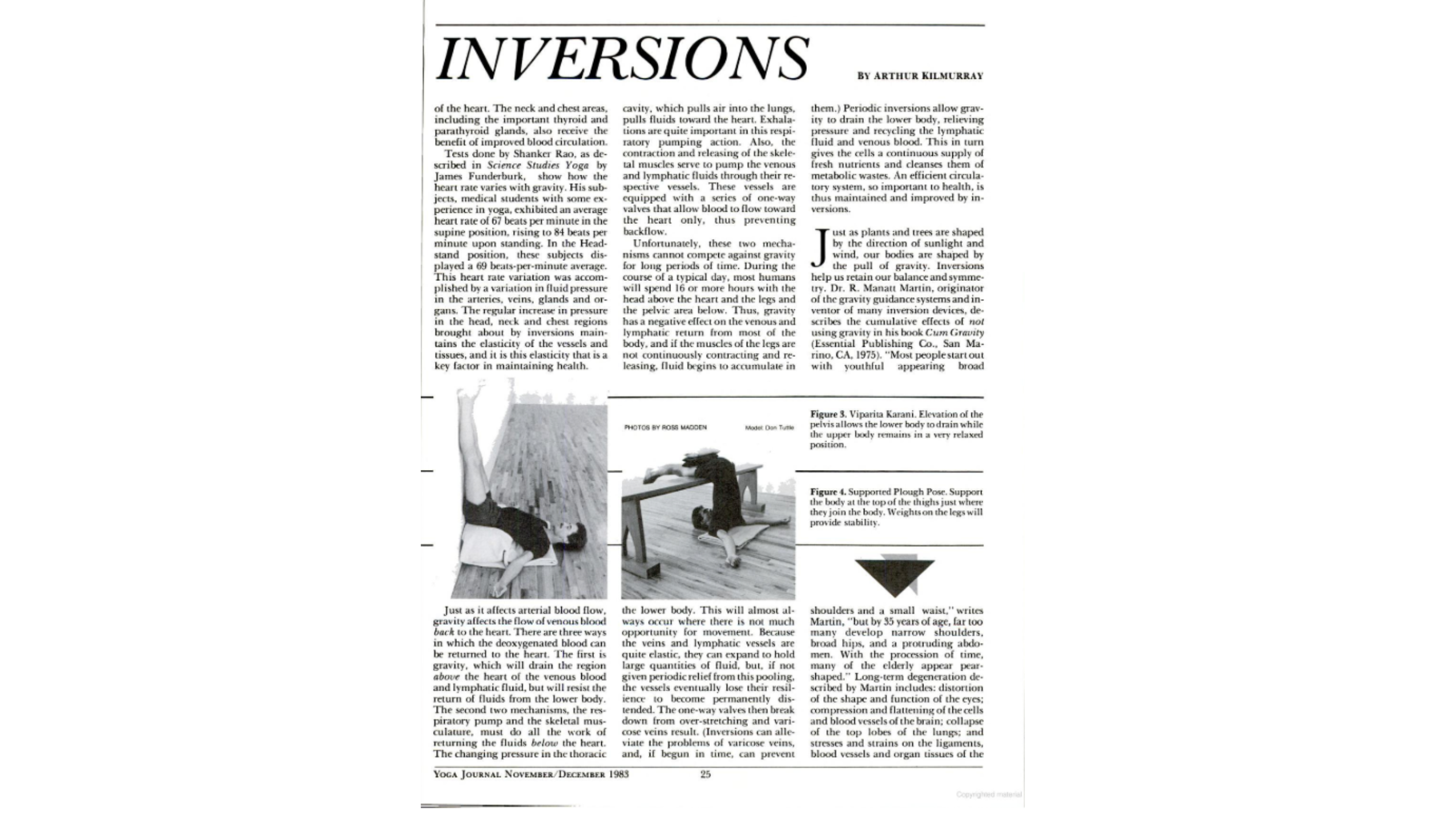
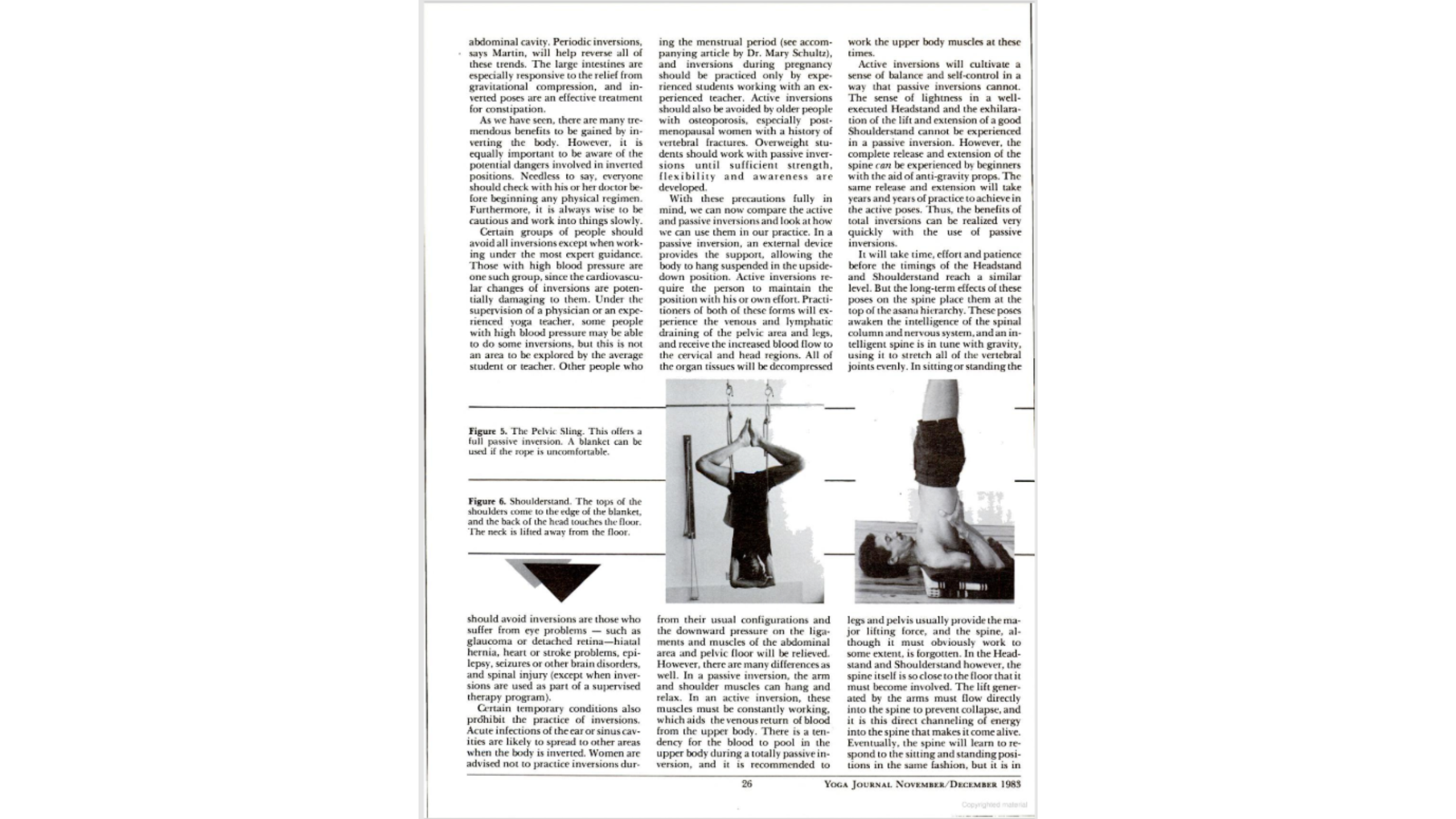
Because the veins and lymphatic vessels are quite elastic, they can expand to hold large quantities of fluid, but, if not given periodic relief from this pooling, the vessels eventually lose their resilience to become permanently distended. The one-way valves then break down from over-stretching and varicose veins result. (Inversions can alleviate the problems of varicose veins, and, if begun in time, can prevent them.) Periodic inversions allow gravity to drain the lower body, relieving pressure and recycling the lymphatic fluid and venous blood. This in turn gives the cells a continuous supply of fresh nutrients and cleanses them of metabolic wastes. An efficient circulatory system, so important to health, is thus maintained and improved by inversions.
As we have seen, there are many tremendous benefits to be gained by inverting the body. However, it is equally important to be aware of the potential dangers involved in inverted positions. Needless to say, everyone should check with their before beginning any physical regimen. Furthermore, it is always wise to be cautious and work into things slowly.
Certain groups of people should avoid all inversions except when working under the most expert guidance. Those with high blood pressure are one such group, since the cardiovascular changes of inversions are potentially damaging to them. Under the supervision of a physician or an experienced yoga teacher, some people with high blood pressure may be able to do some inversions, but this is not an area to be explored by the average student or teacher. Other people who should avoid inversions are those who experience certain eye conditions—such as glaucoma or detached retina—hiatal hernia, heart or stroke problems, epilepsy, seizures or other brain disorders, and spinal injury (except when inversions are used as part of a supervised therapy program).
Certain temporary conditions also prohibit the practice of inversions. People are advised not to practice inversions during the menstrual period, and inversions during pregnancy should be practiced only by experienced students working with an experienced teacher. Active inversions should also be avoided by older people with osteoporosis, especially those with a history of vertebral fractures.