
Updated April 30, 2026 11:00AM
Ever find yourself wanting and needing to practice yoga but feeling sluggish and unable to summon enough motivation? Or maybe you manage to unroll your mat but by the time you drag yourself out of Savasana, you feel as low-energy as before you started.
It’s not your fault. Most vinyasa yoga classes are designed to build heat and intensity relatively quickly and then ease you into some mat stretches before ending in soothing stillness resulting in relaxation. This usually takes the shape of a yoga flow starting with seated and kneeling poses quickly building to Sun Salutations followed by challenging standing and balancing poses before you slow things down with an extended cool down of hip openers, forward folds, reclined poses, and, finally, Savasana.
But there are ways to adapt yoga flows for those days when you don’t feel ready to launch into intensity right away or prefer to avoid the traditional slide into stillness. That’s when you want to try a reverse yoga flow.
A reverse yoga flow literally flips the script and begins where the traditional sequence ends—Savasana. From there, it slowly progresses and meets whatever lethargic or unmotivated vibes you’re experiencing exactly where you are with an extended amount of time stretching on your back. This arc has a longer build than most warm-ups to slowly coax out your energy. Then it takes you through the usual standing poses but stops when you’re feeling energized rather than taking you back to the mat so you can take that momentum with you.
How to Practice a Reverse Yoga Flow
Whether you have only 10 minutes to practice or an entire hour, a reverse yoga flow leaves you standing and engaged rather than completely soothed so you can take that uptick into the rest of your day. The following is a general framework that you can start with, whether you’re a student or teacher, and make your own. Keep any props you usually use within reach.
1. Start in Stillness + Ease Into Movement
Lie down and get comfortable. Use props if needed and maybe turn on some quiet music or perhaps a guided yoga nidra practice at the beginning. When you’re ready to move, linger in some simple reclined mat stretches.
2. Move a Little More Actively
Don’t rush what comes next. Slowly introduce some more movement.
3. Build Momentum
Move to a seated position or come to your hands and knees as you initiate larger movements that build strength and challenge stability.
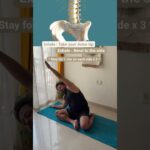
- Spinal Mobility (Seated Side Stretches and Twists; Seated or Kneeling Cat and Cow)
- Balancing (Bird Dog and Plank)
- Backbending (Locust and Low Lunge)
4. Find intensity (Invigoration)
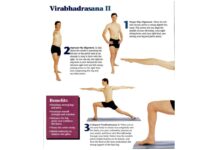
After you’re adequately warmed up, incorporate your usual full-body movements and standing poses to build heat.
5. Finish Standing
Rather than winding down on the mat, close your practice in stillness but standing in Mountain Pose. Bring your hands together and open your eyes. Gaze steadily at a drishti, or single-pointed focus, straight in front of you. Take a grounding breath or two to close your practice and seal in the vitality you’ve generated, then ride that momentum into whatever comes next in your day.