
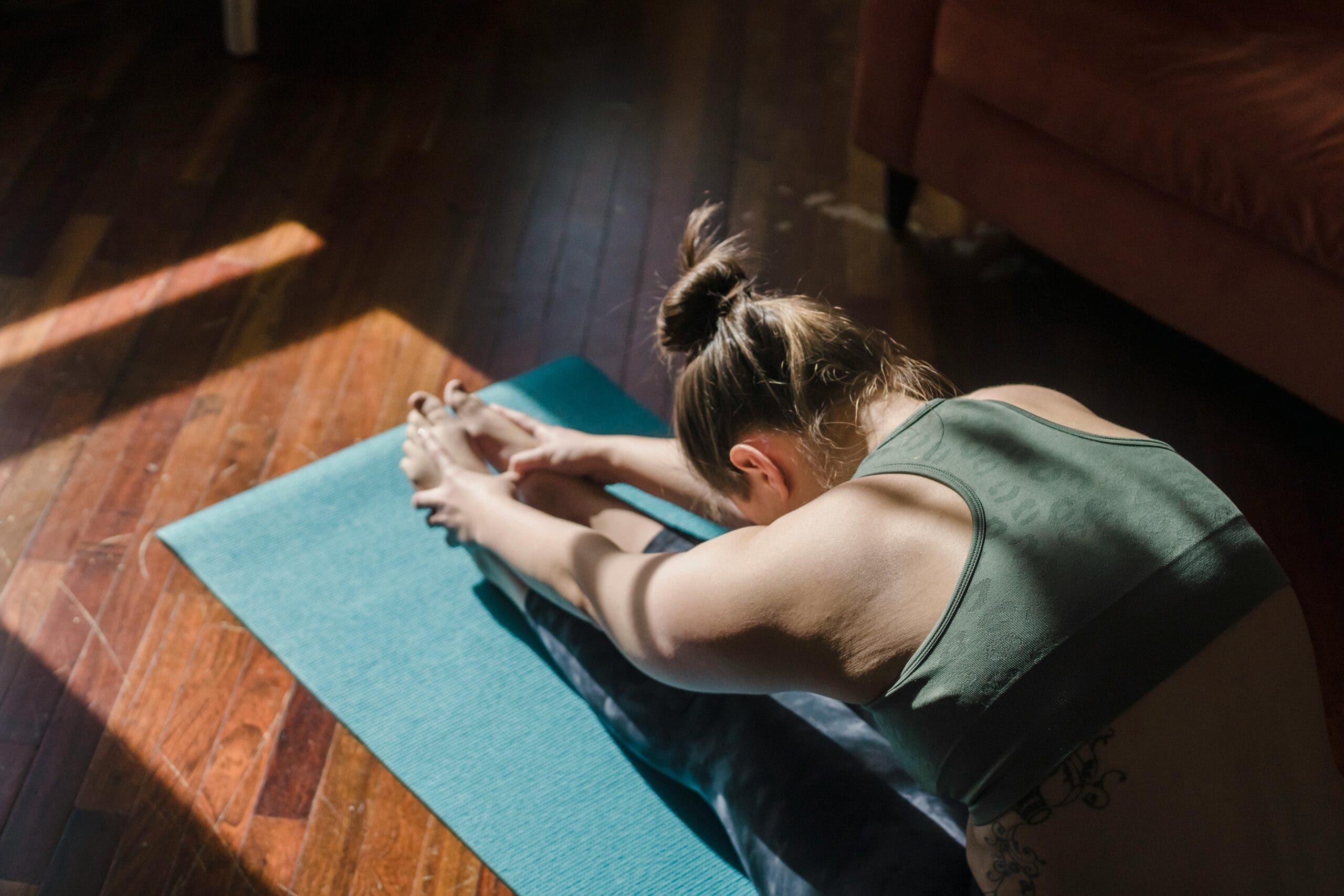
The obstacles are opportunities for growth—on and off the mat.
(Photo: Tim Samuel | Pexels)
Updated April 30, 2026 05:44PM
Gentle yoga is often considered the “easier” version of yoga. Students usually walk into class expecting a slower pace, a more relaxed vibe, and an overall less intense experience. Yet for some students, it can be even more challenging than faster-paced, more physically intense vinyasa classes for the exact same reason that people assume it’s easy—because it’s slow.
Vinyasa classes often require you to quickly focus on where to position your feet in Warrior 2, where to gaze in a balancing pose, or which transition you’ll take from Downward Dog to Standing Forward Bend. For some, that need to constantly refocus can be a distraction from what’s happening inside. By slowing down the pace of what is asked of you, gentle yoga removes the distraction of constant movement and gives you more space to observe how you think and feel.
And that can magnify a lot of the physical, mental, and emotional experiences you’re having on the mat. Stillness doesn’t come easy to many people, but what feels like obstacles at first can, with time, become opportunities to better understand and support yourself. You simply need to know how to navigate them.
Why Is Gentle Yoga Challenging?
In general, slower practices tend to increase interoceptive awareness, which is your ability to sense what’s happening in your body and mind. For some students, this is the most challenging part of the practice, especially when negative thoughts and emotions rise to the surface.
Maybe you think, “This should be easier.” or “Why is everyone getting this except for me?” Or you might feel emotions that you’ve been avoiding bubble to the surface such as anxiety, frustration, or worry. This is a normal response.
In some cases, the nervous system also interprets stillness as a threat. That can be why students sometimes feel the urge to fidget, look around, or mentally “check out” during gentle classes. Those wiggly tendencies can be the body’s instinctive response to a lack of familiarity with quiet or calm energy.
Gentle yoga can also shed more light on physical challenges. Holding a pose for more time forces you to confront muscle tightness, pain, shakiness, and other sensations—and not just in passing. Many students find this confronting and feel frustration or even grief when they realize their practice doesn’t look the way they want.
These challenges often take the shape of exactly what yoga is trying to teach you.
4 Ways to Make Gentle Yoga Feel More Approachable
You can learn how to work with gentle yoga instead of against it. Then you can take these skills into any type of yoga class and any challenge you face in life.
1. Shift Your Focus
Yoga isn’t about mastering a new pose or reaching a flexibility goal. Consider measuring your practice by how much awareness you can cultivate instead. Focus on what your body and mind are telling you and ask yourself:
- “What do I notice about this moment that I might otherwise miss?” Maybe it’s the solid feeling of all 10 toes on the floor, or the warmth between your hands when they’re pressed together at your chest.
- “What can I show gratitude for instead of criticizing?” In a spinal twist, perhaps you appreciate your spine for being the sturdy center of your body instead of judging how “far” you go in the stretch.
2. Notice Your Breath
Instead of fighting your thoughts or emotions, anchor your attention on your breath. Notice the soothing sound of each inhalation and exhalation. Feel your lungs and belly expand and contract. Focus on the cooling sensation of the inhalation and the slightly warmer exhalation.
If your mind wants to rehash an awkward conversation from yesterday, guide your attention back to the breath. Repeat as needed. This ritual can become a simple comfort during practice, as well as help regulate your nervous system and soften the intensity of your thoughts and feelings.
3. Embrace Discomfort
Slight discomfort (but not pain) will be part of your practice—and that’s okay. Remind yourself that this is only a moment in time and it will pass. Processing your emotions during gentle yoga is also teaching you how to process them in life. You learn to sit with discomfort without immediately reacting.
Instead of dismissing any less-than-ideal sensation, allow yourself to feel the nagging tightness in your shoulders or the sting of a negative thought. With each exhalation, remind yourself that if you can tolerate some unpleasantness on the mat for a few more breaths, then you can also handle that awkward moment during your next social event or a disagreement with a family member.
4. Make the Practice Your Own
In any yoga practice, only you know what’s going on in your body. Just because you’ve come into a pose doesn’t mean you must stay there. And in gentle yoga, you have even more time and space to listen to your body. Have you gone too deep into a stretch? Is there a way you could better support your body in a pose, perhaps by using props? Did you lose focus on your breath?
Also, give yourself permission to ease out of the pose or skip it altogether. Gentle yoga is all about honoring the fact that your mind and body may feel different from day to day—and you can change your practice accordingly. Learning to adjust for your needs also avoids potential injury before it becomes a problem.
You might even feel more comfortable grabbing an extra prop in a gentle yoga class, knowing that you won’t miss much in the time it takes you to return to your mat.
Gentle yoga isn’t a lesser version of the practice, but it is a different version than what many are familiar with experiencing. Feeling out of your comfort zone on the yoga mat isn’t a negative thing—in fact, it’s often what leads you to grow off the mat.