
All you need is a wall and a willingness to relax.
(Photo: Andrew Clark; Design in Canva)
Published June 26, 2026 11:25AM
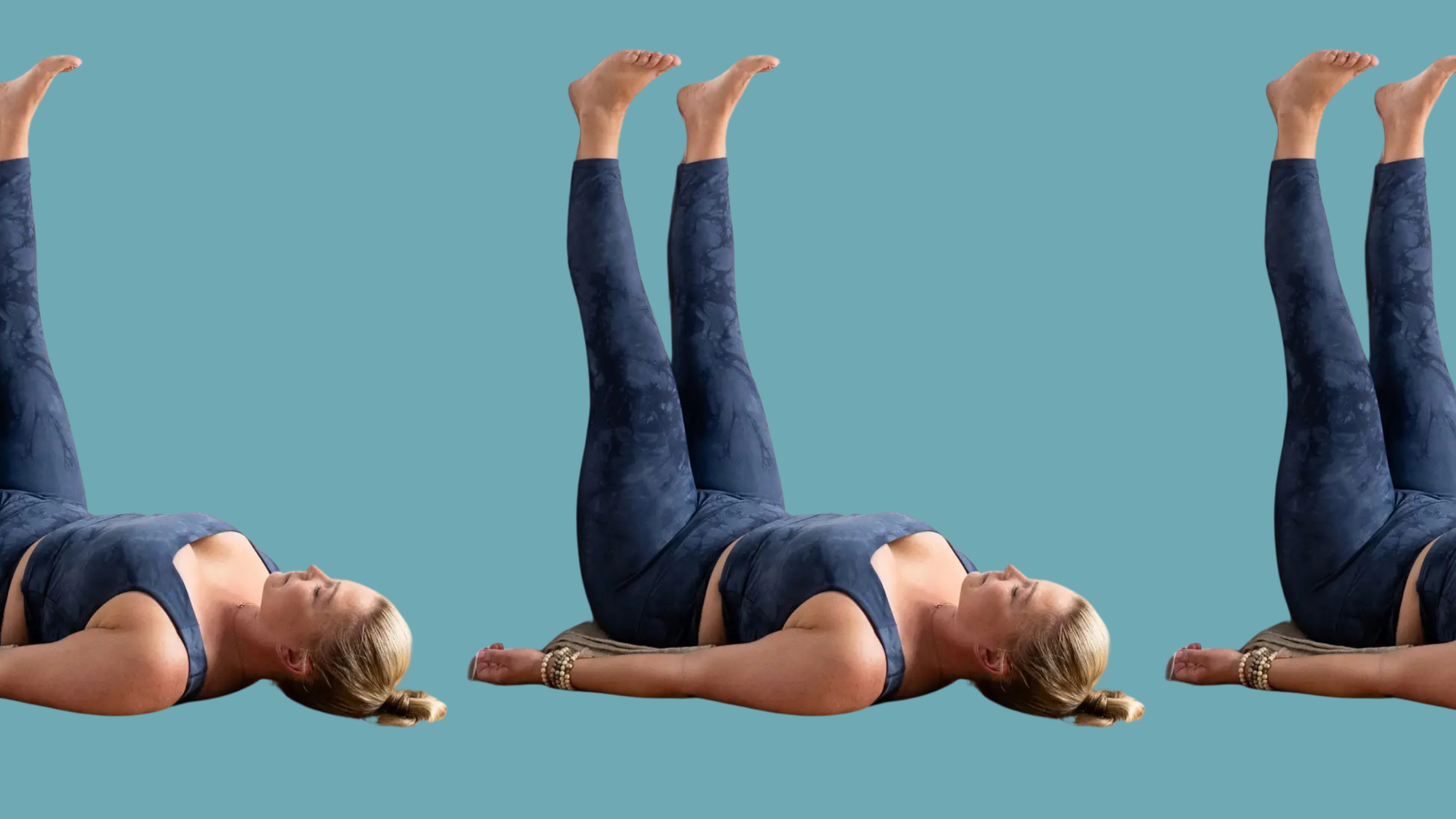
When one of our editors lived in New York City, the only way she could calm her mind and body (all that hustle and bustle!) and get any sleep was by spending a few pre-bedtime minutes in Legs Up the Wall (Viparita Karani). Shimmying your sit bones up against a wall and sticking your legs straight up may sound silly, but as anyone who has spent time in the pose knows, the restorative results are very real.
The benefits of Legs Up the Wall come from the inverted nature of the pose. Research proves that passive leg raises get your blood flowing, which in turn boosts brain function, immunity, and overall energy. And for those looking to chill out, restorative poses like this one help stimulate the parasympathetic nervous system, which reduces blood pressure and heart rate and, in turn, minimizes symptoms of anxiety and general stress.
Some yoga teachers equate the effects of several minutes spent in Legs Up the Wall to a really good nap. So although Savasana might be the closest thing you’ll get to a standard lie-down in yoga, Legs Up the Wall can mirror quality rest more closely.
How to Practice Legs Up the Wall
Practicing this pose is as simple as its name suggests.
First up, as the name indicates, you’ll need a wall (one of the most unsung props in all of yoga). If a wall isn’t available to you, you can also use a chair, a couch, a coffee table, a tree, or anything else that allows you to send your legs up in the air with enough support to make the pose relatively passive.
You’ll also need a willingness to be still. Legs Up the Wall’s power comes from being rather than doing—so if you’re a fan of efforting your way toward relaxation, try to release that inclination for a few minutes.
Start seated with the side of one hip touching the wall. Lie on your back and pivot your low body, sending your legs up the wall. Scoot and adjust until your tailbone is touching, or at least very close to, the wall. Rest your arms by your sides, atop your belly, on your heart—whichever placement feels the most natural to you.
Stay here for 5-10 minutes or more. It’s that simple.
When you’re ready to release the pose, bend your knees and roll gently to one side. Pause here before slowly pressing up to a seated position and invite a few additional moments of stillness, integrating the effects of this powerful inversion before taking them back with you into life.