
Published October 19, 2026 04:53PM
You hear a lot about yoga to stretch your back. But what about strengthening your back? In particular, yoga to strengthen the upper back, which tends to be overlooked compared to the lower back. Yoga teacher and certified trainer Amber Sayer explores the research and the poses that help you support your upper back muscles.
When you think about practicing yoga for your back, you probably think of seeking release from kinks near your neck and shoulders or finding relief from stiffness in your lower back. And there is no shortage of poses that support each of those. Yet there’s an equally essential approach that is talked about far less, and that’s practicing yoga to strengthen the upper back muscles.
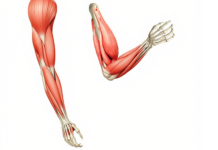
Holding an isometric contraction in the upper back, as one does in many yoga poses when the muscles are engaged in a static position, is a fantastic way to not only to build strength but also endurance in ways that promote healthy posture. These muscles include the upper, middle, and lower trapezius (positioned from the neck to the shoulder blades) as well as the rhomboids (found beneath the trapezoids and between the shoulder blade and spine), and the erector spinae (running along the spine).
And there’s no shortage of research that suggests yoga can strengthen the upper back. A recent study found that yoga poses resulted in a more diverse array of concurrent muscle activation in the upper back and shoulders compared to traditional gym exercises. In one instance, Downward-Facing Dog and the version of Bridge with the hands interlaced behind the back were shown to be significantly effective at activating the muscles of the upper back muscles.
Another study found that long-term, consistent yoga practice correlated with improved posture and curvature of the spine, including fewer instances of thoracic kyphosis (rounding of the upper back) and lumbar lordosis (swayback). Participants had been practicing yoga an average of three times a week for anywhere from 1 to 15 years. The results were supported by another study that found a 6-month yoga program could significantly improve upper back strength.
Ultimately, the improvements found from enhancing upper back strength resulted in more ease and less struggle as participants navigated everyday life.
Yoga to Strengthen Your Upper Back
Following are the yoga poses that target and strengthen the overlooked muscles of the upper back. Most of them do so by holding your body in isometric contraction against gravity. And the best news? All you need is your body and your yoga mat; no fancy gym equipment or weights required.
1. Sphinx Pose
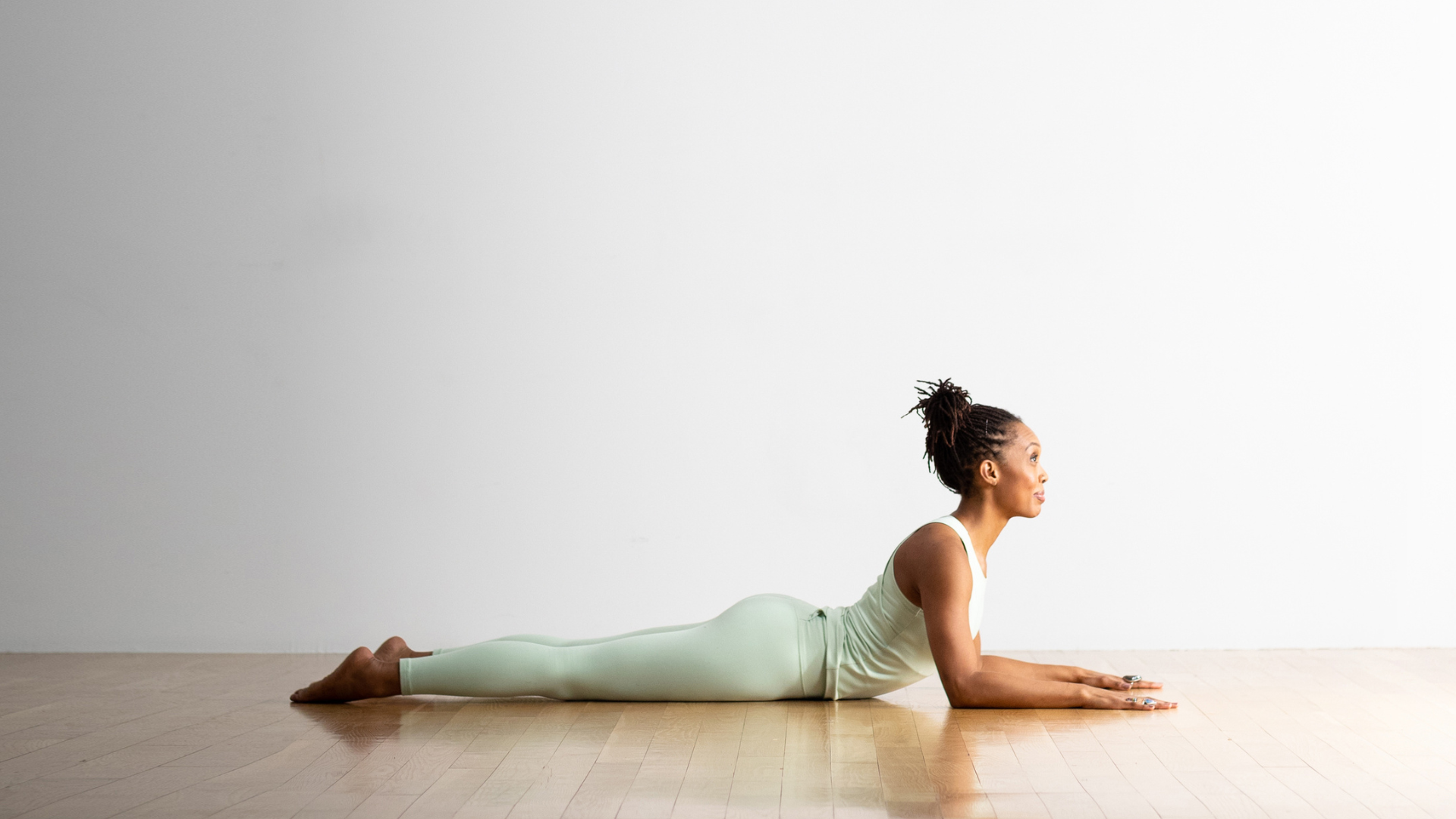
One of the most beginner-friendly yoga poses for upper back strength is Sphinx Pose (Salamba Bhujangasana). It’s a modest backbend that, thanks to your forearms resting on the mat and propping up your chest, is typically quite passive. But press through your forearms and actively lift your chest and you’ll activate the erector spinae muscles. Then draw your shoulder blades together and away from your ears to engage your posterior deltoids (back of the shoulders), rhomboids, and trapezius. Consider it a backbend with training wheels.
Practice Sphinx Pose.
2. Cobra Pose
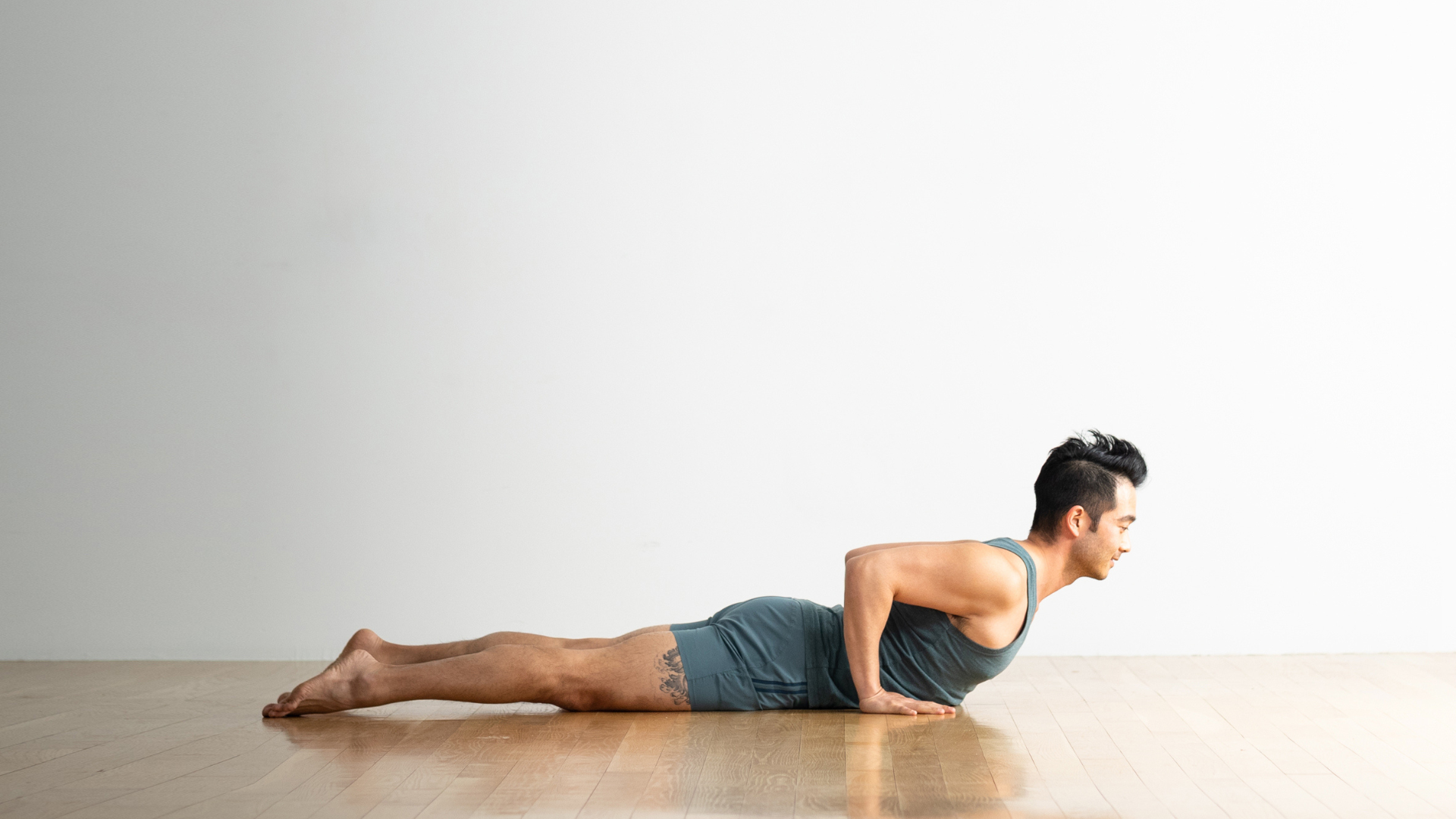
Think of this as a progression from Sphinx Pose. Start by resting your palms on the mat beneath your shoulders as you engage your upper back muscles and lift your chest off the mat in Cobra Pose (Bhujangasana). That ensures you create the shape by enlisting the erector spinae muscles. To maximize muscle activation, lift your chest farther away from the mat or, even better, float your hands off the mat.
Practice Cobra Pose.
3. Cat-Cow
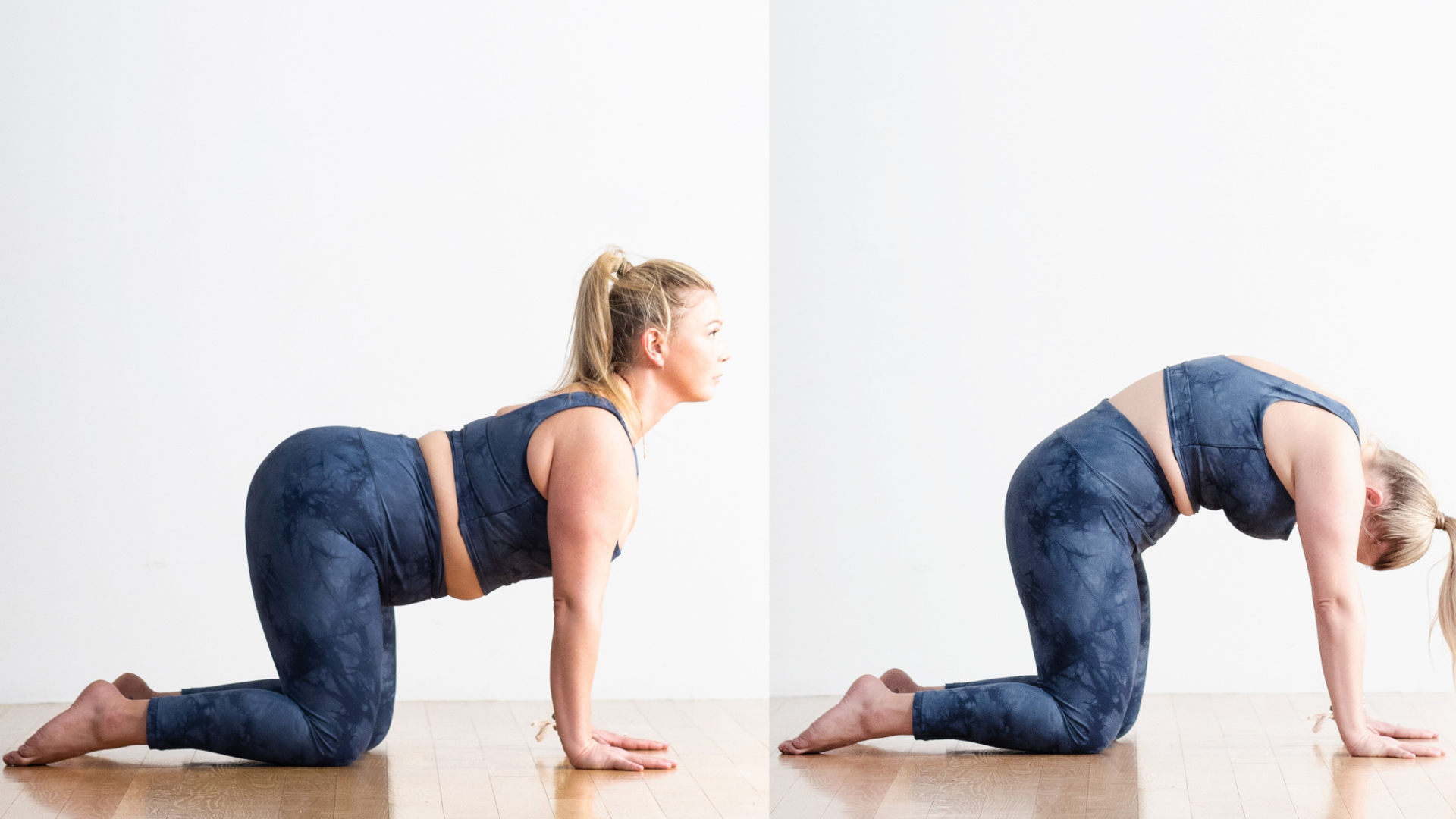
This dynamic movement between the two shapes asks you to flex and extend the spine, improving mobility over time. Rather than just go through the motions, take your time and make certain you exaggerate the shape of the upper back as you transition between Cat and Cow. Inhale as you arch your back and lower your belly toward the mat, exhale as you round your back.
Practice Cat–Cow.
4. Downward-Facing Dog
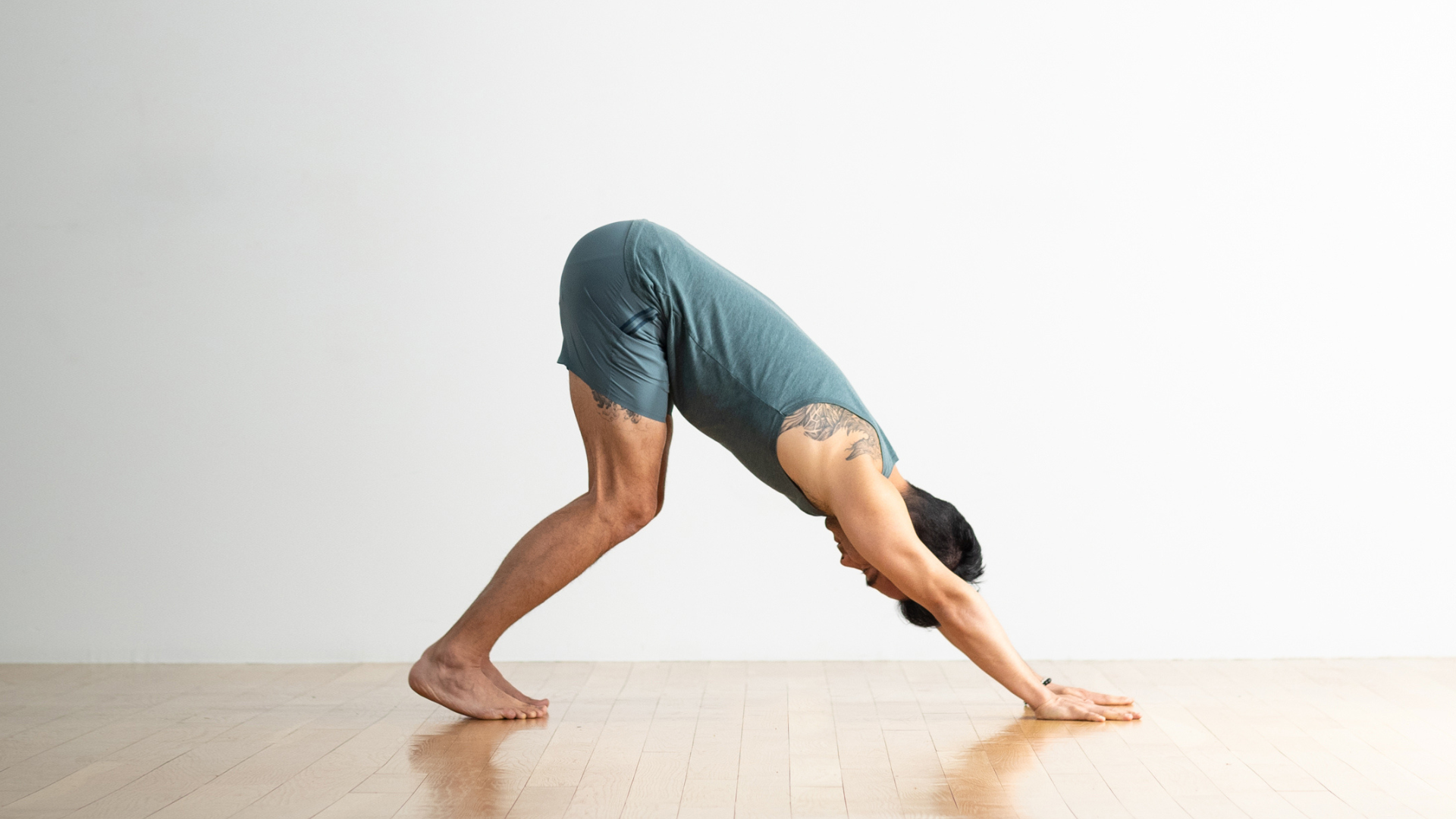
It’s easy to focus on the challenge passed along to the arms and shoulders in Downward-Facing Dog (Adho Mukha Svanasana), but the upper back plays a strong role in holding your body stable. Focus on drawing your shoulders away from your ears and pressing your hips toward the ceiling behind you to maximize engagement of the lower trapezius.
Practice Downward-Facing Dog.
5. Dolphin Pose
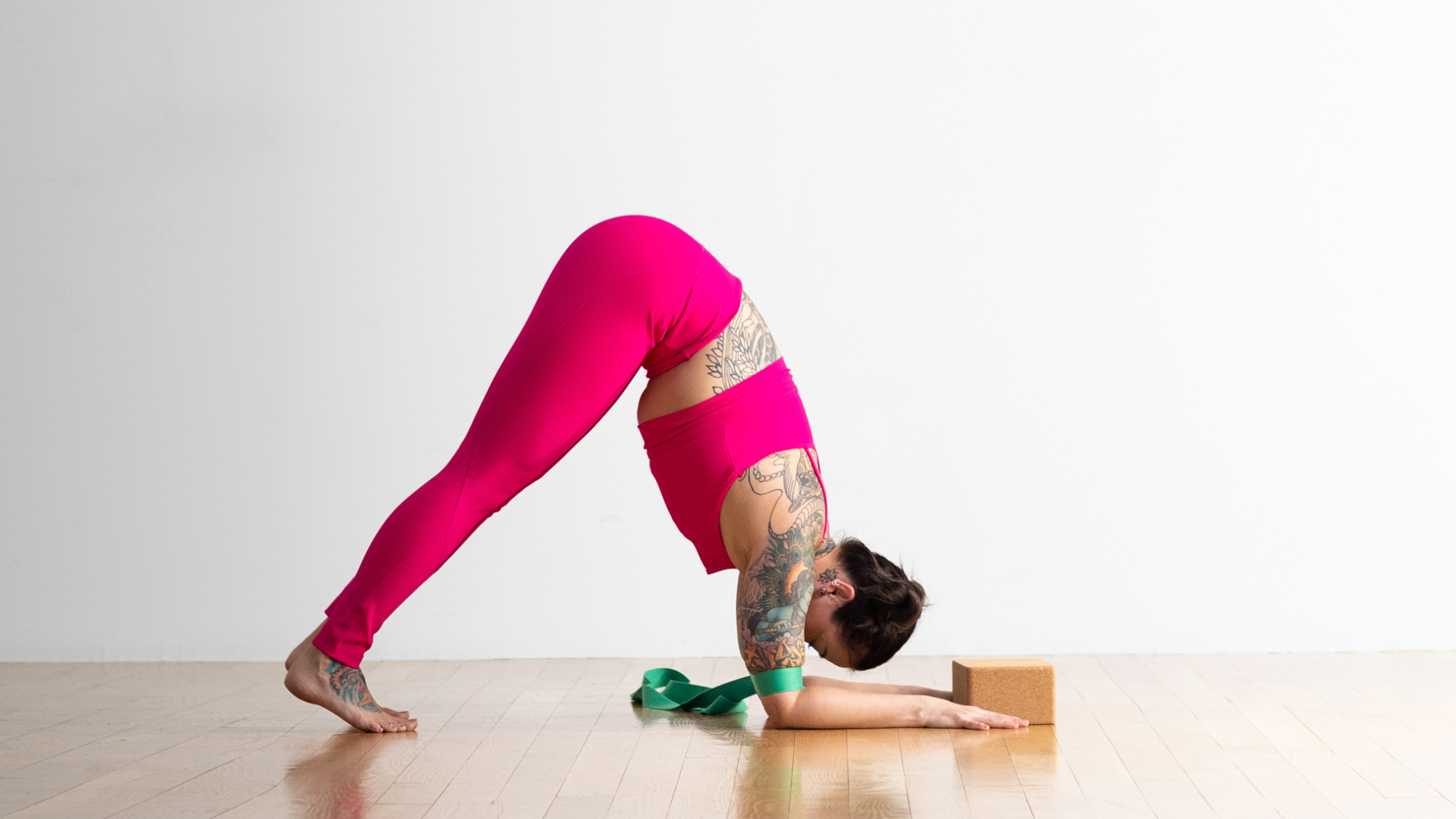
Dolphin Pose has a similar shape and effect as Downward-Facing Dog but with your forearms on the mat. This lessens the strain on the wrists and transfers more of the work to the shoulders and upper back. Be certain to press your forearms down as you lift your shoulders up and away from the mat.
Practice Dolphin Pose.
6. Reverse Plank
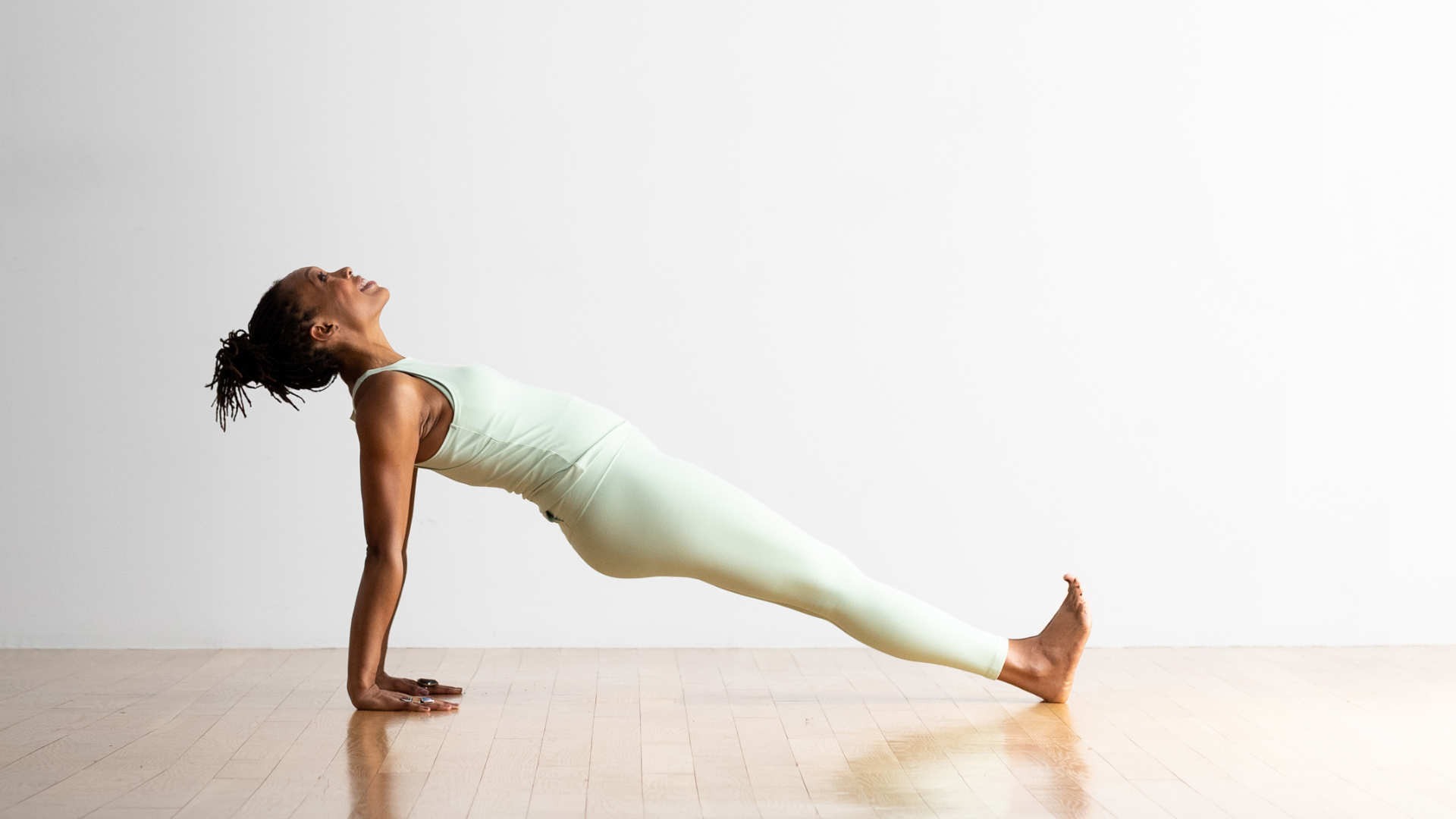
This cousin of the more common Plank Pose is typically overlooked. And that’s a shame because Reverse or Upward Plank (Purvottanasana) challenges you to engage your upper body muscles as you support a significant portion of your body weight against gravity. It strengthens all the muscles of the upper back as well as the triceps and shoulders (particularly the rear deltoids and rotator cuff muscles).
As with Plank, it’s important to squeeze your glutes to enlist these strong muscles in supporting the body in safe alignment.
Practice Reverse Plank.
7. Forearm Plank
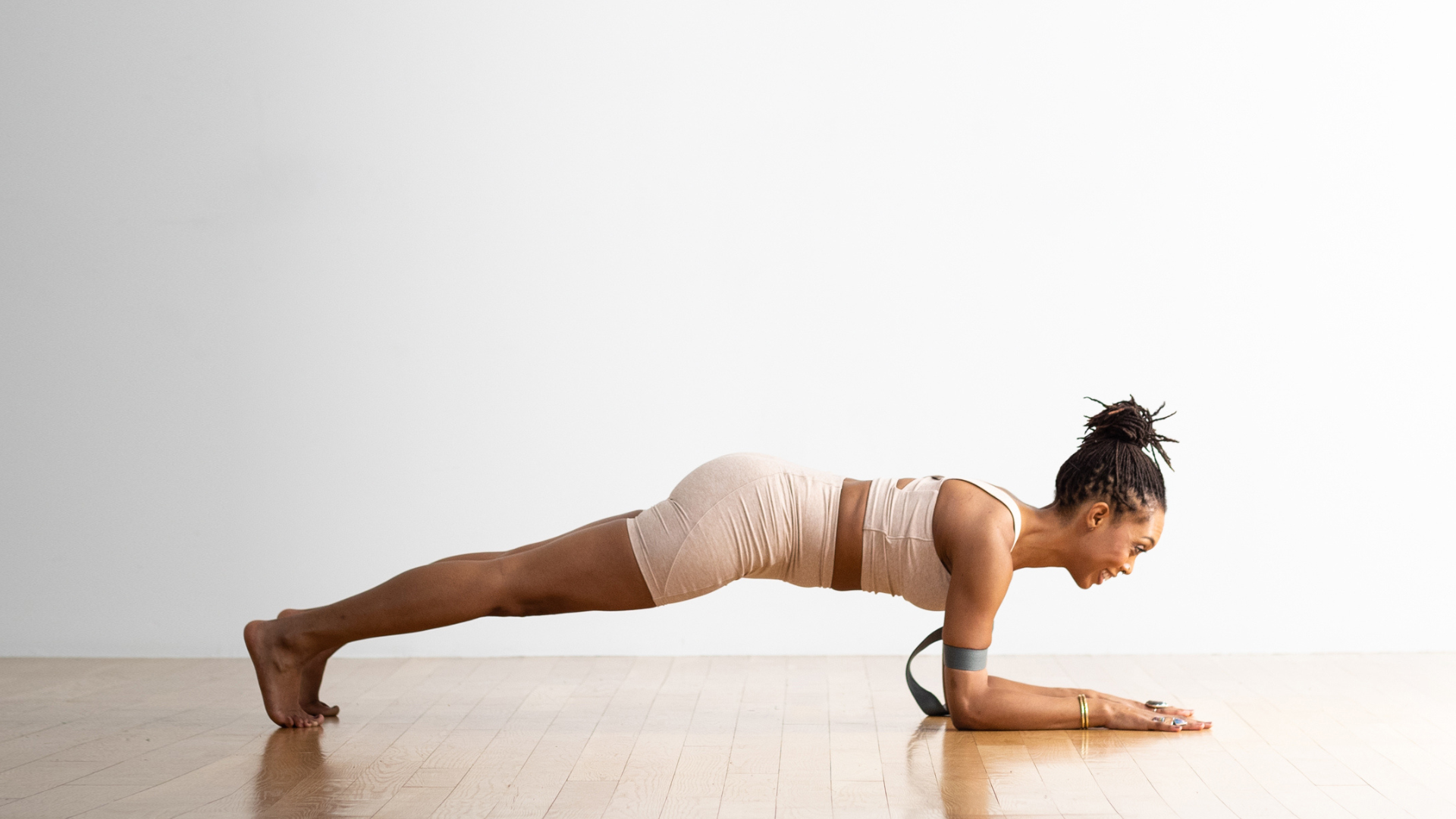
Practicing Plank on your forearms is commonly considered a core-strengthening exercise—and it is. But it also strengthens the upper back muscles as you stabilize your shoulder blades along the back of your rib cage while keeping your body in alignment. Focus on not allowing your shoulders to roll forward. A strap tied around your upper arms can help keep the upper arms from turning outward.
Practice Forearm Plank.
8. Warrior 3
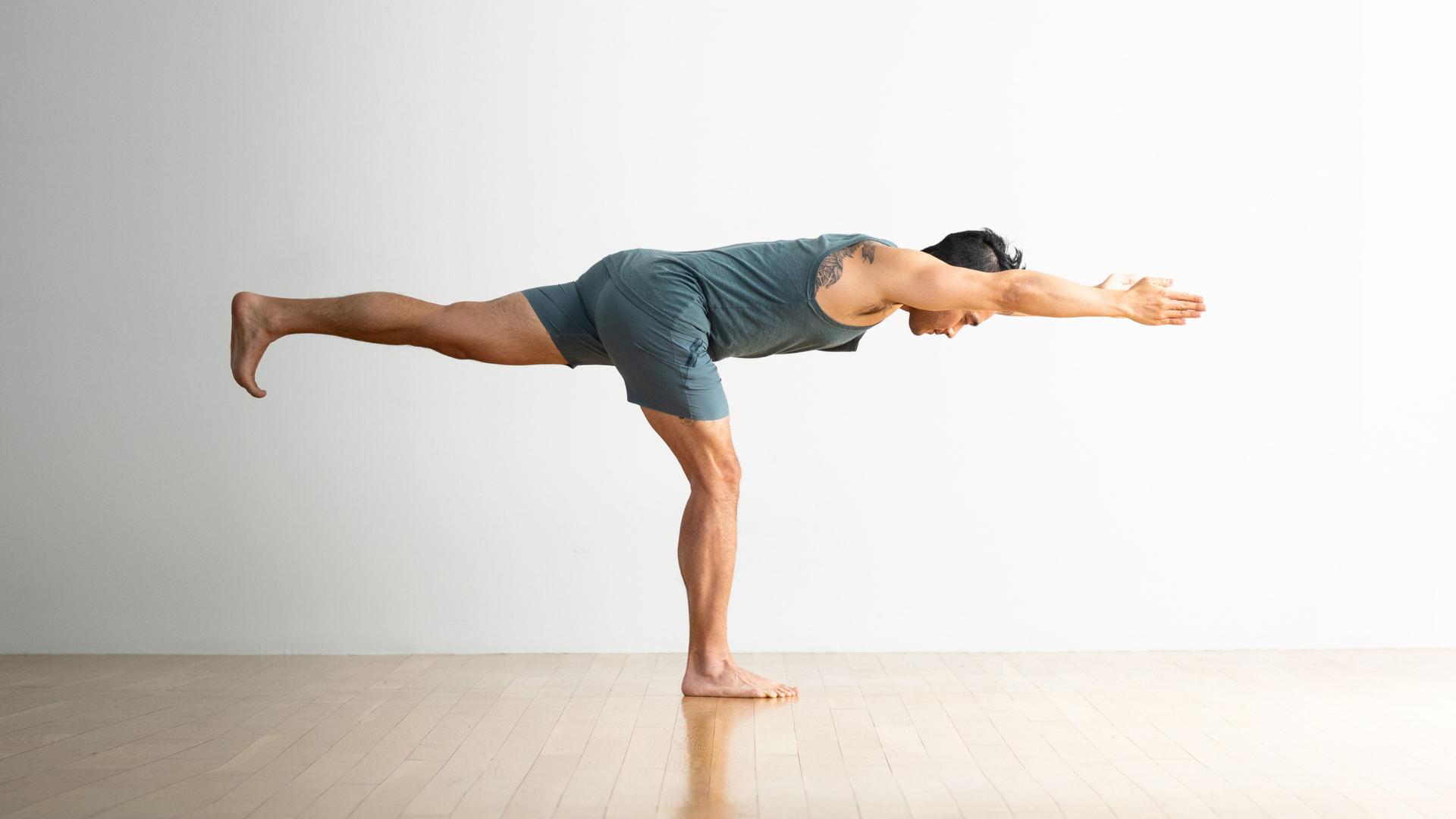
This is one of those fantastic full-body yoga poses that challenges and strengthens most major muscle groups. Warrior 3 (Virabhadrasana III) can also be a powerful activator of the upper back and shoulder muscles when you reach your arms straight ahead and hold them in alignment against gravity.
As your shoulders and upper back muscles start to fatigue, imagine helium balloons attached to each arm, helping them remain aloft and parallel to the floor.
Practice Warrior 3.
9. Half Moon Pose
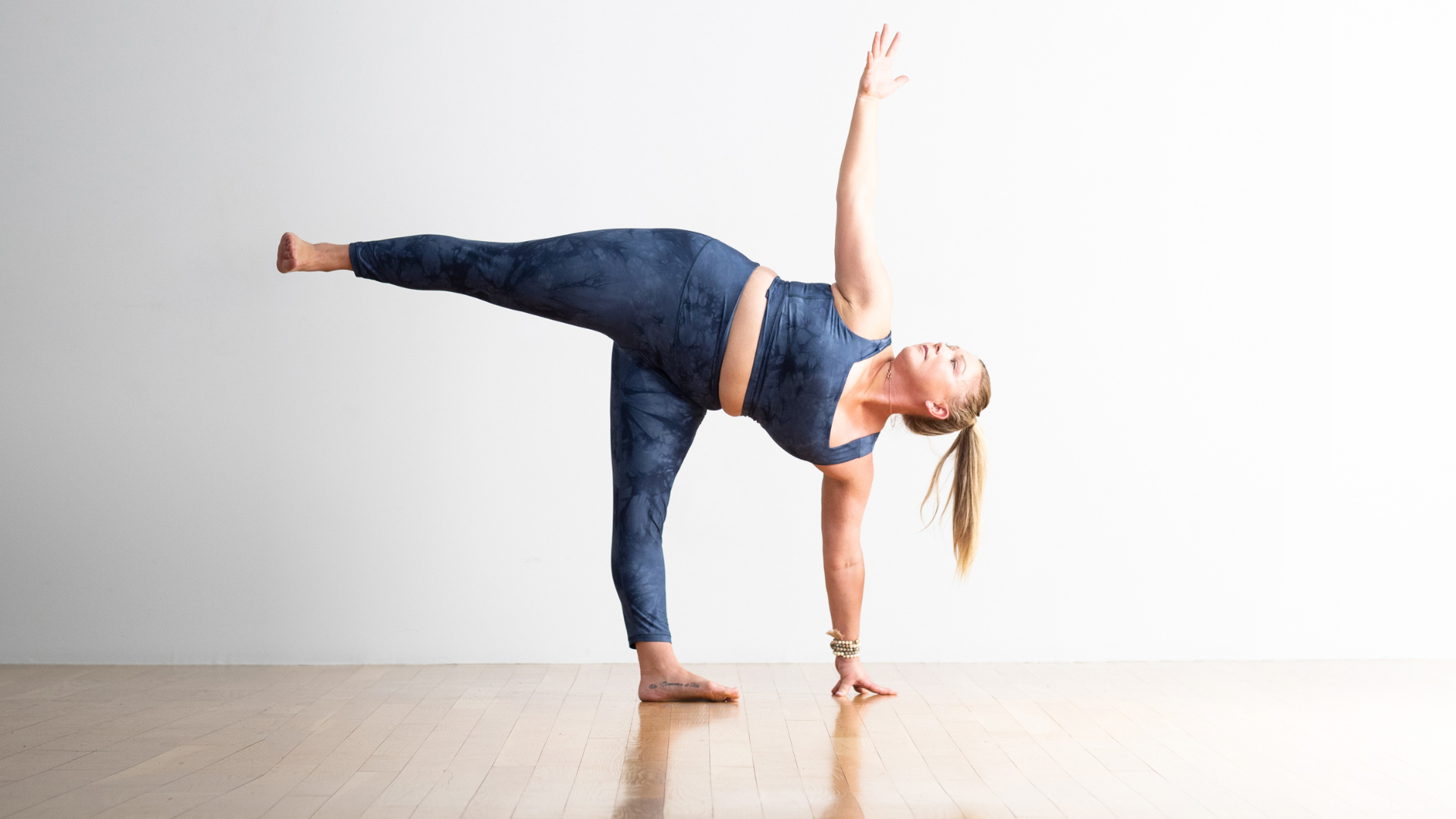
This balancing pose is typically appreciated for its emphasis on strengthening the lower body, although it also demands significant upper body integration. Try engaging the muscles between your shoulder blades to actively roll your top shoulder slightly back (but without letting your arm fall behind you) in Half Moon Pose (Ardha Chandrasana). Imagine pinching and holding a pencil between your shoulder blades to fully engage your upper back muscles. You want your shoulders stacked and expansion across your chest. Feel the difference?
Practice Half Moon Pose.
10. Locust Pose
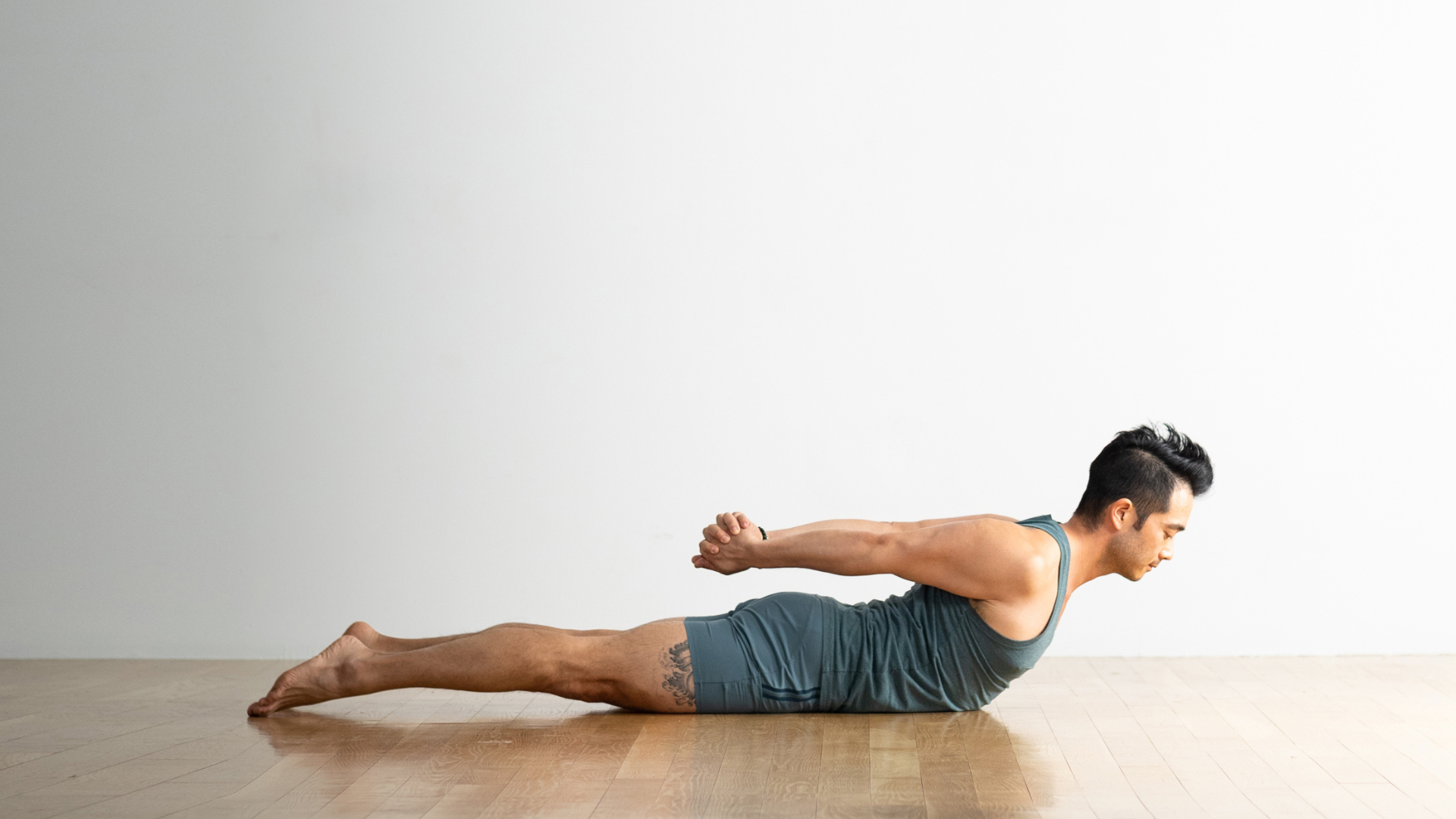
Rather than press your palms into the mat to lift and hold your upper body aloft in Locust Pose (Salabhasana), let your upper back do the work. You can float your hands off the mat, reach them alongside your legs, interlace your fingers behind your back and reach your knuckles toward the wall behind you, or reach your arms forward like Superman to engage your triceps, posterior deltoids, levator scapulae, rhomboids, rotator cuff muscles, traps, and various spinal extensors.
Research that explored muscular activity in the upper back during various yoga poses found that Locust Pose with the arms extended overhead most efficiently targets the trapezius (upper back muscles).
Remember to squeeze your glutes to reduce the workload on your lower back muscles.
Practice Locust Pose.
11. Bridge Pose
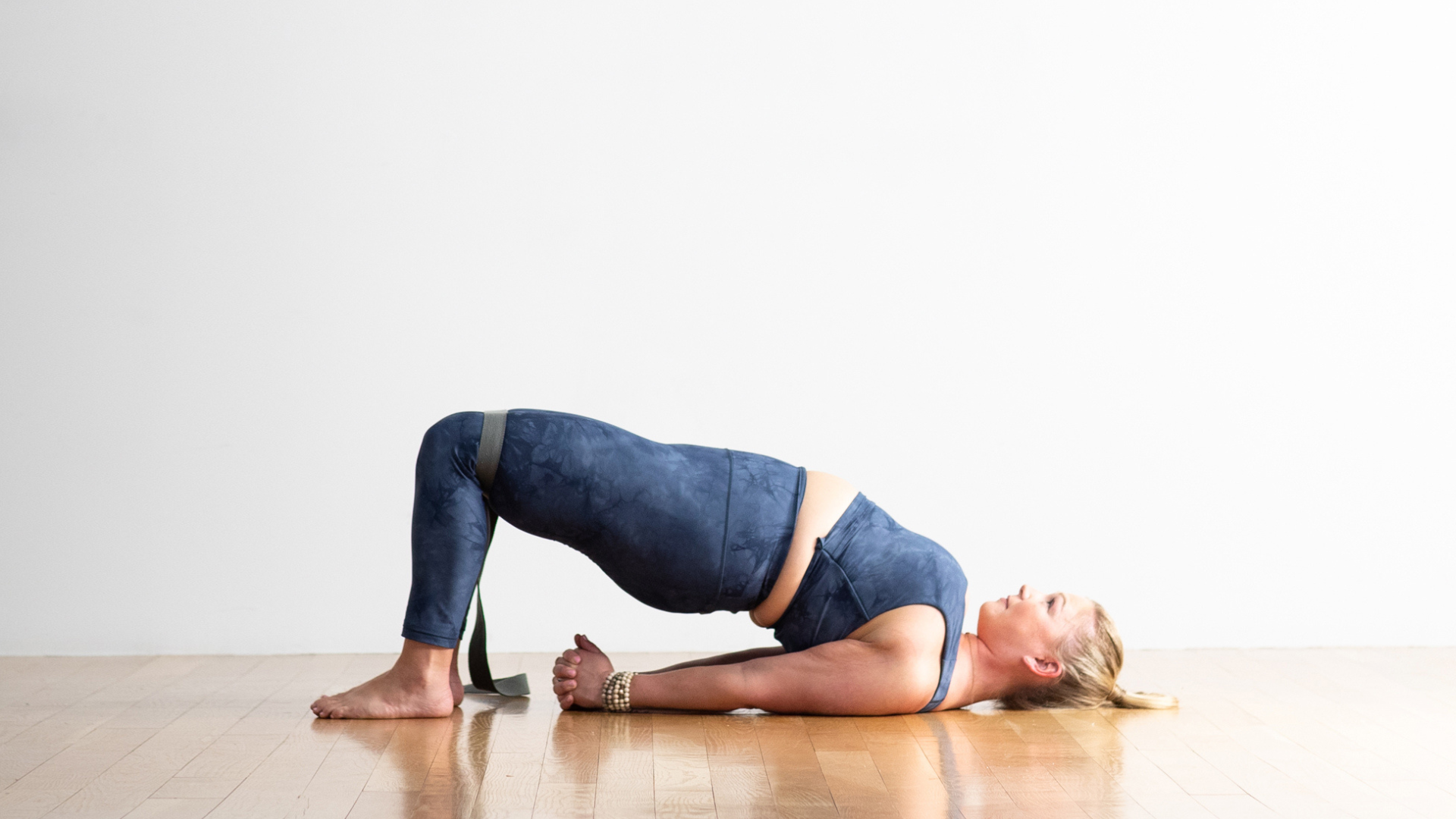
It’s not the lifting of your hips that activates your upper body in Bridge Pose (Setu Bandha Sarvangasana). There’s a hidden benefit in interlacing your fingers behind your back, rolling your upper arms slightly underneath you, drawing the shoulder blades away from your ears, and actively pressing your upper arms, forearms, and the pinky sides of your fingers into the mat. That’s what activates the muscles you’re intending to target.
Practice Bridge Pose.
12. Staff Pose
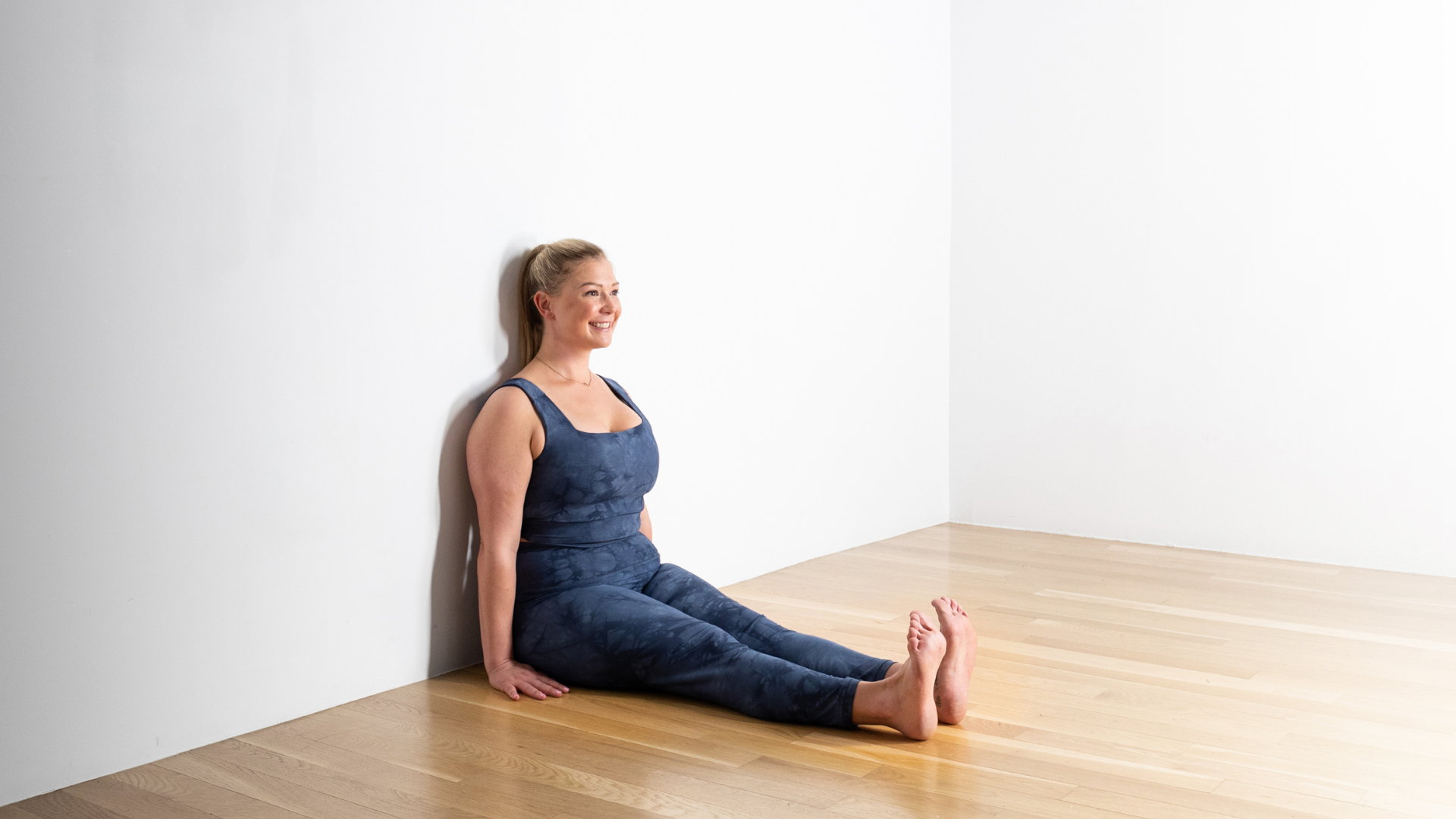
This shape might look simple. After all, you’re just sitting. But it can be surprisingly difficult to sit upright with flawless posture in Staff Pose (Dandasana). Pressing your hands into the mat further engages the spinal stabilizers and postural muscles.
You can take it one step further and maximize the isometric contractions of your shoulders and upper back by practicing the shape with your back against a wall. Actively press your shoulders and backs of your arms into the support behind you. You can also bend your elbows 90 degrees and bring your arms into a cactus position so your upper arms are straight out to the sides, fingers pointing toward the ceiling, palms facing forward. If your lower back arches, draw it closer toward the wall.
Practice Staff Pose.
13. Bow Pose (Dhanurasana)
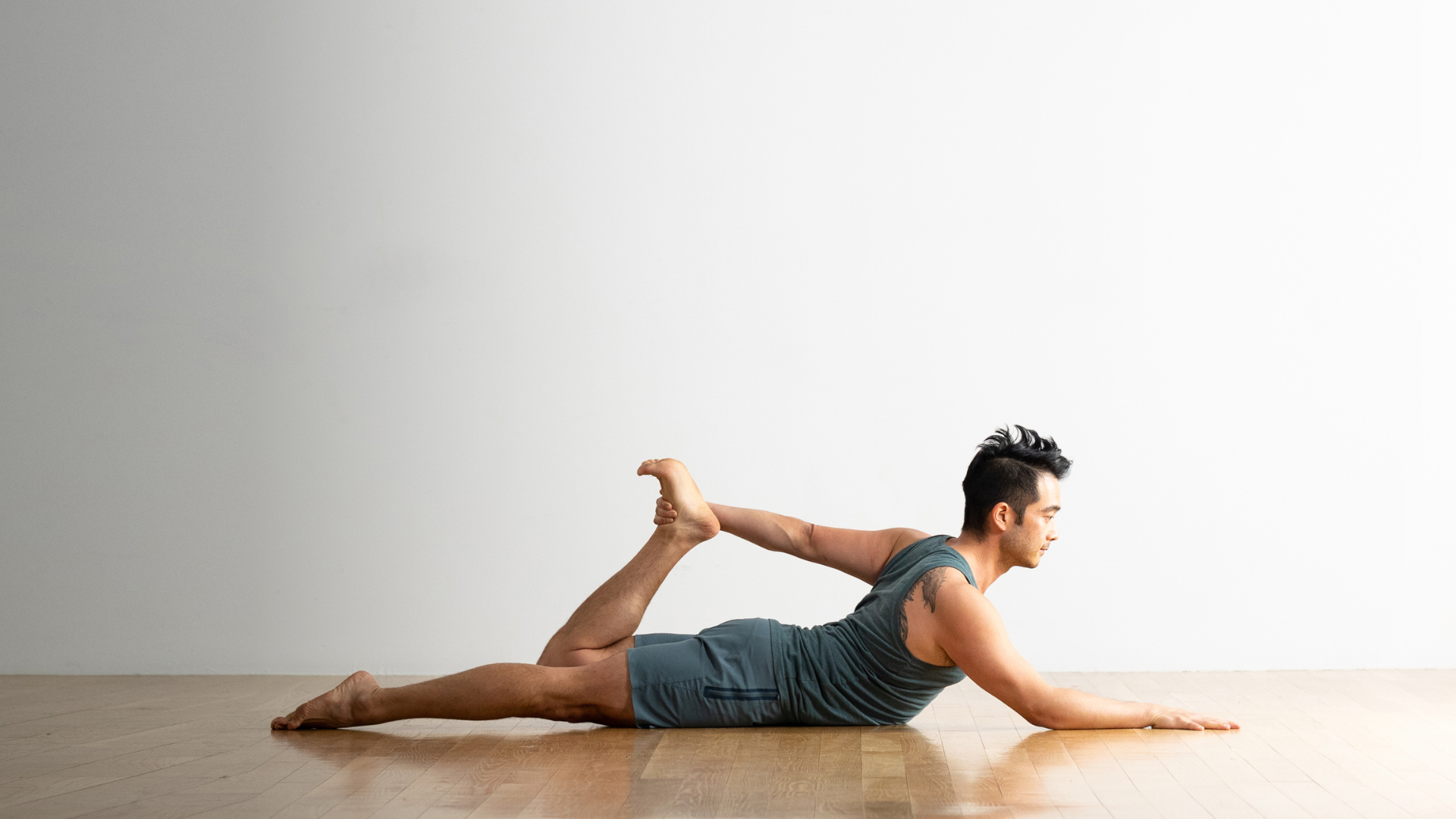
An intense backbend, Bow Pose (Dhanurasana) should only be practiced after warming up your body with increasingly intense backbends, including some of the earlier ones in this list as well as Upward-Facing Dog (Urdhva Mukha Svanasana), Dancer (Natarajasana), or Camel (Ustrasana). Also, avoid this pose if you experience back pain or have other contraindications for exaggerated backbending.
As you lift your upper body off the mat, squeeze the glutes and let these powerful muscles do most of the work rather than forcing your smaller, weaker back muscles to overcompensate. Also, come into the pose slowly, relying on intention rather than momentum. Once you’re in the shape, actively draw your upper arms slightly back to open across your chest, which engages the back muscles (namely, the trapezius and rhomboids). You can also work your way up to Bow Pose by practicing one side at a time.
Practice Bow Pose.