
Updated August 7, 2026 11:30AM
Yoga Journal’s archives series is a curated collection of articles originally published in past issues beginning in 1975. This article about Bound Angle Pose first appeared in the January-February 1987 issue of Yoga Journal.
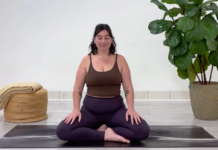
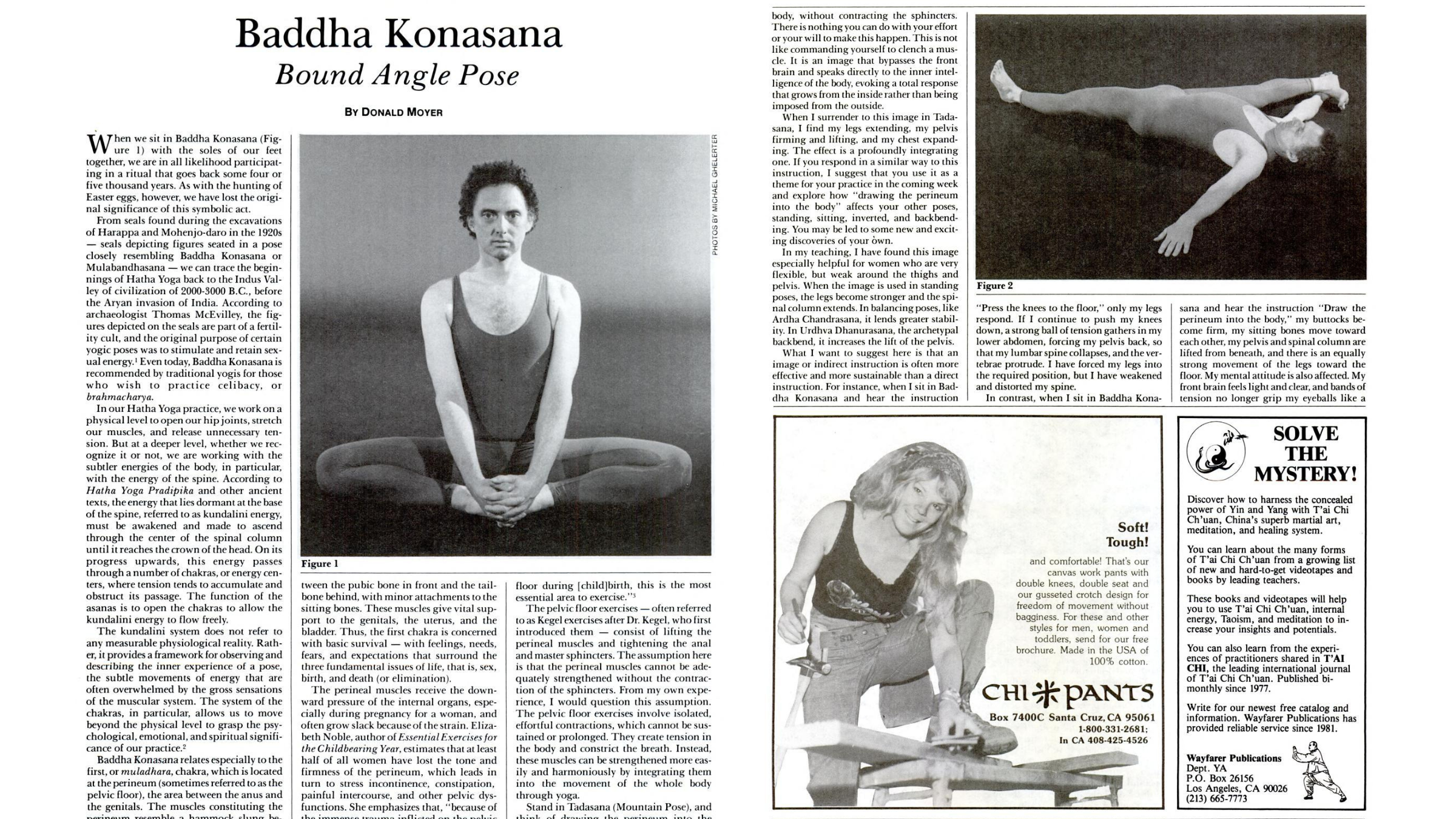
When we sit in Bound Angle Pose, commonly known as Butterfly Pose (Baddha Konasana, Figure 1) with the soles of our feet together, we are in all likelihood participating in a ritual that goes back some four or five thousand years.
From seals found during the excavations of Harappa and Mohenjo-daro in the 1920s—seals depicting figures seated in a pose closely resembling Butterfly Pose or Mulabandhasana—we can trace the beginnings of Hatha Yoga back to the Indus Valley of civilization of 2000-3000 B.C., before the Aryan invasion of India. According to archaeologist Thomas McEvilley, the figures depicted on the seals are part of a fertility cult, and the original purpose of certain yogic poses was to stimulate and retain sexual energy.’ Even today, Butterfly Pose is recommended by traditional yogis for those who wish to practice celibacy, or brahmacharya.
In our Hatha Yoga practice, we work on a physical level to open our hip joints, stretch our muscles, and release unnecessary tension. But at a deeper level, whether we recognize it or not, we are working with the subtler energies of the body, in particular, with the energy of the spine. According to Hatha Yoga Pradipika and other ancient texts, the energy that lies dormant at the base of the spine, referred to as kundalini energy, must be awakened and made to ascend through the center of the spinal column until it reaches the crown of the head. On its progress upwards, this energy passes through a number of chakras, or energy centers, where tension tends to accumulate and obstruct its passage. The function of the asanas is to open the chakras to allow the kundalini energy to flow freely.
The kundalini system does not refer to any measurable physiological reality. Rather, it provides a framework for observing and describing the inner experience of a pose, the subtle movements of energy that are often overwhelmed by the gross sensations of the muscular system. The system of the chakras, in particular, allows us to move beyond the physical level to grasp the psychological, emotional, and spiritual significance of our practice.
Butterfly Pose relates especially to the first, or muladhara, chakra, which is located at the perineum (sometimes referred to as the pelvic floor), the area between the anus and the genitals. The muscles constituting the perineum resemble a hammock slung between the pubic bone in front and the tailbone behind, with minor attachments to the sitting bones. These muscles give vital support to the genitals, the uterus, and the bladder. Thus, the first chakra is concerned with basic survival—with feelings, needs, fears, and expectations that surround the three fundamental issues of life, that is, sex, birth, and death (or elimination).
The perineal muscles receive the downward pressure of the internal organs, especially during pregnancy for a woman, and often grow slack because of the strain. Elizabeth Noble, author of Essential Exercises for the Childbearing Year, estimates that at least half of all women have lost the tone and firmness of the perineum, which leads in turn to stress incontinence, constipation, painful intercourse, and other pelvic dysfunctions. She emphasizes that, “because of the immense trauma inflicted on the pelvic floor during [child]birth, this is the most essential area to exercise.”
Pelvic Floor Exercises and Yoga
The pelvic floor exercises—often referred to as Kegel exercises after Dr. Kegel, who first introduced them—consist of lifting the perineal muscles and tightening the anal and master sphincters. The assumption here is that the perineal muscles cannot be adequately strengthened without the contraction of the sphincters. From my own experience, I would question this assumption.
The pelvic floor exercises involve isolated, effortful contractions, which cannot be sustained or prolonged. They create tension in the body and constrict the breath. Instead, these muscles can be strengthened more easily and harmoniously by integrating them into the movement of the whole body through yoga.
Stand in Mountain Pose (Tadasana), and think of drawing the perineum into the body, without contracting the sphincters.
There is nothing you can do with your effort or your will to make this happen. This is not like commanding yourself to clench a muscle. It is an image that bypasses the front brain and speaks directly to the inner intelligence of the body, evoking a total response that grows from the inside rather than being imposed from the outside.
When I surrender to this image in Mountain Pose, I find my legs extending, my pelvis firming and lifting, and my chest expanding. The effect is a profoundly integrating one. If you respond in a similar way to this instruction, I suggest that you use it as a theme for your practice in the coming week and explore how “drawing the perineum into the body” affects your other poses, standing, sitting, inverted, and backbending. You may be led to some new and exciting discoveries of your own.
In my teaching, I have found this image especially helpful for women who are very flexible, but weak around the thighs and pelvis. When the image is used in standing poses, the legs become stronger and the spinal column extends. In balancing poses, like Half Moon Pose (Ardha Chandrasana), it lends greater stability. In Wheel Pose (Urdhva Dhanurasana), the archetypal backbend, it increases the lift of the pelvis.
What I want to suggest here is that an image or indirect instruction is often more effective and more sustainable than a direct instruction. For instance, when I sit in Butterfly Pose and hear the instruction,”Press the knees to the floor,” only my legs respond. If I continue to push my knees down, a strong ball of tension gathers in my lower abdomen, forcing my pelvis back, so that my lumbar spine collapses, and the vertebrae protrude. I have forced my legs into the required position, but I have weakened and distorted my spine.
In contrast, when I sit in Butterfly Pose and hear the instruction “Draw the perineum into the body,” my buttocks become firm, my sitting bones move toward each other, my pelvis and spinal column are lifted from beneath, and there is an equally strong movement of the legs toward the floor. My mental attitude is also affected. My front brain feels light and clear, and bands of tension no longer grip my eyeballs like a miser stealing eggs. This adjustment brings a movement of my whole being, not just my body.
But now let me turn to some practical considerations.
How to Practice Butterfly Pose
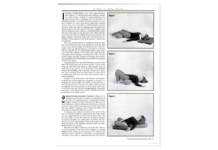
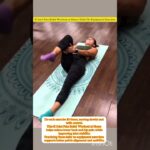
For those who experience pain of the inner knee or tightness in the hips in Butterfly Pose, it is essential (1) to stretch the inner thigh muscles and (2) to increase the outward rotation of the thighs. One of the best poses for accomplishing this is Reclining Hand-to-Big-Toe Pose (Supta Padangusthasana), where the raised leg is lowered to the side of the chest, keeping the opposite hip in firm contact with the floor (Figure 2).* If the stretch of the inner thigh is too intense, the leg can be supported against a wall or bolster at a more appropriate height. Remember to draw the sitting bone of the raised leg toward the heel of the extended leg to maximize the outward rotation of the thigh.
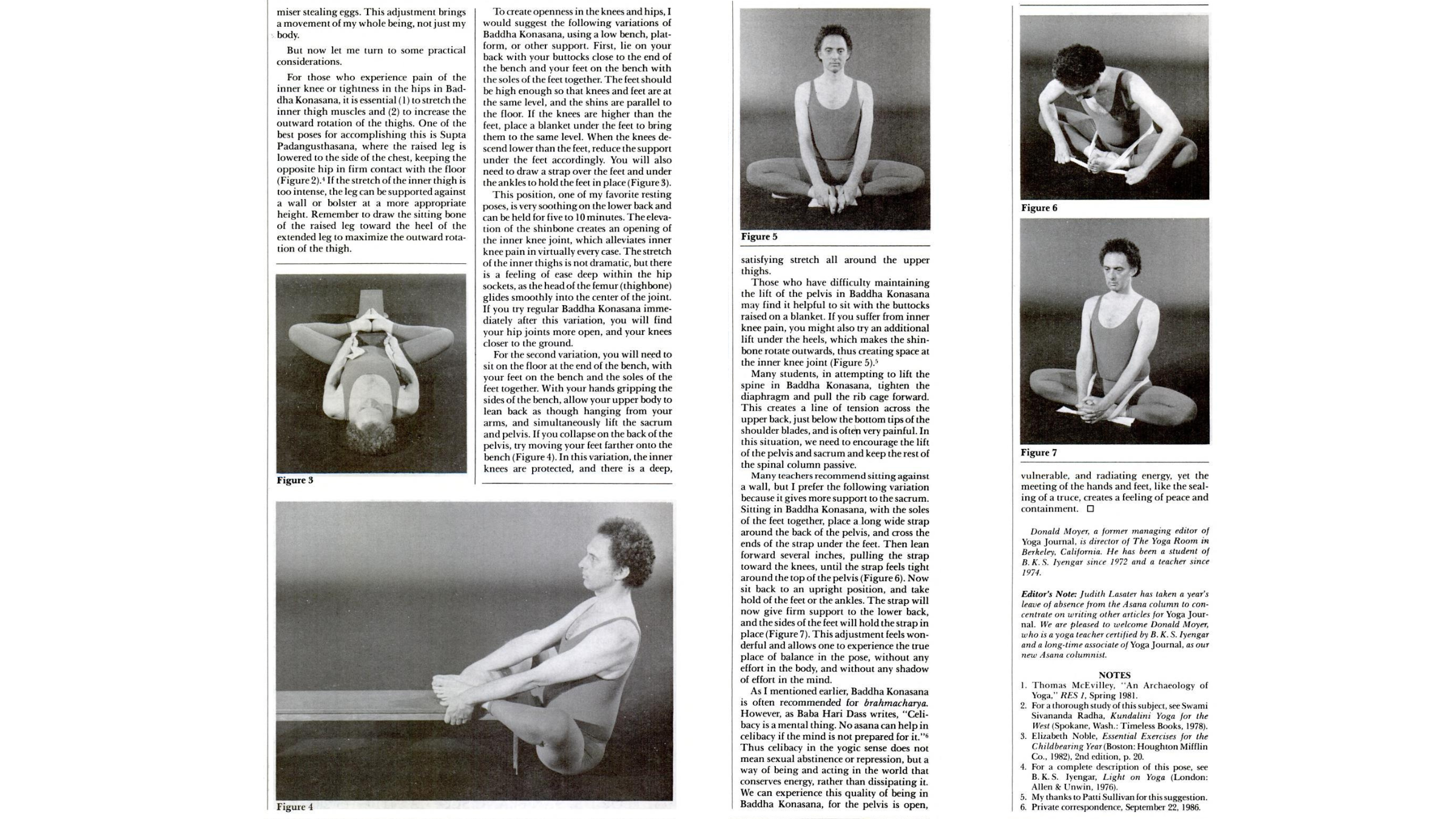
To create openness in the knees and hips, I would suggest the following variations of Butterfly Pose, using a low bench, platform, or other support. First, lie on your back with your buttocks close to the end of the bench and your feet on the bench with the soles of the feet together. The feet should be high enough so that knees and feet are at the same level, and the shins are parallel to the floor. If the knees are higher than the feet, place a blanket under the feet to bring them to the same level. When the knees descend lower than the feet, reduce the support under the feet accordingly. You will also need to draw a strap over the feet and under the ankles to hold the feet in place (Figure 3).
This position, one of my favorite resting poses, is very soothing on the lower back and can be held for five to 10 minutes. The elevation of the shinbone creates an opening of the inner knee joint, which alleviates inner knee pain in virtually every case. The stretch of the inner thighs is not dramatic, but there is a feeling of ease deep within the hip sockets, as the head of the femur (thighbone) glides smoothly into the center of the joint.
If you try regular Butterfly Pose immediately after this variation, you will find your hip joints more open, and your knees closer to the ground.
For the second variation, you will need to sit on the floor at the end of the bench, with your feet on the bench and the soles of the feet together. With your hands gripping the sides of the bench, allow your upper body to lean back as though hanging from your arms, and simultaneously lift the sacrum and pelvis. If you collapse on the back of the pelvis, try moving your feet farther onto the bench (Figure 4). In this variation, the inner knees are protected, and there is a deep, satisfying stretch all around the upper thighs.
Those who have difficulty maintaining the lift of the pelvis in Butterfly may find it helpful to sit with the buttocks raised on a blanket. If you suffer from inner knee pain, you might also try an additional lift under the heels, which makes the shinbone rotate outwards, thus creating space at the inner knee joint (Figure 5).”
Many students, in attempting to lift the spine in Butterfly Pose, tighten the diaphragm and pull the rib cage forward This creates a line of tension across the upper back, just below the bottom tips of the shoulder blades, and is often very painful. In this situation, we need to encourage the lift of the pelvis and sacrum and keep the rest of the spinal column passive.
Many teachers recommend sitting against a wall, but I prefer the following variation because it gives more support to the sacrum.
Sitting in Butterfly, with the soles of the feet together, place a long wide strap around the back of the pelvis, and cross the ends of the strap under the feet. Then lean forward several inches, pulling the strap toward the knees, until the strap feels tight around the top of the pelvis (Figure 6). Now sit back to an upright position, and take hold of the feet or the ankles. The strap will now give firm support to the lower back, and the sides of the feet will hold the strap in place (Figure 7). This adjustment feels wonderful and allows one to experience the true place of balance in the pose, without any effort in the body, and without any shadow of effort in the mind.