

It’s worse than ineffective.
(Photo: Dev Asangbam | Unsplash)
Published June 9, 2026 11:45AM
I’ve been teaching yoga for almost five years and there’s a common yoga cue that I’ve never said in any of my classes. Not even once.
If you’ve ever taken a yoga, Pilates, or movement class of any type, I can almost guarantee you’ve heard it before.
The cue?
“Belly button to spine.” Sometimes the words are disguised with the slightly more anatomical language of “navel to spine.” Either way, I’m not a fan.
In fact, I’m in a friend group of yoga and movement teachers, personal trainers, and dedicated class-goers and we’re no strangers to attending Sunday morning class together and then dissecting the experience afterward. At this point, my disdain for this cue has become a running joke. Whenever a teacher says it, they all not-so-subtly whip their heads around to look at me and laugh.
The thing is, I don’t think instructors use this cue maliciously. Quite the opposite. I’ve heard incredible teachers—teachers I respect—drop it casually in class. I suspect the words have become so commonplace in movement culture that many teachers utter it automatically, without ever stopping to question whether it’s actually useful.
And, frankly, it’s not. I’d say “belly button to spine” is ineffective if the goal is to help students activate the deep core muscles, particularly the transversus abdominis. The idea is to create a stabilizing internal “corset” that supports the spine and contributes to overall stability.
If you just pulled your belly button inward while reading this, notice what happens. Your abdominals don’t magically switch on. More likely, you simply suck your stomach in, causing your posture to change and your breath to become restricted. When taken too literally, many students respond by gripping and bracing excessively or completely holding their breath. None of those outcomes are particularly helpful.
If you’re already familiar with the feeling, then belly button to spine might be all you need to hear to kick things into gear. But if you’re newer to movement and yoga classes, you need to understand that it’s a more complex and subtle movement that involves all the muscles of the core. This cue both oversimplifies it and, at the same time, makes it more confusing than it needs to be.
Movement educator Jenni Rawlings has written extensively about approaches to core stability and unpacks several reasons why “navel to spine” might not be the most effective way to achieve the intended result from a mechanics perspective, including some misassumptions.
The intention is good. The execution? Not so much.
The Other Problem With This Ineffectual Yoga Cue
And then there’s the body-image issue.
As a mid-size yoga teacher with lived experience in classes where the cueing was not designed for my body, I make a point to keep my cueing as body neutral as possible. I know from personal experience as well as conversations with students and colleagues that cues focused on pulling in, shrinking, or somehow making the body smaller can land differently than teachers intend.
It’s important to remember that many people have complicated histories with their bodies. They might have experienced criticism, shame, or exclusion in fitness spaces before they ever stepped onto a yoga mat. Even worse, they may have also experienced it on the yoga mat.
For some students, particularly those who have spent years receiving messages about changing their bodies, “belly button to spine” doesn’t feel like a movement cue at all. It feels like a reminder to shrink themselves.
And the moment a student starts worrying about whether their stomach looks flat enough as they attempt to pull their navel toward their spine, we’ve completely lost the plot.
We’ve also lost their attention. Their mind is somewhere else entirely because their nervous system is activated. It might ruin the rest of class for them or even the rest of the day.
What to Cue Instead of “Belly Button to Spine”
The good news? There are far more effective cues that can actually help students find core engagement.
Also, telling students to draw their belly button to the spine misses something essential that everyone can use reminding of during movement: breathing. To me, breathing and stability should work together, not compete with one another like they might when you are busy sucking in your belly button to your spine.
I prefer to cue breath as a 360-degree rib cage breath in my classes. That means I encourage students to expand through the front, sides, and back of the rib cage on the inhalation and allow natural core tension to return on the exhalation. There’s less focus on squeezing and minimizing and more focus on actually engaging the superficial as well as the innermost muscles and focusing on your breathing.
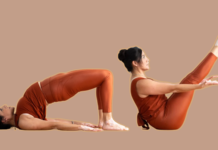
Following are some of the cues I’ve heard teachers say to incur core engagement, which tend to instinctively create in students the desired core engagement response we’re seeking without asking students to grip, suck in, or overthink their midsections:
- Exhale with an audible “haaa”
- Imagine you’re about to step into freezing cold water
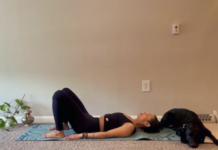
- Brace like your dog, cat, or toddler is about to jump onto the bed
- Imagine you’re preparing to catch a heavy box.
As yoga and movement teachers, it’s important we remember that language shapes experience. We have thousands of words at our disposal. If one set of words doesn’t improve movement mechanics or support breathing, and if it risks distracting some students from their practice, maybe it’s time to retire it.