
It worked so much better than I expected.
(Photo: Andrew Clark | Design in Canva by Laura Harold)
Published September 25, 2026 10:53AM
Laura Harold is a Yoga Journal editor who has practiced yoga for more than 10 years. Throughout her eight years as an editor in the health and wellness space, she’s tried (and resented) many relaxation hacks, and enjoys exploring ways to make them simpler for herself and readers.
You know that irritated feeling you get when seemingly everyone around you is absolutely raving about something that you personally find borderline meh or actively terrible? For me, there are several things in the contemporary cultural lexicon that have consistently elicited this aversion—Marvel movies, Las Vegas, and Legs Up the Wall.
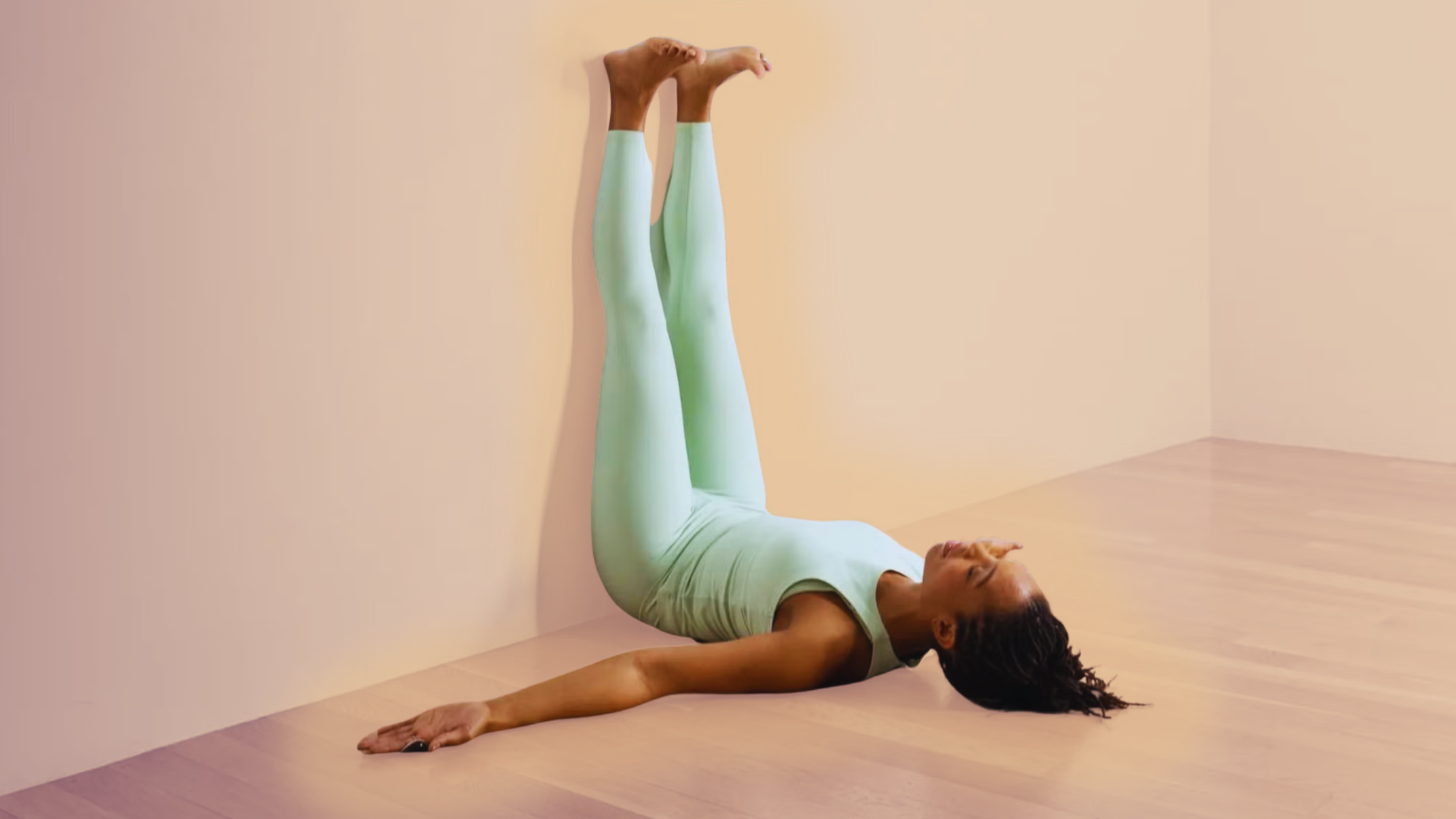
In yoga, Legs Up the Wall (Viparita Karani) is often lauded as *the* pose for rest and relaxation. I’ve heard countless people talk about it as if it’s their desert island pose and the only position that they need to undo the stress of the day. “Just a few minutes in Legs Up the Wall and the world feels a little bit more manageable!” Blah, blah, blah.
But here’s the thing. I tried to drink the Kool-Aid. I diligently lay on the floor in yoga studios and my bedroom. I inched my hips closer and then farther away from the wall. I slid a folded blanket underneath my hips. I made hundreds of other microadjustments in an attempt to find a Viparita Karani variation that would bestow upon me the alleged benefits of this beloved pose.
Yet despite all this, my HUGE problem with Legs Up the Wall was that my legs literally wouldn’t remain in place, which rendered the pose impossible and infuriating. Just when I would come across a semblance of stillness, my feet would slide out to the sides into a wide V shape. And although forcing my legs back into position and trying again might have made me look like I was relaxing, on the inside I was rigid and miserable.
This years-long battle with Legs Up the Wall solidified my fury toward it. That is, until a work meeting a few weeks ago, when I was venting about my frustration for the pose. One of the perks of being an editor in the yoga space is that the people I vent to about yoga are, more often than not, yoga teachers.
“Everyone’s anatomy is different,” YJ’s editor in chief Renee Marie Schettler said in regard to how common it is that people’s legs slide out of position in Legs Up the Wall. This reassured me that I didn’t have some sort of slippery leg syndrome, but rather, was experiencing something normal and maybe even fixable.
“Have you tried tying a sweatshirt around your legs?” she asked.
Of course, I had not. Likely because my rage for Legs Up the Wall blinded me from acknowledging any possible middle ground with my longtime nemesis.
A few nights later, I assumed my usual position against the wall. Waves of bitterness ran through my chest and my thoughts consisted of, “We’ve tried this before,” and “It’s not going to work.” Still, I persisted.
As if I were doing a slow crunch, I hoisted myself up just enough to tie a quick knot around my calves with an old sweatshirt. Then I relaxed back onto the floor.
For the first few minutes, I kept waiting for that telltale sensation that my legs were sliding against the wall—but it never happened. With my hips a little farther away from the wall than usual, my legs relaxed against the support of the sweatshirt and the wall without any coaxing from my end. Suddenly, gravity was doing its job—and I was mentally apologizing to the swaths of people I’d harshly judged for their unrestrained enthusiasm for Legs Up the Wall.
I’m still new in my relationship with Legs Up the Wall, so I can’t say I’ve joined others in that respect. Time will tell. But the overall experience reminded me of many things—that asking for help—ideally before I’ve developed a grudge—is seriously underrated, and to never underestimate the resources I already have in my possession. If a ratty old sweatshirt and a willingness to persevere (albeit for the umpteenth time) helped me gain a more positive perspective on yoga and what I’m capable of, what else is possible?