
Published July 1, 2026 09:28AM
Yoga teachers are perfect embodiments of grace and light. Except, of course, when we’re not. Although we mean to help students feel calm and safe, we can end up doing the complete opposite. Sometimes, things go very wrong in class. Very wrong.
When embarrassing interactions happen in class, remember you’re not alone. “Every single teacher has most likely done something just as mortifying,” says Kat Heagberg Rebar, a Los Angeles-based yoga teacher and author of Yoga Inversions. “It doesn’t make you a bad teacher; it makes you human.”
So if you’ve ever wanted to hide behind the bolsters in the props closet, knowing that other yoga instructors also make mistakes from time to time can be liberating. After all, the biggest mistake we make might be expecting perfection of ourselves.
4 Ways Yoga Teaching Can Go Horribly Wrong
As much as we want our yoga classes to be supportive spaces, we can unintentionally create some awkward moments for our students and ourselves. But once we dust ourselves off, it’s possible to learn a thing or two from our faux pas.
1. When Our Assists Don’t Assist
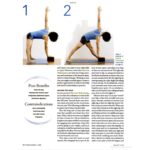
When students consent to hands-on assists, teachers might offer them as a way to help provide more support in a pose. But our adjustments don’t always work out. Rebar was offering a hands-on assist to a student in Triangle Pose when she got a reaction she didn’t expect.
“As soon as I touched her wrist, she collapsed into a heap on the floor. I felt terrible,” says Rebar. Fortunately, the student wasn’t hurt. “She’d told me she was fine with hands-on adjustments,” says Rebar. “She forgot to mention she was really ticklish—especially on her wrists.” That moment attuned Rebar to the possibility that hands-on assists can have unintended consequences, beyond the well-known issue of consent. Ever since, she’s been very clear about what type of adjustment she’s offering before she offers them.
Other times, hands-on assists don’t just disturb one student but the entire class. That’s what happened to Hemalayaa Behl, yoga teacher and co-founder of the retreat center Embody Costa Rica, while her students were in Savasana. “I came to one student and, as quietly and tenderly as I could, placed my hands on her feet to ground her…and she twitched, jumped like a jumping bug (which we have in Costa Rica), and screamed. The whole room jolted awake,” says Behl. “So much for serenity.”
Now Behl tries to be less stealthy when students are relaxed and vulnerable.
2. When We Make Assumptions
There are times we think we know what would be most helpful to a student, and we’re sorely mistaken. Rebar was 18 years old and teaching her first yoga class when a student came in who appeared to be pregnant. Rebar didn’t want to single her out by asking potentially unwelcome questions, so she did her best to avoid teaching any poses contraindicated for pregnancy.
“It went alright until we got to Savasana,” says Rebar. “I went over to the student and whispered that she should lie on her left side. She looked confused and said, ‘Just me? Why?’” At that point, Rebar realized that her assumption was likely incorrect. “I stammered something like, ‘I just seemed like it might be more comfortable, but do what feels best for you.’”
“I was obviously mortified,” says Rebar. “I had at worst offended this person and at best confused them.” Rebar’s takeaway? “Don’t assume you know what someone needs or what’s going on with their body just by looking at them.”
Dianne Bondy, leader of the Yoga for All movement and author of Yoga for Everyone, also knows the repercussions of making assumptions. She was about to teach at an accessible yoga conference when she noticed several chairs that seemed to be crowding a student who was in a wheelchair. To give him more space to practice, she started moving the folding chairs away from him. He quickly objected. He was planning to use the chairs to help him come down onto the mat.
Bondy immediately apologized and used a little humor to diffuse the situation. “Look at me, teaching an accessible class and making it less accessible,” she said. To her surprise, this became an effective icebreaker moment for her and the student.
3. When Our Words Don’t Land as Intended
Putting-Foot-in-Mouth is a position that’s familiar to many yoga teachers. Richard Rosen, longtime teacher and author of The Yoga of Breath, was talking to a student after class when he noticed a Sanskrit tattoo on her arm.
“I saw immediately that whoever applied the tattoo had a poor grasp of the letters, and I casually mentioned there were a couple of mistakes and that they could likely be easily corrected,” says Rosen. Though Rosen had meant to be helpful, the student stormed off. He never saw her again.
Rosen has since laid off correcting people’s Sanskrit—and thinks twice before offering any corrections to yoga students outside of class, when they might not be seeking his input.
Christopher Perkins, co-founder and senior teacher at Yandara Yoga Institute, also has experience saying things that didn’t land quite as he thought they would. During a Savasana assist, he said to a student, “You are so loved.”
“Hearing myself recount this, it’s obvious why I won’t do that again,” he said. “In my mind, in the moment, it was just a simple and caring reminder. But she interpreted it very differently—she thought I was hitting on her.”
He later had a chance to check in with the student, who shared what she’d been thinking about the awkward moment between them. Perkins was then able to correct the misunderstanding. “Once we had the conversation, the [issue] dissolved,” he said.
What struck Perkins most was how easily a well-intended comment can be misinterpreted. “I’ve learned not to rely on assumptions and to create space for honest conversations when something feels off,” he says.
4. When We Do Something Klutzy
Sometimes our trip-ups are literal trips. Bondy approached a student after class to ask if a prop set-up had worked for her when she lost her balance. “I caught my toe on these fit-and-flare yoga pants I was wearing, and I started to tumble toward this student. I’m not a small person, so the look on her face was one of sheer panic,” says Bondy. “It didn’t help that I screamed.”
Bondy quickly caught herself and no one was hurt. The student returned to class and didn’t seem to hold Bondy’s unintentional slip against her. Bondy’s trying not to hold it against herself, either.
“People are far from perfect. I try to give everybody grace,” she says. Including herself. Although, to this day, Bondy stays away from flared yoga pants.
Once, while giving students assists in Savasana, I kicked a student’s head. Yep. It was a crowded class in a small room. As I was stepping over her head, my foot hit her face—hard enough that her head rolled to the side and her eyes opened wide.
Horrified at my clumsiness, I apologized. She seemed pretty forgiving, but I noticed that she never came back to my class. It was not one of my finest moments. I did, however, learn from it. Now when I don’t have room to maneuver, I don’t walk around—especially in Savasana.
How to Move on With Your Yoga Teaching
So how can we get past our yoga teacher faux pas? Rebar encourages us to keep perspective. “One mistake is not the totality of who you are as a teacher.”
Similarly, Behl suggests, “Treat yourself the way you’d treat a student.” Chances are, you’d have some compassion and understanding, and maybe even a laugh.
You might not forget your embarrassing student interactions. I’m still kicking myself for kicking that student. But the key is to “listen and learn” from your mistakes, says Perkins.
Yoga teaching mistakes can help keep us humble, and they remind us to teach as one human to another rather than from on high. Perhaps we’re also demonstrating to our students that it’s okay to stumble on our way to enlightenment.