
Published June 29, 2026 05:05AM
Ever sit down to answer an email and then proceed to get lost in three other browser tabs, send two text messages, scroll social, and completely forget what you had originally intended to do? Between constant notifications, distractions, and multitasking, your mind rarely gets the chance to settle into a focused state.
But feeling unfocused isn’t a personal failing or even a lack of discipline. It’s a physiological repercussion of experiencing constant overstimulation and feeling your attention pulled in a dozen directions at once. Research suggests that constant task switching, multitasking, and digital stimulation drastically decrease your attention span. Each time you shift your focus from a laptop screen to a phone notification, your brain suffers from “attention residue,” which forces your brain to constantly hit the reset button.
This form of stress can not only leave you feeling unfocused and mentally exhausted, it can result in a reactive and sometimes frantic state, making it challenging to quietly land in the present moment.
But you don’t necessarily need more discipline. You need less noise. And you can reclaim that through yoga.
When you breathe consciously and sync that with the movement of your body, you practice focusing your awareness instead of unconsciously giving it away. This ability to discern what you pay attention to helps your nervous system shift from a scattered, reactive state to a calm, attentive one. At the same time, the longer, slower inhalations and exhalations calm the nervous system. And the more you practice finding your focus on the mat, the more able you are to return to it in everyday life.
Sometimes, a 5-minute yoga for focus routine is all it takes to break the cycle of distraction, quiet the digital noise, ease the mental clutter, and remind you what it feels like to experience calm.
5-Minute Yoga for Focus
From a yogic perspective, focus is not something you forcefully drag back. It is something you cultivate over time by becoming more intentional about where you place your attention. And you don’t need an hour on your mat to accomplish that.
The following 5-minute yoga for focus sequence meets you exactly where you are, whether that’s on your mat, on the carpet, even in bed or at your desk between meetings. Let these simple shapes and sensations in your body be enough for you to focus on for the next five minutes.
1. Cat-Cow (Bitilasana-Marjaryasana)
From a traditional yogic perspective, long periods of stillness—which can look like sitting at a desk or being slumped on a couch in contemporary times—create stagnant energy throughout your body. Research suggests even gentle spinal movement, as in Cat-Cow, can rejuvenate your physical body and relieve the persistent physical stress that contributes to mental fog and restlessness.
How to: Come onto your hands and knees. As you inhale, lower your belly, broaden through your chest, and lift your gaze slightly upward (Cow).
As you exhale, round your spine, tuck your chin toward your chest, and release your head (Cat).
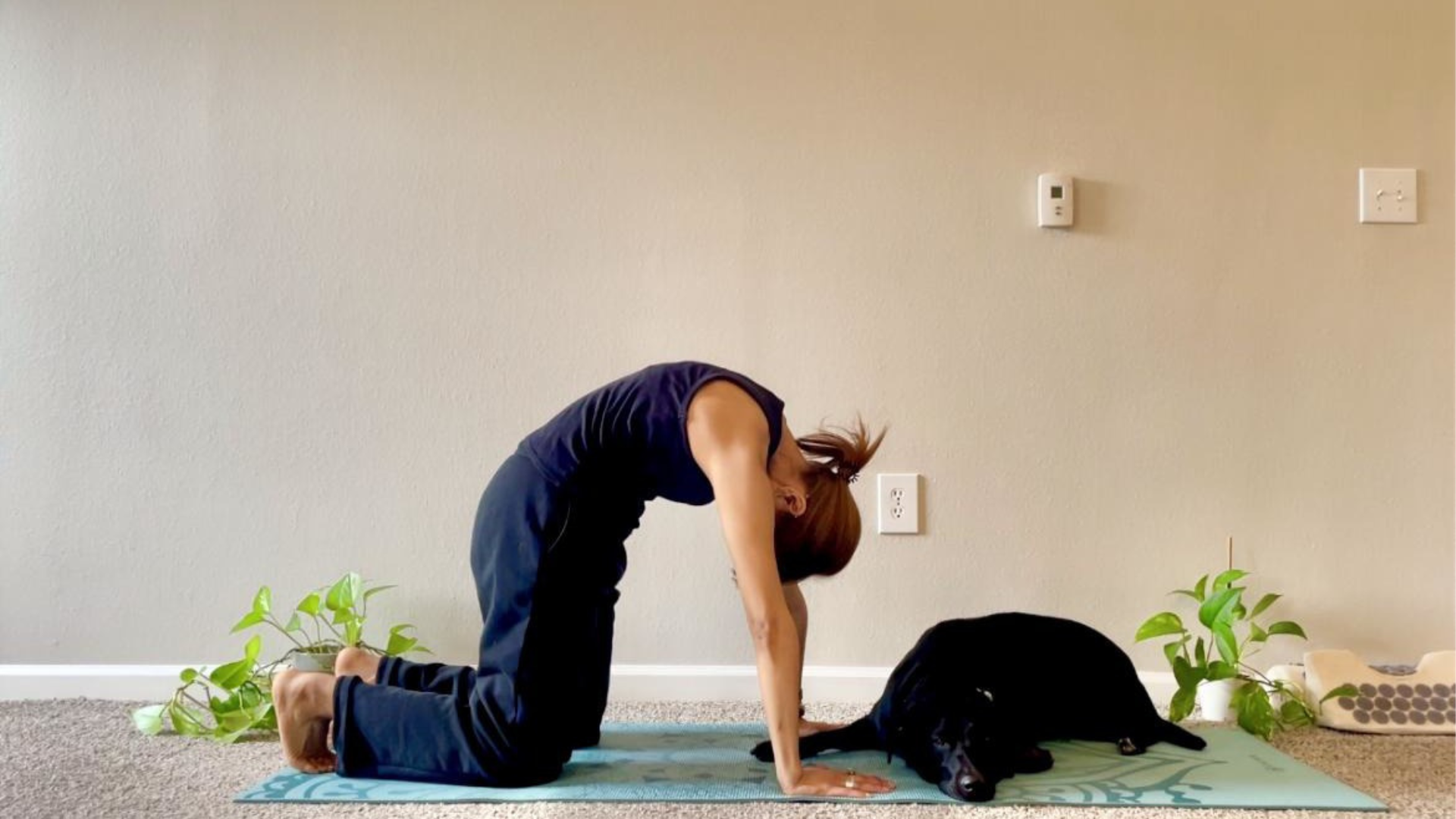
Repeat slowly for 4-8 rounds of breath.
Focus on: The slow yet fluid sensation of your spine moving vertebra by vertebra. Notice how your breath tends to deepen as your chest expands and releases, as if you can physically feel any rigid edges shift from stiffness into fluidity.
2. Seated Upward Salute (Urdhva Hastasana Variation)
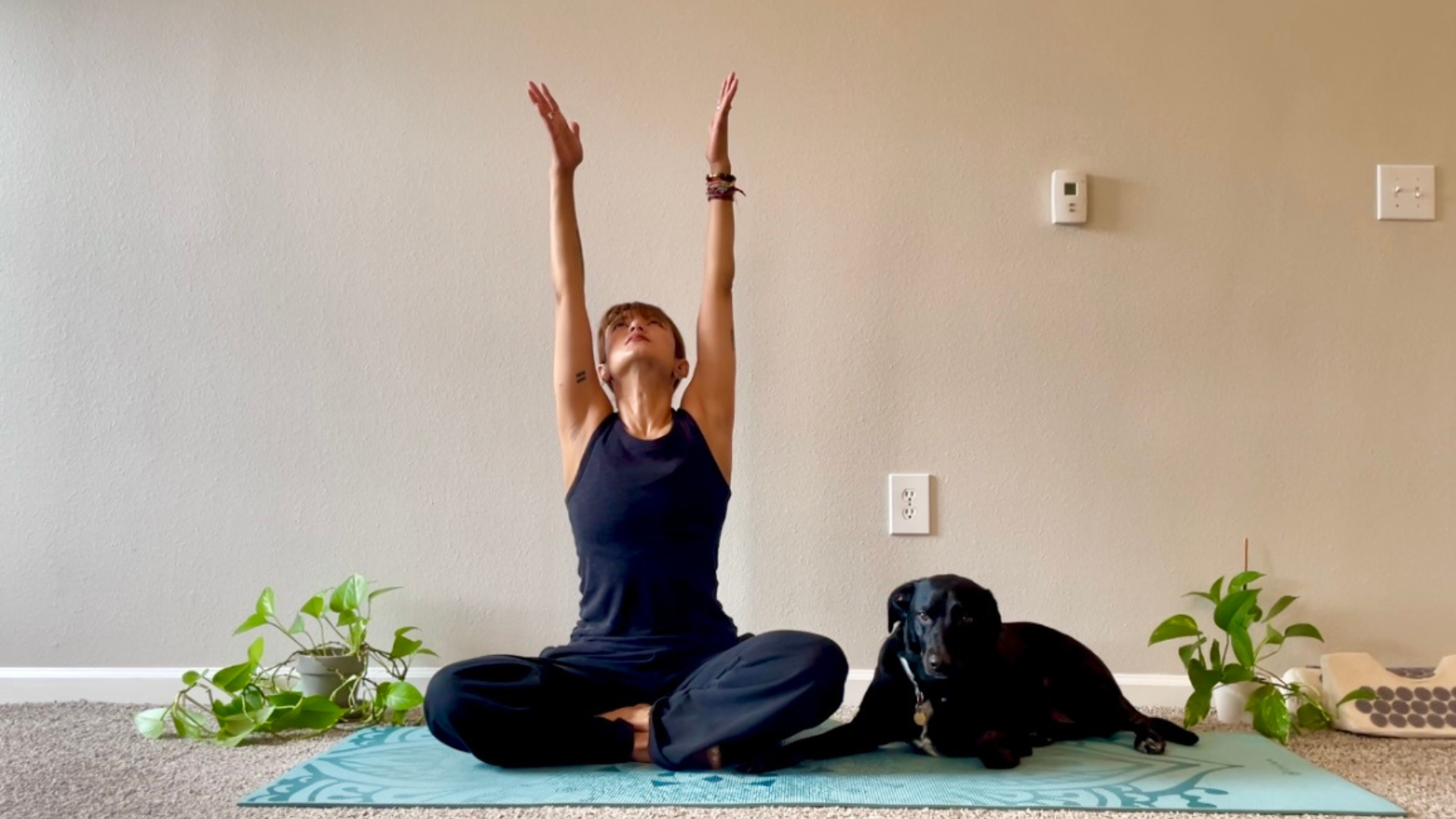
Mental distraction often takes the physical shape of being collapsed, including rounded shoulders, slumped posture, and shallow breathing. Physically reaching upward with your arms instantly signals alertness to both body and mind.
How to: Find a comfortable cross-legged position (Easy Seat) if you’re on the floor or you can instead sit in a chair. Inhale as you sweep your arms overhead, reaching through your fingertips, palms facing each other, while keeping your sit bones grounded. Stay here for 2–4 breaths, then slowly lower your arms. Repeat for 4–5 rounds.
Focus on: The lengthening sensation along your waist, ribs, and side body. Also, bring your awareness to the steadiness of your foundation beneath you even as your spine seems to lengthen. Feel your breath expand more fully into the back of your lungs.
3. Seated Forward Bend (Adho Mukha Sukhasana)
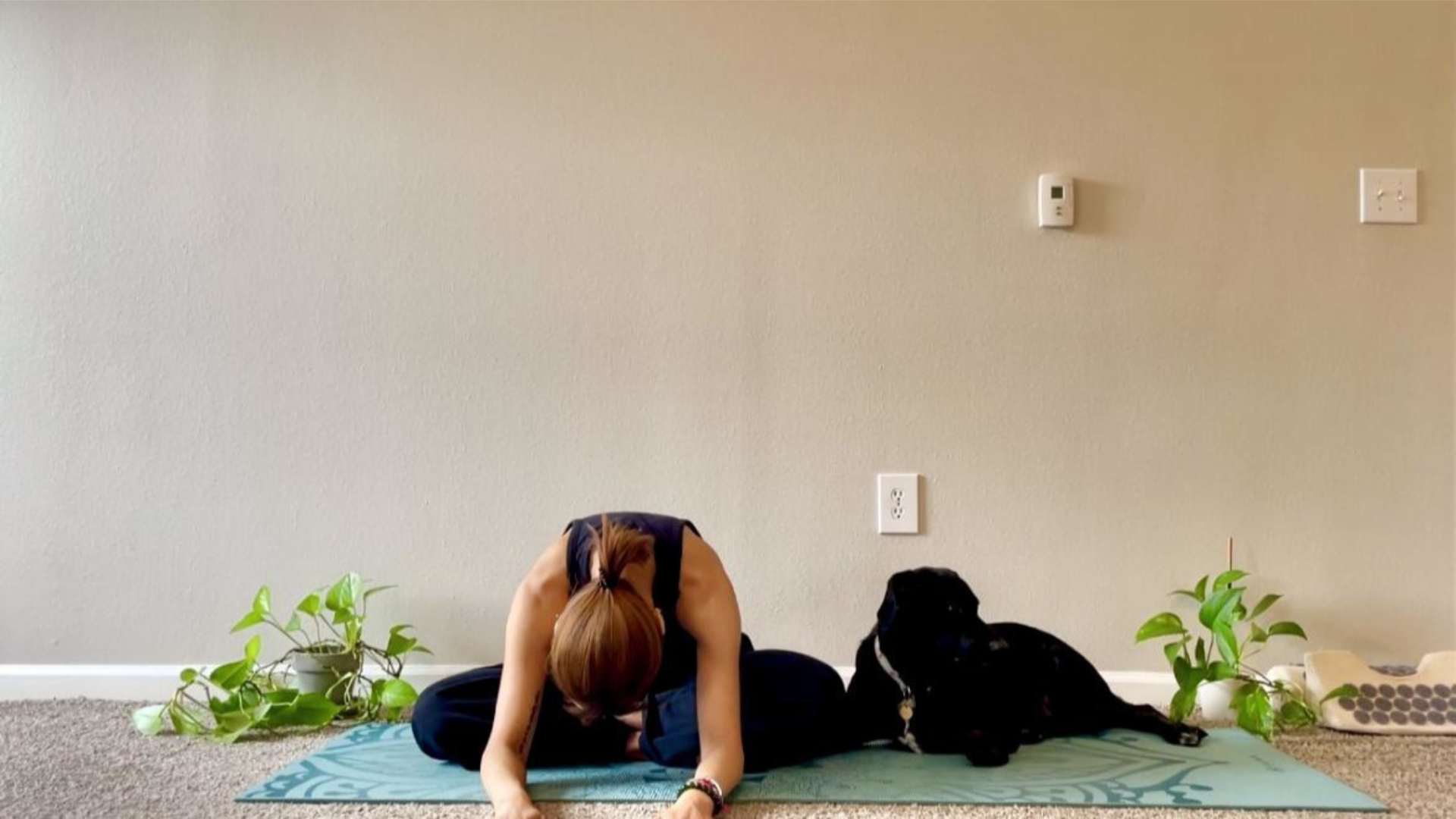
Constant visual stimulation keeps your nervous system externally focused and on high alert. Folding your body forward helps reduce sensory input, which in turn can help decrease anxiety and encourage your mind to shift from reactive thinking to quiet inward observation, known as pratyahara.
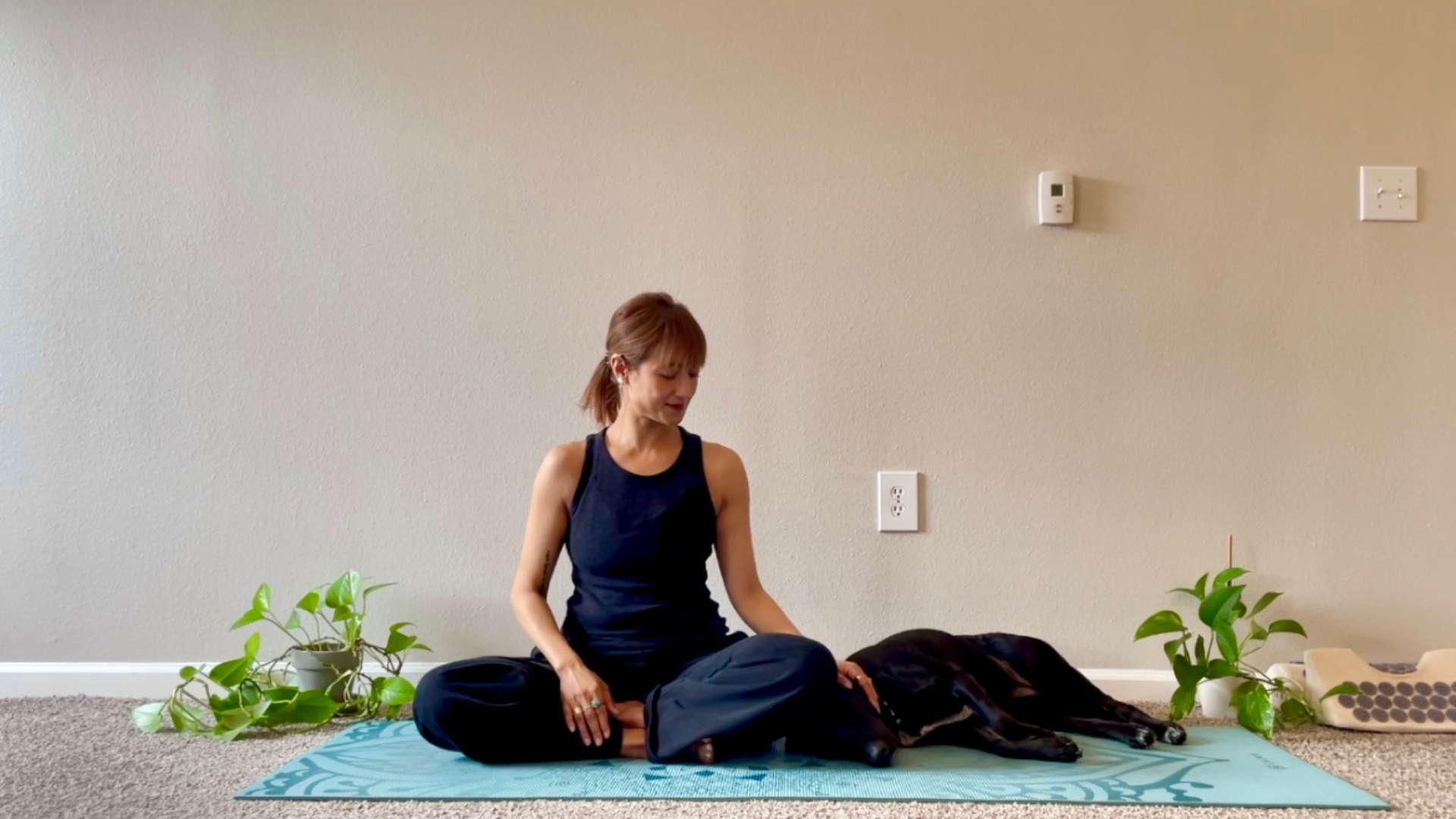
How to: From sitting cross-legged, hinge forward from your hips, walk your hands out in front of you, and release your chest toward the mat. Allow your head and neck to relax completely. You can rest your arms alongside your legs or loosely hold on to your feet if that’s more comfortable. Close your eyes or take a soft gaze. Stay here for 3–5 breaths.
When you’re ready, walk your hands back and slowly lift your torso into Easy Seat.
Focus on: The weight of your head hanging and the physical release along the back of your neck. Notice the feeling of your eyes softening away from external stimulation. Direct your mind entirely to the subtle sound and rhythm of your breath.
4. Spinal Twist (Ardha Matsyendrasana Variation)
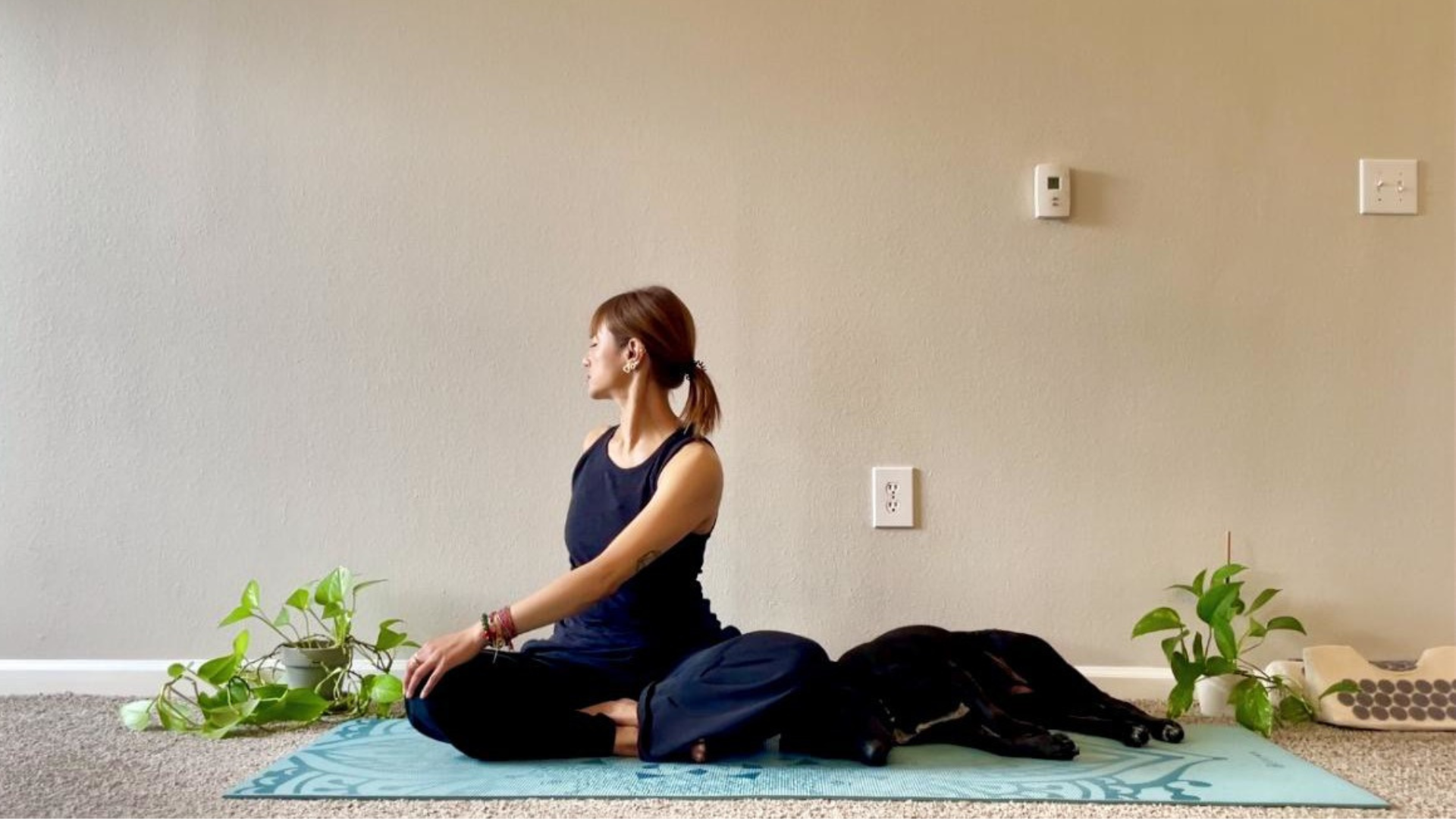
Mental overwhelm can leave your thoughts feeling crowded and repetitive. A seated spinal twist can create a sensation of wringing out tension and provide space for you to reset your focus.
How to: From sitting, place your right hand on the floor beside or behind your right hip, and rest your left hand on your right knee. Inhale as you lengthen your spine, then exhale as you gently rotate your torso toward the right. Stay here for 3–5 breaths, then slowly return to the center and switch sides. Gaze straight ahead or over your right shoulder. Release the twist and unwind back to center.
Focus on: The sensation of your spine lifting straight upward before you twist. Notice the opening across your chest and ribs as you breathe. Feel the activation throughout your core as you twist and the softness in your gaze as your line of sight changes.
5. Box Breathing (Sama Vritti)
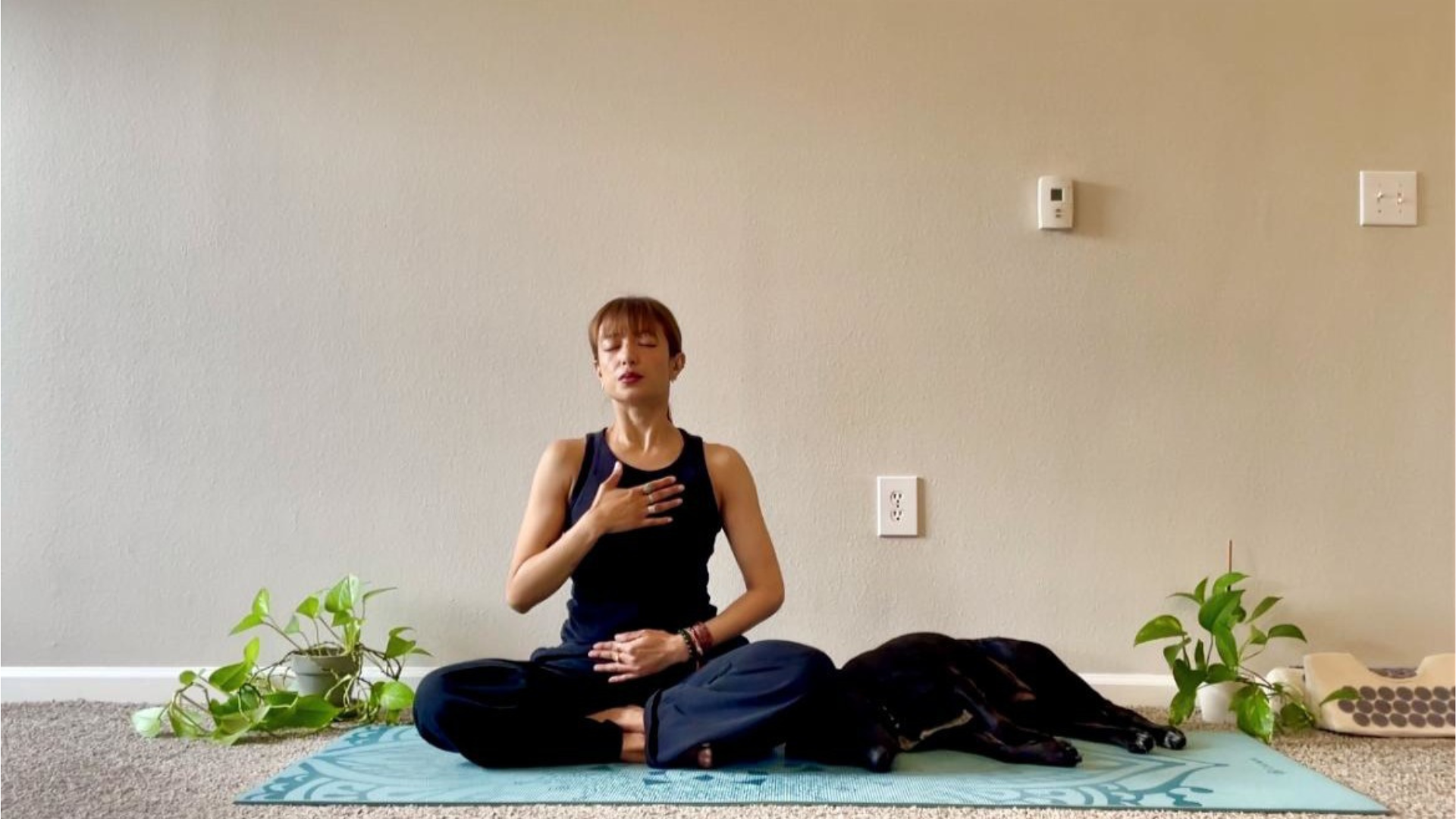
Think of your breath as the control panel for your nervous system. Slowing and equalizing the length of your inhalations and exhalations can help anchor your attention and interrupt the constant dopamine loop of digital distraction.
How to: For sama vritti, remain sitting and bring your left hand to your chest and your right hand to your belly. Take your time as you inhale for a count of four. Then hold for a count of four. Then exhale for four. Finally, hold the breath empty for a count of four.
Repeat this cycle for a total of one minute.
Focus on: The counting. The even rhythm of the breath. The quiet pauses in between the inhalations and exhalations. Also, feel the rise and fall of your body beneath your palms and the physical steadiness you create as your heart rate slows and your scattered thoughts settle. Know that you can return to this breath at any time.