
(Photo: Michael Burke | Design in Canva by Laura Harold)
Published September 16, 2026 12:30PM
Amber Burke is a yoga teacher who trained at YogaWorks and has 16 years of teaching yoga to students. She is also a graduate of the Yale and the Johns Hopkins Writing Seminars. Her approach is to support students in creating a practice that is sustainable and sustained, and her experience has taught her that creating moments of novelty can encourage students to be more present.
Even the most exciting relationships are prone to eventually fizzling out—including the bond you have with yoga. Unrolling your mat and moving your body in the same expected ways each time you practice can sometimes start to feel anywhere from slightly uninspired to banging-your-head-against-the-wall boring. Familiarity bordering on boredom is part of any relationship, and part of life. But that doesn’t mean the spark has gone out forever.
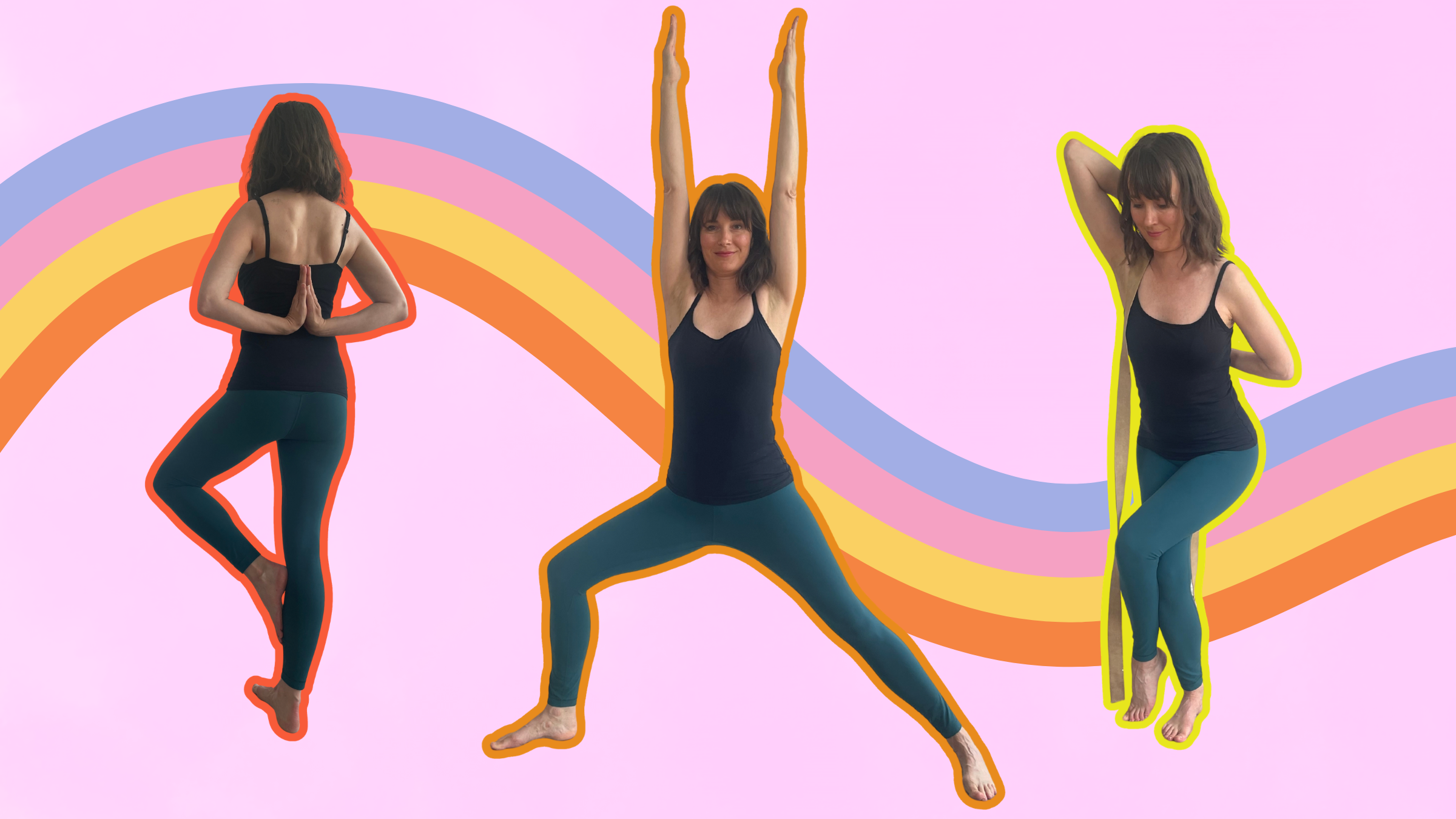
So when you need an enthusiasm boost to revive a fresh feeling into your relationship with yoga, consider switching up your usual arm positions. The following Frankensteined poses are mash-ups of the familiar and the unexpected, making the same old classics feel completely new.
6 Ways to Switch Up Your Arms in Yoga Poses
Notice how trying new arm placements affects your experience of the pose both on the mat and in your mindset. But remain attentive to your body’s limits. Stick to what feels good and skip what doesn’t. You need only a mat and a strap or belt.
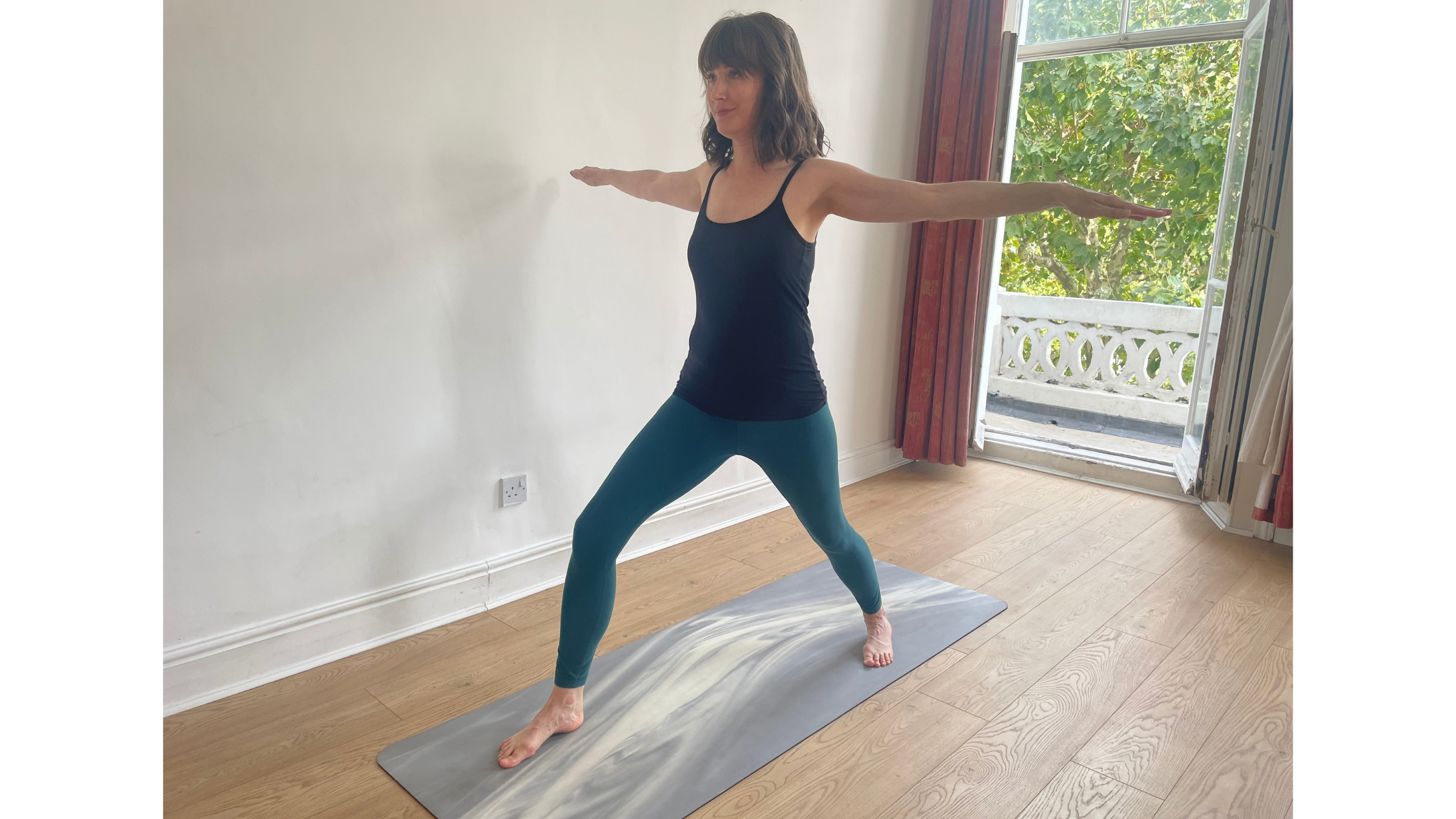
1. Warrior 1 With Warrior 2 Arms
Moving your arms straight out to the sides in Warrior 1 gives the pose an even more powerful vibe—that of a warrior taking up more space. Or even about to take flight. This arm position can also help you feel more balanced in a pose that has a narrow stance (think tightrope-walker arms).
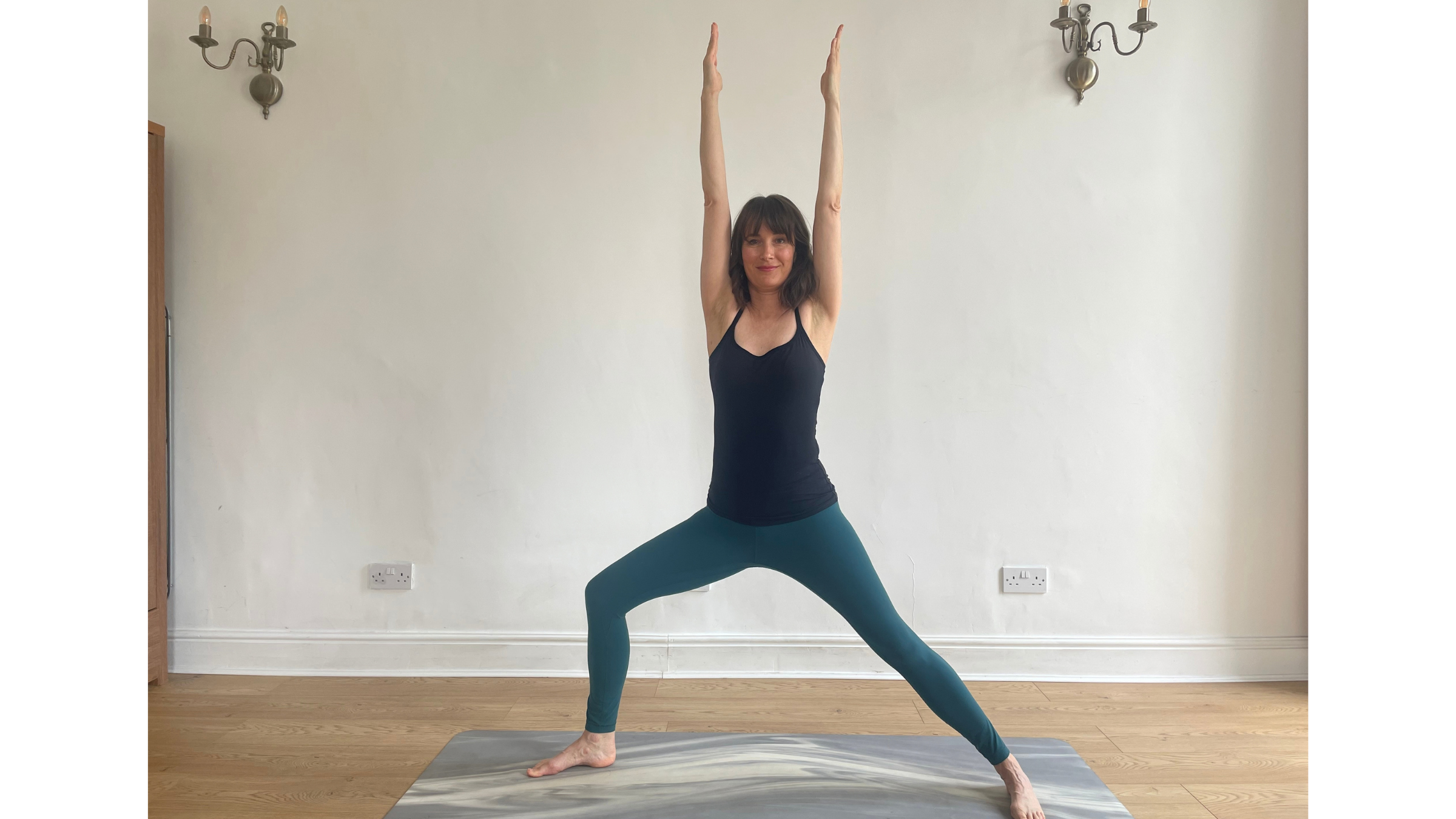
2. Warrior 2 With Warrior 1 Arms
Reaching your arms straight toward the ceiling in Warrior 2 helps you stand tall and tap into your inner confidence, while allowing you to feel the more subtle sensations you might usually overlook—including the slight twist in your mid back.
This variation is also a study in awareness. Your shoulders might be tempted to creep toward the same direction as your front leg, so imagine drawing your shoulders slightly away from your bent knee to face the long side of the mat.
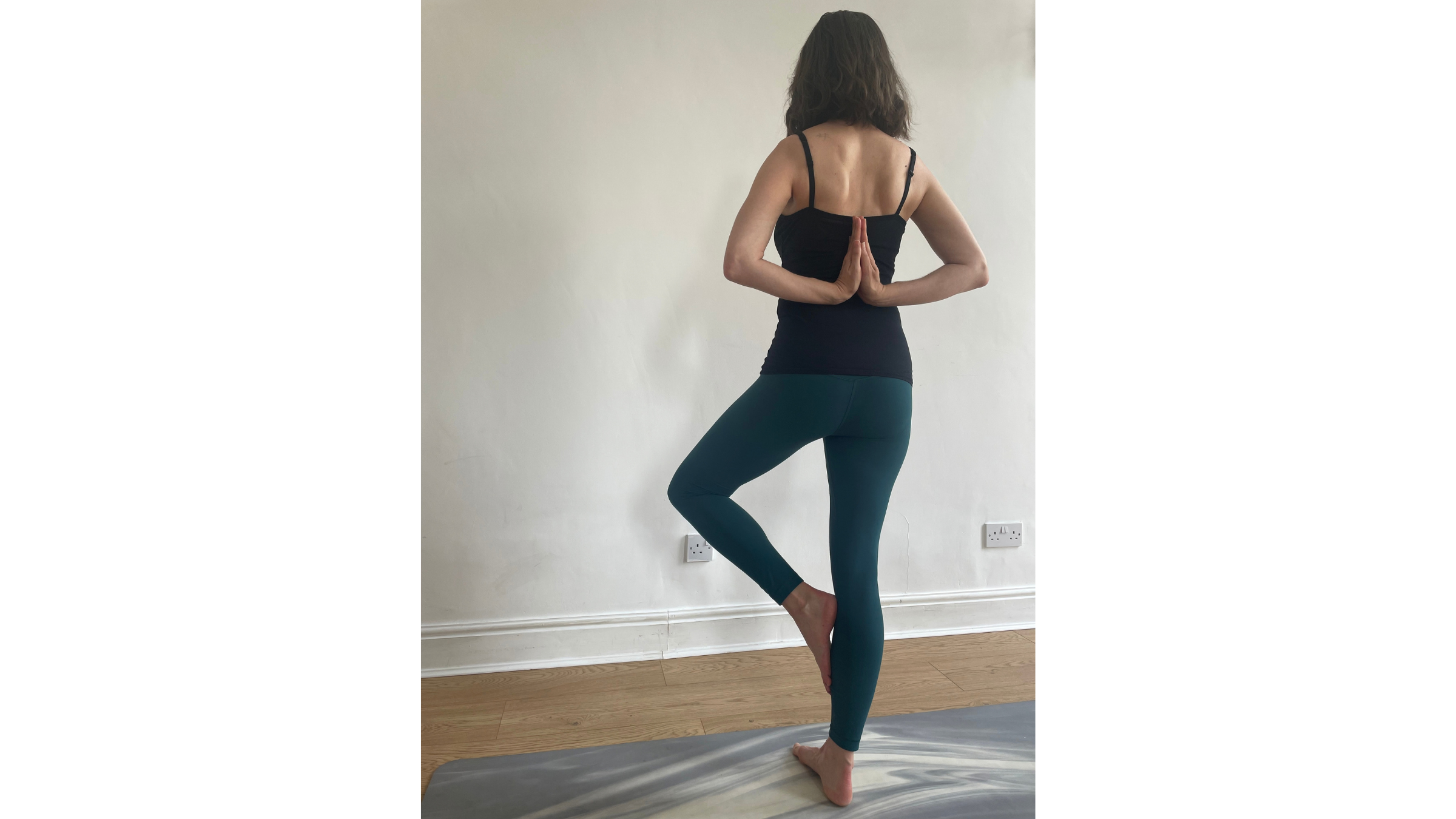
3. Tree Pose With Reverse Prayer Hands
You’ll feel a pronounced wrist and shoulder stretch by taking prayer hands (anjali mudra) behind your back—instead of at your chest—in Tree Pose. Since the weight of your arms is behind you, you’ll also challenge your balance in a slightly different way than in your typical Tree.
If this hand position isn’t comfortable, try pressing your fists against each other or hold onto a belt or strap behind your back. If you want to increase the intensity, grasp opposite elbows.
Notice if bringing your hands behind you causes an exaggerated backbend in your lower back. If so, imagine drawing your lower ribs toward the back wall.
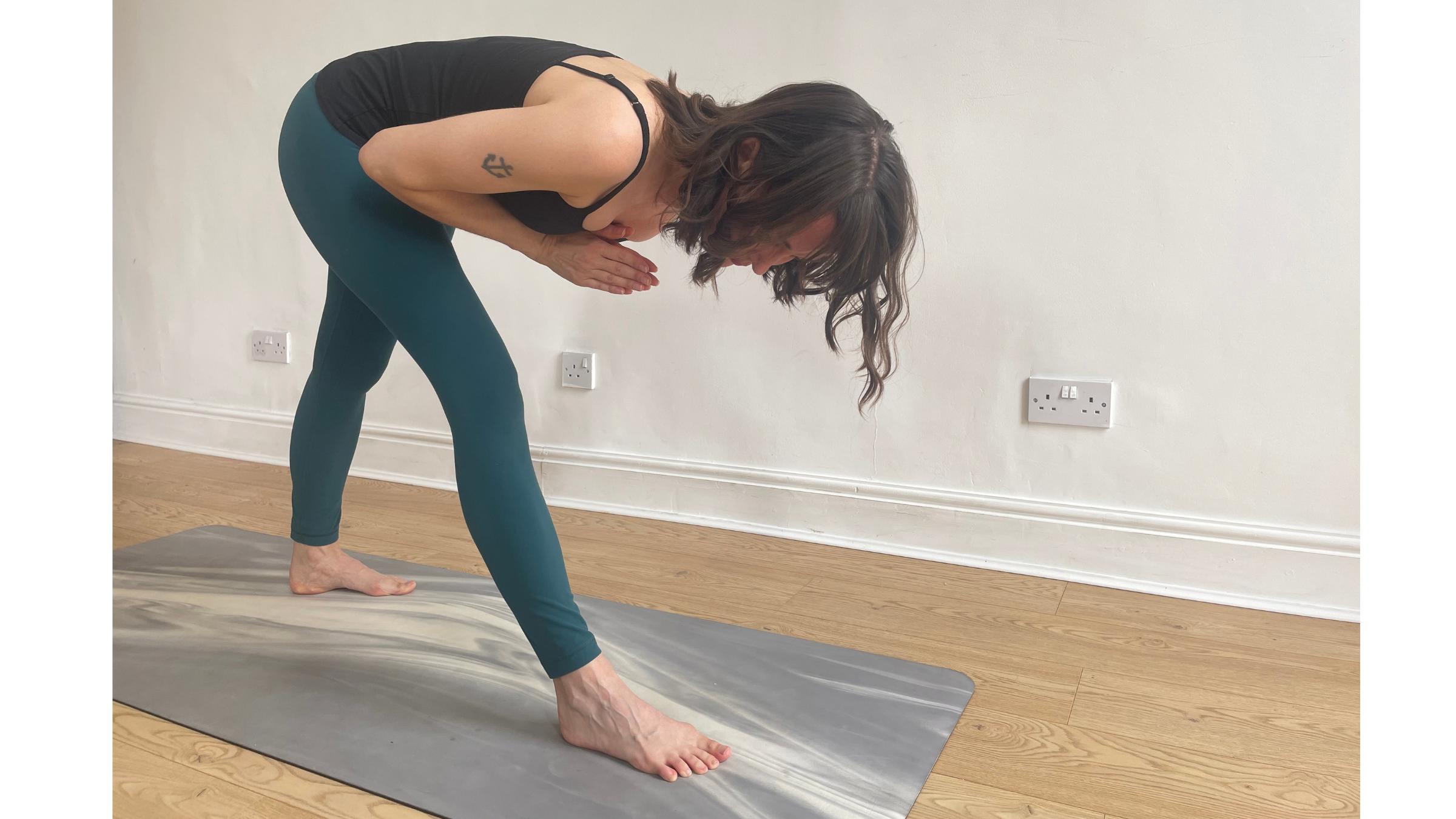
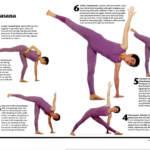
4. Pyramid Pose With Prayer Hands
There’s nothing like a little feedback to reassure yourself that you’re on the right track. That’s what happens when you gently press your prayer hands against your chest—instead of your lower back—in Pyramid Pose. The arm position is a gentle reminder to lengthen your front body and keep your chest lifted rather than let it collapse toward your front thigh.
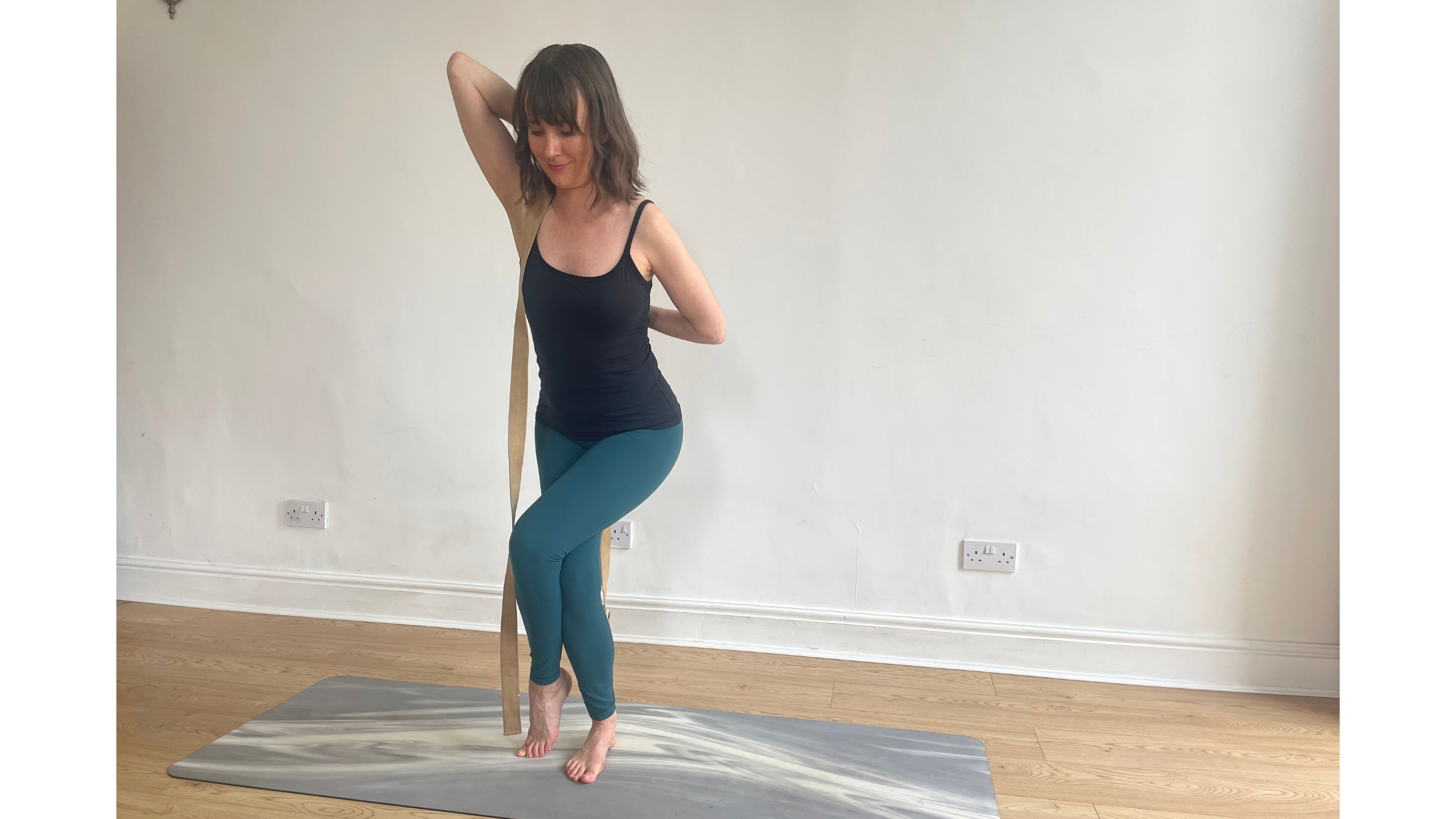
5. Eagle Pose With Cow Face Arms
Typical Eagle arms—the pretzel-y bind of elbows crossed in front of your chest—stretches your back body. Yet despite your best efforts, it can also cause your chest and shoulders to collapse forward. Swap them with Cow Face arms and suddenly you’re broadening across your chest and the front of your shoulders. You also encourage your core to engage as it finds a new center of gravity. It’s an entirely new experience.
Hold the strap in one hand, reach it overhead, and bend your elbow. Reach your opposite hand behind you, palm facing away from you, to grab the part of the strap that’s hanging down your back. Ensure this feels like more of a stretch than a strain in your arms and shoulders. You can also use the resistance of the strap between your hands to help keep your chest lifted as you lean forward with your legs in Eagle. 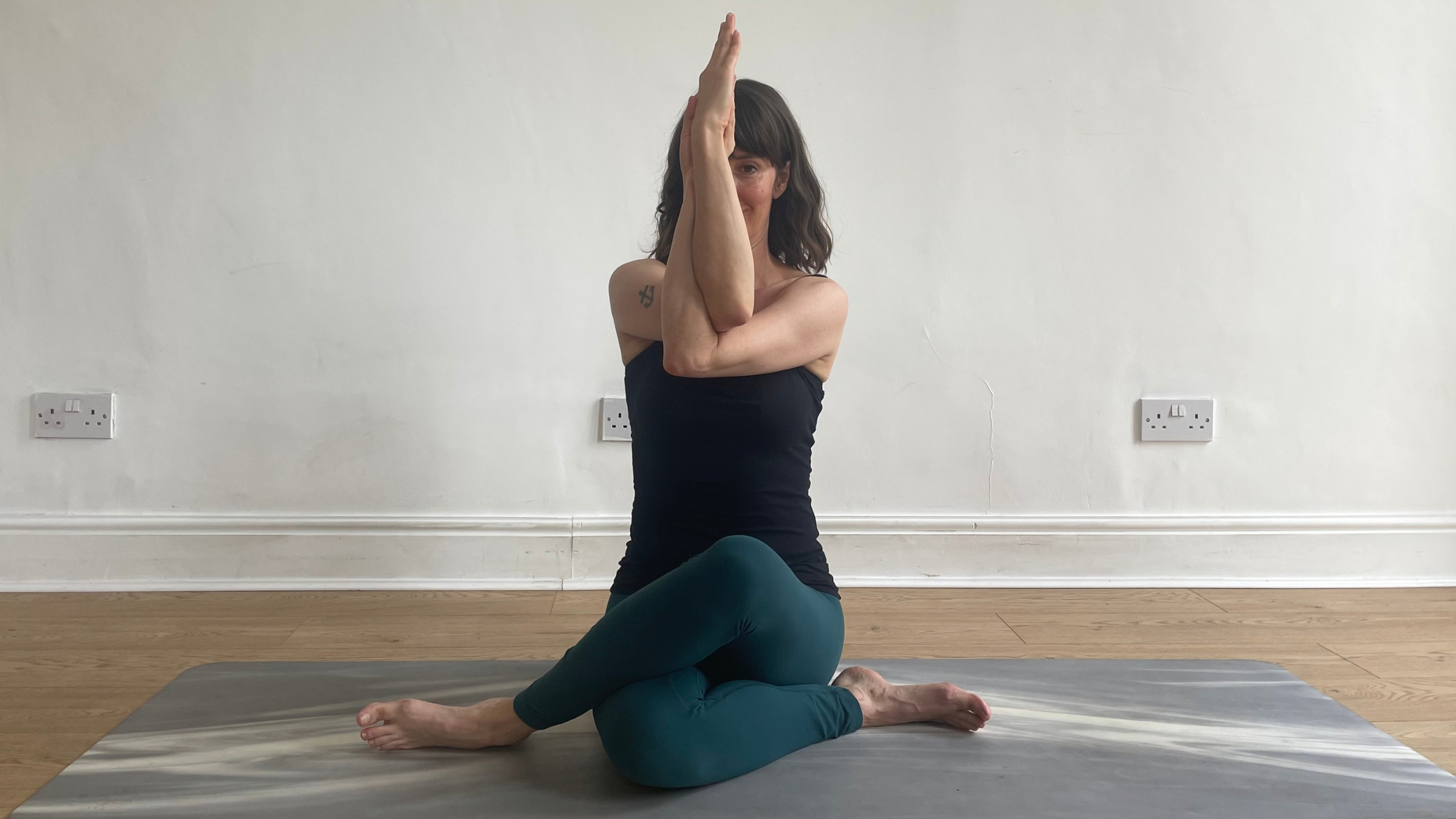
6. Cow Face Pose with Eagle Arms
The wrap of Eagle arms is an aesthetically pleasing match for the similarly crossed position of the legs in Cow Face Pose. More importantly, it asks you to engage in adduction, or bringing your arms and legs closer to your midline, whereas most yoga poses do the opposite. This helps keep your body balanced. If you choose to fold forward, your top knee can make a nice “hook” for your bottom elbow. But remember the objective is not external. It’s to create space by lengthening the spine, even if you move forward only an inch, rather than rounding your back to force your body to touch.
After practicing any of these unusual arm variations, it might feel good to take the familiar shape of Savasana. Let your arms relax and be heavy, then imagine that relaxation flowing throughout your entire body. Stay here for several minutes, allowing a period of ease to gently reinvent your relationship to yourself and the world.