

Published July 22, 2026 08:08AM
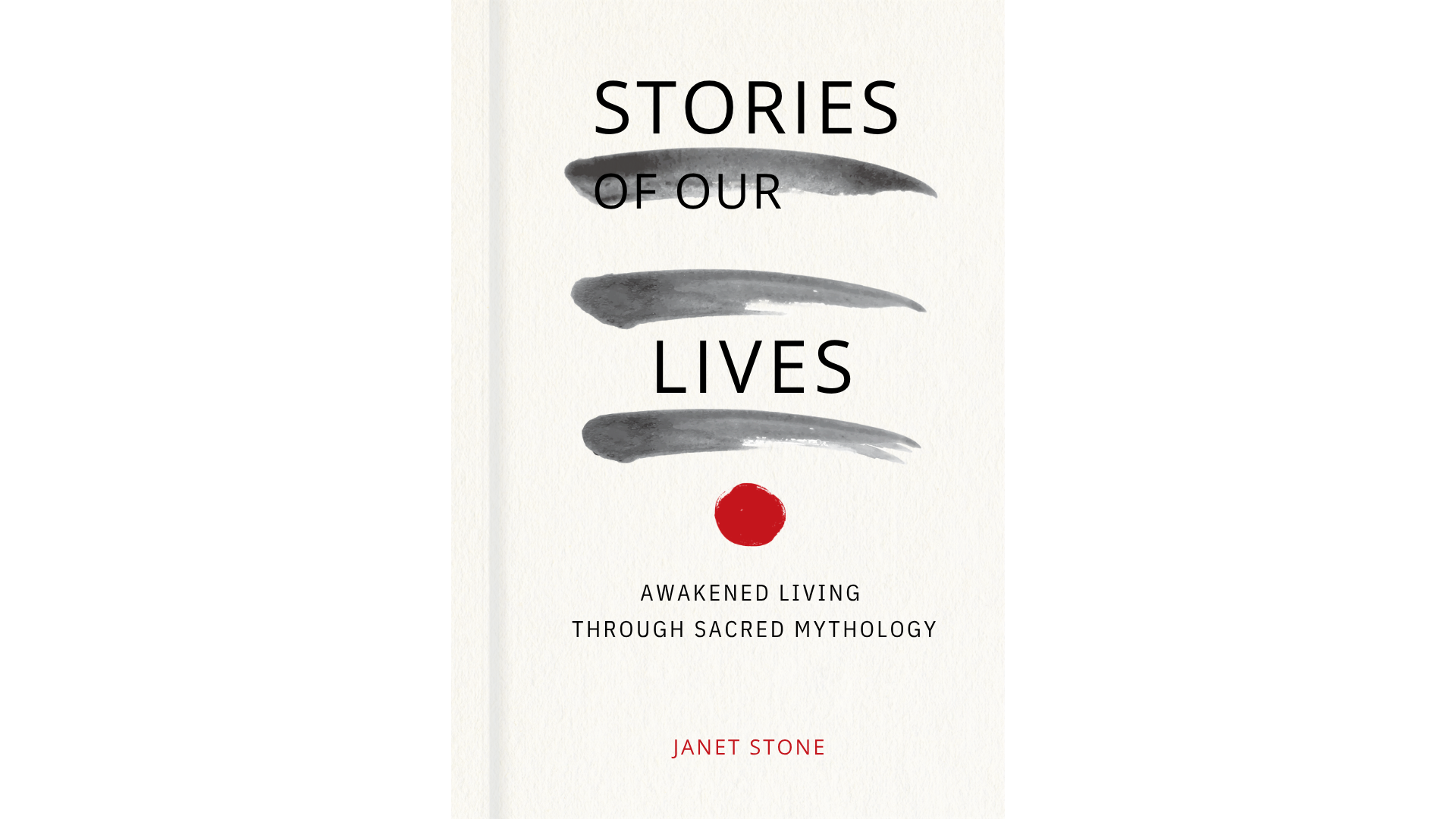
Ever found yourself settling into stillness on your mat when, seemingly out of nowhere, the yoga teacher shared mention of an insight from an ancient Hindu creation story or a cautionary tale of destruction? Whether you were left curious or confused, you probably came away with a desire to better understand the untold insights and lessons imparted by these myths. Longtime yoga teacher Janet Stone explains just how essential these collected stories, known as puranas, are to our understanding of life in her recently released book, Stories of Our Lives: Awakened Living Through Sacred Mythology, which shares many such stories. The following excerpt delves into the foundational question of why these relics matter.
Stories: The Threads of Human Existence
Stories are the threads in the fabric of human existence, the universal language that transcends time and culture. We need stories to understand ourselves. We need stories to understand the world. Stories invite us to remember a deeper nature that tends to get lost in our daily dramas. They are a way of seeing ourselves and the human condition through a boundless lens, a view from the stars. They invite our connection with the eternal flow of life. It’s as if we can peek behind the current of our personal narrative and unveil the richness that interconnects all living things.
Stories have the power to evoke tears, passion, and wonder, to set us out on new adventures, to bring us closer, and to tear us apart. Stories are the great wisdom keepers, joy makers, sorrow trackers, and inspiration to so many. Whether told orally, as they have been traditionally, or in writing, they can stir up lost parts within us. To immerse ourselves in an ancient story is to remember parts of ourselves we may have long forgotten. The great legends bridge our mundane existence with cosmic phenomena, aligning the heartbeat of humanity with the rhythm of the universe.
Puranas are ancient tales from India. These legends are woven from a collective understanding of the nature of the mind, body, and spirit, offering a road map back to our inherent oneness and the many faces of our life’s experience.
The Power of Curiosity
The puranas are stories that are not only for entertainment; they offer new ways to understand ourselves and the universal themes that play into our lives, bringing the collective unconscious to life. They can also build a stronger personal practice and awareness of internal guiding forces.
To see ourselves as the heroes or as the shadow characters in a story allows us to gain perspective on our own selves and all the many characters we play in this lifetime or even in a given day. The puranas reveal the masks we put on in order to fit in, to manage, or to seemingly trick ourselves and those around us. However, living a life with a false persona only causes suffering. The puranas invite us on the heroic path of digging within to reveal our many faces and give ourselves the bountiful gift of integrating and expressing all aspects of ourselves.
When we begin to look at ourselves through the lens of the puranas and the archetypes they portray, it’s like a play in which we’re acting out love and loss, likes and dislikes, and fears and confidence. In this grand cosmic play, you are a vital character too. You are the hero, the villain, the sage, the fool—a multifaceted being, capable of infinite growth and transformation.
As we set foot into the expansive world of the puranas, let us remember to bring along our most essential tool: curiosity. For it is through curiosity that we begin to see beyond the surface and into the heart of these eternal stories.
The power of the sacred resides among us. Are we willing to tune in? Are we willing to listen, look, and feel our way into these narratives to allow them to transform us? These stories pause the relentless flow of the mundane and immerse us in sacred wisdom, a deeper knowing and understanding, opening the door to the potential of waking up.
Sacred Listening
Sravana is the ancient art and joy of listening to divine stories and bathing in their symbology. Here we will do just that—immerse ourselves in ancient stories that echo our modern experiences. The richness of wisdom, spiritual teachings, and epic stories was traditionally passed down through oral recitation. Even though I am sharing the stories with you in written form, I believe we can open the inner aperture of our ears to listen to the deep understanding sparked by the tale. The art of truly hearing stories brings us more intimately face-to-face with our own subconscious. It allows us to suspend sureness and drift into the realm of remembering that our stories are a powerful thread—born of a specific time and place but capturing universal themes of the human experience. While we’re alive, we simply get to hold onto this thread, and if we’re curious enough to step back from our daily dramas, we will see how this thread is woven through time, connecting us to all who came before us and all who will come after us.
We live in a modern world where information comes our way faster than we can comprehend, discern, or feel. Our ears have tuned into false narratives that lead us down paths that have us believing in the illusion of social media, and messages of division, fear, outrage, and that somehow we’re not enough.
When we share the stories of the great universal struggle of light versus shadow, we are able to see that even the most revered beings struggle with their inner forces. This is the reinforcement we need to lift ourselves out of the collective maya (illusion) that we can get so lost in. In the chaos of information that floods our world, listening to these stories offers us a beacon of clarity, guiding us through the maya and reminding us of our common origins and shared destiny.
Sacred Seeing
Darshan is the ancient practice of auspiciously seeing (in form or in one’s own mind’s eye) a deity, a guru (teacher), or something that brings illumination. While hearing the tales of the gods and goddesses, we can use the sense of sight to look inward and to see these deities within us as well as in the world around us. We can also look at a picture or a murti (sacred statue), nature, or anything else that may inspire a deeper connection with the essence of the myth.
Our perspective shapes our understanding, and if we broaden our perspective, like a camera panning back, we can take in the infinite tapestry of life—not only human life, but all life and its divine interconnectedness. How can we look at another person, being, or group of people and determine that we are better or worse, when we all make up this same tapestry? These old patterns of seeing keep us stuck on a roller coaster, unable to look with curiosity at the world around us. They keep us wandering through our days on the yo-yo of self-loathing and self-aggrandizement. Our work is to open our eyes and begin to see the divine within and all around.
Sacred Feeling
Bhava—the feelings, emotions, or vibe of an experience—is a core aspect of stories. The realm of bhava is where we truly connect with the heart of the stories. When we embrace the feeling state of the puranas, we engage with the navarasas, the nine emotions: shringara (love or beauty), hasya (laughter), karuna (sorrow), rudra (anger), vira (heroism or courage), bhayanaka (terror or fear), bibhatsa (disgust), adbutha (surprise or wonder), and shantha (peace or tranquility). Embracing the navarasas allows us to deeply engage with these tales while also exploring our own emotional landscape.
All of these emotions give us permission to be feeling beings in the world. The power of a story to invoke the many feeling states of human experience can give us a better understanding of our own subconscious push and pull. When we allow the feelings to flow, we allow ourselves to drop behind the frontal lobe—the part of the brain’s cerebrum that is responsible for our thought processes—and access the occipital cortex or the temporal lobe—the parts of the brain that process senses and feeling. Through a story, we enter the realms of intuition and emotion rather than being stuck in the cognitive realm of thinking.
Our journey through the oral tradition is not just about sravana, darshan, or bhava—listening, seeing, or feeling; it’s a dynamic interplay of all three. We become active participants in these timeless tales, breathing life into them, and in the process, discovering a deeper understanding of ourselves and our place in the grand tapestry of life.
This list of the feelings, experiences, and expressions captures elements of ourselves and aspects of our shared humanity. Each one has a story to tell, a lesson of humans longing for meaning, purpose, and connection—truly an intense longing for remembering.
Excerpt reprinted with permission from Stories of Our Lives by Janet Stone © 2026. Published by Mandala, an imprint of Insight Editions.