
(Photo: Magnific; Yoga With Kassandra)
Published August 3, 2026 11:00AM
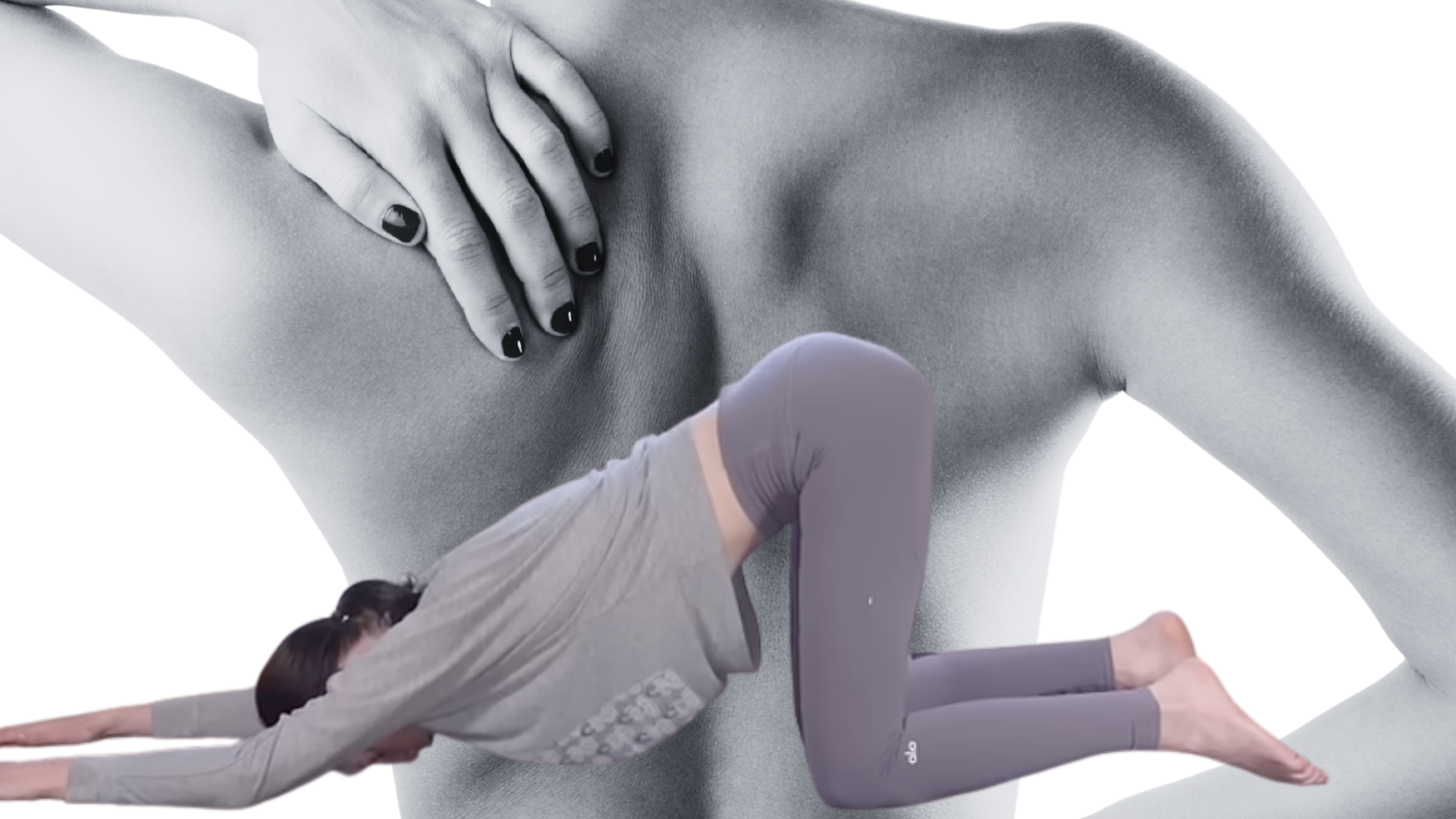
I don’t think there is necessarily a right or wrong way to do any yoga pose. But when it comes to Puppy Pose, also known as Melting Heart or Anahatasana, there is a way to practice the chest-opening shoulder stretch that no one talks about, and it can help counteract all the forward leaning and hunching we do throughout the day.
What usually happens when a teacher cues Puppy Pose is everyone surrenders to the shape. Meaning, they let their midsection release toward the mat and they create a bend in the lower back. It’s not wrong to practice the pose in this way. But for most of us, the lower back tends to already be much more flexible than the mid and upper back. So in this familiar backbend, it’s tempting to simply let the belly drop and create a big sway in our lower back. The shape is not only familiar, it’s easy. I like to teach it slightly differently to target the upper and mid spine.
I ask students to engage the lower abs a little as they come into Puppy Pose, which ends up flattening the lower back and creating a bigger backbend sensation through the mid and upper back. By extension, it also creates a more intense stretch across the shoulders and chest.
I’m not suggesting this is the only way to practice the pose as I always encourage feeling into what is right for your body on any given day. But this is how I usually like to do it because I know if I’m not mindful, every time I come into Puppy Pose, I will end up in a lower backbend, which is not where my body needs it most.
How to Practice Puppy Pose
So let’s come into Puppy Pose. As you kneel on the mat, keep your hips stacked over your knees. Walk your hands out forward and start to melt your chest down toward the mat. Then bend your elbows so your forearms are resting on the mat.
It can be really tempting to completely drop the belly toward the mat, but see if you can engage it a little so you’re not overly bending through your low back. You want to try and send the majority of the sensation into the shoulders, upper back, and chest. Stay here and breathe for at least several inhalations and exhalations.