
Move your body, quiet your mind.
(Photo: Andrew Clark | Design in Canva by Laura Harold)
Published October 2, 2026 11:03AM
In Yoga Journal’s Archives series, we share a curated collection of articles originally published in past issues beginning in 1975. This article about how the best poses for before and after meditation first appeared in the September-October 1998 issue of Yoga Journal. Find more of our Archives here.
If you’ve ever sat during a long meditation retreat, you know the physical demons that can beset you: the aches and pains in your knees, back, hips, neck, and shoulders; the waves of sleepiness. Even a half hour of meditation can be physically painful if you’re not used to sitting on the floor. It’s bad enough that your mind won’t stop re-scripting the fight you had with a boyfriend 15 years ago—but now your knees feel like they’re being drilled with a red-hot jackhammer.
Of course, learning to allow physical discomfort to arise and pass away without judging it is one of the aims of meditative practice. But a few simple yoga stretches before and after you sit can put you at ease. Zen priest and yoga teacher Victoria Austin offers these four postures:

1. Supported Bridge Pose (Setu Bandhasana)
This gentle back bend opens the chest and upper back, nourishing and revitalizing body and mind. Fold several blankets wide and long enough to support your body from the midback to the heels. With torso and legs on the blankets, inch backward until the top of the shoulders and the neck rest on the floor. Stretch your legs and rest your arms, palms up, by your sides (Figure 1). Close your eyes and breathe fully and deeply in Supported Bridge Pose. To exit the pose, slide backward until your whole body is resting on the floor. Kneel with your head down for a breath or two before getting up.
2. Bound Angle Pose (Baddha Konasana)
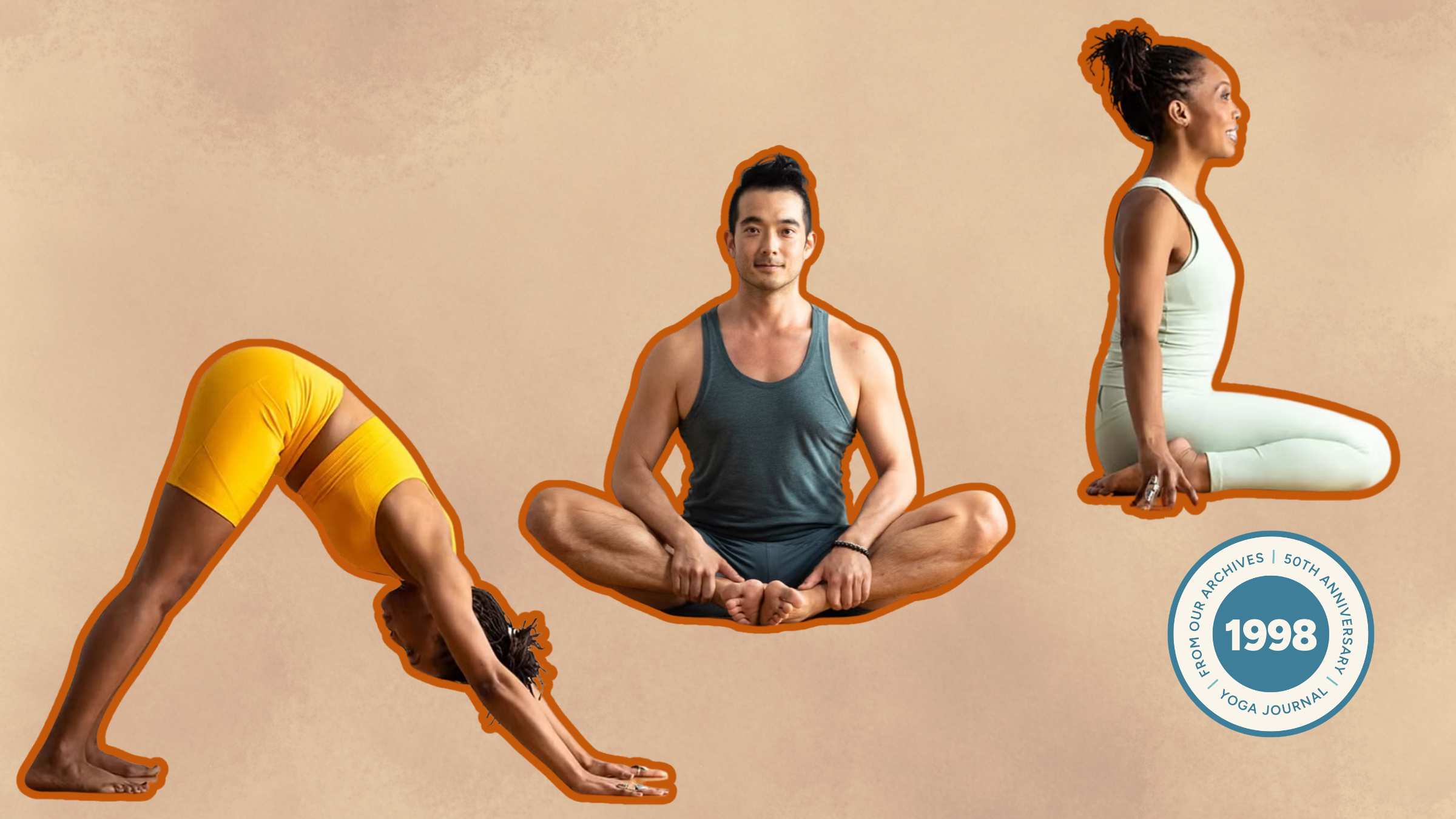
This seated pose and its variations open the hips and nourish the inner organs, making it easier to sit cross-legged with a feeling of comfort and joy. Sit on the floor with the body erect. If your back rounds, sit on the edge of a low cushion or folded blanket. Draw your feet toward your groin, rest the soles together, clasp your feet, and let the knees drop out to the side (Figure 2). Don’t force the knees downward. Instead, press the outer heels together and lengthen your inner legs from the groin toward the knees. Hold the pose for one to three minutes, lifting the chest and breathing deeply. Now gently fold forward across your feet, keeping the front of the body long (Figure 2a). Go only as far as feels comfortable—do not force or strain. Hold the forward variation for several breaths, then slowly sit up. Lie back, keeping the groin soft and open. To rest more comfortably in this pose, you can support your back on a bolster or stack of folded blankets (Figure 2b). Rest here for as long as you want, releasing the belly on the exhalation.

3. Hero Pose (Virasana) with Shoulder Stretches
Kneel in Virasana (Hero Pose) with your calves folded alongside your thighs and your buttocks resting between your feet. If this pose is hard on your knees, sit on a cushion or stack of blankets. This posture will lengthen your quadriceps and rest your legs. Clasp your hands, turn your palms outward, and stretch your arms overhead (Figure 3). Hold for five to 10 deep breaths, then release. Now take the right arm up and bend it so the elbow stays up and the hand comes down. Sweep the left arm out behind the back, and clasp your hands. If they don’t reach, use a belt (Figure 3a). Hold for five to 10 breaths, then repeat on the other side.
4. Downward-Facing Dog Pose (Adho Mukha Svanasana)
“If I’ve overworked in sesshin and I need to do one pose to feel human again, I do Downward Dog,” says Austin. Dog pose stretches and strengthens the shoulders, hips, legs, and back; relieves fatigue; improves circulation (especially to the brain); and both relaxes and energizes the nervous system. It’s a forward bend, inversion, standing pose, and back bend all rolled into one. Practiced with a block supporting the head, it’s a restorative pose as well. Kneel on all fours with palms shoulder-width apart and feet hip-width apart. Exhaling, straighten your legs and lift your thighs up and back. Lengthen the sides of the body from the palms all the way to the sitting bones. Press your heels back and down. If you have a wooden yoga block or a stack of books, you might try placing it on your mat before you go into the pose, and then gently rest your head on it once you’re up (Figure 4). Hold for 10 to 20 slow breaths, then release.